

Crayons

Pay in 3 interest-free payments on purchases from £20-£3000 with  . Learn more.

 Loading...
End of content
Error - No more pages to load
About Crayons
Professional marking crayons are indispensable tools for tradespeople working across construction, automotive, fabrication, and manufacturing sectors. Unlike children's art supplies, these industrial-grade markers are specifically engineered to deliver clear, visible marks on challenging surfaces including metal, timber, concrete, rubber, glass, and ceramics. Whether you're marking cut lines on joists, identifying components in a busy workshop, marking tyres for rotation, or setting out positions on a building site, professional crayons produce durable marks that withstand harsh working conditions, moisture, and contamination.
The selection at Tooled-Up.com includes specialist marking crayons from trusted manufacturers such as Markal, Faithfull, Sealey, and Strait Line. These marking tools are designed to perform in demanding environments where standard pens and pencils simply won't work. Available in various colours including high-visibility yellow for dark surfaces and traditional black for lighter materials, professional crayons offer excellent coverage and can mark through oil, dirt, and moisture. They're valued by tradespeople for their reliability, affordability, and the bold, clear lines they produce on virtually any surface, from smooth steel to rough concrete.
Professional marking crayons are available in different formulations to suit specific applications and working conditions. General-purpose builders crayons work effectively across multiple materials, whilst specialist formulations are designed for particular industries—such as tyre marking crayons for automotive workshops or fade-resistant variants for outdoor steelwork. The robust construction means they won't break easily when rattling around in toolboxes or site bags, and their wax-based composition ensures they remain usable in cold weather when liquid markers would freeze or fail to write.
Jargon Buster
- All-Weather Marking: Crayons formulated to write effectively in wet, cold, or humid conditions where standard markers would fail. Essential for outdoor construction and year-round site work in British weather.
- Wax-Based Formulation: The most common type of marking crayon, using a wax compound that adheres to rough, porous, or contaminated surfaces including rusty metal, damp timber, and dusty concrete.
- Fade-Resistant: Pigments that maintain visibility over extended periods when exposed to sunlight and weathering, important for long-term marking applications on outdoor projects.
- Builders Crayon: A general-purpose industrial marking crayon designed for use across multiple construction materials and applications on building sites, workshops, and fabrication facilities.
- Tyre Marking Crayon: Specialist crayons designed specifically for marking rubber tyres, with formulations that won't damage rubber compounds whilst providing clear, lasting identification marks.
- Chisel Point: A flat, angled crayon tip that allows for both broad marking and finer detail work depending on the angle used, offering versatility for different marking tasks.
Who Uses Crayons?
Professional marking crayons are used daily by a wide variety of trades and industries:
- Carpenters and joiners marking cut lines, measurements, and assembly points on timber and sheet materials
- Steel fabricators and welders marking metal components for cutting, drilling, welding, and assembly
- Builders and general contractors marking positions on various construction materials across site work
- Tyre fitters and automotive technicians marking tyres for rotation, balancing, and identification
- Warehouse and logistics personnel marking packages, pallets, and inventory items for despatch
- Plumbers and heating engineers marking pipe cut points and installation positions
- Roofers marking slate, tile, metal roofing materials, and batten positions
- Electricians marking cable runs, mounting positions, and cut-outs on various surfaces
- Scaffolders identifying and marking scaffold components during erection and dismantling
- Shop fitters and cabinet makers marking positions for fixtures and fittings
- DIY enthusiasts tackling home improvement and workshop projects
How to Choose the Right Crayons
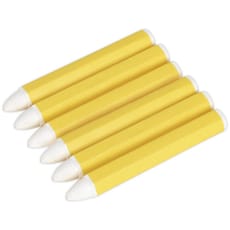
Surface Material: Consider what you'll be marking most frequently. General builders crayons from brands like Markal and Faithfull work across multiple materials, but if you primarily mark tyres or work with specific surfaces, choose a specialist formulation designed for that application. Products like Sealey Tyre Marking Crayons are engineered specifically for rubber surfaces.
Colour Visibility: Choose colours that contrast with your working surfaces. Yellow and white provide excellent visibility on dark materials like steel, rubber, and stained timber. Black crayons work well on lighter surfaces such as concrete blocks, pale woods, and ceramic tiles. For industrial settings, different colours can be used as coding systems for different trades or processes.
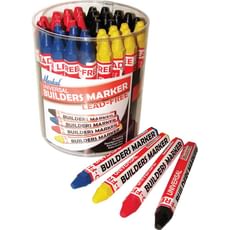
Environmental Conditions: If you work outdoors or in damp conditions, select all-weather crayons that won't wash away or become unusable in wet environments. Indoor workshop users have more flexibility with standard formulations. The Markal Universal Builders Marker Crayon offers weather and fade resistance for outdoor applications.
Mark Duration: Consider whether you need temporary or semi-permanent marks. Some applications require marks that will last for months on external steelwork, whilst others need marks that can be easily cleaned off after immediate use on finished surfaces.
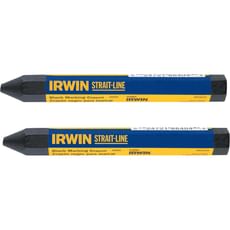
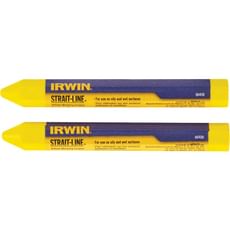
Pack Quantity: Professional crayons are frequently sold in multipacks such as Strait Line Crayons in twin packs. Consider buying multipacks if you use crayons regularly, as this represents better value and ensures you always have spares in your toolbox, van, or site bag.
Popular Accessories
- Chalk lines and chalk for creating longer straight marking lines on construction sites
- Carpenter's pencils for finer, more precise marking on timber and sheet materials
- Permanent markers and paint markers for semi-permanent identification and labelling
- Soapstone holders for precision marking in welding and metalwork applications
- Tool belts and pouches to keep marking tools accessible and organised on site
- Measuring tapes and rules for accurate marking layouts and dimensions
- Spirit levels and combination squares for marking straight lines and accurate angles
- Tool boxes and storage systems from Stanley, DeWalt, or Milwaukee to organise marking equipment
Safety Information
Whilst marking crayons are generally safe tools, observe these basic precautions for professional use:
Always check the manufacturer's guidance regarding the composition of crayons, particularly if working in food-preparation environments or situations requiring specific material compliance. Some industrial crayons contain components that may not be suitable for certain sensitive applications. Most professional crayons are lead-free and non-toxic, but always verify specifications.
When marking materials that will subsequently be cut, drilled, or machined, ensure marks are placed appropriately and won't interfere with the work or contaminate finished surfaces. Remove or clean off crayon marks from finished work where visible marks would be unacceptable to clients or end users.
Store crayons in a cool, dry location when not in use. Excessive heat can cause wax-based crayons to soften or melt, whilst extreme cold may make them brittle. Keep crayons in toolboxes or pouches to prevent damage during transport and maintain their effectiveness throughout their working life.
Frequently Asked Questions
Will marking crayons work on wet or oily surfaces?
Professional marking crayons available from Tooled-Up are specifically formulated to mark through light contamination including moisture, oil, and dirt. However, for best results on heavily contaminated surfaces, wipe away excess liquid or debris before marking. All-weather formulations like the Faithfull Marker Crayons offer superior performance in challenging conditions and are designed for use on oily, wet, or dry surfaces.
How do I remove crayon marks after they're no longer needed?
Most professional crayon marks can be removed with white spirit, mineral spirits, or appropriate cleaning solvents. On porous materials like untreated timber, marks may penetrate the surface and be more difficult to remove completely. Always test cleaning methods on inconspicuous areas first, particularly on finished surfaces or materials with special coatings.
What's the difference between a marking crayon and a carpenter's pencil?
Marking crayons are wax-based and work on a much wider variety of surfaces including metal, glass, rubber, ceramics, and rough concrete where pencils would fail or produce faint marks. Carpenter's pencils are graphite-based and better suited for precise marking on timber and sheet materials. Many tradespeople carry both types for different applications throughout the working day.
Can I use marking crayons in cold weather conditions?
Yes, quality marking crayons are designed to work in temperatures well below freezing, making them ideal for British winter conditions. They're significantly more reliable than liquid markers or paint pens in cold weather. Wax-based formulations remain workable down to approximately -29°C, making them ideal for outdoor construction and site work year-round.
Are marking crayons better than chalk for construction marking?
Each has advantages depending on the application. Marking crayons produce more durable, water-resistant marks and work on a wider variety of surfaces including non-porous materials. Chalk is better for temporary marks and creating long straight lines when used with a chalk line tool. Many professionals use both depending on the specific task and surface being marked.