
Dies

Pay in 3 interest-free payments on purchases from £20-£3000 with  . Learn more.


Loading...
End of content
Error - No more pages to load
About Dies
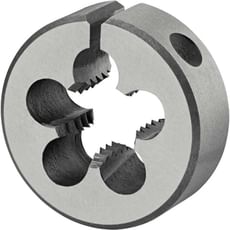
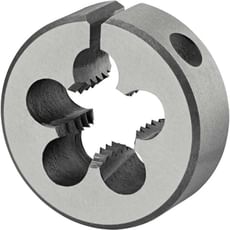
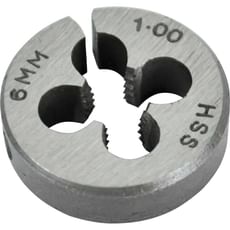
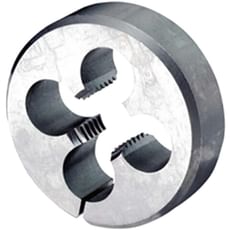
Threading dies are precision cutting tools designed to create external threads on cylindrical materials such as pipes, rods, bolts, and studding. Whether working with metric or imperial measurements, BSP or BSPT threads, dies enable tradespeople and engineers to form accurate, standardised threads that ensure secure connections in plumbing, mechanical assembly, and fabrication work. Available in various configurations including circular split dies, solid dies, and die nuts, these essential tools work in conjunction with die stocks or threading machines to cut clean, precise threads on a wide range of materials including steel, copper, brass, and aluminium.
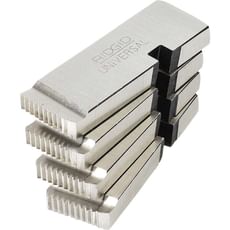
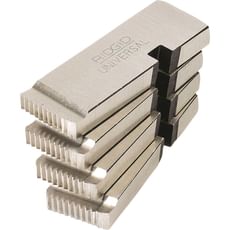
The dies collection at Tooled-Up.com features professional-grade products from trusted manufacturers including Dormer, Ridgid, Sirius, Draper, and Faithfull. From HSS (High-Speed Steel) dies for general workshop applications to specialised threading machine dies for heavy-duty pipework, the range covers both manual and machine threading requirements. Whether you need a single die for occasional repairs or a comprehensive set for professional installation work, you'll find dies suitable for various thread standards including BSP (British Standard Pipe), BSPT (British Standard Pipe Taper), metric, NPT (National Pipe Thread), and UNC (Unified National Coarse) threads.
Threading dies are indispensable in situations where pre-threaded components are unavailable or where custom thread lengths are required. They're particularly valuable on site where immediate thread repair or creation is necessary, eliminating delays and reducing costs associated with sourcing replacement parts. Manufactured from hardened steel and often featuring titanium or other coatings for extended life, quality dies maintain their cutting edges through thousands of threading operations when properly maintained and lubricated.
Jargon Buster
- HSS (High-Speed Steel): A hardened steel alloy that retains its hardness at high temperatures, making it ideal for cutting operations. HSS dies offer excellent durability and can be resharpened multiple times.
- BSP (British Standard Pipe): A family of thread standards for interconnecting pipes and fittings, widely used throughout the UK and Commonwealth countries. BSP threads have a parallel profile and are measured by nominal bore size rather than actual diameter.
- BSPT (British Standard Pipe Taper): A tapered thread standard used primarily for pipe joints where a pressure-tight seal is required. The taper (1:16) allows threads to form a seal when tightened, eliminating the need for additional sealant in many applications.
- Split Die (Circular Split Die): A threading die with an adjustable opening controlled by a screw, allowing fine adjustment of thread diameter and enabling the die to be opened for removal without reversing the workpiece.
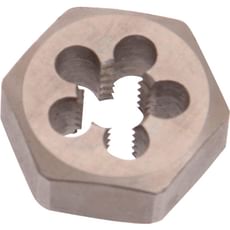
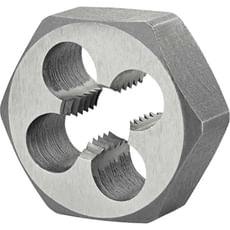
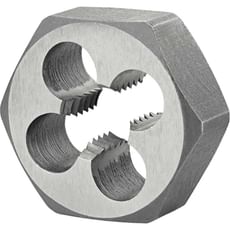
- Die Nut: A hexagonal-shaped die that can be turned using a standard spanner or wrench, ideal for rethreading damaged threads or quick threading operations where a die stock isn't available.
- Thread Pitch: The distance between corresponding points on adjacent threads, measured in millimetres for metric threads or threads per inch (TPI) for imperial threads.
Who Uses Dies?
- Plumbers and heating engineers – creating and repairing threads on copper and steel pipework
- Maintenance engineers – repairing damaged threads on machinery and equipment
- Mechanical fitters – fabricating threaded components for assembly work
- Steel fabricators and welders – threading studding, bar, and custom fabrications
- Gas fitters – threading gas supply pipes to British standards
- Agricultural engineers – maintaining and repairing farm machinery and equipment
- Vehicle mechanics and auto electricians – repairing stripped threads and creating mounting points
- Marine engineers – maintaining threaded connections on vessels
- General engineers – producing custom threaded components for projects
- Serious DIY enthusiasts – undertaking home plumbing and fabrication projects
How to Choose the Right Dies
Thread Standard: Determine which thread standard you require – BSP and BSPT for plumbing work in the UK, metric threads for general engineering, or UNC/UNF for working with American-specification equipment. Using the wrong standard will result in incompatible connections and potential safety issues.
Die Type: Circular split dies offer adjustment and are ideal for general workshop use with a die stock. Solid dies provide rigid, accurate threads for precision work. Die nuts offer convenience for field repairs and can be turned with standard spanners. Threading machine dies are designed for power threading equipment and handle larger diameter pipes efficiently.
Material Compatibility: Ensure your chosen die is suitable for the material you're threading. HSS dies handle most common materials including mild steel, brass, copper, and aluminium. Harder materials may require cobalt HSS or specialist dies. Consider the flute design – straight flutes for through-holes and spiral flutes for blind holes or easier chip evacuation.
Size Range: Check both the thread diameter and pitch match your requirements. For plumbing work, consider whether you need a full range of sizes or specific diameters. Threading machine dies typically cover size ranges (such as 1/2" to 3/4" BSPT), whilst hand dies are usually individual sizes.
Quality and Brand: Professional-grade dies from manufacturers like Dormer, Ridgid, and Sirius offer superior edge retention, accurate thread profiles, and longer working life. Cheaper dies may produce inconsistent threads or fail prematurely, particularly when working with tougher materials or in production environments.
Popular Accessories
- Die stocks and handles – manual holders for turning circular dies
- Threading machines – powered equipment for production threading work
- Cutting fluid and lubricant – essential for clean cuts and extended die life
- Taps and tap wrenches – complementary tools for creating internal threads
- Thread gauges – for verifying thread accuracy and pitch
- Pipe vices – securing workpieces during threading operations
- Deburring tools – removing sharp edges after threading
- Thread sealants and PTFE tape – ensuring leak-proof connections
- Die storage cases – protecting dies and keeping sets organised
- Engineers' files – chamfering workpiece ends before threading
Safety Information
Always wear appropriate PPE when using threading dies, including safety glasses to protect against flying metal chips and work gloves when handling workpieces – though gloves should be removed when operating powered threading equipment to prevent entanglement. Ensure workpieces are securely clamped or held in a suitable vice; attempting to hand-hold material whilst threading is extremely dangerous and can result in serious lacerations.
Use appropriate cutting fluid to reduce heat build-up and prevent die damage. Excessive heat can cause thermal expansion leading to inaccurate threads and potential burns. When using threading machines, ensure guards are in place and follow the manufacturer's operating instructions. Keep long hair tied back and avoid wearing loose clothing or jewellery that could become caught in rotating components.
Inspect dies regularly for damage, wear, or chipped cutting edges. Damaged dies can bind on workpieces, potentially causing the die stock to spin unexpectedly or the workpiece to break free from the vice. Never force a die – if cutting resistance is excessive, withdraw the die, clean the threads, apply more lubricant, and proceed gradually. Threading operations should comply with relevant HSE guidelines for workshop safety and manual handling.
Frequently Asked Questions
What's the difference between BSP and BSPT threads?
BSP (British Standard Pipe) threads are parallel throughout their length and typically require a washer or O-ring to create a seal. BSPT (British Standard Pipe Taper) threads have a 1:16 taper that creates an interference fit, forming a pressure-tight seal when tightened, often used with thread sealant paste. BSPT is preferred for gas installations and high-pressure applications where a reliable seal is critical.
Do I need cutting fluid when using threading dies?
Yes, cutting fluid is essential for producing clean, accurate threads and extending die life. It reduces friction, dissipates heat, and helps evacuate metal chips from the cutting area. Different materials benefit from specific lubricants – general cutting oil works well for steel, whilst neat cutting fluid or paraffin suits aluminium and copper. Threading dry will produce rough threads, accelerate die wear, and may cause die breakage.
How do I know what thread pitch I need?
For replacing or extending existing threads, use a thread gauge to identify the pitch. For new applications, consult British Standards or manufacturer specifications for your intended fitting or assembly. BSP threads follow standard pitch tables based on diameter, whilst metric threads commonly use coarse or fine pitch variants. When uncertain, take a sample fitting to match against before purchasing dies from Tooled-Up.com.
Can I use a die to clean up damaged threads?
Yes, dies are excellent for chasing or cleaning damaged external threads, removing rust, paint, or minor damage. For this application, a split die is preferable as it can be adjusted to cut minimally, preserving as much of the original thread as possible. Run the die over the thread several times with cutting fluid, gradually tightening if necessary, until the thread engages smoothly with its mating component.
Why won't my die start cutting on the workpiece?
The workpiece end likely needs chamfering. Dies require a slight taper or chamfer on the material edge to engage properly. Use a file or bench grinder to create a small chamfer at approximately 45 degrees. Also ensure you're using the correct diameter material – threading dies require material diameter slightly smaller than the major thread diameter. Consult thread diameter charts for your specific thread standard.