

Diesel Heaters

Pay in 3 interest-free payments on purchases from £20-£3000 with  . Learn more.
 Loading...
End of content
Error - No more pages to load
About Diesel Heaters
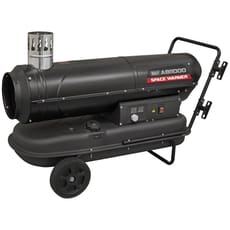
Diesel heaters, also known as diesel space heaters or kerosene heaters, are powerful heating solutions designed to provide efficient warmth in large, unheated spaces where traditional heating systems aren't practical or available. These robust heaters are essential equipment for workshops, warehouses, construction sites, garages, and agricultural buildings throughout the UK. Operating on diesel fuel or paraffin (kerosene), they deliver impressive heat output measured in kilowatts (kW) or British Thermal Units (BTU), capable of warming substantial areas quickly and cost-effectively even in the coldest British winters.
Tooled-Up.com stocks a comprehensive range of diesel heaters from trusted brands including Sealey and Draper, offering models with varying heat outputs to suit different space sizes and applications. The selection includes both direct-fired jet force heaters, which provide maximum heat output and are ideal for well-ventilated spaces, and indirect-fired models that duct exhaust fumes away for use in more enclosed environments. Whether you're a building contractor needing temporary site heating, a farmer requiring livestock building warmth, or a tradesperson maintaining a comfortable workshop, these diesel heater solutions offer reliable, portable heating for demanding professional applications.
These industrial-grade heaters are built to withstand the demanding conditions of professional use, featuring durable steel construction, integrated fuel tanks, and safety features including flame-out protection and overheat cut-offs. With heat outputs ranging from compact 17kW models suitable for smaller workshops up to powerful 63kW units capable of heating large warehouses, there's a diesel heater to match every requirement and budget.
Jargon Buster
- BTU (British Thermal Unit) – A measurement of heat output, with higher BTU ratings indicating greater heating capacity. One kW equals approximately 3,412 BTU.
- Direct-Fired Heater – A diesel heater where combustion exhaust is released directly into the heated space along with the warm air. These provide maximum efficiency but require adequate ventilation and are best suited for well-ventilated or outdoor covered areas.
- Indirect-Fired Heater – A heater design where combustion gases are ducted away from the heated space, providing clean, fume-free warm air. Ideal for enclosed spaces or areas with people working nearby.
- Jet Force Technology – A powerful fan-assisted heating system that propels warm air considerable distances, ensuring rapid and even heat distribution across large spaces.
- Thermostat Control – An automatic temperature regulation system that maintains consistent warmth by cycling the heater on and off, improving fuel efficiency and comfort levels.
- Flame-Out Protection – An essential safety feature that automatically shuts off the fuel supply if the flame is extinguished unexpectedly, preventing dangerous fuel vapour accumulation.
Who Uses Diesel Heaters?
Diesel heaters are essential equipment for a wide range of trades and industries across the UK:
- Building Contractors and Site Managers – providing temporary heating for construction sites, enabling work to continue during cold weather and helping plaster, concrete, and paint to cure properly
- Agricultural Workers and Farmers – maintaining appropriate temperatures in livestock buildings, protecting animals during lambing and calving seasons, and preventing frost damage in storage barns
- Warehouse and Logistics Operators – keeping large storage and distribution facilities at working temperatures for staff comfort and product protection
- Event Managers and Marquee Hire Companies – heating temporary structures for weddings, exhibitions, and outdoor events throughout the year
- Motor Mechanics and Vehicle Repairers – maintaining comfortable working temperatures in garages and bodyshops during winter months
- Painters and Decorators – accelerating drying times and ensuring proper paint adhesion in unheated properties
- Plant Hire and Tool Rental Businesses – providing heating equipment to contractors and businesses on a short-term basis
- Industrial Facility Managers – offering supplementary or emergency heating for factories, manufacturing plants, and processing facilities
How to Choose the Right Diesel Heaters
Selecting the appropriate diesel heater requires careful consideration of several key factors:
Heat Output Requirements: Calculate the size of the space you need to heat in cubic metres and consider the level of insulation. As a general rule, you'll need approximately 30-40 watts per cubic metre for a well-insulated space, or 40-60 watts for poorly insulated areas. Available models range from 17kW up to 63kW to suit different applications.
Ventilation and Heater Type: Direct-fired heaters offer maximum efficiency but discharge combustion gases into the heated space, making them suitable only for well-ventilated areas or semi-outdoor locations. If you're heating an enclosed space where people will be working, consider whether you need an indirect-fired model with ducting capabilities.
Fuel Tank Capacity: Larger integrated fuel tanks mean longer running times between refills. If you need continuous heating throughout a working day, look for models with substantial tank capacities, typically ranging from 20 to 60 litres across the Sealey and Draper ranges available from Tooled-Up.
Portability Features: Consider whether you'll be moving the heater regularly between locations. Look for models with sturdy wheels, comfortable carry handles, and manageable weights. Many diesel heaters feature integrated trolley designs for easy site-to-site transportation.
Safety Features: Essential safety elements include flame-out protection, overheat cut-off switches, and stable bases to prevent tipping. Models with electronic ignition systems are generally more reliable than manual lighting systems and comply with current HSE guidelines for workplace heating equipment.
Running Costs: More efficient models consume less fuel per hour of operation. Check the fuel consumption rate (litres per hour) when comparing models, as this directly impacts your ongoing operating costs, particularly for extended use.
Popular Accessories
- Diesel and Kerosene Fuel – clean-burning fuel supplies in various container sizes for convenient heater operation
- Fuel Transfer Pumps – making safe and spillage-free refuelling easier, particularly with larger heaters
- Ducting Kits – flexible heat-resistant ducting for directing warm air to specific areas or venting exhaust gases away from working spaces
- Thermostats and Controllers – aftermarket temperature control systems for automated operation and improved fuel efficiency
- Replacement Nozzles and Filters – maintenance consumables to keep your heater operating at peak efficiency
- Fuel Containers and Jerry Cans – safe storage and transportation solutions for diesel and paraffin supplies
- Carbon Monoxide Detectors – essential safety equipment when operating fuel-burning heaters in enclosed or semi-enclosed spaces
- Extension Cables – heavy-duty 240v electrical extensions rated for industrial use to power the heater's fan and ignition systems
Safety Information
Operating diesel heaters safely is paramount, particularly in workplace environments governed by HSE regulations:
Ventilation Requirements: Direct-fired diesel heaters consume oxygen and produce combustion gases including carbon dioxide. Always ensure adequate ventilation when operating these heaters indoors. The HSE recommends a minimum of two permanent ventilation openings in any space using combustion heating equipment. Never use direct-fired heaters in confined spaces or areas where people sleep.
Fuel Handling and Storage: Store diesel and paraffin fuels in approved containers away from heat sources and in well-ventilated areas. Follow COSHH guidelines for handling and storing flammable liquids. Always refuel heaters outdoors or in well-ventilated areas after the unit has cooled completely, and never smoke or allow naked flames nearby during refuelling.
Clearance Distances: Maintain adequate clearances around the heater – typically at least one metre from combustible materials, walls, and ceilings. Never direct the heat output towards flammable materials, gas cylinders, or aerosol cans. Position heaters on stable, level, non-combustible surfaces away from high-traffic areas where they might be knocked over.
Carbon Monoxide Awareness: Incomplete combustion can produce dangerous carbon monoxide gas. Install battery-operated carbon monoxide detectors in any space where you're operating diesel heaters. Symptoms of carbon monoxide exposure include headaches, dizziness, and nausea – if these occur, move to fresh air immediately and seek medical attention.
Electrical Safety: Most diesel heaters require 240v mains electricity for fan operation and ignition systems. Ensure your power supply is adequate and that extension cables are rated for the heater's power consumption. Use RCD protection when operating on construction sites as required by current electrical safety regulations.
Regular Maintenance: Keep your heater in safe working condition by following the manufacturer's maintenance schedule, including cleaning fuel filters, checking fuel lines for leaks, and inspecting ignition systems. Faulty or poorly maintained heaters pose serious safety risks and should be professionally serviced or replaced.
Frequently Asked Questions
Can I use red diesel in my space heater?
Yes, diesel heaters can operate on both standard white diesel (DERV) and red diesel (rebated fuel oil). Red diesel is the same product chemically but is dyed red and sold at a lower price for off-road use. It's legal to use red diesel in static heating equipment for construction sites, agricultural buildings, and other non-road applications, making it a cost-effective choice for space heating.
What's the difference between diesel and paraffin (kerosene) for heating?
Paraffin (also called kerosene or heating oil) and diesel are both petroleum products that can fuel space heaters, though paraffin typically burns cleaner with less odour and smoke. Most modern diesel space heaters are designed to run on either fuel. Paraffin generally costs slightly more than diesel but may be preferable for indoor use due to reduced emissions. Always check your heater's specifications to confirm compatible fuels.
How much does it cost to run a diesel heater?
Running costs depend on the heater's output and fuel consumption rate. A typical 30kW diesel heater consumes approximately 2-3 litres of fuel per hour at full output. With diesel prices averaging £1.50-£1.80 per litre (varying with market conditions), you can expect running costs of around £3-£5 per hour for a medium-sized unit. Using a thermostat and running the heater at lower outputs when appropriate can significantly reduce fuel consumption and costs.
How long will a diesel heater run on a full tank?
Runtime varies considerably based on tank capacity and heat output setting. A heater with a 40-litre tank consuming 2.5 litres per hour will run for approximately 16 hours on a full tank at maximum output. Most heaters can operate at reduced outputs when maintaining temperature rather than initially heating a cold space, which extends runtime significantly. Many contractors refuel once per working day for continuous site heating.
Do I need any special qualifications to operate a diesel heater?
No specific qualifications are legally required to operate diesel space heaters in the UK, but users should be trained in safe operation procedures, particularly regarding fuel handling, ventilation requirements, and fire safety. Employers have a duty under HSE regulations to ensure workers are competent to use equipment safely. Many tool hire companies provide operating instructions and safety guidance when renting diesel heaters, and manufacturers include comprehensive safety information in user manuals.