

Drain Rod Sets
Pay in 3 interest-free payments on purchases from £30-2000 with  . Learn more.


 Loading...
End of content
Error - No more pages to load
About Drain Rod Sets
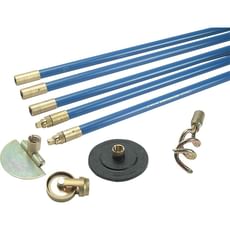
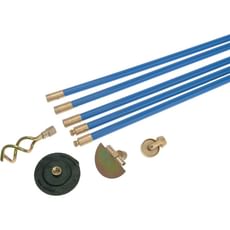
Drain rod sets are essential tools for clearing blocked drains, pipes, and sewage systems in domestic, commercial, and industrial settings. These versatile cleaning systems consist of multiple flexible rods with threaded connections that screw together to form an extendable pole capable of reaching deep into drainage systems to dislodge stubborn blockages. Common obstructions including compacted debris, grease build-up, tree root intrusion, and foreign objects can be effectively cleared using the various attachments supplied with most sets, such as plungers, scrapers, worm screws, and brushes. The flexible polypropylene construction allows rods to navigate bends and junctions in underground drainage networks whilst maintaining sufficient rigidity to push through blockages.
Professional-grade drain rod sets available from Tooled-Up.com include equipment from leading manufacturers such as Bailey, Draper, and Faithfull, offering solutions for every application from basic domestic maintenance through to demanding commercial drainage work. The range encompasses both universal and lock-fast connection systems, with configurations spanning compact 2-piece starter sets ideal for occasional domestic use through to comprehensive 13-piece professional kits designed for regular drainage clearance work. Most sets feature the industry-standard 3/4" diameter threading, ensuring compatibility across different manufacturers and allowing tradespeople to mix components from various sources when building custom configurations.
Investing in a quality drain rod set represents excellent value for tradespeople and property owners alike, potentially saving hundreds of pounds compared to repeated callouts for professional drainage contractors. With proper maintenance, cleaning, and storage away from direct sunlight, a well-manufactured set of drain rods will deliver reliable performance for many years, making them an essential addition to any plumber's toolkit, property maintenance inventory, or facilities management equipment store. The robust polypropylene construction provides the ideal balance of flexibility and strength required for effective drain clearance whilst offering chemical resistance against sewage and drain cleaning products.
Jargon Buster
- Lock-Fast Connection: A secure threaded coupling system incorporating a secondary locking mechanism that prevents rods from accidentally unscrewing whilst being rotated during use. This system proves particularly valuable when clearing stubborn blockages requiring significant twisting force, offering superior reliability compared to universal connections and reducing the risk of rods becoming detached within drainage systems.
- Universal Connection: The industry-standard 3/4" threaded connection system used across most drain rod sets, ensuring compatibility between rods and attachments from different manufacturers. Whilst widely compatible and suitable for occasional domestic use, these connections require careful clockwise-only rotation technique to prevent disconnection during operation.
- Worm Screw Attachment: A corkscrew-shaped head designed to hook onto and extract solid blockages such as rags, tree roots, compacted debris, or foreign objects from drainage systems. Double worm variants feature two corkscrew heads for increased grip and pulling power when removing particularly stubborn obstructions.
- Plunger Head: A rubber or synthetic disc attachment that creates hydraulic pressure waves to dislodge blockages through pushing and pulling motions. Particularly effective for clearing soft obstructions including grease accumulation, organic matter, and semi-solid waste materials. Available in various diameters (typically 75mm, 100mm, and 150mm) to suit different pipe sizes.
- Drop Scraper: A hinged blade attachment that scrapes away built-up deposits, scale, and residue from the internal walls of drainage pipes as the rods are pushed through and rotated, helping to restore full flow capacity and prevent future blockages from recurring quickly.
- Bailey Blue Rods®: Premium polypropylene drain rods manufactured by Bailey, widely recognised throughout the UK drainage industry for their distinctive blue colour, exceptional flexibility, and durability. These professional-grade rods are often supplied with brass fittings for enhanced longevity and are considered the benchmark for quality in the drainage maintenance sector.
Who Uses Drain Rod Sets?
- Drainage Engineers and Specialists: Professional contractors specialising in drainage system maintenance, repair, and clearance across commercial and domestic properties
- Plumbers and Heating Engineers: Tradespeople who regularly encounter blocked drains during installation, servicing, and emergency maintenance work
- Property Maintenance Contractors: Building maintenance professionals responsible for keeping drainage systems operational in commercial premises, retail units, and office buildings
- Facilities Managers: Those overseeing maintenance of schools, hospitals, care homes, offices, and other institutional buildings where drainage issues require prompt resolution to maintain operational continuity
- Landlords and Property Managers: Individuals managing rental properties who need to address drainage problems quickly and cost-effectively without waiting for contractors
- Local Authority Maintenance Teams: Council workers maintaining public drainage infrastructure, parks, community facilities, and municipal buildings
- Site Managers and Construction Supervisors: Those overseeing building sites where temporary or newly installed drainage systems may require clearing of construction debris
- Agricultural Workers: Farm maintenance personnel dealing with drainage systems in rural settings, agricultural buildings, and livestock facilities
- DIY Enthusiasts and Homeowners: Property owners who prefer to tackle routine drainage maintenance themselves rather than incurring professional callout charges
How to Choose the Right Drain Rod Sets
Number of Rods: Consider the depth and length of drains you'll typically need to clear. A 2-piece set provides approximately 1.8-2.4 metres of reach, suitable for basic domestic applications and short drain runs between inspection chambers. Four-piece sets offer around 3-4 metres, whilst 10-13 piece professional sets provide 6-8 metres or more for deeper drainage systems, longer runs, and commercial applications. External manholes can be several metres from the actual blockage point, so measure your property's drainage layout before purchasing to ensure adequate reach.
Connection Type: Lock-fast systems provide superior security by preventing rods from unscrewing during use through a secondary locking mechanism, which proves particularly important when applying significant rotational force to stubborn blockages. Universal connections offer wider compatibility with existing equipment and replacement parts from various manufacturers, but require careful clockwise-only rotation technique to prevent disconnection. Professional drainage engineers typically prefer lock-fast systems for reliability and safety, whilst universal connections suit occasional domestic use where compatibility with older equipment may be beneficial.
Attachments Included: Basic sets typically include a standard plunger and possibly a worm screw, whilst comprehensive kits offer multiple attachment types including double worms, drop scrapers, various plunger sizes, and specialist brushes. Consider the blockages you'll encounter most frequently—grease build-up and organic matter respond well to plungers, whilst tree roots and solid objects require worm screws. The selection at Tooled-Up includes sets with varying attachment combinations to suit different applications, from simple domestic maintenance to comprehensive commercial drainage clearance.
Material Quality: Professional-grade polypropylene rods offer excellent flexibility whilst maintaining strength and chemical resistance against sewage and drain cleaning chemicals. Check that rods are UV-stabilised if they'll be stored outdoors or in vans exposed to sunlight, as UV degradation can weaken materials over time. Quality brass fittings on threaded connections ensure longevity under frequent use, whilst reinforced plastic alternatives offer good durability at lower price points for occasional use. Bailey's Blue Rods with brass fittings represent the professional standard, whilst Draper and Faithfull offer dependable options at various price points.
Brand Reputation and Support: Established brands typically provide better replacement part availability and customer support when components wear or require updating. Bailey drain rods enjoy widespread recognition across the UK drainage industry for reliability, whilst Draper and Faithfull also offer dependable options backed by comprehensive warranties and readily available replacement components.
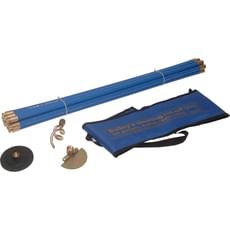
Storage and Portability: Some sets include storage bags or carry cases, which protect rods from damage, prevent contamination of vehicles and workspaces, and make transportation between job sites considerably easier—particularly valuable for mobile tradespeople. Proper storage also prevents UV degradation and prolongs equipment life. Professional sets with heavy-duty waterproof carry bags and adjustable shoulder straps offer excellent portability for those working from vans or covering multiple sites daily.
Popular Accessories
- Additional Drain Rod Extensions: Extra rods to increase overall reach for particularly deep drainage runs or properties with long distances between inspection chambers and main sewers
- Replacement Plunger Heads: Spare rubber plungers in various diameters (75mm, 100mm, 150mm) to replace worn attachments and tackle different pipe sizes effectively
- Specialist Cleaning Attachments: Including circular wire brushes for scrubbing pipe walls, disc cutters for root removal, and heavy-duty scrapers for consolidated deposits
- Drain Inspection Mirrors: Angled mirrors with extending handles for visual inspection of drain interiors, manholes, and pipe junctions before and after clearance work
- Manhole Cover Lifters and Keys: Essential tools for safely removing heavy cast iron manhole and inspection chamber covers without risk of back injury or finger traps
- Heavy-Duty Protective Gloves: Chemical-resistant rubber or nitrile gloves rated for sewage contact, extending to elbow length for maximum protection
- Drainage Cleaning Chemicals: Enzymatic drain maintainers and caustic cleaners for keeping pipes clear between rodding sessions and breaking down organic build-up
- High-Visibility Clothing and PPE: Essential safety wear when working on roadside drainage systems, commercial sites, or public areas requiring traffic management
- Cleaning and Disinfection Supplies: Heavy-duty disinfectants, antibacterial solutions, stiff brushes, and buckets for maintaining hygiene and equipment condition after use
- Storage Solutions: Waterproof bags, wall-mounted racks, and vehicle storage systems for keeping equipment organised, clean, and readily accessible
Safety Information
Working with drainage systems presents several health and safety considerations that must be addressed appropriately. Always wear suitable personal protective equipment including heavy-duty waterproof gloves (ideally elbow-length), safety glasses or goggles to prevent splash contamination, and sturdy waterproof footwear when handling drain rods or working near open drainage systems. Sewage and wastewater contain harmful bacteria including E. coli, Salmonella, Leptospirosis (Weil's disease), and other pathogens, so never allow direct skin contact with drain contents or contaminated equipment.
Before commencing work, ensure adequate ventilation when working near manholes or in confined spaces, as dangerous gases including methane, hydrogen sulphide, and carbon dioxide can accumulate in drainage systems. The HSE provides specific guidance on confined space working and gas monitoring that should be consulted for commercial applications. When working on roadside drains, public highways, or commercial premises, implement proper traffic management, use appropriate signage, and wear high-visibility clothing to protect yourself and members of the public.
Exercise care not to over-extend drain rods or apply excessive force, as this can cause them to buckle, snap, or spring back, potentially causing injury. Always rotate rods clockwise to prevent unscrewing of connections, particularly crucial with universal thread systems. Inspect connections regularly during use to ensure they remain tight. After completing drainage work, thoroughly clean and disinfect all equipment before storage using appropriate antibacterial solutions compliant with COSHH regulations, and wash hands and any exposed skin with antibacterial soap. Store drain rods in a secure, dry location away from direct sunlight to prevent material degradation and maintain flexibility.
Frequently Asked Questions
How many drain rods do I need for typical residential drainage work?
For most domestic applications, a 10-13 piece drain rod set providing 6-8 metres of reach proves sufficient, covering the typical distance from inspection chambers to blockage points in standard residential drainage layouts. However, properties with longer drain runs, multiple inspection chambers, or connections to distant main sewers may benefit from additional extension rods. It's advisable to measure the distances between your manhole covers and the main sewer connection to determine your specific requirements before purchasing. A 2-4 piece set may suffice for terraced houses with short drainage runs, whilst detached properties with gardens often require longer configurations.
What's the practical difference between lock-fast and universal drain rod connections?
Universal connections use standard 3/4" threads compatible across most manufacturers but can unscrew if rotated anti-clockwise during use, requiring careful technique and periodic checking during operation. Lock-fast systems feature a secondary locking mechanism that prevents accidental disconnection when applying rotational force, making them significantly safer and more reliable for professional use and stubborn blockages. Whilst lock-fast systems offer superior performance and reduce the risk of losing rods within drainage systems, they may have limited compatibility with older equipment using purely universal threading, though most modern professional sets accommodate both systems.
Can drain rods clear all types of blockages effectively?
Drain rods prove highly effective for most common blockages including compacted organic matter, grease accumulation, silt build-up, and moderate tree root intrusion. However, they're unsuitable for collapsed pipes, severe structural damage, heavily consolidated concrete or cement blockages, or obstructions in very small diameter pipes (under 75mm). For blockages in sinks, basins, toilets, or waste traps themselves, a plunger or hand-operated drain snake provides more appropriate solutions. If drain rods don't clear a blockage after reasonable attempts, the problem likely requires professional CCTV inspection and mechanical cutting or high-pressure jetting equipment.
How do I prevent drain rods from becoming unscrewed whilst working?
Always rotate drain rods in a clockwise direction only, as this continuously tightens the threaded connections during use. With universal connections, periodically withdraw the rods slightly and check that all joints remain tight during operation, particularly when applying significant pushing or twisting force. Lock-fast systems largely eliminate this concern through their integrated locking mechanism. Some experienced drainage professionals apply plumber's PTFE tape to threads for additional security with universal connections, though this isn't usually necessary with quality equipment used correctly. Avoid forcing rods or applying excessive torque, which can stress connections and lead to separation.
What's the proper procedure for cleaning and maintaining drain rod sets?
After each use, remove all visible debris from rods and attachments using a stiff brush under running water. Wash thoroughly with hot water and a suitable disinfectant or antibacterial detergent compliant with COSHH regulations, paying particular attention to threaded connections where waste matter accumulates. Rinse comprehensively and allow to air dry completely before storage to prevent bacterial growth and material degradation. Inspect threads and connections regularly for wear, damage, or stress fractures, replacing any compromised components immediately. Store rods lying flat or hanging vertically in a dry, well-ventilated location away from direct sunlight to maintain their flexibility, strength, and UV resistance, extending their operational lifespan considerably. Professional drainage engineers often keep dedicated cleaning equipment and separate storage containers to prevent cross-contamination with other tools.