

Drywall T Squares
Pay in 3 interest-free payments on purchases from £30-2000 with  . Learn more.
 Loading...
End of content
Error - No more pages to load
About Drywall T Squares
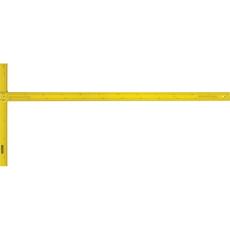
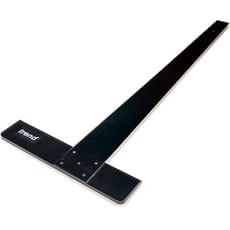
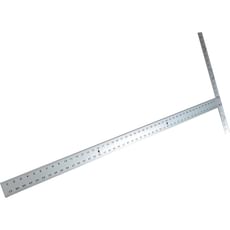
Drywall T squares are specialist measuring and marking tools engineered specifically for cutting and installing plasterboard with professional accuracy and efficiency. These purpose-built squares feature a distinctive T-shaped design, comprising a long blade—typically 1200mm or 1220mm in length—that spans the full width of standard UK plasterboard sheets, paired with a perpendicular fence or head that hooks securely over the sheet's edge to guarantee perfectly square cuts every time. Unlike conventional carpenter's squares or framing squares, drywall T squares are optimised for the unique requirements of plasterboarding work, where speed, precision, and ease of handling large sheets are absolutely critical to productivity and material economy.
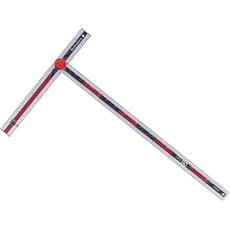
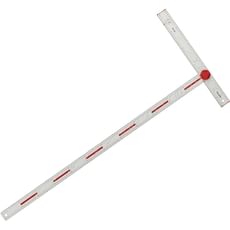
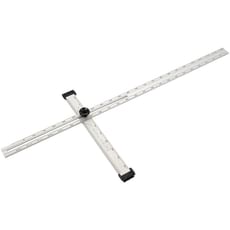
Modern drywall T squares are available in both fixed and adjustable configurations. Fixed-length models offer simplicity and robustness for standard 90-degree cuts, whilst adjustable versions—such as those from Hultafors and Draper—can be set to various angles including 22.5°, 45°, and 67.5° for cutting mitres, bevels, and angled sections required for complex installations. Many feature graduated metric markings along the blade for rapid measuring without additional tools, and the best examples are constructed from lightweight yet rigid anodised aluminium that resists warping, corrosion, and the demanding conditions of construction sites. Clear, deeply engraved measurement scales remain legible even in dusty environments, ensuring consistent accuracy throughout the tool's lifespan.
The selection at Tooled-Up.com includes drywall T squares from respected manufacturers including Hultafors, Draper, Marshalltown, Stanley, and Trend. Whether you're a professional plasterer managing multiple site installations daily or a DIY enthusiast undertaking a home renovation project, investing in a quality drywall T square will substantially improve cutting accuracy, reduce material waste, and accelerate your workflow, making it an indispensable component of any drywalling toolkit.
Jargon Buster
- Fence/Head: The perpendicular section of the T square that hooks over the edge of the plasterboard sheet, providing a stable reference point and ensuring the blade runs perfectly square to the sheet edge for consistent, accurate cuts.
- Blade: The long arm of the T square extending across the plasterboard width, typically 1200-1220mm in length to match standard UK sheet dimensions. Functions as both a measuring scale and straight edge for marking cutting lines.
- Adjustable Square: A T square with a movable head or blade that can be locked at various angles, allowing for mitred corners, bevelled edges, and work with non-standard sheet sizes. Common preset angles include 22.5°, 45°, 67.5°, and 90°.
- Graduated Markings: Measurement increments engraved or printed along the blade, usually in millimetres and centimetres, enabling quick measuring and marking without requiring separate tape measures.
- Anodised Aluminium: An electrochemically treated aluminium finish that provides enhanced durability, corrosion resistance, and ensures measurement markings remain legible throughout years of site use.
- Scoring Guide: The straight edge provided by the blade that guides your utility knife when scoring plasterboard. A clean, straight score allows the board to snap cleanly along the marked line for professional-quality cuts.
Who Uses Drywall T Squares?
Drywall T squares are essential tools for a diverse range of construction and renovation professionals:
- Plasterers and Drylining Specialists: Professional tradespeople who install plasterboard systems daily and require fast, accurate cutting to maintain productivity and profitability on site installations.
- Builders and General Contractors: Multi-trade professionals who regularly work with plasterboard as part of new builds, extensions, loft conversions, and renovation projects.
- Shopfitters and Partition Installers: Specialists who create internal walls, divisions, and stud partitions in commercial premises, retail spaces, and office environments.
- Ceiling Fixers: Tradespeople focused on suspended ceiling systems and plasterboard ceiling installations where precise cutting is critical for professional finishes.
- Maintenance Contractors: Property maintenance professionals carrying out repair and refurbishment work involving plasterboard replacement, patch repairs, and boarding.
- DIY Enthusiasts: Homeowners undertaking renovation projects, room divisions, or stud wall construction who want professional-quality results without hiring contractors.
- Carpenters and Joiners: Woodworking tradespeople who incorporate plasterboard installation as part of their broader construction and fit-out work.
How to Choose the Right Drywall T Squares
Length and Size: Most drywall T squares are manufactured in 1200mm or 1220mm lengths to match standard UK plasterboard widths (typically 1200mm). Ensure the blade length corresponds to the sheets you'll be cutting most frequently. This length allows you to mark straight across the full width in one pass, ensuring accuracy and efficiency. Some adjustable models offer additional versatility for working with off-cuts or non-standard sheet sizes.
Fixed vs Adjustable Design: Fixed T squares are simpler, more robust, and ideal if you primarily make straight 90-degree cuts. They typically offer better value for money and have fewer components that could work loose. Adjustable models from manufacturers like Hultafors and Draper allow angle adjustments for cutting bevels and mitres, making them more versatile but slightly more complex and typically commanding a higher price point. Consider whether the additional functionality justifies the investment based on your typical applications.
Build Quality and Materials: Premium models feature thick-gauge anodised aluminium construction that resists bending under pressure and ensures longevity even with daily professional use. The fence should be robustly constructed with secure fixings, as any play or flex will compromise cutting accuracy. Look for deeply engraved or printed measurements rather than stickers that can wear off with regular use and exposure to site conditions.
Measurement Systems and Readability: Check that graduations are clear and easy to read in various lighting conditions. Metric measurements should be prominent and precise, with millimetre increments for accurate marking. Some squares include both metric and imperial markings, though metric is standard for UK construction work. High-contrast markings against the aluminium background improve visibility on dusty job sites.
Brand Reputation: Established brands like Marshalltown, Stanley, Hultafors, and Trend have proven track records in professional tool manufacturing and typically offer better warranty support. Budget options may save money initially but can lack the precision, rigidity, and durability required for frequent professional use.
Professional vs DIY Applications: If you're a professional plasterer using the tool daily, invest in a robust model designed for constant site work—the improved accuracy and durability will pay for themselves through reduced material waste and faster working. DIY users with occasional needs can consider mid-range options that still deliver accuracy without the premium price tag associated with trade-grade tools.
Popular Accessories
- Utility Knives and Blades: Heavy-duty retractable knives with sharp, replaceable blades are essential for scoring plasterboard along your T square's edge. Look for models with blade storage compartments and ergonomic grips for comfortable extended use.
- Plasterboard Saws: Jab saws, keyhole saws, and panel saws for cutting outlets, switch boxes, and internal openings that the T square helps you mark accurately before cutting.
- Marking Pencils and Chalk Lines: Carpenter's pencils for marking cutting lines on plasterboard surfaces, and chalk lines for longer measurements across multiple sheets or for marking fixing positions.
- Spirit Levels: Essential for checking plasterboard alignment during installation, often used alongside T squares for ensuring both accurate cuts and proper fixing to stud frameworks.
- Plasterboard Lifts and Props: Mechanical aids and support systems that hold sheets in position whilst you mark and fix them, particularly useful for ceiling work and single-handed installations.
- Measuring Tapes: Quality metric tape measures for initial room measurements and sheet planning before using the T square's graduated markings for final marking and cutting.
- Tool Bags and Storage: Protective storage solutions to keep your T square safe during transport between jobs and prevent damage to the blade edges and measurement markings.
Safety Information
Sharp Blade Awareness: When using utility knives against your T square, always cut away from your body and keep fingers well clear of the cutting path. Ensure the blade extends only as far as necessary to score the plasterboard—typically 10-15mm is sufficient. Retract blades immediately after use and replace blunt blades promptly, as excessive pressure on dull blades increases the risk of slipping.
Manual Handling: Both T squares and plasterboard sheets can be awkward to manoeuvre, particularly in confined spaces. Follow proper manual handling techniques, including bending from the knees and keeping loads close to your body. Seek assistance when working with full sheets to prevent back strain, shoulder injuries, or dropped materials that could cause foot injuries.
Work Area Safety: Ensure adequate lighting when marking and cutting plasterboard, as poor visibility increases the risk of inaccurate cuts and knife-related injuries. Keep your work area clear of trip hazards, especially when handling long T squares on busy sites where other trades may be working simultaneously.
PPE Considerations: Wear appropriate dust masks or respirators when cutting plasterboard to avoid inhaling gypsum dust, which can cause respiratory irritation with prolonged exposure. Consider safety glasses or goggles to protect eyes from particles and dust. Follow HSE guidance on workplace dust exposure limits and ensure adequate ventilation when working indoors.
Tool Condition: Regularly inspect your T square for damage, particularly checking that the fence remains securely attached and the blade hasn't bent, twisted, or suffered edge damage. A compromised square will produce inaccurate cuts leading to material waste and potentially dangerous gaps in fire-rated partition systems. Store the tool properly to maintain accuracy throughout its service life.
Frequently Asked Questions
What's the difference between a drywall T square and a regular framing square?
A drywall T square is specifically designed for plasterboard work, featuring a long blade (typically 1200mm) that spans the full width of standard UK sheets and a fence that hooks over the edge for consistent 90-degree cuts. Framing squares are much smaller—usually 600mm or less—designed for general carpentry and timber framing work, and simply don't provide the reach or efficiency required when working with full plasterboard sheets. The T square's design allows you to mark and cut in a single pass, whereas a framing square would require multiple repositions.
Can I use a drywall T square for cutting materials other than plasterboard?
Yes, drywall T squares work excellently as straight edges for marking and cutting various sheet materials including insulation boards, thin plywood, MDF, and foam boards. However, they're dimensionally optimised for standard 1200mm plasterboard widths, so consider whether the length suits your other materials before relying on them as a multi-purpose tool. The lightweight aluminium construction makes them less suitable as cutting guides for power saws compared to heavier steel straight edges.
How do I maintain my drywall T square to ensure long-term accuracy?
Keep your T square clean and dry, wiping away plaster dust, adhesive residue, and debris after each use with a dry cloth. Store it flat or hung vertically to prevent bending—never lean it at angles or store it with weight on top. Avoid using it as a pry bar, hammer guide, or standing on it, as these misuses will bend the blade and compromise accuracy. Periodically check that all fixings are tight, particularly on adjustable models where the locking mechanisms can work loose with vibration during transport.
Are adjustable drywall T squares worth the extra cost?
If you frequently need to cut angles other than 90 degrees—such as for mitred internal corners, sloped ceilings, dormer windows, or architectural features—an adjustable model like those from Hultafors or Draper offers excellent value through increased versatility. For standard partition work with primarily straight cuts and right angles, a fixed T square is perfectly adequate, more economical, and arguably more robust due to fewer moving parts. Assess your typical work requirements before investing in the adjustable functionality.
What length drywall T square do I need for standard UK plasterboard?
Standard UK plasterboard sheets are 1200mm wide (with 2400mm or 2700mm heights being most common), so a T square with a 1200mm or 1220mm blade is ideal for British construction work. This length allows you to mark straight across the full width of the sheet in one pass, ensuring accuracy and maximising efficiency. Shorter models are available for specific applications but require repositioning for full-width cuts, which increases the risk of inaccuracies where the marks meet.