

Electrical Socket Testers

Pay in 3 interest-free payments on purchases from £20-£3000 with  . Learn more.
 Loading...
End of content
Error - No more pages to load
About Electrical Socket Testers
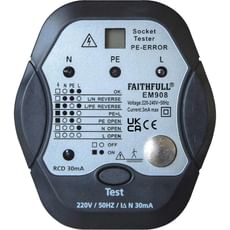
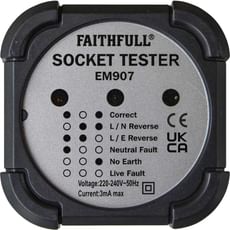
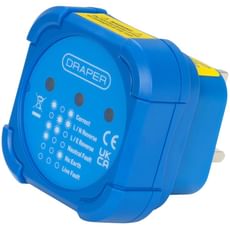
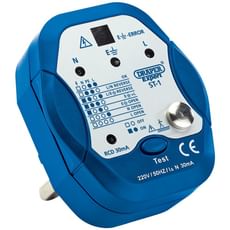
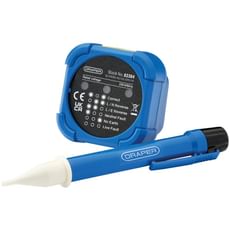
Electrical socket testers are indispensable diagnostic tools that allow electricians, maintenance professionals, and safety-conscious property owners to quickly verify the correct wiring and safety of UK mains electrical sockets. These compact, plug-in devices provide instant visual feedback on socket polarity, earthing integrity, and potential wiring faults without requiring complex multimeters or invasive testing procedures. By simply inserting the tester into a standard 13A socket, users receive immediate indication of common electrical faults through illuminated LED patterns, making them essential for routine safety checks, fault diagnosis, and compliance verification.
The selection at Tooled-Up.com includes basic polarity testers for straightforward socket verification, advanced RCD testers that check protective device operation, and comprehensive socket testing kits from trusted brands including Draper and Faithfull. A properly functioning electrical socket is critical for both the safe operation of appliances and protection against electric shock. UK domestic and commercial installations use 240v AC supplies with 13A BS1363 plugs and sockets, where correct wiring configuration is paramount. Socket testers work by checking the relationship between live, neutral, and earth connections, highlighting common faults such as reversed polarity, missing earth, or open neutral conditions.
Whether conducting periodic electrical safety inspections, fault-finding on site, or verifying socket integrity before connecting expensive equipment, having a reliable socket tester provides professional assurance and peace of mind. These tools are invaluable for pre-rental property checks, PAT testing workflows, campsite electrical hook-up verification, and ensuring compliance with BS7671 wiring regulations across domestic, commercial, and industrial environments. Many modern testers also incorporate non-contact voltage detection functionality, offering additional safety during diagnostic work.
Jargon Buster
- Polarity – The correct orientation of live and neutral conductors within an electrical circuit. Reversed polarity occurs when these connections are swapped, creating a potential safety hazard even when appliances appear to function normally.
- RCD (Residual Current Device) – A life-saving protective device that automatically disconnects the electrical supply when it detects an imbalance between live and neutral currents, indicating current leakage to earth. Socket testers with RCD testing capability can verify proper operation and trip times.
- Earth Continuity – The presence of a proper connection to the earthing system, providing a low-resistance path for fault currents to safely discharge, preventing electric shock and ensuring protective devices operate correctly.
- Non-Contact Voltage Detector – A safety tool that identifies the presence of live electrical current without requiring physical contact with conductors. These devices detect the electromagnetic field surrounding live wires and alert users through visual and audible indicators.
- Open Neutral – A wiring fault where the neutral connection is broken or absent, which can cause dangerous voltage fluctuations and damage to connected equipment.
- BS7671 – The UK standard for electrical installation safety, also known as the IET Wiring Regulations, which specifies requirements for the design, installation, inspection and testing of electrical installations.
Who Uses Electrical Socket Testers?
- Qualified Electricians – carrying out installation testing, fault diagnosis, and periodic inspection and testing in accordance with BS7671
- Electrical Contractors – verifying socket installations on new builds, extensions, and rewiring projects
- Maintenance Engineers – conducting routine safety checks across commercial and industrial premises
- PAT Testing Technicians – ensuring socket integrity before testing portable appliances
- Landlords and Letting Agents – verifying electrical safety in rental properties to meet legal obligations
- Facilities Managers – maintaining electrical safety standards in offices, schools, hospitals and public buildings
- Health and Safety Officers – conducting workplace electrical safety audits and risk assessments
- Competent DIY Enthusiasts – checking socket safety in their own homes before undertaking electrical work or identifying faults
- Caravan and Motorhome Owners – testing campsite electrical hook-ups before connecting their vehicle
How to Choose the Right Electrical Socket Testers
Testing Requirements: Determine what level of testing you need. Basic polarity testers provide simple pass/fail indication for common wiring faults, whilst more sophisticated models include RCD testing functionality to verify the operation and trip time of protective devices. Consider whether you need additional features such as non-contact voltage detection for added safety during diagnostic work.
Indication Method: Most socket testers use illuminated LED displays with different light combinations indicating specific fault conditions. Ensure the model you choose has clear, easy-to-interpret indicators, ideally with a reference guide printed on the device itself. Some advanced testers include LCD displays showing numerical values for RCD trip times and earth loop impedance measurements.
Compliance and Standards: For professional use, ensure your socket tester meets relevant British and European standards such as BS EN 61010. This is particularly important if you're conducting tests for certification purposes or as part of regulatory compliance work required under BS7671 or the Electricity at Work Regulations 1989.
Build Quality and Durability: Socket testers must withstand regular use in demanding environments. Look for robust plastic housings that can survive drops from working height, and check that the device has appropriate CAT (category) ratings indicating the voltage levels it's designed to safely handle. Trusted brands like Draper and Faithfull offer reliable construction suitable for professional tradespeople.
Portability and Convenience: Compact socket testers that fit easily into tool pouches or bags are ideal for electricians working across multiple sites. Some kits include both socket testers and non-contact voltage detectors in protective cases, providing comprehensive diagnostic capability in one portable package.
Budget Considerations: Basic polarity testers represent excellent value for occasional users and DIY enthusiasts, whilst professional electricians may require the additional functionality of RCD testers despite the higher investment. Consider how frequently you'll use the device and whether certification-level testing is required for your applications.
Popular Accessories
- Multimeters – for comprehensive electrical testing beyond basic socket verification
- Voltage Testers and Probes – to complement socket testing with detailed circuit analysis
- Insulation Resistance Testers – for complete electrical installation testing workflows
- Earth Loop Impedance Testers – for professional certification and compliance testing
- Tool Pouches and Bags – to safely carry and protect your testing equipment
- Proving Units – to verify that voltage testers are functioning correctly before use
- Electrical Testing Kits – comprehensive sets containing multiple testing devices for professional electricians
- Cable Testers – for identifying wiring faults in network and telephone installations
Safety Information
Working with mains electricity carries inherent risks and requires appropriate competence, training, and adherence to safety procedures. Socket testers should only be used by individuals who understand electrical safety principles and UK wiring practices. Always ensure the tester itself is in good condition with no damage to the plug pins or casing before use, as compromised equipment can create serious hazards.
Before plugging a socket tester into any outlet, visually inspect the socket for obvious damage, scorching, or loose fittings. Never use a socket tester on circuits where water ingress or dampness is present unless the device is specifically rated for such conditions. When testing reveals socket faults, do not continue using that outlet – isolate the circuit and arrange for repairs by a qualified electrician.
Socket testers indicate common wiring faults but are not substitutes for comprehensive electrical installation testing required under BS7671. Professional electricians conducting certification work must use calibrated test equipment appropriate to the task. Always follow HSE guidance and the Electricity at Work Regulations 1989, which require electrical work to be carried out safely and by competent persons.
When using RCD testing functions, be aware that the tester will deliberately trip the protective device. Ensure this won't affect critical equipment or processes, and always inform building occupants before conducting RCD tests. Non-contact voltage detectors should always be proven on a known live source before and after use to verify correct operation.
Frequently Asked Questions
Q: Can I use a socket tester to verify all electrical safety aspects of my property?
A: Socket testers are valuable diagnostic tools but only check specific aspects of socket wiring such as polarity, earth presence, and basic RCD operation. Comprehensive electrical safety certification requires additional tests including insulation resistance, earth loop impedance, and circuit verification that require professional test equipment and qualified electricians.
Q: What do the different light combinations on my socket tester mean?
A: LED patterns vary by manufacturer, but typically a specific combination of illuminated lights indicates correct wiring, whilst different patterns signal faults such as reversed polarity, missing earth, or open neutral. Most testers include a reference guide on the device showing what each light combination means. Consult your specific model's instructions for accurate interpretation.
Q: How often should I test the electrical sockets in my home or workplace?
A: For domestic properties, periodic testing every 10 years is recommended, or when purchasing a property, after alterations, or if problems are suspected. Rental properties require electrical installation condition reports every five years. Commercial and industrial premises typically require testing every one to five years depending on the environment and usage. Regular socket testing between formal inspections helps identify developing faults early.
Q: Can socket testers damage my electrical installation?
A: Quality socket testers available from Tooled-Up are designed to safely test electrical installations without causing damage. However, on circuits with pre-existing serious faults, any testing activity could potentially trigger protective devices. RCD test functions deliberately cause the RCD to trip as part of verifying correct operation, so be prepared for temporary loss of power on that circuit.
Q: Do I need to be a qualified electrician to use a socket tester?
A: Basic socket testers can be used by competent individuals to check for obvious wiring faults in their own properties, helping identify issues that require professional attention. However, any remedial work must be carried out by a qualified electrician in compliance with Part P Building Regulations. Professional testing for certification purposes must always be conducted by appropriately qualified and registered electricians using calibrated test equipment.