

Engineers Scrapers
Pay in 3 interest-free payments on purchases from £30-2000 with  . Learn more.
 Loading...
End of content
Error - No more pages to load
About Engineers Scrapers
Engineers scrapers are precision hand tools designed for the meticulous removal of material from metal surfaces, eliminating burrs, high spots, and irregularities with exceptional control. These specialised implements are indispensable for achieving perfectly flat surfaces on engineering components, removing raised areas from machine beds, and deburring metal parts after machining operations. Unlike general-purpose scrapers intended for paint removal or woodwork, engineers scrapers feature hardened and tempered blades with precisely ground edges capable of tackling both ferrous and non-ferrous metals with the accuracy demanded by precision engineering applications.
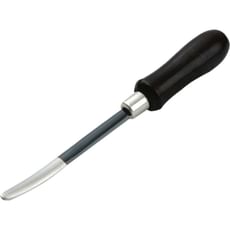
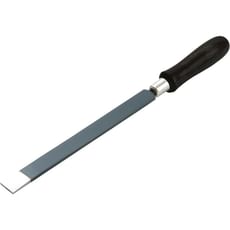
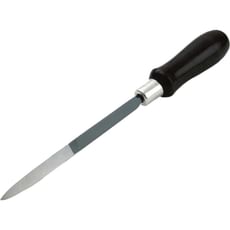
The category encompasses three distinct blade profiles, each optimised for different scraping tasks and surface geometries. Flat hand scrapers excel at working on broad, flat surfaces and are ideal for precision surface finishing and general deburring work. Half round scrapers combine a flat edge with a curved profile, making them remarkably versatile for both flat surfaces and concave areas where other profiles struggle. Triangular scrapers feature three cutting edges, providing excellent access to corners, angles, and tight recesses that other blade geometries simply cannot reach. The selection at Tooled-Up.com features engineers scrapers from Faithfull, manufactured to exacting standards with comfortable wooden handles that allow for extended use without hand fatigue.
These hand tools represent an essential investment for anyone involved in precision engineering, machine maintenance, or metal fabrication. When powered machinery cannot access confined spaces, or where delicate, controlled material removal is required, engineers scrapers provide unmatched precision. The hardened steel construction ensures excellent edge retention even when working with tough materials, whilst the ergonomic design allows craftsmen to apply consistent pressure for uniform results across the workpiece. Despite advances in CNC machining, hand scraping remains a valued skill in tool rooms and precision workshops throughout the UK, particularly for creating bearing surfaces and achieving the specialised finishes that only hand work can provide.
Jargon Buster
- Scraping
- A precision machining technique using a hardened blade to remove tiny amounts of material, creating an exceptionally flat and true surface. This hand process achieves tolerances that sometimes exceed machine finishing, particularly for bearing surfaces.
- Deburring
- The removal of unwanted material ridges (burrs) left on metal edges after cutting, drilling, or machining operations. Proper deburring prevents injury, ensures parts fit together correctly, and improves the professional appearance of fabricated components.
- High Spots
- Raised areas on a machined surface that prevent proper mating between components. Engineers scrapers remove these irregularities to create perfectly flat bearing surfaces, typically identified using engineers blue marking compound.
- Hardened and Tempered Blade
- A heat-treatment process that hardens steel for edge retention whilst tempering reduces brittleness, creating a blade that holds its edge during demanding use but resists chipping or breaking when encountering hard materials.
- Bearing Surface
- A carefully scraped metal surface where moving parts make contact. Proper hand scraping creates microscopic oil pockets that improve lubrication and extend component life, a finish impossible to achieve with conventional machining alone.
- Tang
- The portion of the blade that extends into and is secured within the handle. Quality engineers scrapers feature properly fixed tangs that won't loosen with use, ensuring safe operation and precise control.
Who Uses Engineers Scrapers?
Engineers scrapers are indispensable tools for a wide range of skilled professionals and metalworking specialists:
- Mechanical Engineers - for precision fitting and surface finishing of components to exacting tolerances
- Tool and Die Makers - essential for creating accurate mating surfaces on moulds, dies, and press tooling
- Machine Tool Fitters - for scraping machine beds, slideways, and bearing surfaces to restore or maintain accuracy
- Maintenance Engineers - repairing and refurbishing industrial machinery to original specifications
- Metal Fabricators - removing burrs and finishing edges on fabricated components for professional results
- Millwrights - for fitting and aligning heavy machinery installations where precision is paramount
- Precision Instrument Makers - achieving the exacting tolerances required for measuring and testing equipment
- Workshop Technicians - general deburring and material removal tasks across various engineering applications
- Model Engineers and Hobbyists - for detailed work on scale engineering projects requiring professional-quality finishing
- Aerospace Engineers - working on components where surface finish and precision are safety-critical
How to Choose the Right Engineers Scrapers
Blade Profile: Consider the geometry of the surfaces you'll be working on most frequently. Flat scrapers suit large, open surfaces and general deburring applications. Half round profiles offer versatility for both flat and curved work, making them excellent all-rounders. Triangular scrapers excel at corners, angles, and restricted access areas where other profiles simply won't fit. Many professionals maintain all three profiles in their toolkit to ensure they have the appropriate tool for every situation encountered in precision metalwork.
Blade Material and Hardness: Quality engineers scrapers feature hardened and tempered high-carbon steel blades that provide excellent edge retention when working with both soft and hardened metals. Tooled-Up stocks the Faithfull range, which provides reliable performance and longevity. Ensure blades are properly heat-treated throughout rather than simply surface-hardened, as this guarantees consistent performance and the ability to resharpen multiple times without losing temper.
Handle Design: Comfortable, ergonomic handles are crucial for precision work that may extend over lengthy periods. The Faithfull engineers scrapers feature shaped round wooden handles that provide secure grip without causing hand fatigue. The handle should be securely fixed to the blade tang with no movement during use, as any looseness compromises control and safety.
Overall Length and Balance: The tool should feel balanced in your hand, allowing controlled strokes without excessive wrist strain. Standard engineers scrapers typically range from 200mm to 250mm in total length, providing good reach whilst maintaining manoeuvrability in confined spaces typical of machine tool work and precision fitting applications.
Build Quality: Examine the blade-to-handle junction for solid construction. Quality tools feature properly secured tangs that won't loosen with extended use. The blade edges should be cleanly ground without nicks or irregularities that would mar the workpiece. Faithfull engineers scrapers represent excellent value whilst maintaining the quality standards demanded by professional metalworkers throughout the UK.
Popular Accessories
- Engineers Blue (Marking Compound) - essential for identifying high spots on surfaces during precision scraping work and surface plate testing
- Sharpening Stones and Files - for maintaining sharp cutting edges on scraper blades, including diamond files and fine oilstones
- Safety Goggles and Face Protection - protecting eyes from metal particles and swarf during scraping operations
- Engineer's Squares and Straight Edges - for checking surface flatness, squareness, and accuracy throughout the scraping process
- Deburring Tools - complementary tools including swivel-blade deburring tools for different applications
- Machine Oil and Lubricants - for testing bearing surfaces and protecting finished work from corrosion
- Wire Brushes - cleaning surfaces before and after scraping to remove swarf and debris
- Precision Measuring Equipment - micrometers, dial indicators, and feeler gauges for verifying tolerances
- Engineer's Files - for preliminary material removal before final scraping operations
- Workshop Aprons - protecting clothing from metal swarf, oils, and engineers blue marking compound
- Surface Plates - cast iron or granite reference surfaces for checking flatness during scraping work
Safety Information
Personal Protective Equipment: Always wear safety goggles or glasses to protect your eyes from metal particles and swarf. The scraping action can propel small fragments at considerable speed, particularly when working with brittle materials. Consider wearing protective gloves when handling sharp-edged components, though many experienced users prefer bare hands for better tool control on the scraper handle itself. Workshop aprons protect clothing and prevent swarf from collecting in pockets.
Blade Handling: Engineers scraper blades are extremely sharp and hardened to work effectively on metal surfaces. Always scrape away from your body and keep your free hand behind the cutting direction. Never place your hand in the path of travel should the blade slip. Store scrapers with blade guards or in a dedicated tool roll to prevent accidental cuts and protect the precision-ground cutting edges from damage.
Work Holding: Secure workpieces properly in a vice or fixture before scraping operations. Never hold small parts in your hand whilst scraping, as this significantly increases injury risk should the tool slip. Ensure your workbench is stable and at a comfortable working height to maintain control throughout the operation without awkward postures that lead to fatigue and errors.
Maintenance and Inspection: Keep blades sharp - dull blades require excessive force and are more likely to slip, causing injury. Inspect handles regularly for cracks, splits, or looseness at the tang junction. Replace tools showing signs of deterioration rather than risking failure during use. Clean scrapers after use to prevent corrosion of the hardened blades, which can lead to edge damage and compromised performance.
Workshop Environment: Maintain good lighting in your work area to clearly see the surface being scraped and any high spots indicated by engineers blue. Keep your work area clear of debris and swarf that might cause slips or falls. Ensure adequate ventilation when using engineers blue or other marking compounds, and follow HSE guidelines for metalworking operations in UK workshops.
Frequently Asked Questions
Do I need all three profiles of engineers scrapers?
Whilst not essential for all users, having flat, half round, and triangular profiles provides maximum versatility for different scraping tasks. If budget or storage space is limited, start with a flat scraper for general work and deburring, then add other profiles as specific tasks require them. Serious metalworkers and machine tool fitters typically maintain all three profiles in their toolkit, as each excels at particular geometries and applications that the others cannot efficiently handle.
How do I maintain the cutting edge on my engineers scraper?
Sharpen blades using a fine oilstone or diamond file, carefully maintaining the original bevel angle. Work with smooth, controlled strokes to create a consistent edge without dubbing over the tip. Some professionals finish with a fine ceramic stone for ultimate sharpness. Regular light sharpening is preferable to allowing edges to become very dull, which requires more aggressive material removal and risks altering the blade geometry. Always sharpen away from the body and secure the scraper appropriately during sharpening operations.
What's the difference between engineers scrapers and general-purpose scrapers?
Engineers scrapers feature hardened and precisely ground blades specifically designed for metal removal and achieving specific tolerances in engineering applications. General-purpose scrapers typically have softer blades suited to paint removal, adhesive cleaning, or softer materials where hardness isn't required. The blade geometry, heat treatment, and edge finish of engineers scrapers make them unsuitable for substitution with general scrapers in precision metalworking applications, and conversely, using engineers scrapers for paint removal wastes their precision capabilities.
Can engineers scrapers be used on hardened steel?
Quality engineers scrapers like the Faithfull range available from Tooled-Up can handle most engineering materials including many hardened steels, though extremely hard materials may dull edges more quickly. The scraper blade must be harder than the workpiece material to cut effectively. For very hard materials, more frequent sharpening may be necessary, and carbide-tipped scrapers might be more appropriate for production environments where edge life is critical.
Are engineers scrapers still relevant with modern CNC machining?
Absolutely. Whilst CNC machining produces excellent results for most applications, engineers scrapers remain essential for final fitting, deburring, removing tool marks, and achieving the specialised bearing surfaces that hand scraping provides. Many precision machine tools still rely on hand-scraped ways and bearing surfaces for optimal accuracy, oil retention, and longevity. The skill of hand scraping continues to be highly valued in tool rooms, maintenance departments, and precision engineering workshops throughout the UK, particularly for restoration work on vintage machinery and high-end precision equipment where traditional craftsmanship is paramount.