

Expanding Foam Guns
Pay in 3 interest-free payments on purchases from £30-2000 with  . Learn more.
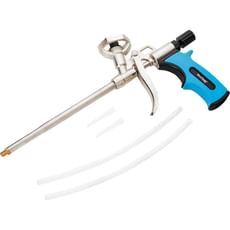
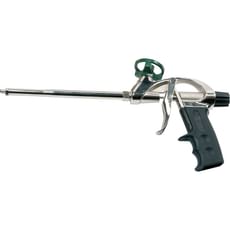
 Loading...
End of content
Error - No more pages to load
About Expanding Foam Guns
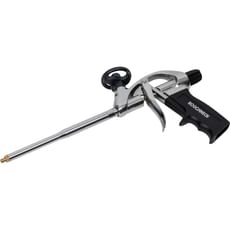
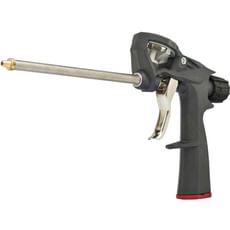
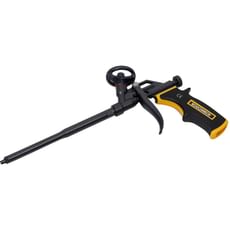
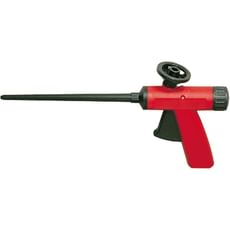
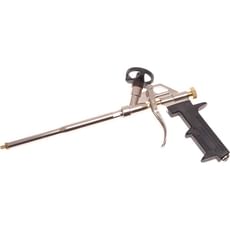
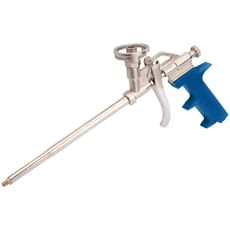
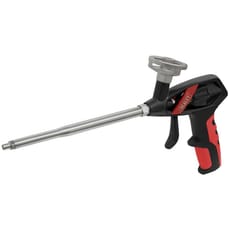
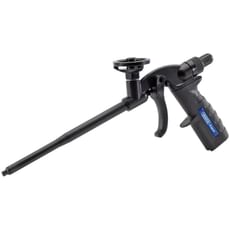
Expanding foam guns, also known as PU foam guns or foam applicator guns, are precision tools designed to dispense polyurethane expanding foam with professional control and accuracy. Unlike disposable aerosol cans with basic fixed straws, these reusable guns provide adjustable flow control, reliable trigger operation, and the ability to leave cartridges attached between jobs. This makes them indispensable for tradespeople working on insulation projects, gap filling, sound dampening, and securing fixtures across construction, renovation, and maintenance work. The controlled application minimises waste whilst maximising efficiency, particularly when working through multiple cartridges on larger projects.
The selection at Tooled-Up.com ranges from medium-duty aluminium models suitable for regular site use, through to heavy-duty professional guns with Teflon-coated barrels for enhanced durability and simplified cleaning. Established brands including Everbuild, Draper, Roughneck, Sealey, Fischer, and Blue Spot manufacture foam guns engineered specifically for UK construction standards and demanding site conditions. Whether you're a builder tackling cavity insulation, a window fitter sealing frames, or a general tradesperson dealing with diverse applications, a quality expanding foam gun transforms polyurethane foam work from messy and imprecise to controlled and professional.
Modern foam applicator guns feature adjustable flow mechanisms allowing precise regulation from narrow beading to full discharge capacity. The trigger mechanism delivers instant start-stop control that aerosol cans cannot match, whilst quick-release basket systems enable rapid cartridge changes. Many professional models incorporate compatibility with standard foam gun cleaners, making maintenance straightforward and extending operational life considerably when properly cared for between applications.
Jargon Buster
- PU Foam: Polyurethane foam that expands upon contact with atmospheric moisture, curing to create an insulating, gap-filling material widely used throughout construction and renovation work.
- Teflon Coating: Non-stick coating applied to gun barrels that prevents foam adhesion, significantly simplifying cleaning procedures and extending the working life of professional-grade tools.
- Flow Control: Adjustable mechanism, usually a dial or knob positioned on the gun body, that regulates foam volume from minimal bead application through to maximum discharge capacity.
- Basket/Cradle: The threaded mounting section where gun-grade foam cartridges screw securely onto the gun body, creating the essential airtight seal for controlled foam delivery.
- Gun-Grade Foam: Professional expanding foam supplied in larger cartridges (typically 750ml) designed specifically for foam gun attachment, offering superior capacity and consistency compared to standard single-use aerosol cans.
- Cleaner Adaptor: Fitting that allows aerosol foam gun cleaner to attach for flushing residual uncured foam from internal mechanisms, essential for maintaining optimal performance.
Who Uses Expanding Foam Guns?
Expanding foam guns are essential daily tools across numerous construction trades and skilled professions, including:
- Builders and General Contractors: For structural insulation work, cavity filling, thermal bridging solutions, and general gap sealing on residential and commercial sites
- Window and Door Fitters: To seal around frames, eliminate draughts, provide weather-tight installations, and ensure compliance with building regulations
- Insulation Specialists: For professional cavity wall insulation, loft conversions, retrofit projects, and energy efficiency improvements
- Plumbers and Heating Engineers: To seal pipe penetrations, insulate pipework, fill voids around boiler installations, and maintain thermal efficiency
- Electricians: For sealing cable entry points, meeting fire-stopping requirements, and maintaining building integrity around electrical installations
- Roofers: To seal roof penetrations, fill gaps around roof windows, weatherproof junctions, and improve thermal performance
- Carpenters and Joiners: For securing door frames, filling structural voids, improving acoustic performance, and general fixing applications
- Property Maintenance Professionals: For reactive repairs, draught-proofing programmes, general gap-filling tasks, and building improvement works
- Serious DIY Enthusiasts: Tackling home improvement projects including loft insulation, draught exclusion, renovation work, and energy-saving modifications
How to Choose the Right Expanding Foam Gun
Build Quality and Construction: Professional metal-bodied guns manufactured by brands like Everbuild and Roughneck offer superior durability for daily site work and continuous use. Aluminium alloy construction with nickel plating provides excellent corrosion resistance, whilst Teflon-coated barrels significantly ease cleaning and prevent foam accumulation, making them worthwhile investments for regular professional users.
Duty Rating and Frequency of Use: Medium-duty models suit regular applications and moderate workloads, whilst heavy-duty professional guns like the Everbuild P65 are engineered for intensive daily use with multiple cartridges. Match the duty rating to your typical workload to ensure longevity and avoid premature failure on demanding projects.
Flow Control Precision: Quality guns feature precise adjustment mechanisms allowing fine control from narrow beading to full discharge. This versatility proves essential when working across different applications, from delicate sealing work around window frames to large-scale cavity filling on construction sites.
Cleaning and Maintenance Features: Models with quick-release cartridge mechanisms and compatibility with standard aerosol foam gun cleaners save considerable time and frustration. Easy-clean designs with accessible internal mechanisms enable thorough maintenance, which is essential for maintaining consistent performance and extending tool life.
Thread Quality and Basket Design: Ensure the cartridge mounting thread is robustly manufactured and precisely machined, as this creates the vital airtight seal between cartridge and gun. Poor thread quality leads to leaks, wasted material, and frustrating application problems.
Ergonomics and User Comfort: For extended applications, consider grip design and trigger action quality. Well-balanced guns with comfortable soft-grip handles and smooth trigger mechanisms reduce hand fatigue during prolonged sessions, particularly important when working through multiple cartridges.
Popular Accessories
- Gun-Grade Expanding Foam Cartridges: Professional PU foam in various formulations including fire-rated, low-expansion, acoustic, and fast-cure options from brands like Everbuild and Fischer
- Foam Gun Cleaner: Aerosol cleaner specifically formulated to dissolve uncured polyurethane foam and maintain gun mechanisms between applications
- Cleaning Brushes and Picks: Small brushes, needle tools, and wire picks for removing stubborn foam deposits from nozzles, valves, and thread areas
- Spare Nozzles and Extensions: Replacement tips and extension tubes for reaching awkward spaces, tight cavities, and controlling bead size for different applications
- Protective Caps: Storage caps that seal the gun between uses, preventing accidental discharge and keeping mechanisms clean during transportation
- Disposable Gloves and Wipes: Nitrile gloves and specialist foam removal wipes for maintaining cleanliness during application and preventing skin contact
- PTFE Thread Tape: For ensuring perfect airtight seals on cartridge connections and preventing leaks during operation
Safety Information
Expanding foam guns and polyurethane foam cartridges require careful handling to ensure safe operation. Always wear appropriate PPE including safety glasses or goggles to protect eyes from accidental foam discharge and foam particles, along with disposable nitrile gloves to prevent skin contact with uncured foam, which adheres stubbornly and may cause irritation.
Work in well-ventilated areas as expanding foam releases isocyanates during the curing process, which can irritate respiratory systems. For enclosed spaces or prolonged exposure, consider appropriate respiratory protection in accordance with COSHH regulations and HSE guidance. Never point the gun towards people or animals, and always ensure the trigger is handled carefully when cartridges are attached.
Expanding foam is highly adhesive and extremely difficult to remove from surfaces once cured, so protect surrounding areas, fixtures, and finishes with masking tape and dust sheets. Store cartridges and guns away from heat sources, direct sunlight, and naked flames, as pressurised cartridges can be compromised by excessive temperatures. Follow manufacturer guidelines for proper cleaning procedures and maintenance schedules, and dispose of empty cartridges responsibly in accordance with local waste management regulations.
Frequently Asked Questions
How do I properly clean my expanding foam gun?
Clean your foam gun immediately after completing work by removing the empty cartridge and attaching a can of foam gun cleaner to the basket thread. Discharge cleaner through the gun mechanism until it runs completely clear, then thoroughly wipe the nozzle, basket threads, and external surfaces. For guns stored between jobs, periodically unscrew the flow control adjustment and clean the needle mechanism with cleaner and a small brush. Never allow foam to cure inside the gun barrel or mechanism, as this will render it permanently unusable.
Can I leave a partially used foam cartridge attached to the gun?
Yes, this represents one of the key advantages of professional foam guns over disposable aerosol cans. You can safely leave a partially used cartridge attached for several weeks, as the gun mechanism creates an airtight seal that prevents the foam from curing inside the cartridge. The foam remains liquid and ready for immediate use. However, clean the nozzle tip before storage and test the gun operation before starting your next application to ensure optimal performance.
What's the difference between gun-grade and standard expanding foam?
Gun-grade foam is supplied in larger professional cartridges (typically 750ml) that screw directly onto foam guns, offering better value, superior control, and higher output than standard aerosol cans. Gun-grade formulations tend to be more consistent in quality and expansion characteristics. Standard aerosol foam cans feature fixed plastic straws and are single-use products, making them less economical and practical for professional applications or frequent use on multiple projects.
Why isn't my foam gun dispensing foam correctly?
Common causes include cured foam blocking the nozzle or needle mechanism (clean thoroughly with foam gun cleaner), an empty or faulty cartridge (test with a fresh cartridge), incorrect flow control adjustment (open the control dial), damaged basket seals (inspect threads for cross-threading or damage), or contamination in the valve mechanism. Regular cleaning after each use and proper storage procedures prevent the majority of dispensing problems encountered on site.
Do I need different guns for fire-rated or acoustic foam?
No, standard expanding foam guns available from Tooled-Up work effectively with all types of gun-grade foam including fire-rated, acoustic, low-expansion, and standard formulations. However, always clean the gun thoroughly when switching between different foam types to prevent cross-contamination and ensure the specialised properties of fire-rated or acoustic foams perform as specified by manufacturers.