

Festoon Lights
Pay in 3 interest-free payments on purchases from £30-2000 with  . Learn more.
 Loading...
End of content
Error - No more pages to load
About Festoon Lights
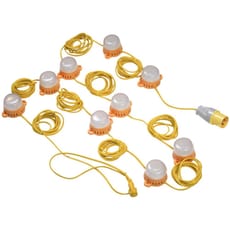
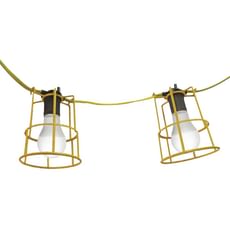
Festoon lights are an essential temporary lighting solution for construction sites, workshops, and outdoor work areas where reliable illumination is needed without permanent electrical installations. These robust lighting systems feature a series of protective lamp holders connected by heavy-duty cable, delivering bright, distributed light across large work areas. Built to withstand the demanding conditions of professional environments, festoon lights combine portability with durability, making them indispensable for tradespeople who need flexible lighting that can be quickly deployed, repositioned, and transported between sites.
Modern festoon lighting has evolved considerably, with energy-efficient LED technology now dominating the market. Available predominantly in 110V configurations to comply with UK construction site safety requirements, these systems offer significant advantages over traditional incandescent alternatives, including reduced energy consumption, longer operational life, and improved impact resistance. Tooled-Up.com stocks festoon lights from trusted manufacturers including Faithfull, Defender, and Draper, with options ranging from compact 10-lamp kits ideal for focused work areas to extensive 22-metre systems capable of illuminating entire construction sites.
Whether working in poorly lit warehouses, conducting electrical installations, excavating trenches, or managing outdoor events, festoon lights provide reliable illumination where it's needed most. Complete with impact-resistant lamp guards, weatherproof construction, and flexible yet durable cabling, these lighting systems are designed for professionals who demand equipment that performs reliably day after day. Essential accessories such as cable hanging hooks and replacement LED bulbs ensure your lighting remains operational and easy to install across scaffolding, beams, and temporary structures.
Jargon Buster
- 110V (Volts) - The standard voltage for portable equipment and temporary lighting on UK construction sites. This reduced voltage, centre-tapped to earth (providing just 55V to earth), significantly reduces electric shock risk compared to 240v mains power, making it essential for potentially hazardous environments.
- SMD LED (Surface-Mounted Device LED) - Advanced LED technology where light-emitting diodes are permanently mounted onto circuit boards. SMD LEDs consume approximately 80% less energy than traditional incandescent bulbs, generate minimal heat, and typically deliver 30,000+ hours of operational life, dramatically reducing running costs and bulb replacement frequency.
- IP Rating (Ingress Protection) - A standardised classification indicating electrical equipment's resistance to dust and water ingress. For outdoor festoon lights, IP44 or higher ratings ensure adequate weather protection for typical UK conditions, with higher numbers providing greater protection against the elements.
- Lamp Guard - Protective metal or robust plastic cage surrounding each bulb, preventing damage from impacts, falling debris, or accidental contact. Essential for site lighting where rough handling, knocks, and harsh conditions are unavoidable daily occurrences.
- Festoon Cable - Heavy-duty electrical cable connecting lamp holders and power sources together. Quality festoon cable balances flexibility for easy handling and deployment with robust construction to withstand outdoor conditions, regular repositioning, and the wear associated with professional construction site use.
- Daisy-Chain Configuration - The ability to connect multiple festoon light strings end-to-end, extending coverage across larger areas. Always observe manufacturer maximum load specifications to prevent overheating and ensure safe operation.
Who Uses Festoon Lights?
Festoon lights are essential equipment across numerous trades and industries:
- Construction Workers and Site Managers - providing temporary illumination during builds, refurbishments, and extension projects
- Electricians (Sparkies) - lighting work areas during installations, rewiring, and fault-finding in poorly lit locations
- Groundworkers and Civil Engineers - illuminating excavations, trenches, foundations, and outdoor work areas safely
- Maintenance Engineers - temporary lighting for factories, warehouses, plant rooms, and industrial facilities
- Scaffolders - ensuring safe working conditions during early morning or evening work when natural light is insufficient
- Events Companies - providing functional or decorative lighting for outdoor events, marquees, festivals, and temporary venues
- Facilities Managers - emergency lighting during power outages, maintenance work, or building system upgrades
- Landscapers and Garden Contractors - extending productive working hours during winter months with shorter daylight periods
- Plumbers and Heating Engineers - illuminating basements, lofts, and cramped spaces during installations
- Agricultural Workers - temporary lighting for barns, outbuildings, livestock areas, and outdoor working zones
- DIY Enthusiasts - tackling home improvement projects in garages, sheds, and poorly lit areas
How to Choose the Right Festoon Lights
Voltage Requirements: For construction sites and professional applications, 110V systems are strongly recommended and frequently mandatory under HSE guidelines. These provide enhanced safety in potentially hazardous environments with wet conditions or metal structures. Ensure your lighting matches available power supplies, whether site transformers or generators.
Cable Length and Lamp Quantity: Consider the area requiring illumination. Compact 10-lamp kits suit smaller spaces, workshops, or focused work areas, whilst 22-metre systems with additional lamps accommodate larger construction sites or extensive outdoor zones. Many systems can be daisy-chained together for greater coverage, though always verify manufacturer maximum load specifications before connecting multiple units.
LED vs Incandescent Technology: LED festoon lights available at Tooled-Up.com offer compelling advantages including up to 80% energy savings, operational life exceeding 30,000 hours, cooler operation reducing burn risks, and superior impact resistance. Whilst initial investment is slightly higher, LED systems rapidly pay for themselves through dramatically reduced electricity consumption and virtually eliminating bulb replacement expenses.
Build Quality and Durability: Prioritise festoon lights with robust lamp guards, heavy-duty cabling featuring proper insulation, and weatherproof lamp holders. Quality brands like Faithfull, Defender, and Draper engineer their systems to withstand daily professional use, offering superior long-term value compared with budget alternatives that may fail prematurely under demanding conditions.
Portability and Storage: Consider transportation between sites. Some kits include carry cases or storage reels preventing cable tangling and protecting lamps during transit. Effective cable management features significantly accelerate setup and pack-down, saving valuable time on busy sites.
Environmental Conditions: Check IP ratings match your working environment. IP44 provides adequate protection for typical outdoor UK weather, whilst higher ratings suit more exposed or wet conditions. Ensure lamp guards are sufficiently robust for your specific application.
Popular Accessories
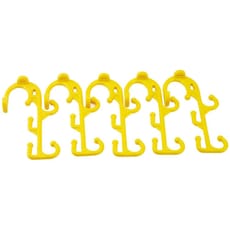
- Festoon Cable Hanging Hooks - purpose-designed hooks manufactured from thermoplastic polymer for suspending festoon cables from scaffolding, beams, or temporary structures whilst reducing trip hazards
- Replacement LED Bulbs - spare lamps maintaining system operational status even when individual bulbs fail
- 110V Extension Cables and Leads - rated cables for connecting festoon lights to distant power sources across larger sites
- Site Transformers - converting 240v mains power to safe 110V for site lighting equipment
- Cable Reels - organised storage and easy deployment of festoon lighting systems
- Replacement Lamp Guards - maintaining protection after damage or wear from site work
- Weatherproof Connectors - ensuring safe electrical connections in outdoor environments
- Storage and Carry Cases - protecting your investment during transport and storage between jobs
Safety Information
Voltage Compliance: Use 110V centre-tapped to earth systems (55V to earth) for construction sites and outdoor work as required by HSE guidance. This significantly reduces electric shock severity in potentially hazardous environments. Never use 240v lighting where 110V alternatives are available for site applications.
Pre-Use Inspection: Before each deployment, visually inspect all cables for damage, cuts, abraded areas, or exposed conductors. Check lamp holders for cracks or damage, and ensure all lamp guards are securely fitted. Replace any damaged components immediately—never attempt temporary repairs to electrical equipment used in professional environments.
Weather Protection: Whilst quality festoon lights are designed for outdoor use, ensure all connections suit the environment. Keep plug connections elevated above wet ground and protect from standing water where possible. Verify IP ratings are appropriate for your specific working conditions.
Load Limits: Never exceed manufacturer maximum load specifications when connecting multiple festoon strings together. Overloading causes overheating, cable insulation damage, and potential fire hazards. LED systems typically permit more units to be connected due to lower power consumption.
Proper Installation: Secure festoon cables at appropriate intervals preventing sagging that could create trip hazards or bring lamps into contact with flammable materials. Maintain adequate clearance from combustible materials, and never drape cables over sharp edges that could penetrate insulation over time.
PAT Testing: Ensure your festoon lights are included in regular Portable Appliance Testing schedules as required for professional work environments. Maintain records of testing dates and any repairs carried out for compliance and insurance purposes.
Frequently Asked Questions
What's the difference between 110V and 240v festoon lights?
110V festoon lights are specifically engineered for construction sites and outdoor work where HSE guidance requires reduced voltage equipment. The centre-tapped to earth design means only 55V exists between either live conductor and earth, significantly reducing electric shock severity. 240v systems are standard mains voltage, generally only suitable for permanent installations or indoor use with proper RCD protection installed.
How many festoon light strings can I connect together?
This depends on specific product specifications and total wattage of all connected lamps. LED festoon lights typically allow more units to be daisy-chained together due to dramatically lower power consumption compared with traditional incandescent bulbs. Always consult manufacturer guidance in instruction manuals—exceeding maximum load specifications creates fire hazards and voids warranties.
Are LED festoon lights worth the additional cost?
Absolutely. Whilst LED systems cost slightly more initially, they typically consume 80% less electricity than incandescent equivalents, generate minimal heat, last significantly longer (often 30,000+ hours versus 1,000 hours for traditional bulbs), and offer superior impact resistance. For professional users, LED festoon lights rapidly pay for themselves through reduced energy costs and virtually eliminating bulb replacement expenses.
Can festoon lights be used in rain and wet conditions?
Quality festoon lights from reputable brands like Faithfull, Defender, and Draper are designed for outdoor use and withstand typical UK weather conditions. Look for appropriate IP ratings (IP44 or higher for outdoor applications) and ensure all connections are adequately protected. However, avoid submersion in water and keep plug connections raised off wet ground wherever possible.
Do I need a transformer to use 110V festoon lights?
Yes, if your power source is standard 240v mains electricity, you'll require a suitable 110V site transformer to safely power your festoon lights. Many construction sites already have 110V distribution systems installed. Using correct voltage equipment isn't just about compatibility—it's a critical safety requirement for site work under HSE regulations and insurance requirements.