

Fire Extinguishers

Pay in 3 interest-free payments on purchases from £20-£3000 with  . Learn more.
 Loading...
End of content
Error - No more pages to load
About Fire Extinguishers
Fire extinguishers are essential safety equipment for workshops, garages, commercial premises, and domestic properties throughout the UK. Whether you're a tradesperson maintaining a compliant work site, a business owner fulfilling your fire safety obligations, or a homeowner protecting your property, having the right fire extinguisher readily accessible can make the difference between a minor incident and a devastating fire. From electrical fires in server rooms to flammable liquid incidents in vehicle workshops, different fire risks require specific extinguisher types to tackle them safely and effectively.
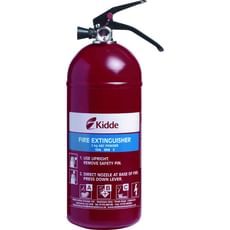
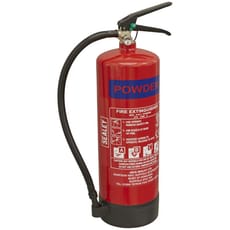
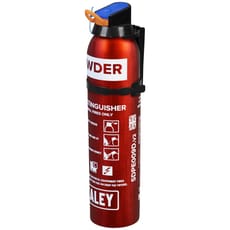
The selection at Tooled-Up.com includes various types of fire extinguishers designed to tackle different classes of fire, from dry powder and foam extinguishers for general-purpose protection to specialist carbon dioxide units ideal for electrical fires in workshops and offices. Trusted brands including Sealey and Kidde offer both portable extinguishers in various capacities and essential accessories such as mounting brackets, stands, and protective cabinets to ensure your fire safety equipment is properly stored and easily accessible in an emergency.
All fire extinguishers must meet British Standards (BS EN3) and comply with HSE regulations. For businesses and tradespeople working on commercial sites, maintaining appropriate fire extinguishers isn't just good practice—it's a legal requirement under the Regulatory Reform (Fire Safety) Order 2005, making proper selection and maintenance crucial for workplace safety and compliance.
Jargon Buster
- Fire Classes (A, B, C, D, F) - The classification system for different types of fires: Class A (combustible materials like wood and paper), Class B (flammable liquids), Class C (flammable gases), Class D (combustible metals), and Class F (cooking oils and fats). Multi-purpose extinguishers are rated for multiple classes.
- ABC Extinguisher - An all-purpose dry powder fire extinguisher effective against Class A, B, and C fires, making it the most versatile choice for workshops, vehicles, and general commercial use where broad protection is needed.
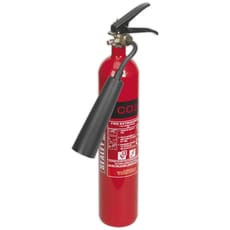
- Carbon Dioxide (CO2) Extinguisher - A clean-agent extinguisher that leaves no residue, ideal for electrical fires and protecting sensitive equipment in workshops, server rooms, and offices where powder residue could damage electronics or machinery controls.
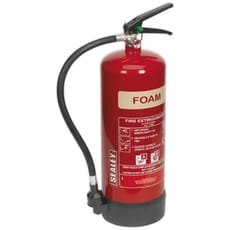
- Foam (AFFF) - Aqueous Film-Forming Foam extinguishers suitable for Class A and B fires, creating a cooling blanket that smothers flames and prevents re-ignition, commonly used in commercial premises and areas with mixed fire risks.
- Fire Rating - The number before the letter classification (e.g., 13A, 21B) indicates the extinguisher's firefighting capability—higher numbers mean greater effectiveness against that class of fire, helping you select adequate capacity for your premises.
- BS EN3 - The British and European standard that specifies requirements for portable fire extinguishers, ensuring they meet safety and performance criteria for use in the UK and comply with regulatory requirements.
Who Uses Fire Extinguishers?
- Electricians and electrical contractors requiring CO2 extinguishers for protection when working with live 240v equipment and electrical installations
- Motor mechanics and vehicle technicians protecting workshops from fuel, oil, and electrical fires in automotive environments
- Builders and construction site managers maintaining HSE-compliant fire safety on commercial and domestic building projects
- Welders and fabricators managing fire risks from hot work, sparks, and flammable materials in metalworking environments
- Woodworkers and carpenters protecting workshops containing combustible materials, timber, and dust
- Plumbers and heating engineers carrying extinguishers in vans and when undertaking hot works involving blowtorches
- Warehouse and facilities managers ensuring workplace fire safety compliance across commercial premises
- Landlords and property managers meeting fire safety obligations in rental properties and commercial buildings
- Hospitality businesses including restaurants, cafés, and pubs requiring F-rated extinguishers for kitchen areas
- DIY enthusiasts and homeowners protecting home workshops, garages, and domestic properties
How to Choose the Right Fire Extinguishers
Identify the Fire Risks: Assess what types of fires are most likely in your environment. Workshops with electrical equipment need CO2 extinguishers, while general trade environments benefit from ABC dry powder units. Premises with mixed risks may require multiple extinguisher types positioned strategically throughout the building.
Consider the Size and Capacity: Fire extinguishers are measured in kilograms (dry powder/CO2) or litres (foam/water). Smaller 1-2kg units suit vehicles and compact spaces, whilst 6kg or larger extinguishers provide greater firefighting capacity for workshops and commercial premises. Remember that larger units may be harder to handle quickly in an emergency, particularly for those unfamiliar with their operation.
Check Compliance Requirements: For business premises, the Regulatory Reform (Fire Safety) Order 2005 requires a fire risk assessment determining the type, number, and placement of extinguishers needed. Generally, you should be able to reach an extinguisher within 30 metres on any floor. Ensure all units meet BS EN3 standards and are properly maintained with annual servicing by a competent person.
Storage and Accessibility: Consider whether you need mounting brackets, floor stands, or protective cabinets. External or semi-exposed locations benefit from weatherproof cabinets, whilst high-traffic workshops may need protective stands to prevent accidental damage. Extinguishers should be visible, accessible, and positioned near exit routes but not so close that fire could block access to them.
Multi-Purpose vs Specialist: ABC dry powder extinguishers offer the broadest protection for most trade environments, but they leave residue that can damage electronics and require cleanup. For areas with computers, CNC machinery, or electrical panels, carbon dioxide extinguishers provide clean firefighting without residue. Foam extinguishers suit premises where Class A and B fires are the primary risk but electrical equipment is minimal.
Popular Accessories
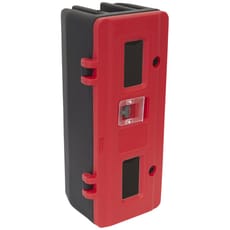
- Fire extinguisher cabinets and stands for secure mounting and protection from damage or weather exposure
- Wall-mounting brackets to keep extinguishers accessible at the correct height and compliant positioning
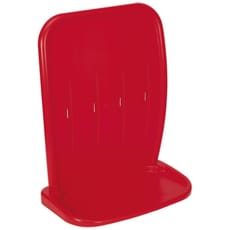
- Double extinguisher stands for positioning multiple unit types together at key locations throughout premises
- Fire safety signage including photoluminescent signs indicating extinguisher locations for emergency visibility
- Fire blankets as complementary protection, particularly for kitchens and welding areas where smothering is effective
- Annual service tags and maintenance records for compliance documentation during HSE inspections
- Vehicle brackets for securing extinguishers in vans and commercial vehicles during transit
- Smoke detectors and fire alarms providing early warning systems for occupied premises
- Fire-resistant storage cabinets for protecting valuable tools, documents, and equipment
Safety Information
Training and Competence: Simply having fire extinguishers isn't enough—users must know how to operate them safely. The HSE recommends that at least one person on each floor of business premises receives basic fire safety training. Familiarise yourself with the PASS technique: Pull the pin, Aim at the base of the fire, Squeeze the handle, and Sweep from side to side. Never attempt to fight a fire that's spreading rapidly or blocking your escape route.
Regular Inspection and Maintenance: UK regulations require fire extinguishers to be serviced annually by a competent person, with a thorough examination every five years. Between professional services, conduct monthly visual checks ensuring the pressure gauge shows green, seals are intact, and there's no visible damage. Keep maintenance records as evidence of compliance during HSE inspections.
Correct Positioning: Mount extinguishers between 1 and 1.5 metres from the floor to the handle, ensuring they're visible and accessible but not obstructing escape routes. Position them near fire exits and high-risk areas, but not so close that fire could prevent access. Different coloured labels identify extinguisher types—ensure everyone on site understands the colour coding system.
Electrical Safety: Never use water or foam extinguishers on live electrical equipment—they can conduct electricity and cause electrocution. Only CO2 or dry powder extinguishers are safe for electrical fires involving 240v equipment. If in doubt, isolate the power supply first if it's safe to do so, then tackle the fire with an appropriate extinguisher.
Frequently Asked Questions
What type of fire extinguisher do I need for my workshop?
For most trade workshops, an ABC dry powder extinguisher provides the broadest protection against solid materials, flammable liquids, and gases. However, if you work with sensitive electrical equipment or machinery controls, add a CO2 extinguisher to avoid powder residue damage. A 6kg dry powder unit suits most medium-sized workshops, whilst larger premises may require multiple units positioned strategically. Tooled-Up stocks both Sealey and Kidde extinguishers in various capacities to suit different workshop sizes.
How often do fire extinguishers need servicing?
UK law requires annual servicing by a competent person, typically a qualified fire safety engineer. Additionally, conduct monthly visual inspections checking for damage, correct pressure readings, and accessible positioning. Fire extinguishers also require extended service every five years and must be replaced or refurbished after 10-20 years depending on the type. Keep dated service labels and maintenance records for compliance purposes during inspections.
Can I keep a fire extinguisher in my van?
Yes, and it's highly recommended for tradespeople, particularly those undertaking hot works like welding or working with flammable materials. A compact 1-2kg ABC dry powder extinguisher is ideal for vehicles. Secure it properly using a vehicle-specific bracket to prevent it becoming a projectile during sudden braking. Check it monthly as vehicle environments can be harsh on equipment due to temperature fluctuations and vibration.
What's the difference between CO2 and dry powder extinguishers?
CO2 extinguishers contain carbon dioxide gas under pressure, leaving no residue—ideal for electrical fires and protecting computers, machinery, and electronic equipment. Dry powder (ABC) extinguishers contain a chemical powder effective on more fire types but leave residue requiring cleanup. CO2 works by displacing oxygen, whilst powder smothers flames and interrupts the chemical reaction. Many workshops benefit from having both types available for different scenarios.
Do I legally need fire extinguishers for my business?
Yes, if you're an employer, business owner, or control premises used by workers or the public. The Regulatory Reform (Fire Safety) Order 2005 requires you to conduct a fire risk assessment and provide appropriate firefighting equipment. Requirements vary based on your premises size, occupancy, and fire risks identified. Even sole traders working from commercial premises must comply. Domestic premises aren't legally required to have extinguishers, though they're strongly recommended for home workshops and garages.