

Flat Files

Pay in 3 interest-free payments on purchases from £20-£3000 with  . Learn more.

 Loading...
End of content
Error - No more pages to load
About Flat Files
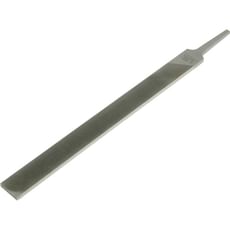
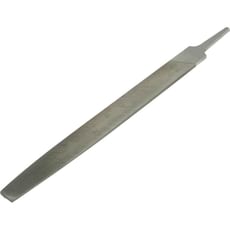
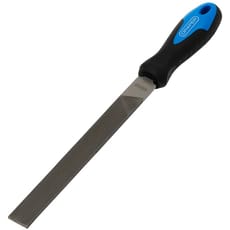
Flat files are fundamental hand tools characterised by their rectangular cross-section and parallel cutting surfaces, designed for shaping, smoothing, and removing material from metal, wood, plastic, and other materials. These versatile implements provide excellent control and precision when working on flat surfaces, creating straight edges, or preparing materials for assembly. Whether deburring sharp metal edges, sharpening garden tools, smoothing down welds, or fine-tuning joinery work, flat files remain indispensable across countless workshop and site applications.
Available in a comprehensive range of sizes, cuts, and tooth configurations, flat files cater to diverse applications and material types. Engineers' files with fine cuts suit precision metalwork and detailed finishing, whilst coarse farmers' files excel at garden tool maintenance and heavy stock removal. The selection at Tooled-Up.com includes professional-grade options from trusted manufacturers including Bahco, Sealey, Draper, and Nicholson, ensuring tradespeople and DIY enthusiasts alike can access quality tools that deliver consistent, reliable performance.
Modern flat files frequently incorporate ergonomic handle designs that significantly reduce hand fatigue during extended use, with advanced grip technology providing improved comfort and control. Common lengths range from 100mm for detailed work in confined spaces through to 350mm for efficient material removal across larger surfaces. Whether you're a fabricator requiring precision fitting, a mechanic maintaining brake components, or a gardener keeping cutting edges sharp, selecting the appropriate flat file makes a substantial difference to both working efficiency and finish quality.
Jargon Buster
- TPI (Teeth Per Inch): The measurement indicating how many cutting teeth are present per inch along the file's surface. Higher TPI numbers (12+) produce finer cuts suitable for finishing work and hardened materials, whilst lower TPI files (6-9) remove material more aggressively for rough shaping tasks.
- Cut Grade: Files are classified by cut grade - bastard cut (coarse, approximately 26 teeth per 25mm), second cut (medium, approximately 36 teeth per 25mm), and smooth cut (fine). The grade determines both the speed of material removal and the quality of surface finish achieved.
- Tang: The tapered, pointed end of the file that fits into the handle. Tanged files require separate handles, offering the advantage of replacing worn files whilst retaining serviceable handles, making them economical for professional use.
- Safe Edge: One or more edges of a file manufactured without teeth, allowing you to file into corners or against perpendicular surfaces without inadvertently damaging adjacent areas - particularly useful in precision metalwork and joinery.
- Single Cut vs Double Cut: Single cut files feature parallel rows of teeth running in one direction, providing smoother finishes ideal for draw filing and precision work. Double cut files have two sets of teeth crossing each other at angles, removing material more quickly but leaving a slightly rougher surface texture.
- Pinning: The condition when soft metals like aluminium or brass become lodged between file teeth, dramatically reducing cutting efficiency. A file card (specialized wire brush) removes pinned material, whilst rubbing chalk into teeth before use helps prevent pinning altogether.
Who Uses Flat Files?
Flat files are essential tools across numerous trades and applications:
- Engineers and Fabricators: For deburring sharp edges, fitting components, precision metalwork in machine shops, and achieving accurate dimensional tolerances
- Mechanics and Vehicle Technicians: Cleaning brake callipers, filing metal components, preparing surfaces for assembly, and general automotive maintenance tasks
- Welders: Smoothing welds, removing slag deposits, preparing metal surfaces for painting or coating, and blending weld seams
- Carpenters and Joiners: Shaping timber components, adjusting joints for precise fits, fine-tuning wooden assemblies, and chamfering edges
- Plumbers and Heating Engineers: Deburring cut copper and plastic pipes to prevent seal damage, filing metal fittings for proper sealing surfaces
- Gardeners and Groundskeepers: Sharpening spades, hoes, shears, secateurs, and other garden tools to maintain effective cutting edges throughout the season
- Electricians: Filing cable entries in enclosures, smoothing metal conduit ends, and removing burrs that could damage cable insulation
- Blacksmiths and Metalworkers: Refining forged pieces, creating decorative details, and achieving smooth finishes on wrought ironwork
- General Construction Workers: Various site applications requiring material removal, edge smoothing, and surface preparation
- DIY Enthusiasts: Home maintenance projects, hobby metalwork, restoring vintage tools, and general workshop tasks
How to Choose the Right Flat Files
Material Application: Consider your primary filing applications. Coarser bastard cuts work effectively on soft metals, wood, plastics, and heavy stock removal, whilst finer smooth cuts suit hardened steel and precision finishing where surface quality matters. Engineers' files typically offer finer cuts for metalwork, whereas farmers' files feature aggressive teeth for garden tool maintenance and timber work.
File Length: Match file length to your typical workpiece dimensions. Longer files (300-350mm) provide faster material removal across larger surfaces and longer strokes, whilst shorter files (100-150mm) offer superior control in confined spaces and for detailed work. Many professionals maintain several lengths to suit different situations.
Teeth Configuration (TPI): Lower TPI ratings (6-9 teeth per inch) suit heavy material removal and rough shaping operations. Medium TPI (9-12) provides versatile all-purpose filing for general workshop tasks. Higher TPI (12+) delivers fine finishing and precision work where surface quality is paramount. Consider maintaining multiple grades for different project stages.
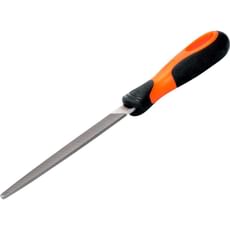
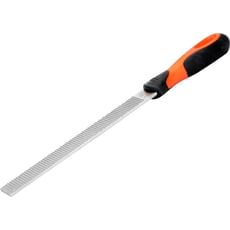
Handle Design: Ergonomic handles significantly impact user comfort during extended filing sessions. Tooled-Up stocks files with modern soft-grip ERGO™ handles from Bahco that reduce hand fatigue and improve control. Some files include integrated handles, whilst tanged files require separate handles that can be replaced independently - offering better long-term economy for professional users.
Brand Quality: Established manufacturers like Bahco, Draper, Sealey, and Nicholson employ quality tool steel and proper heat treatment processes for longer-lasting cutting edges. Professional-grade files maintain sharpness considerably longer than budget alternatives, representing superior value through extended working life despite higher initial cost.
Specialist vs General Purpose: Assess whether you need specialist files (such as brake calliper cleaning files for automotive work) or general-purpose files handling various tasks. Dedicated files often outperform general options for their specific application, whilst versatile files like the Bahco Filemaster with dual sides suit users requiring multi-purpose functionality.
Popular Accessories
- File Handles: Replacement or additional handles for tanged files in various sizes, materials, and ergonomic designs to suit different hand sizes and preferences
- File Cards (Wire Brushes): Essential maintenance tools for cleaning metal filings, wood fibres, and debris from file teeth to maintain optimal cutting efficiency
- File Holders and Mounting Systems: Secure files for two-handed workpiece manipulation or specialized applications like the Sealey RE5001 system
- Chalk: Rubbed into file teeth before use to prevent pinning when working with soft metals like aluminium, copper, and brass
- Protective Sleeves and Racks: Keep files separated in toolboxes and workshops to prevent teeth damage through contact with other tools
- Workshop Vices: Essential for securing workpieces safely during filing operations, available in various jaw widths and mounting options
- Cut-Resistant Gloves: Protect hands from sharp edges and burrs whilst maintaining dexterity for controlled filing work
- Metal Lubricants: Reduce friction and prevent overheating during heavy filing operations on dense materials
Safety Information
Handle Condition: Always ensure files have securely fitted handles before use. Never use a tanged file without a proper handle, as the sharp tang can cause serious hand injuries if the tool slips during work. Inspect handles regularly for cracks, splits, or looseness, and replace immediately when deterioration is evident.
Secure Workpieces: Always secure items being filed in a vice, clamp, or suitable holding device. Hand-holding workpieces whilst filing significantly increases injury risk if the file slips or the workpiece moves unexpectedly. Follow HSE guidance on workshop safety practices and workpiece securing methods.
Filing Technique: File on the forward stroke only, lifting slightly on the return stroke. This prevents premature tooth wear, maintains better control, and reduces the risk of the file catching and causing injury. Apply even pressure across the file length and avoid rocking motions that can round edges unintentionally or cause the file to slip.
Eye Protection: Wear safety glasses or goggles when filing, especially metal, as small particles become airborne and can cause serious eye injuries. This is particularly important when filing cast iron, hardened steel, or brittle materials that produce sharp fragments. Ensure eye protection meets BS EN 166 standards.
File Maintenance and Storage: Keep files clean and dry to prevent rust formation that damages cutting edges. Store files separately or in protective sleeves to avoid tooth damage through contact with other tools. Never use files as levers, striking tools, or pry bars, as the brittle hardened steel can crack or shatter, creating dangerous projectiles.
Frequently Asked Questions
How do I know when my flat file needs replacing?
Replace your file when teeth become visibly worn, rounded, or glazed, or when it stops cutting effectively even after thorough cleaning with a file card. Excessive slipping across the workpiece surface without removing material indicates the teeth are spent. Quality files from brands like Bahco and Draper can last years with proper care and regular cleaning, but eventually wear through normal use and must be replaced rather than resharpened.
Can I sharpen a flat file or restore worn teeth?
Unfortunately, files cannot be effectively resharpened once worn. The teeth are formed during manufacture through specialized cutting machines and precise heat treatment processes that cannot be replicated in workshop conditions. Once teeth are worn down or dulled, files should be replaced. However, proper cleaning after each use, preventing rust through correct storage, and using appropriate pressure significantly extends working life.
What's the difference between American pattern and Swiss pattern files?
American pattern files, commonly available in the UK, are generally more robust with coarser cuts, designed for heavier stock removal in general engineering, fabrication, and workshop applications. Swiss pattern files are smaller precision instruments with finer cuts used for detailed work in watchmaking, jewellery making, and precision instrument manufacture. For most trade and DIY applications, American pattern files are the appropriate choice.
Why does my file keep clogging when working with aluminium?
Aluminium is a soft metal particularly prone to pinning (clogging file teeth). Prevent this by rubbing ordinary chalk into the file teeth before starting work, which fills the gullets and prevents aluminium from adhering. Clean the file frequently with a file card during work to maintain cutting efficiency. Consider using a file specifically designed for soft metals with deeper gullets and coarser teeth for extensive aluminium work.
Do I need different files for wood and metal?
Whilst you can use the same file on both materials, dedicated files perform considerably better. Wood files typically have coarser teeth with deeper gullets to clear wood fibres effectively without clogging. Metal files come in various grades for different metals and finishing requirements, with finer teeth for precision work. For occasional use, a medium-cut general-purpose file handles both materials adequately, but frequent users benefit from maintaining specialized files for each material type to achieve optimal results and extend tool life.