

Flexible Shafts

Pay in 3 interest-free payments on purchases from £20-£3000 with  . Learn more.
Loading...
End of content
Error - No more pages to load
About Flexible Shafts
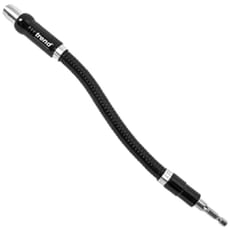
Flexible shafts are indispensable accessories that revolutionise how power tools perform in restricted, awkward, or hard-to-reach locations. These clever attachments connect between your drill, impact driver, or screwdriver and the working bit, creating a bendable extension that allows you to navigate around obstacles, reach deep into tight corners, and tackle fastening jobs at challenging angles. Whether you're working behind radiators, inside kitchen cabinets, under vehicle dashboards, or in any situation where a direct approach is impossible, flexible shafts provide the practical solution that keeps work progressing efficiently without time-consuming dismantling.
The selection available at Tooled-Up.com includes dedicated flexible drive shaft attachments for power drills, angled bit holders with flexible sections for impact drivers and screwdrivers, and magnetic flexible drivers that combine angle adjustment with secure bit retention. Premium brands such as DeWalt, Stanley, Faithfull, and Trend manufacture these accessories to professional standards, ensuring they can withstand the torque and repetitive use demanded in site work. The flexible core typically consists of a tightly wound cable or shaft housed within a protective sheath, allowing rotational force to be transmitted smoothly whilst maintaining flexibility through angles of 45 to 90 degrees or more.
From professional tradespeople working on installations and maintenance to DIY enthusiasts tackling home improvements, flexible shafts have become essential additions to any comprehensive tool kit. They're particularly valuable for electrical work, plumbing installations, furniture assembly, automotive repairs, and any trade where access is severely restricted. By extending your tool's reach and allowing operation at extreme angles, these accessories can save hours of dismantling work and eliminate the need for costly specialised right-angle tools.
Jargon Buster
- Flexible Drive Shaft: A rotating cable core enclosed in a protective housing that transmits torque from a power tool to a chuck or bit holder at the opposite end, enabling work in confined spaces and around obstacles whilst maintaining rotational force.
- Hex Shank Compatibility: The standardised hexagonal fitting (typically 1/4-inch or 6.35mm) that allows quick-change bits to be securely held in the flexible shaft's chuck or holder, preventing slippage during operation and ensuring reliable bit retention under load.
- Magnetic Bit Holder: A feature on many flexible shafts that uses a rare earth magnet to secure screwdriver bits firmly in place, facilitating one-handed operation and preventing bits from dropping out during angled work in awkward positions.
- Torque Transmission: The ability of the flexible shaft to effectively transfer rotational force from the power tool through the flexible section to the working bit without excessive loss of power, twisting, or whipping during operation.
- Maximum RPM Rating: The highest rotational speed at which the flexible shaft can safely operate without damage or failure, typically ranging from 2,000 to 3,000 RPM depending on construction quality, internal components, and intended application.
- Working Angle: The maximum degree of bend that a flexible shaft can achieve whilst still transmitting power effectively, commonly ranging from 45 to 90 degrees or more depending on core construction, shaft length, and manufacturer design specifications.
Who Uses Flexible Shafts?
- Electricians and sparkies installing sockets, switches, consumer units, and lighting fixtures in tight spaces behind fitted furniture, appliances, and wall-mounted equipment
- Plumbers and heating engineers working in confined areas under sinks, behind boilers, within airing cupboards, and in restricted pipework locations throughout residential and commercial properties
- Kitchen fitters and carpenters assembling and installing cabinets, worktops, and fitted furniture where straight-line access to fixing points is impossible or severely limited
- Automotive technicians and mechanics accessing fasteners in engine bays, under dashboards, within wheel arches, and throughout vehicle chassis and bodywork assemblies
- HVAC engineers installing and maintaining heating, ventilation, and air conditioning systems in awkward locations including ceiling voids, plant rooms, and restricted commercial spaces
- Shopfitters and retail installers working with display units, shelving systems, point-of-sale fixtures, and merchandising equipment in occupied commercial premises
- Maintenance engineers and facilities managers conducting repairs, servicing, and preventative maintenance in industrial, commercial, and institutional environments with limited access
- DIY enthusiasts and home improvers tackling projects that involve working in cramped spaces around the home, including flat-pack furniture assembly and home renovation work
- Joiners and furniture makers constructing bespoke items and fitted pieces where access to internal fixing points is restricted by design or assembly sequence requirements
How to Choose the Right Flexible Shafts
Power Tool Compatibility: Ensure the flexible shaft is compatible with your power tool's fitting system. Most modern cordless screwdrivers and impact drivers use 1/4-inch hex connections for universal compatibility, whilst drill attachments typically feature keyed or keyless chuck fittings in 10mm or 13mm capacities. Verify whether your tool requires a dedicated screwdriver bit holder style or a full drill chuck attachment before purchasing.
Shaft Length and Reach: Consider the depth of access required for your typical applications. Standard flexible shafts range from approximately 150mm to 300mm in length. Longer shafts provide greater reach into deep cavities but may sacrifice some rigidity and torque transmission efficiency, whilst shorter versions offer better control, reduced flexing, and improved power transfer for closer work in moderately confined spaces.
Flexibility and Rigidity Balance: Quality flexible shafts from Tooled-Up strike an optimal balance between being supple enough to bend into required positions yet rigid enough to transmit torque effectively without excessive whipping, twisting, or flexing during operation. Professional-grade units from brands like DeWalt and Stanley offer superior core construction with tightly wound cables and reinforced sheaths for reliable performance under demanding site conditions.
Bit Retention System: Magnetic bit holders are excellent for general screwdriving work, providing quick bit changes and secure retention during angled operation. For higher torque applications, impact driver use, or drilling operations, look for positive-locking chuck mechanisms that prevent bit slippage under load and maintain accurate bit alignment throughout the working cycle.
Build Quality and Durability: Professional tradespeople should invest in robust flexible shafts with metal housings, reinforced protective sheaths, and high-quality internal cables that won't degrade with regular use, exposure to site conditions, or repeated bending cycles. Budget options may suffice for occasional DIY use, but daily site work demands the resilience and longevity of premium brands including Faithfull, Trend, and DeWalt.
Application Type and Power Requirements: Match the flexible shaft specification to your primary applications. Light-duty screwdriving work requires less robust construction than drilling operations or driving fixings into dense materials like hardwood or masonry. Check the manufacturer's torque ratings, maximum RPM specifications, and impact-ready designation to ensure suitability for your intended applications and power tool combination.
Popular Accessories
- Comprehensive screwdriver bit sets in various drive types including Phillips, Pozi, Torx, slotted, and hex in multiple lengths for different applications and fastener depths
- Magnetic bit holders and standard extensions for additional reach when combined with flexible shafts for extra-deep access requirements
- Right-angle attachments and adaptors for even greater versatility in confined spaces where flexible shafts alone cannot provide sufficient clearance
- Quick-change chuck adaptors allowing rapid switching between different bit types, drill bits, and accessories without tools or time-consuming changeovers
- Impact-rated screwdriver bits with hardened construction designed to withstand higher torque and repetitive impacts when using flexible shafts with impact drivers
- Drill bit sets in HSS, titanium-coated, and brad point configurations suitable for use with flexible drill shaft attachments in wood, metal, and plastic materials
- Professional tool storage solutions such as DeWalt TSTAK, Milwaukee PACKOUT, or Makita MakPac systems for organised accessory and flexible shaft storage
- Cordless screwdrivers, impact drivers, and compact drills from Makita, Milwaukee, Bosch, DeWalt, and Festool to power your flexible shaft attachments efficiently
- Magnetic wristbands and bit holders for convenient storage of screws and bits during one-handed operation with flexible shafts in awkward positions
Frequently Asked Questions
Can I use a flexible shaft with an impact driver?
Many flexible shafts are specifically engineered for use with impact drivers and feature reinforced construction, impact-ready gearboxes, and strengthened cores to handle the additional torque and repetitive impacts. However, always verify the manufacturer's specifications and impact-ready designation, as some lighter-duty flexible bit holders are only suitable for standard drills and screwdrivers. Using an inappropriate flexible shaft with an impact driver may result in premature failure, damage to internal components, or safety concerns.
What's the maximum torque a flexible shaft can handle safely?
This varies considerably by product construction, manufacturer specifications, and internal component quality, but most professional-grade flexible shafts can handle typical screwdriving torques without issue. For heavy-duty applications involving dense materials or large-diameter fixings, professional-grade units from DeWalt, Stanley, and Faithfull are engineered to withstand higher torque loads safely. Generally, torque transmission becomes less efficient as the shaft is bent to more acute angles, so use the gentlest curve necessary for your application to maximise power transfer and minimise component stress.
Do flexible shafts work with all power tool brands?
Flexible shafts with standard 1/4-inch hex fittings offer universal compatibility with most modern cordless screwdrivers and impact drivers from Makita, DeWalt, Milwaukee, Bosch, Festool, and other major manufacturers. Flexible drive shaft attachments designed for drills may require specific chuck sizes (typically 10mm or 13mm capacity), so verify compatibility with your drill's chuck capacity and fitting type before purchasing to ensure proper fitment and safe operation.
How do I maintain a flexible shaft to ensure maximum longevity?
Keep the flexible shaft clean and free from dust, debris, and moisture, particularly around moving parts and where the flexible section enters the housing. Avoid over-bending beyond the manufacturer's recommended working angle, as this can damage the internal cable and reduce torque transmission efficiency. Store the shaft in a relaxed, straight position when not in use, and periodically apply a light machine oil to any exposed moving components or connection points. Never exceed the maximum RPM rating, and replace the unit if you notice excessive play, grinding sensations, reduced torque transmission, or visible damage to the protective sheath.
Are flexible shafts suitable for drilling applications as well as screwdriving?
Some flexible drive shaft attachments are specifically designed for drilling applications and feature robust construction with proper chuck mechanisms for securely holding drill bits during rotational operation. However, angled bit holders and magnetic flexible drivers are generally intended for screwdriving work only and lack the necessary construction for drilling loads. When drilling with a flexible shaft, expect some reduction in power, precision, and control compared to drilling with a straight tool, and always ensure the shaft is explicitly rated for drilling operations before use to prevent damage or safety issues.