

Floor Polishers

Pay in 3 interest-free payments on purchases from £20-£3000 with  . Learn more.
 Loading...
End of content
Error - No more pages to load
About Floor Polishers
Floor polishers are essential power tools designed to clean, polish, and maintain a wide variety of hard flooring surfaces to a professional standard. Whether you're working on commercial vinyl, polished concrete, terrazzo, or sealed wood floors, a quality floor polisher delivers superior results compared to manual cleaning methods. These machines combine rotary scrubbing action with professional-grade cleaning solutions to remove ingrained dirt, restore shine, and protect floor surfaces from premature wear.
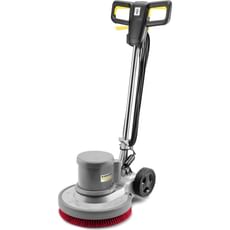
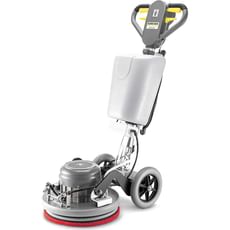
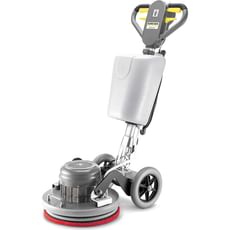
Modern single disc floor polishers, such as those in the Karcher Professional range available from Tooled-Up.com, offer versatile performance for both cleaning and polishing applications. Available in various disc sizes typically ranging from 400mm to 450mm diameter, these machines provide the torque and consistency needed for large-area commercial work. Orbital action models deliver particularly impressive results on sensitive surfaces, whilst traditional rotary machines excel at heavy-duty scrubbing and stripping tasks. Many professional units now feature integrated spray systems that apply cleaning solution directly to the floor surface, improving efficiency and reducing chemical waste.
Floor polishers represent a significant investment for professional cleaning contractors, facilities management teams, and tradespeople who maintain commercial spaces. With proper care and the right selection of brushes, pads, and cleaning liquids, these machines can transform tired, dull floors into gleaming surfaces that enhance any commercial or domestic environment.
Jargon Buster
- Single Disc Machine
- A floor polisher with one rotating disc that drives brushes or pads. The standard configuration for professional floor cleaning and polishing work, offering excellent manoeuvrability and consistent pressure distribution.
- Orbital Action
- A drive system where the cleaning head oscillates in small circular movements rather than rotating continuously. This action is gentler on delicate surfaces and produces superior shine on polished floors without creating swirl marks.
- RPM (Revolutions Per Minute)
- The speed at which the floor polisher's disc rotates. Lower speeds (150-300 RPM) suit scrubbing and stripping, whilst higher speeds (up to 1500 RPM) are better for buffing and polishing to a high shine.
- Pad Driver
- The attachment plate that holds cleaning pads securely to the machine's drive disc. Essential for quickly changing between different pad types during multi-stage floor restoration work.
- Solution Tank
- An integrated reservoir that holds cleaning liquid and dispenses it through the machine during operation. Spray floor cleaners with solution tanks improve productivity and ensure even chemical distribution.
- Working Width
- The diameter of the cleaning disc, typically measured in centimetres or millimetres. Common professional sizes include 430mm and 450mm, with larger diameters covering more floor area per pass.
Who Uses Floor Polishers?
Floor polishers are essential equipment for a diverse range of professionals and organisations:
- Contract Cleaners - Professional cleaning companies maintaining offices, retail spaces, schools, and healthcare facilities
- Facilities Management Teams - In-house maintenance staff responsible for commercial buildings, shopping centres, and industrial premises
- Janitorial Services - Caretakers and cleaning operatives in educational institutions, leisure centres, and public buildings
- Property Maintenance Contractors - Multi-trade professionals offering floor restoration as part of refurbishment projects
- Hotel and Hospitality Staff - Housekeeping teams maintaining lobby areas, function rooms, and guest corridors to presentation standards
- Retail Store Managers - Maintaining shop floors to create positive first impressions for customers
- Industrial Cleaning Specialists - Tackling heavy soiling in warehouses, factories, and production facilities
- DIY Enthusiasts - Homeowners undertaking floor restoration projects or maintaining large domestic floor areas
How to Choose the Right Floor Polishers
Selecting the appropriate floor polisher depends on several key factors that will determine performance and suitability for your specific applications:
Disc Size and Coverage: The working width directly affects productivity. A 430-450mm disc suits most commercial applications, covering approximately 1500-2000 square metres per hour depending on the task. Smaller diameters offer better manoeuvrability in confined spaces, whilst larger discs excel at open-plan areas.
Drive System: Standard rotary machines provide aggressive cleaning power ideal for stripping old floor finishes and heavy scrubbing. Orbital action models like the Karcher BDS 43 Orbital C deliver gentler performance perfect for maintaining polished surfaces without creating unsightly swirl marks or scratches.
Power Requirements: Professional floor polishers typically operate on 240v mains power with ratings between 1000W and 1500W. Check the motor specification matches your intended workload - higher wattage generally indicates more torque for demanding applications. Ensure your site's electrical installation can support the machine's current draw.
Solution Application: Integrated spray systems significantly improve efficiency by eliminating separate mopping stages. Models with built-in solution tanks allow precise control over chemical usage and ensure even distribution across the floor surface. Consider whether your typical jobs would benefit from this feature.
Weight and Manoeuvrability: Professional machines typically weigh 40-60kg, which provides the downward pressure needed for effective cleaning. However, heavier units can be more challenging to transport and manoeuvre. Look for models with well-designed handles and balanced weight distribution for reduced operator fatigue during extended use.
Accessory Compatibility: Verify that a wide range of brushes, pads, and pad drivers are available for your chosen machine. Different floor types and cleaning stages require specific accessories, so compatibility with industry-standard fittings provides valuable versatility.
Popular Accessories
Maximise the versatility and effectiveness of your floor polisher with these essential accessories and consumables:
- Brushes & Pads - Different grades from aggressive scrubbing brushes for deep cleaning to ultra-fine polishing pads for achieving mirror finishes on hard floors
- Cleaning Liquids - Professional floor cleaning solutions formulated for specific surface types, including neutral cleaners, degreasers, and polish restorers
- Dust Bags - Collection systems for dry buffing work, preventing airborne dust and maintaining a cleaner working environment
- Pad Drivers - Quick-change mounting systems for different pad types, essential for multi-stage floor restoration projects
- Spray Bottles and Applicators - For applying cleaning solutions to smaller areas or spot treatment before machine cleaning
- Spare Drive Discs - Replacement components to maintain optimal performance and extend machine lifespan
- Cable Management Systems - Keep power cables organised and prevent trip hazards on busy sites
- Protective Covers - Transport and storage protection for your investment when moving between job sites
Safety Information
Floor polishers are powerful machines that require proper safety awareness and responsible operation:
Electrical Safety: Always inspect the power cable and plug before use, ensuring no damage to insulation. Floor polishers operate on 240v mains power and must be connected to properly earthed sockets. Consider using a residual current device (RCD) for additional protection, particularly when working in wet conditions or on construction sites. Comply with IEE Wiring Regulations BS 7671 for all electrical connections.
Personal Protective Equipment: Wear appropriate safety footwear with slip-resistant soles, as floor polishing creates temporarily slippery surfaces. Safety glasses protect against splashes from cleaning solutions, whilst gloves prevent skin contact with chemicals. Hearing protection may be necessary during extended operation in enclosed spaces.
Chemical Handling: Floor cleaning liquids must be used in accordance with COSHH (Control of Substances Hazardous to Health) regulations. Always read product safety data sheets, use appropriate dilution rates, and ensure adequate ventilation when working with chemical cleaners. Store cleaning solutions securely away from heat sources and incompatible materials.
Manual Handling: Professional floor polishers are heavy machines requiring proper lifting technique. Follow HSE manual handling guidelines, and always use two people when loading equipment into vehicles or moving machines up steps. Many models feature transport wheels to reduce manual handling risks.
Operational Hazards: Clearly mark areas being cleaned with warning signs to prevent slip accidents. Never leave the machine running unattended, and ensure the power cable is positioned to avoid trip hazards. Keep hands, feet, and loose clothing away from rotating components during operation.
Frequently Asked Questions
What's the difference between cleaning and polishing modes?
Cleaning mode typically uses more aggressive brushes or pads at lower speeds (150-300 RPM) with appropriate cleaning solutions to remove dirt and old finishes. Polishing mode employs finer pads at higher speeds (1000-1500 RPM) to buff the surface and create shine. The professional machines stocked at Tooled-Up.com can perform both functions by changing accessories and adjusting speed settings.
How often should I polish commercial floors?
This depends on traffic levels and floor type. High-traffic commercial areas may benefit from light polishing weekly and deep cleaning monthly. Lower-traffic spaces might only require monthly polishing. Regular maintenance prevents dirt becoming ingrained, making each cleaning session quicker and extending the life of floor finishes.
Can I use a floor polisher on all hard floor types?
Most professional floor polishers work excellently on vinyl, linoleum, sealed concrete, terrazzo, and sealed wood floors. However, always check the manufacturer's guidance for your specific floor type. Unsealed or very soft surfaces may require specialist equipment or techniques. When in doubt, test in an inconspicuous area first.
Why choose an orbital floor polisher over a standard rotary machine?
Orbital machines like the Karcher BDS 43 Orbital C produce less aggressive action, making them ideal for maintaining already-polished surfaces without creating swirl marks. They're particularly effective on sensitive floors where traditional rotary machines might cause damage. However, standard rotary machines provide more aggressive cleaning power for heavy soiling and stripping applications.
What size floor polisher do I need for my application?
For most commercial cleaning applications, a 430-450mm disc diameter offers the best balance of coverage and manoeuvrability. These machines can effectively clean 1500-2000 square metres per hour whilst still navigating around furniture and through doorways. Smaller operators or those working in very confined spaces might prefer more compact models, though these are less common in professional ranges.