

Food Industry Lubricants
Pay in 3 interest-free payments on purchases from £30-2000 with  . Learn more.
 Loading...
End of content
Error - No more pages to load
About Food Industry Lubricants
Food industry lubricants are specialist formulations engineered specifically for use in food processing, preparation, and packaging environments where there is potential for incidental contact with food products. Unlike conventional industrial lubricants, these products are manufactured using food-grade base oils and additives that meet stringent safety standards, ensuring they pose no health risk if they come into contact with consumables. They provide essential lubrication, protection, and maintenance for machinery and equipment whilst complying with food safety regulations and HACCP requirements.
These lubricants are formulated to meet NSF H1 registration standards, which certifies them as safe for use in food processing areas where incidental food contact may occur. They deliver the same high-performance characteristics as traditional industrial lubricants—including excellent load-carrying capacity, water resistance, and temperature stability—whilst maintaining the purity required for food production environments. From multi-purpose pastes and anti-seize compounds to chain oils and bearing greases, food industry lubricants are available in various formulations to suit different applications and operating conditions.
Quality food-grade lubricants help maintain hygiene standards, extend equipment life, and reduce maintenance downtime in commercial kitchens, food manufacturing plants, breweries, bakeries, and other food processing facilities. Tooled-Up.com stocks trusted brands like Rocol, whose Foodlube range has been specifically developed to meet the demanding requirements of food and pharmaceutical industries. These products are an essential component of HACCP compliance programmes and help businesses meet their legal obligations under UK food safety legislation whilst ensuring operational efficiency and equipment reliability.
Jargon Buster
- NSF H1 Registration: A certification from NSF International indicating that a lubricant is safe for use in food processing areas where incidental food contact may occur. These products contain only FDA-approved ingredients and are essential for compliance with food safety regulations.
- HACCP Compliance: Hazard Analysis and Critical Control Points—a systematic preventive approach to food safety that identifies, evaluates, and controls hazards. Using appropriate food-grade lubricants is a key requirement of HACCP programmes in the UK food industry.
- Incidental Food Contact: Situations where lubricants may accidentally come into contact with food products during normal equipment operation, typically through drips, leaks, or spray mist. H1-rated lubricants are formulated specifically for these scenarios.
- Food-Grade Base Oil: Highly refined mineral oils or synthetic oils that meet purity standards for potential food contact, free from harmful additives or contaminants that could pose health risks.
- Anti-Seize Properties: The ability of a lubricant to prevent galling, pick-up, and seizure on threaded connections and metal-to-metal contact surfaces, particularly important in equipment that undergoes frequent assembly and disassembly for cleaning.
- COSHH Assessment: Control of Substances Hazardous to Health—UK regulations requiring risk assessment of chemicals used in the workplace, including lubricants in food processing environments, to protect worker safety and ensure proper handling procedures.
Who Uses Food Industry Lubricants?
Food industry lubricants are essential for a wide range of professionals and businesses operating within food-related sectors:
- Food processing plant engineers and maintenance technicians
- Commercial kitchen equipment engineers and installers
- Bakery and confectionery production facilities
- Brewery and beverage manufacturing engineers
- Dairy processing plant operators and maintenance teams
- Meat and poultry processing facilities
- Pharmaceutical manufacturing maintenance teams
- Catering equipment service engineers
- Quality assurance and food safety managers
- Industrial maintenance contractors working in food environments
- Agricultural food processing operations
- Packaging machinery operators and engineers
- Cold storage and frozen food facility operators
- Hospital and healthcare catering department technicians
How to Choose the Right Food Industry Lubricants
Selecting appropriate food industry lubricants requires careful consideration of several key factors:
Certification and Compliance: Always verify that products carry NSF H1 registration for incidental food contact applications. Check that the lubricant meets UK and EU food safety regulations and is suitable for your specific HACCP requirements. Ensure you have access to technical data sheets and safety information for COSHH assessments. Products available from Tooled-Up include detailed documentation to support your compliance obligations.
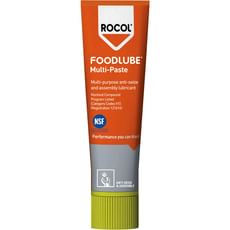
Application Type: Consider whether you need a paste, grease, oil, or spray formulation based on your equipment and maintenance requirements. Multi-purpose pastes like Rocol Foodlube Multi-Paste offer versatility for various applications including threaded connections, bushes, slides, small open gears, and fasteners. Specialised products are available for chains, conveyor systems, bearings, and hydraulic systems depending on your operational needs.
Operating Conditions: Assess the temperature range your lubricant must withstand, from cold storage environments potentially down to -20°C to high-temperature ovens or cooking equipment that may exceed 150°C. Consider exposure to water, steam, cleaning chemicals, and washdown procedures, which require lubricants with excellent water resistance and adhesion properties to remain effective between maintenance intervals.
Load and Speed Requirements: Evaluate the mechanical loads and operating speeds of your equipment. Heavy-duty applications such as mixing equipment, conveyors under load, or packaging machinery require lubricants with enhanced extreme pressure (EP) properties and load-carrying capacity to prevent wear and equipment failure. Lighter applications may be adequately served by general-purpose formulations.
Relubrication Frequency: Choose lubricants that offer extended service intervals to reduce maintenance time and labour costs whilst maintaining equipment reliability and hygiene standards. Consider the tenacity of the product—its ability to resist water washout during cleaning procedures is particularly important in food processing environments subject to frequent sanitation.
Popular Accessories
- Grease guns and precision applicators for controlled lubricant placement
- Clean, lint-free application cloths and wipes
- Colour-coded tools and equipment for food processing environments
- Lubricant storage cabinets and dispensing systems
- Food-grade thread sealants and assembly compounds
- Maintenance record labels and HACCP documentation systems
- Personal protective equipment (PPE) including nitrile gloves and safety glasses
- Equipment cleaning and degreasing products
- Brush applicators for hard-to-reach areas
- Lockable chemical storage containers
- Temperature measurement devices for monitoring operating conditions
Safety Information
Whilst food industry lubricants are formulated for safety in food environments, proper handling procedures should always be followed. Store products in their original containers away from direct food contact areas and ensure they're clearly labelled with product identification and date of opening. Consult safety data sheets and conduct appropriate COSHH assessments before use to understand any specific handling requirements.
Wear suitable PPE including nitrile gloves and eye protection during application to prevent skin and eye contact, even though these products are non-toxic. Follow HSE guidelines for workplace chemical handling and ensure all operatives are trained in correct application procedures and dosage rates. Avoid over-application to minimise waste and potential contamination risks—a thin, even coat is typically more effective than excessive quantities.
Keep equipment lubrication records as part of your HACCP documentation, including product names, application dates, and quantities used. This traceability is essential for food safety audits and regulatory compliance. In case of accidental ingestion or adverse reaction, seek medical advice immediately and have product safety information available for healthcare professionals.
Frequently Asked Questions
What does NSF H1 registration mean for food industry lubricants?
NSF H1 registration certifies that a lubricant is formulated only with ingredients approved by the FDA for incidental food contact. These products can be safely used on food processing equipment where there's a possibility of accidental contact with food products, typically up to 10 parts per million. This certification is recognised globally and is essential for compliance with UK food safety regulations and HACCP requirements.
Can I use ordinary industrial lubricants in food processing areas?
No. UK food safety regulations and HACCP principles require that only food-grade lubricants with appropriate NSF H1 certification be used in areas where incidental food contact is possible. Using non-compliant products poses serious health risks, may contaminate food products, and could result in regulatory enforcement action, product recalls, and prosecution under food safety legislation.
How often should food industry lubricants be applied?
Application frequency depends on the specific product formulation, equipment type, operating conditions, and manufacturer recommendations. Heavy-use environments or facilities with frequent washdown procedures may require more frequent relubrication—potentially daily or weekly. Equipment in less demanding conditions may only need monthly or quarterly attention. Always follow equipment manufacturer guidelines and maintain detailed lubrication schedules as part of your preventive maintenance programme.
Are food-grade lubricants less effective than industrial lubricants?
Modern food-grade lubricants offer comparable performance to traditional industrial products. Quality formulations provide excellent load-carrying capacity, wear protection, water resistance, and temperature stability whilst meeting food safety requirements. They're specifically engineered to perform under demanding food processing conditions including exposure to cleaning chemicals, steam, and temperature extremes.
Can food industry lubricants be used as cutting or drilling compounds?
Yes, certain food-grade lubricants like Rocol Foodlube Multi-Paste are suitable for use as drilling, tapping, and cutting lubricants, particularly when maintenance work must be carried out on equipment in situ within food processing areas. This dual functionality reduces the need to stock multiple products and helps maintain compliance during equipment repairs and modifications.