

Foot Pumps
Pay in 3 interest-free payments on purchases from £30-2000 with  . Learn more.
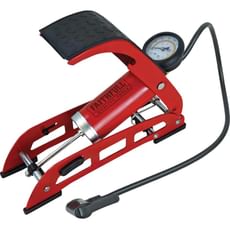
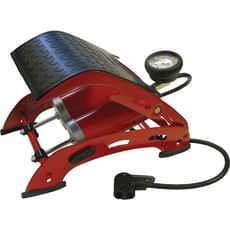
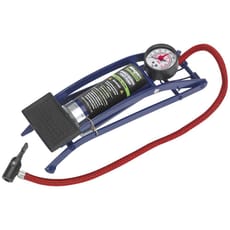
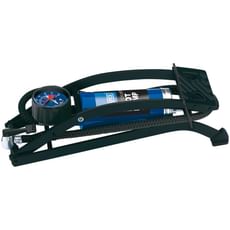
 Loading...
End of content
Error - No more pages to load
About Foot Pumps
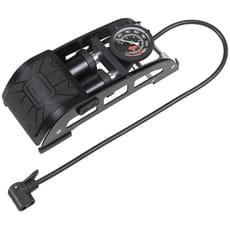
Foot pumps are manual inflation devices that use a foot-operated pedal mechanism to generate air pressure, making them indispensable for inflating tyres, sports equipment, air beds, and other inflatable items without requiring electricity or batteries. Whether you're a mobile mechanic working roadside, a groundskeeper maintaining ride-on equipment, or a DIY enthusiast keeping your car tyres properly inflated, a reliable foot pump delivers a portable, cost-effective inflation solution that works anywhere, anytime. Unlike electric compressors that depend on 240v mains power or battery charge, foot pumps offer complete operational independence, making them ideal for remote locations, emergency situations, or environments where noise and emissions must be minimised.
Tooled-Up.com stocks both single and double cylinder foot pumps from trusted brands including Sealey, Draper, Faithfull, and Siegen. Single cylinder models provide a compact, lightweight option perfectly suited for occasional use, bicycle tyres, and smaller inflation tasks, whilst double cylinder (twin barrel) designs deliver significantly faster inflation rates and higher maximum pressures—typically achieving twice the air volume per pump cycle. This makes them the preferred choice for regular professional use, larger vehicle tyres, and time-sensitive applications. Most quality foot pumps feature integrated pressure gauges for accurate inflation monitoring, multiple valve adaptors for different applications, and robust steel or aluminium construction engineered to withstand the rigours of workshop and site environments.
Modern foot pumps typically achieve maximum pressures between 5 and 10 bar (approximately 70-145 PSI), which covers the requirements for car tyres, bicycle tyres, motorcycle tyres, wheelbarrow tyres, and the vast majority of common inflation applications. The ergonomic pedal design harnesses natural stepping motion to generate consistent pressure with reduced fatigue during extended pumping sessions, whilst providing superior control compared to hand pumps for high-pressure tasks. With hose lengths typically ranging from 500-1000mm and lock-on connectors that secure firmly to valve stems, professional-grade foot pumps deliver reliable performance whether you're topping up tyres at home or conducting pressure checks on site.
Jargon Buster
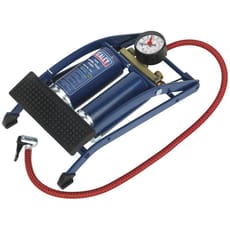
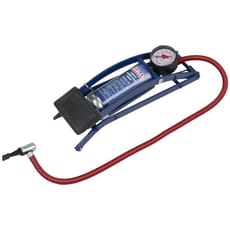
- Single Cylinder: A foot pump with one compression chamber that generates air only on the downward stroke. These models are lighter and more compact but require more pumping strokes to achieve desired pressure compared to twin barrel designs, making them ideal for occasional use and smaller inflation jobs.
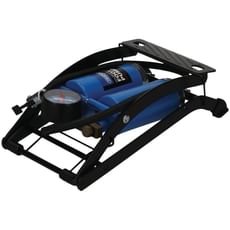
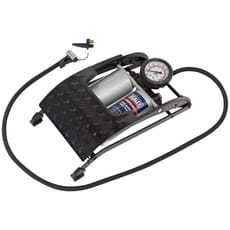
- Double Cylinder (Twin Barrel): Features two compression chambers that work on both the upward and downward strokes, effectively doubling the air volume delivered per pump cycle. This significantly reduces pumping time and effort, particularly beneficial for larger vehicle tyres and professional applications.
- Bar/PSI: Units of pressure measurement. Bar is the metric standard (1 bar = 100 kilopascals), whilst PSI (pounds per square inch) represents the imperial equivalent. Most UK foot pumps display both measurements, with 1 bar approximately equal to 14.5 PSI for easy reference.
- Presta and Schrader Valves: The two most common valve types on bicycle tyres. Schrader valves are the wider type also used on car tyres, whilst Presta valves are narrower and typically found on road bikes and performance bicycles. Quality foot pumps include adaptors for both valve systems.
- Pressure Gauge: An integrated dial or digital display showing the current air pressure being delivered, allowing precise inflation to manufacturer-recommended levels and preventing over-inflation damage that can compromise safety and equipment longevity.
- Lock-On Connector: A threaded or lever-operated attachment that secures firmly to the valve stem, preventing air loss during pumping and allowing hands-free operation—particularly useful when inflating to higher pressures where leakage at the connection point can significantly increase pumping effort.
Who Uses Foot Pumps?
- Mobile Mechanics and Automotive Technicians: For tyre inflation, pressure checks during roadside repairs, and emergency callouts where power sources aren't available
- Cyclists and Bicycle Mechanics: Essential equipment for bike shops, cycling clubs, and fleet bicycle maintenance programmes
- Groundskeepers and Greenkeepers: Maintaining correct tyre pressures on ride-on mowers, turf equipment, wheelbarrows, and utility vehicles across sports facilities and estates
- Agricultural Workers and Farmers: Keeping tractors, trailers, quad bikes, and farm machinery tyres properly inflated across large sites without mains access
- Caravan and Motorhome Owners: Checking and adjusting tyre pressures before journeys and during extended trips to maintain safety and fuel efficiency
- Site Managers and Construction Workers: Inflating wheelbarrows, pneumatic tools, and equipment tyres on building sites where electric compressors may not be accessible
- Sports Facility Managers: Maintaining correct inflation for footballs, rugby balls, basketballs, and other inflatable sports equipment
- DIY Enthusiasts and Homeowners: General purpose inflation for car tyres, bicycle tyres, air beds, paddling pools, and garden equipment
- Camping and Outdoor Enthusiasts: Portable inflation solution for air mattresses, inflatable boats, kayaks, and recreational equipment at campsites and remote locations
How to Choose the Right Foot Pumps
Single vs Double Cylinder: Consider usage frequency and typical inflation volumes. Single cylinder models from brands like Draper and Faithfull are perfectly adequate for occasional home use, bicycle tyres, and sports equipment, whilst double cylinder pumps are recommended for regular professional use, larger vehicle tyres, or when speed matters. The twin barrel design reduces pumping time by approximately 50% but adds weight and cost—worthwhile for tradespeople but potentially unnecessary for infrequent domestic use.
Maximum Pressure Rating: Ensure the pump's maximum pressure capacity matches your requirements. Most car tyres require 2-2.5 bar (30-35 PSI), bicycle tyres range from 2-8 bar depending on type, whilst some specialist applications may need higher pressures. A pump rated to 7-10 bar provides versatility for most common tasks and future-proofs your investment against varying requirements.
Gauge Accuracy and Readability: A clear, accurate pressure gauge is essential for preventing dangerous over-inflation or performance-compromising under-inflation. Look for large, easy-to-read dials with both bar and PSI markings clearly displayed. Premium models from Sealey often feature protective gauge covers and larger dial faces for professional use where accuracy is critical and visibility in various lighting conditions matters.
Build Quality and Materials: Professional-grade pumps typically feature steel cylinders, reinforced hoses, and metal pedal mechanisms that withstand heavy workshop use and site conditions. The Tooled-Up range includes robust all-metal designs with 4mm thick steel bases that provide stability during operation. Budget models may incorporate more plastic components suitable for lighter domestic applications, but consider the environment where the pump will be stored and used—damp workshops and outdoor storage demand corrosion-resistant construction.
Valve Adaptors and Compatibility: Ensure the pump includes necessary adaptors for your specific applications. Universal sets should include Schrader (car-type) and Presta (bicycle) valve fittings, plus adaptors for sports balls and inflatable toys. Some models include storage compartments within the pump base to keep adaptors organised and prevent loss—a valuable feature for professionals carrying pumps between job sites.
Portability and Storage: If you'll transport the pump regularly in your van or car boot, consider weight, folding handles, and overall dimensions. Compact single cylinder models fit easily in vehicle storage, whilst larger professional double cylinder pumps may be better suited to permanent workshop locations. Hose lengths of 600mm or more provide flexibility when accessing awkwardly positioned valves on vehicles and equipment without repositioning the pump.
Popular Accessories
- Additional Valve Adaptors: Specialist fittings for unusual valve types, inflatable boats, airbeds, and commercial equipment not covered by standard adaptor sets
- Tyre Pressure Gauges: Separate digital or analogue gauges for verification and calibration checking, ensuring accuracy particularly on older pumps
- Tyre Valve Caps: Dust caps and valve core tools for maintenance, pressure retention, and preventing valve contamination
- Extension Hoses: Longer connecting hoses for accessing difficult valve positions on large vehicles, plant equipment, and dual-wheel configurations
- Repair Kits: Replacement seals, washers, and O-rings to maintain pump performance and extend service life when wear occurs
- Ball Needles: Inflation needles specifically designed for sports balls including footballs, rugby balls, basketballs, and netballs
- Puncture Repair Kits: For fixing deflated tyres before re-inflation with your foot pump, particularly useful for cyclists and mobile mechanics
- Quick-Release Chuck Fittings: Clip-on connectors and lever-operated attachments for faster valve connection and disconnection
- Protective Carry Bags: Storage solutions for transporting pumps and accessories whilst protecting against damage and corrosion
Safety Information
Pressure Limits: Never exceed the maximum rated pressure of your foot pump or the recommended pressure for the item being inflated. Over-inflation can cause catastrophic tyre failure, burst sports equipment, and serious injury from explosive decompression. Always check manufacturer specifications on the vehicle placard or equipment labelling before inflating, and monitor the gauge throughout the pumping process.
Gauge Maintenance and Accuracy: Regularly verify gauge accuracy against a known-good reference gauge, particularly if the pump has experienced impact damage or harsh storage conditions. Inaccurate pressure readings can lead to dangerous under or over-inflation, affecting vehicle handling, tyre wear, fuel economy, and safety. Replace or professionally recalibrate gauges showing inconsistent or obviously incorrect readings rather than relying on suspect measurements.
Stable Positioning: Always place foot pumps on firm, level ground before use. Unstable positioning can cause the pump to slip during operation, potentially causing injury to your ankle or foot, or damage to valve stems which can result in rapid deflation. Use the pump's anti-slip base pads and never operate on wet, icy, or uneven surfaces where stability is compromised.
Hose and Connection Inspection: Before each use, inspect hoses for cracks, splits, perishing, or abrasion damage, and check all connections are secure without cross-threading. A failed hose under pressure can whip dangerously and cause injury to hands, face, or eyes. Replace damaged components immediately through the original manufacturer rather than attempting temporary repairs with tape or adhesive which may fail catastrophically under pressure.
Appropriate Footwear: Wear sturdy, closed-toe footwear when operating foot pumps. The repetitive pedal action generates significant force—often requiring your full body weight on the pedal—and proper footwear prevents foot fatigue and injury if your foot slips from the pedal during operation. Steel toe-capped boots provide additional protection in professional environments where HSE requirements apply.
Frequently Asked Questions
What's the difference between single and double cylinder foot pumps?
Single cylinder foot pumps compress air only on the downward stroke, whilst double cylinder (twin barrel) models compress air on both the upward and downward strokes. This means double cylinder pumps inflate approximately twice as fast with less effort per complete pumping cycle. For occasional use and smaller items like bicycle tyres or sports balls, single cylinder pumps are perfectly adequate and more affordable. However, for regular professional use, larger vehicle tyres, or when time efficiency matters—such as mobile mechanics conducting multiple callouts daily—the investment in a double cylinder model quickly pays dividends through significantly reduced pumping time and physical effort.
Can I use a foot pump to inflate car tyres from completely flat?
Yes, foot pumps can inflate car tyres from flat, though it requires considerable effort and time—typically 10-20 minutes of continuous pumping per tyre depending on size and whether you're using a single or double cylinder model. Double cylinder pumps reduce this time significantly and are less physically demanding. For emergency roadside use where you have no alternative, a foot pump provides a power-independent solution to reach a safe driving pressure. However, for workshop or regular use, an electric compressor is more practical for complete inflation from flat. Foot pumps excel at topping up partially deflated tyres, making pressure adjustments for different load conditions, and checking pressures during routine maintenance.
How accurate are the pressure gauges on foot pumps?
Quality foot pumps from reputable brands like Sealey, Draper, and Faithfull typically feature gauges accurate to within ±1-2 PSI (approximately 0.07-0.14 bar), which is acceptable for most automotive and general inflation applications. Professional mechanics working to precise specifications may prefer to verify readings with a separate calibrated digital gauge for critical work. Gauge accuracy can deteriorate over time due to mechanical wear, impact damage during transport, or exposure to extreme temperatures and moisture, so periodic verification against a known-good reference gauge is recommended, particularly if the pump is used frequently or in demanding environments where accuracy directly affects safety.
Do foot pumps work with both Presta and Schrader valves?
Most quality foot pumps available at Tooled-Up include adaptors to accommodate both valve types. Schrader valves (the wider type with a spring-loaded pin) are standard on car, motorcycle, and mountain bike tyres, whilst Presta valves (narrower with a threaded lock nut) are common on road and performance bicycles. Some pumps feature reversible or dual-head connections that work with both valve types without requiring adaptor changes, which is convenient if you regularly switch between different applications. Always check the included accessories when purchasing to ensure compatibility with your specific requirements, and store adaptors in the pump's built-in compartment if provided to prevent loss between uses.
What pressure should I inflate my tyres to?
Correct tyre pressures vary significantly by vehicle type, load conditions, and tyre specifications. For cars and vans, the recommended pressures are listed in the vehicle handbook and usually on a placard inside the driver's door frame or fuel filler cap—typically between 2.0-2.5 bar (30-36 PSI) for standard cars, with higher pressures often recommended when carrying maximum loads or driving at motorway speeds. Bicycle tyres vary widely depending on type: mountain bikes typically require 2-3 bar (30-45 PSI), hybrid bikes 3-5 bar (45-70 PSI), and road bikes 6-8 bar (85-115 PSI). Always check manufacturer recommendations specific to your equipment and adjust for load conditions and usage patterns—under-inflation causes excessive tyre wear and poor fuel economy, whilst over-inflation reduces grip and increases puncture risk.