

Forstner Drill Bits

Pay in 3 interest-free payments on purchases from £20-£3000 with  . Learn more.

 Loading...
End of content
Error - No more pages to load
About Forstner Drill Bits
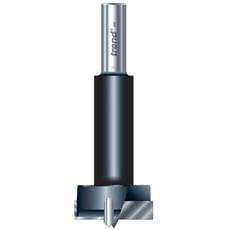
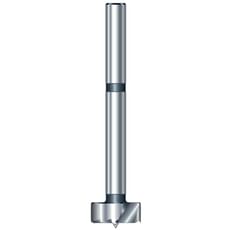
Forstner drill bits are precision woodworking tools engineered to produce flat-bottomed holes with exceptional cleanliness and accuracy. Unlike conventional twist drill bits that tear through timber, Forstner bits feature a distinctive circular rim cutter and chisel-edged blades that slice cleanly through wood fibres, leaving smooth walls and a perfectly flat base. This unique cutting geometry makes them indispensable for installing concealed cabinet hinges, drilling dowel holes, creating recesses for mounting hardware, and any application where a professional finish is non-negotiable. The bits range from compact 10mm diameters through to substantial 50mm cutters, with saw tooth variants offering enhanced performance in hardwoods and production environments.
The design advantages of Forstner bits extend beyond surface finish. Their guided rim cutter prevents wandering, enabling precise hole placement even on angled surfaces or when drilling overlapping holes—something standard bits cannot achieve. The flat-bottomed profile eliminates the conical point left by twist bits, making them perfect for hinge cups, bolt recesses, and decorative inlays where depth control matters. Whether working with softwoods like pine or dense hardwoods such as oak, these bits deliver consistent results across both hand-held cordless drills and pillar drill applications.
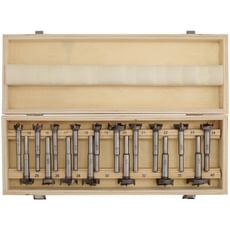
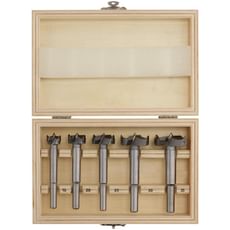
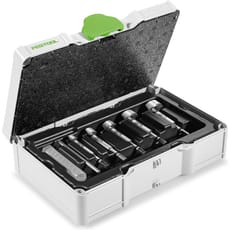
Tooled-Up.com stocks an extensive selection featuring trusted brands including Bosch Professional, DeWalt, Trend, Makita, Draper, Faithfull, and Einhell. The range encompasses individual bits for specific tasks alongside comprehensive sets—such as the Draper 17 Piece collection or compact 5-piece starter sets—housed in protective storage cases. From budget-conscious options ideal for occasional DIY work through to professional-grade Trend saw tooth variants built for intensive trade use, the selection at Tooled-Up caters to cabinet makers, joiners, and woodworking enthusiasts alike.
Jargon Buster
- Centre Spur: The sharp locating point at the bit's centre that establishes precise hole position and prevents drift during drilling. This spur bites into the timber before the cutting edges engage, ensuring accuracy from the first rotation.
- Rim Cutter: The circular cutting edge encircling the bit's perimeter that scores wood fibres cleanly before the main cutting edges remove material. This design produces smooth-edged holes without tear-out or splintering on either entry or exit surfaces.
- Flat-Bottomed Hole: A bore featuring a level, flat base rather than the pointed cone created by standard twist drill bits. Essential for hinge installation, dowel joinery, and creating uniform recesses for bolt heads or decorative features.
- Saw Tooth Design: An advanced Forstner pattern featuring aggressive peripheral teeth that accelerate cutting speed and improve chip evacuation. Particularly effective in hardwoods and high-volume production environments where durability matters.
- Lip and Spur: A closely related bit design incorporating two cutting spurs and lateral lips, delivering comparable precision to Forstner bits with slightly different cutting characteristics. Often employed in machine boring applications and production joinery.
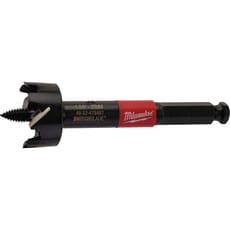
- Self-Feed: Bits equipped with a threaded centre point that pulls the cutter through the material, reducing required downward pressure. Valuable for deep hole drilling or when working with portable drills where maintaining consistent pressure proves challenging.
Who Uses Forstner Drill Bits?
- Cabinet Makers and Joiners: Drilling precise hinge cups for concealed hardware, shelf support pin holes, and dowel joints in bespoke furniture and fitted kitchen installations
- Carpenters and Chippies: Creating recesses for mortice locks, bolt housings, and concealed fixings in architectural joinery and door hanging applications
- Shop Fitters: Installing cabinet hardware, display fixture components, and bespoke joinery elements in retail and commercial fit-out projects
- Furniture Makers: Precision drilling for traditional joinery techniques, decorative inlay work, and hardware installation in custom furniture commissions
- Woodturners: Forming recesses for mounting hardware, clock mechanisms, jam chuck shoulders, and bowl foot details in turned timber projects
- Kitchen Fitters: Drilling accurate holes for concealed cabinet hinges, drawer runner systems, and integrated appliance mounting points
- DIY Enthusiasts: Home woodworking projects, furniture restoration work, and general carpentry requiring clean, professional-quality holes
- Theatre Set Builders: Fabricating wooden scenery components and props requiring professional-standard joinery under tight production schedules
How to Choose the Right Forstner Drill Bits
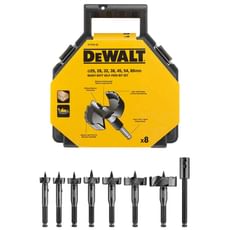
Size Requirements: Identify the hole diameters your projects demand most frequently. Individual bits prove economical for specific applications, whilst sets deliver versatility across varied work. Standard hinge drilling typically requires 26mm and 35mm bits, whereas dowel work commonly employs 6mm, 8mm, and 10mm diameters. The DeWalt 8 Piece set or Makita 5 Piece collection cover frequently used sizes.
Material Quality: Professional-grade bits featuring hardened steel or carbide-tipped cutting edges maintain sharpness considerably longer, delivering cleaner cuts through hundreds of holes—critical for trade users. Bosch Professional and Trend bits exemplify this quality tier, whilst budget options from Einhell or Faithfull suit occasional DIY applications but require more frequent sharpening.
Tooth Design: Standard Forstner bits handle general applications effectively, whilst saw tooth variants such as the Trend WS Saw Tooth series offer accelerated cutting and superior chip evacuation in hardwoods or production environments. Consider saw tooth designs for intensive professional use where speed and durability justify the investment.
Shank Compatibility: Most Forstner bits feature standard round shanks suitable for three-jaw chucks on cordless drills and pillar drills. Verify your chosen bits match your drill chuck capacity—typically 10mm or 13mm for portable drills, with some pillar drills accommodating larger shanks for heavy-duty bits.
Depth Requirements: Standard length bits suit most applications, but extended variants like the Trend WS Long Series enable drilling deeper holes when working through substantial timber sections or creating extended recesses beyond standard bit reach.
Set versus Individual Bits: Starter sets from Bosch, DeWalt, or Makita deliver excellent value with commonly used sizes in protective storage cases. Professional joiners might prefer comprehensive collections like the Draper 17 Piece set, whilst specialists can supplement with individual sizes as specific project requirements emerge.
Popular Accessories
- Pillar Drills and Drill Presses: Provide the stability and perpendicular accuracy essential for optimal results with Forstner bits, particularly when drilling larger diameter holes
- Drill Stands: Convert portable drills into bench-mounted tools for improved accuracy when drilling with larger diameter bits lacking pillar drill access
- Depth Stops: Ensure consistent hole depths when drilling multiple recesses for hinge installation or dowel joinery where uniformity matters
- Clamps and Vices: Secure workpieces firmly preventing movement during drilling, improving both safety and accuracy whilst reducing workpiece damage risk
- Backing Boards: Prevent tear-out on the exit side of through-holes and protect work surfaces from drill bit breakthrough
- Drill Bit Sharpening Systems: Maintain cutting edge sharpness for continued clean cuts and extended bit life, particularly valuable for professional users drilling daily
- Storage Cases: Protect bits from damage and maintain size organisation—particularly important for loose bits purchased individually outside of sets
- Safety Goggles and Dust Masks: Essential personal protective equipment when drilling wood, protecting against flying chips and potentially harmful wood dust particles
Safety Information
Secure Workpiece Clamping: Always clamp timber securely before drilling. Forstner bits can grab suddenly, particularly when breaking through material, potentially spinning loose workpieces dangerously. Never attempt to hold work by hand when using these bits regardless of workpiece size.
Appropriate Drilling Speed: Operate at slower drill speeds than standard twist bits—typically 500-1500 RPM depending on bit diameter and material hardness. Larger diameter bits demand slower speeds to prevent overheating and maintain control. Consult manufacturer guidance for specific recommendations.
Chip Clearance: Withdraw the bit regularly when drilling deep holes to clear accumulated chips and prevent overheating. Packed chips cause the bit to bind or overheat, potentially causing injury or damaging both tool and workpiece.
Personal Protective Equipment: Always wear safety goggles protecting against flying wood chips. Dust masks are advisable when drilling creates fine particles, particularly with MDF or treated timbers. Avoid loose clothing, jewellery, or gloves that could catch in rotating drill chucks.
Drill Selection: Ensure your drill possesses sufficient power for the bit diameter—larger Forstner bits require substantial torque. Pillar drills prove safer and more effective for larger diameters than handheld cordless drills, which may stall or twist dangerously in your hands.
HSE Guidance: Follow Health and Safety Executive guidelines for woodworking machinery and portable power tools, particularly regarding dust extraction and noise levels in professional workshop environments. COSHH assessments may be required for certain timber species.
Frequently Asked Questions
Can I use Forstner bits in a cordless drill?
Yes, but match bit sizes appropriately to your drill's power output. Smaller bits up to 25mm work effectively in quality 18V cordless drills from brands like DeWalt or Makita, but larger diameters are best suited to pillar drills or mains-powered 240v tools with higher torque. Always drill at slower speeds and allow the bit to cut without forcing.
What differentiates Forstner bits from spade bits?
Forstner bits create flat-bottomed holes with exceptionally clean edges and minimal tear-out, making them ideal for visible joinery and precision work. Spade bits drill faster and cost less but leave rougher holes with pointed bottoms, suitable for concealed applications like cable routing where finish quality isn't critical to the installation.
How do I prevent Forstner bits overheating during use?
Operate at appropriate drilling speeds—slower for larger diameters and harder timber species. Withdraw the bit regularly to clear chips, which generate friction and heat buildup. Avoid forcing the bit; allow the cutting edges to work naturally. When drilling multiple holes, permit the bit to cool between operations. Overheated bits lose temper and dull rapidly.
Can Forstner bits drill through metal or masonry?
No, Forstner bits are designed exclusively for wood and wood-based materials including MDF, plywood, and chipboard. Using them on metal, masonry, or plastics will immediately damage the cutting edges beyond repair. For alternative materials, use appropriate drill bits designed specifically for those substrates.
Why do my Forstner bits leave burn marks on timber?
Burn marks typically indicate the bit has dulled, the drill speed is excessive, or you're applying too much downward pressure. Reduce drill speed, use less force, and ensure the bit remains sharp. Regular chip clearance also prevents friction-related burning. Quality bits from Bosch Professional or Trend hold their edge longer and are less prone to causing burn marks through extended use.