

Fuel Nozzles & Hoses

Pay in 3 interest-free payments on purchases from £20-£3000 with  . Learn more.
 Loading...
End of content
Error - No more pages to load
About Fuel Nozzles & Hoses
Fuel nozzles and hoses are essential equipment for the safe and efficient transfer of petrol, diesel, and other fluids in professional workshops, agricultural settings, and on construction sites. Whether you're managing a fleet of vehicles, maintaining farm machinery, or simply need a reliable system for refuelling equipment on-site, quality fuel transfer equipment ensures clean, controlled dispensing whilst minimising spillage and waste. These systems typically comprise retractable hose reels, specialised nozzles with automatic shut-off features, and durable, chemical-resistant hoses designed to withstand the harsh properties of petroleum-based fuels.
Modern fuel nozzles and hoses incorporate a range of safety features including anti-static properties, flow control mechanisms, and leak-proof connections. Professional-grade systems often feature wall-mounted or mobile hose reels that keep fuel hoses organised and protected when not in use, extending their service life considerably. Tooled-Up.com stocks quality fuel transfer equipment from trusted manufacturers like Sealey, ensuring tradespeople have access to equipment that meets stringent UK safety standards and HSE guidelines whilst delivering years of reliable service in demanding environments.
From compact retractable oil hose reels perfect for workshop environments to heavy-duty fuel dispensing systems for agricultural and industrial applications, these products are designed to make fuel handling safer, cleaner, and more efficient. Proper fuel transfer equipment is essential for operational efficiency and workplace safety, whether you're a garage owner, plant hire company, agricultural contractor, or site manager handling daily refuelling operations.
Jargon Buster
- Automatic Shut-Off Nozzle: A fuel nozzle that stops dispensing automatically when the tank or container is full, preventing overflow and spillage through a pressure-sensitive mechanism that detects back-pressure.
- Retractable Hose Reel: A spring-loaded or motorised reel system that automatically retracts the fuel hose after use, keeping it neatly stored and protected from damage, UV degradation, and environmental exposure.
- Swivel Coupling: A rotating connection point that prevents the hose from twisting and kinking during use, extending hose life and improving handling flexibility when manoeuvring around vehicles or equipment.
- Flow Rate: The volume of fuel that can be transferred through the hose per minute, typically measured in litres per minute (LPM). Higher flow rates enable faster refuelling of large tanks and heavy plant machinery.
- Working Pressure: The maximum safe operating pressure the hose can withstand, measured in bar or PSI. Exceeding this pressure can cause hose failure and dangerous leaks.
- Chemical Resistance: The hose material's ability to resist degradation when exposed to petrol, diesel, oils, and other petroleum products without deteriorating or contaminating the fuel being transferred.
Who Uses Fuel Nozzles & Hoses?
- Motor Mechanics and Garage Owners: For transferring fuel during vehicle repairs, maintenance, diagnostics, and MOT preparation work
- Agricultural Contractors and Farmers: Essential for refuelling tractors, combine harvesters, and other farm machinery in field locations away from fixed fuel supplies
- Plant Hire Companies: For maintaining and refuelling construction equipment, generators, excavators, and mobile machinery at depots and on customer sites
- Fleet Managers: Managing on-site refuelling stations for company vehicles, delivery vans, and plant equipment to reduce downtime and fuel costs
- Groundskeepers and Landscapers: Refuelling mowers, strimmers, chainsaws, and other petrol-powered garden equipment throughout the working day
- Construction Site Managers: For dispensing fuel to generators, compressors, construction plant, and tools on active building sites
- Marine and Boating Professionals: Transferring fuel safely to boats, marine engines, and watercraft at marinas and boatyards
- DIY Enthusiasts: Home workshop users who maintain their own vehicles or operate petrol-powered equipment for home improvement projects
How to Choose the Right Fuel Nozzles & Hoses
Fuel Type Compatibility: Ensure the hose and nozzle materials are compatible with the fuel you'll be dispensing. Petrol, diesel, and other petroleum products require different chemical resistance properties. Always check manufacturer specifications to confirm suitability for your intended application.
Hose Length and Diameter: Consider the working area and reach required. Longer hoses provide greater flexibility but may reduce flow rate. Common diameters range from 19mm to 25mm, with larger bores delivering higher flow rates for faster refuelling of large tanks and plant equipment.
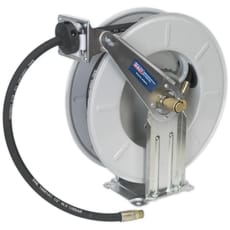
Reel Type and Mounting: Retractable hose reels protect hoses from damage and keep work areas tidy. Choose between wall-mounted, ceiling-mounted, or mobile units depending on your workspace layout. Spring-return mechanisms offer convenient hands-free retraction, ideal for busy workshop environments.
Nozzle Features: Automatic shut-off nozzles prevent overfilling and spillage, whilst adjustable flow control enables precise dispensing. Trigger-lock mechanisms reduce hand fatigue during prolonged use, particularly important for operators refuelling multiple vehicles or machinery daily.
Build Quality and Durability: Professional-grade equipment available from Tooled-Up features robust construction with steel reels, reinforced hoses, and corrosion-resistant fittings. Quality components from established brands like Sealey deliver superior longevity in demanding workshop and site environments.
Safety Features: Look for anti-static hoses to prevent static electricity build-up, leak-proof connections, and equipment compliant with UK fuel handling regulations and HSE guidelines. Safety should never be compromised when handling flammable liquids.
Working Pressure and Flow Rate: Match the equipment specification to your requirements. Higher pressure ratings suit pump-assisted systems, whilst gravity-feed applications require less robust specifications. Consider tank sizes and how quickly you need to complete refuelling operations.
Popular Accessories
- Replacement fuel nozzles with automatic shut-off mechanisms for existing reel systems
- Additional hose lengths for extending reach to difficult access areas
- Swivel couplings and adaptors for connecting different fittings and equipment
- Fuel transfer pumps (manual and electric) for faster dispensing from storage tanks
- Drip trays and spill containment equipment for workshop floor protection
- Fuel filters to prevent contamination and protect engine components
- Wall brackets and mounting hardware for secure installation of reel systems
- Replacement seals, O-rings, and washers for routine maintenance
- Fuel cans and jerry cans for safe storage and transport of petroleum products
- Anti-static grounding cables and clips for enhanced safety during fuel transfer
- Connection hoses for linking reels to pump stations and fuel supplies
Safety Information
Fuel handling presents significant safety risks and must be undertaken in compliance with HSE regulations and COSHH guidelines. Always work in well-ventilated areas away from ignition sources, open flames, sparks, and electrical equipment. Petrol vapours are highly flammable and heavier than air, accumulating in low-lying areas where they pose serious explosion risks.
Use only equipment specifically designed for fuel transfer, ensuring hoses and nozzles are compatible with the fuel type being dispensed. Regularly inspect all equipment for wear, damage, or deterioration, replacing components that show signs of cracking, splitting, or chemical degradation. Never use damaged equipment as this can lead to dangerous leaks and fire hazards.
Ensure proper earthing to prevent static electricity build-up, which can cause ignition of fuel vapours. Use anti-static hoses and ground containers before filling. Always turn off engines and electrical equipment before refuelling operations. Store fuel only in approved containers in dedicated, well-ventilated storage areas away from heat sources and direct sunlight.
Wear appropriate PPE including chemical-resistant gloves and eye protection when handling fuels. Have spill kits readily available and know the emergency procedures for fuel spillages. Keep fire extinguishers suitable for fuel fires (Class B) nearby and ensure all operators are trained in their use. Never siphon fuel by mouth, and avoid prolonged skin contact with petroleum products which can cause dermatitis and other health issues.
Frequently Asked Questions
Can I use the same hose for both petrol and diesel?
Whilst many fuel hoses are compatible with multiple petroleum products, it's best practice to dedicate separate equipment to each fuel type to prevent cross-contamination and maintain fuel quality. Always check the manufacturer's specifications for chemical compatibility before use, and clearly label equipment to avoid confusion in busy workshop environments.
How often should I replace my fuel hose?
Inspect your fuel hose regularly for signs of wear, cracking, perishing, or deterioration. Even without visible damage, most manufacturers recommend replacing fuel hoses every 3-5 years depending on usage frequency and exposure to UV light and weather conditions. Professional environments with daily use may require more frequent replacement to maintain safety standards and prevent leaks.
Are retractable hose reels worth the investment?
Absolutely. Retractable hose reels protect your fuel hose from UV damage, kinking, and accidental damage when not in use, significantly extending its service life. They also keep work areas organised, reduce trip hazards, and improve workplace safety compliance, making them a worthwhile investment for any professional workshop or regular user handling fuel transfer operations.
What flow rate do I need for my application?
For small equipment like mowers and generators, 15-20 litres per minute is typically sufficient. Vehicle refuelling benefits from 30-40 LPM, whilst larger plant machinery, agricultural equipment, and construction vehicles may require 60+ LPM for efficient operations. Consider your tank sizes and how quickly you need to complete refuelling to minimise downtime.
Do I need any special licences to store and dispense fuel?
For domestic quantities (typically under 275 litres of petrol), no special licence is required, though you must comply with storage regulations. Commercial storage and dispensing may require notification to your local authority and compliance with petroleum licensing regulations. Consult HSE guidance and your local fire authority for specific requirements applicable to your situation and industry sector.