

Funnels
Pay in 3 interest-free payments on purchases from £30-2000 with  . Learn more.
 Loading...
End of content
Error - No more pages to load
About Funnels
Funnels are indispensable workshop tools for safely transferring liquids, oils, coolants, and other fluids without spillage or waste. Whether you're servicing vehicles, maintaining agricultural machinery, or working with hydraulic systems, the right funnel ensures clean, efficient fluid handling whilst protecting both your workspace and the environment from contamination. From simple plastic funnels for general workshop tasks to specialist designs with offset necks, integrated filters, and anti-splash features, these essential tools prevent costly spillages and speed up routine maintenance operations across automotive, industrial, and agricultural applications.
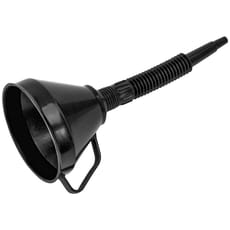
Tooled-Up.com stocks an extensive range of funnels from trusted manufacturers including Sealey, Draper, Faithfull, and Lumatic, catering to professional tradespeople and DIY enthusiasts alike. The selection encompasses standard plastic funnels for everyday workshop use, heavy-duty tractor funnels with mesh strainers for agricultural equipment, flexible funnels that bend around obstacles in cramped engine bays, and foldable designs that save valuable storage space in mobile workshops. Specialist options include offset neck funnels for accessing recessed filler caps, anti-splash funnels that prevent backflow when filling pressurised systems, and comprehensive coolant filling kits with vehicle-specific adapters for sealed cooling systems.
Modern workshop funnels are manufactured from durable, chemical-resistant materials including polypropylene and polyethylene that withstand petroleum products, engine oils, coolants, and cleaning fluids without degrading. Many feature integrated strainers or removable mesh filters to prevent debris contamination, whilst ergonomic handles ensure safe pouring even when transferring large volumes. Available in sizes ranging from compact 50mm diameter models for precision work to robust 300mm tractor funnels for bulk fluid transfer, quality funnels from established brands deliver reliable performance and longevity in demanding professional environments.
Jargon Buster
- Tractor Funnel
- A large-capacity funnel typically 250-300mm in diameter, designed for agricultural and commercial vehicle applications. Features robust construction and an integrated metal or plastic mesh filter to remove debris from oils and fluids before they enter engines or hydraulic systems.
- Offset Neck Funnel
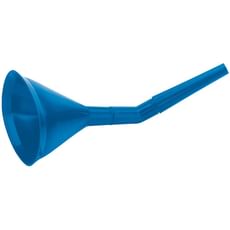
- A funnel with an angled or offset spout that allows pouring into recessed or hard-to-access filler caps commonly found in modern vehicle engine bays. Particularly useful when working around hoses, cables, and other obstructions without removing engine covers.
- Polypropylene
- A chemical-resistant plastic material commonly used in funnel construction. Resistant to most petroleum products, acids, and alkalis, making it ideal for workshop environments handling diverse fluids including engine oils, coolants, and brake fluids.
- Anti-Splash Funnel
- Features a specially designed spout or internal breather system that prevents fluid from splashing back during pouring, particularly useful when filling pressurised or sealed systems where air displacement can cause dangerous backflow.
- Flexi Funnel
- A funnel constructed from flexible materials allowing the spout to bend and manoeuvre around obstacles, ideal for accessing awkward filler points in crowded engine bays or machinery compartments where straight-spout funnels cannot reach.
- Non-Spill Filling Kit
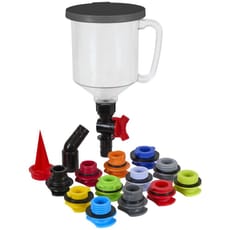
- A comprehensive system including funnels, adapters, and spouts designed for specific applications like automotive coolant filling, where sealed systems require specialised equipment to prevent air locks and spillage during fluid changes.
Who Uses Funnels?
- Automotive Mechanics and Technicians: For engine oil changes, coolant top-ups, brake fluid filling, and general vehicle maintenance in garages and mobile repair services
- Agricultural Workers and Farm Mechanics: Using tractor funnels for maintaining farm machinery, tractors, combine harvesters, and hydraulic equipment in outdoor environments
- Plant Operators and Heavy Machinery Engineers: Servicing construction equipment, generators, and industrial machinery requiring regular fluid maintenance and bulk oil changes
- Manufacturing and Maintenance Engineers: For decanting fluids, oils, and coolants in factory environments and production facilities where equipment uptime is critical
- HGV and Commercial Vehicle Mechanics: Maintaining lorries, buses, and commercial fleets with larger capacity funnels for bulk fluid changes and routine servicing
- Marine Engineers and Boat Maintenance: Filling marine engines, hydraulic steering systems, and bilge pumps in confined boat engine compartments with limited access
- DIY Enthusiasts and Home Mechanics: For general vehicle maintenance, lawn mower servicing, and workshop tasks requiring clean fluid transfer without spillage
- Chemical and Laboratory Technicians: Using chemical-resistant funnels for safely decanting and measuring liquids in controlled laboratory environments
How to Choose the Right Funnels
Consider Your Primary Application
Standard plastic funnels suit general workshop tasks, but specialist applications demand specific designs. If you're working predominantly on modern vehicles, an offset neck or flexible funnel provides better access to recessed filler caps hidden beneath engine covers. Agricultural mechanics require robust tractor funnels with integrated filters to prevent debris entering hydraulic systems, whilst those working with sealed cooling systems benefit from dedicated non-spill filling kits with vehicle-specific adapters that prevent air locks and spillage.
Material and Chemical Compatibility
Ensure your funnel material suits the fluids you're handling. Polypropylene and polyethylene funnels resist most petroleum products, engine oils, and coolants, making them ideal for automotive and industrial work. For aggressive chemicals or solvents, verify the manufacturer's compatibility specifications to prevent chemical degradation. Higher-quality materials offer better longevity, particularly in commercial environments where funnels see daily use and exposure to diverse fluids.
Size and Capacity Requirements
Funnel sizes typically range from compact 50mm diameter models for precision work to 300mm+ tractor funnels for bulk fluid transfer. Consider both the opening diameter and spout length – larger openings speed up filling operations but may not fit confined spaces, whilst longer spouts reach deeper sumps and tanks on machinery. Multi-piece funnel sets from manufacturers like Sealey and Draper offer versatility for workshops handling diverse equipment, with sizes typically covering 50mm through to 150mm diameters.
Filter and Strainer Features
Integrated mesh filters or removable strainers prevent debris contamination when filling engines, gearboxes, and hydraulic systems. This proves particularly important when decanting from opened containers or working in dusty environments where airborne particles can enter fluids. Removable strainers simplify cleaning and maintenance, extending funnel lifespan whilst maintaining filtration effectiveness throughout the product's working life.
Storage and Portability
Mobile mechanics and those with limited workshop space benefit from collapsible or foldable funnels that pack flat when not in use, fitting easily into toolboxes and service vans. Alternatively, consider combo sets with stackable designs that nest together efficiently for organised storage. For fixed workshops, look for funnels with hanging holes or integrated handles for wall-mounted storage systems that keep multiple sizes accessible whilst preventing workshop clutter.
Special Features for Professional Use
Anti-splash designs reduce mess and improve safety when working with hot oils or pressurised systems, particularly valuable during routine servicing operations. Transparent materials allow you to monitor flow and spot contamination before it enters systems, whilst graduated markings help with measuring fluid quantities for accurate filling. Ergonomic handles and robust construction ensure safe handling when working with full containers, reducing the risk of spillage during transfer operations.
Popular Accessories
- Oil Drain Pans and Collection Containers: Essential for collecting waste oil during changes, working in tandem with funnels for complete fluid management and environmental compliance
- Fluid Transfer Pumps: Manual or electric pumps for moving fluids between containers before funnel filling operations, particularly useful for viscous oils in cold conditions
- Measuring Jugs and Graduated Containers: For accurately measuring fluid quantities before filling through funnels, ensuring correct system capacities are maintained
- Spill Trays and Absorbent Mats: Protecting work surfaces and meeting COSHH requirements when handling oils and chemicals in workshop environments
- Filter Papers and Mesh Strainers: Additional filtration options for particularly contaminated fluids or precision applications requiring ultra-clean fluid transfer
- Funnel Storage Racks: Wall-mounted organisers keeping multiple funnels accessible and preventing workshop clutter whilst maintaining hygiene between uses
- Universal Adapter Sets: Extend funnel versatility by fitting different sized filler necks and caps across varied equipment and vehicle types
- Fluid Dispensing Bottles: For controlled application of oils and lubricants in precision maintenance tasks where funnel use would be impractical
- Workshop Roll and Cleaning Rags: Essential for wiping funnel rims and managing minor spills during fluid transfer operations
Safety Information
When working with funnels and fluid transfer, always follow HSE guidelines and COSHH regulations for handling hazardous substances. Ensure adequate ventilation when working with petroleum products, engine oils, and chemicals, as fumes can accumulate in enclosed spaces causing health hazards. Wear appropriate PPE including chemical-resistant gloves and safety glasses to protect against splashes, particularly when handling hot oils straight from engines or corrosive fluids like battery electrolyte.
Inspect funnels before each use for cracks, splits, or chemical degradation that could cause unexpected failure during pouring. Clean funnels thoroughly between different fluid types to prevent dangerous chemical reactions or contamination – never use a funnel that has held brake fluid for coolant, or one used for petroleum products in food-grade applications, even after cleaning. Many professionals maintain colour-coded funnel sets to prevent accidental cross-contamination in busy workshop environments.
Store used oils and fluids in appropriate sealed containers and dispose of them according to environmental regulations – never pour waste oils down drains or onto the ground where they can contaminate water supplies. When working with hot engine oil, allow adequate cooling time before draining to prevent serious burns. Position drain pans securely beneath vehicles and machinery to prevent spills, and always have absorbent materials readily available for immediate spill response. Follow manufacturer instructions carefully for specialist filling kits, particularly those dealing with pressurised cooling systems where improper use can result in scalding from hot coolant under pressure.
Frequently Asked Questions
What's the difference between a standard funnel and a tractor funnel?
Tractor funnels are significantly larger, typically 250-300mm diameter compared to standard 100-125mm workshop funnels, with much higher capacity for bulk fluid filling of agricultural and commercial machinery. They feature robust construction to withstand outdoor and farm environments, and crucially include integrated metal or plastic mesh filters to strain debris, dirt, and particles from oils before they enter engines or hydraulic systems. Standard workshop funnels are smaller and designed for general automotive and light machinery applications where precision access and manoeuvrability matter more than volume capacity.
Can I use the same funnel for different types of fluids?
Whilst polypropylene funnels resist most workshop fluids, best practice dictates using dedicated funnels for different fluid types to prevent cross-contamination. This proves particularly important for brake fluid (which absorbs moisture and contaminants easily), coolant systems (where oil contamination causes seal damage and corrosion), and when handling specialist chemicals. If you must use one funnel for multiple fluids, clean it thoroughly with appropriate solvents and allow it to dry completely between uses. Many professionals at Tooled-Up maintain colour-coded funnel sets or multi-piece combo sets to prevent accidental mixing in busy workshop environments.
Why would I need an offset neck or flexible funnel?
Modern vehicle engine bays are increasingly cramped, with filler caps often recessed beneath plastic covers and surrounded by hoses, cables, and electronic components. Standard straight-spout funnels simply cannot reach these awkward positions without removing components, adding significant time to routine maintenance. Offset neck funnels feature angled spouts that navigate around obstacles, whilst flexible funnels bend to access tight spaces, saving considerable time during oil changes and fluid top-ups. They're particularly valuable for mobile mechanics who cannot afford the time penalty of removing engine covers for simple servicing tasks.
How do I prevent spillage when filling sealed cooling systems?
Sealed cooling systems create air pressure that causes coolant to splash back during filling, wasting fluid and creating mess. Specialist non-spill automotive coolant filling kits available from manufacturers like Sealey include funnels with integrated breather systems and vehicle-specific adapters that seal to the filler neck, allowing air to escape whilst preventing spillage. These kits also help purge air locks from the system during filling, ensuring proper coolant circulation. For best results, follow the vehicle manufacturer's bleeding procedure and fill slowly, allowing air to escape naturally through the breather system rather than forcing fluid in quickly.
What size funnel set should I buy for general workshop use?
For versatile workshop coverage, a 4-5 piece set covering approximately 50mm, 75mm, 100mm, 125mm, and 150mm diameters handles most automotive and light machinery applications. The smallest suits precision work like topping up screenwash or small two-stroke engines, mid-sizes cover standard car oil changes and fluid top-ups, whilst the largest manages gearbox oils and bulk filling operations. Professional mechanics often supplement this with a dedicated tractor funnel for agricultural equipment and a flexible or offset funnel for modern vehicles with restricted engine bay access, providing comprehensive coverage across varied servicing requirements.