

Grade Rods

Pay in 3 interest-free payments on purchases from £20-£3000 with  . Learn more.
 Loading...
End of content
Error - No more pages to load
About Grade Rods
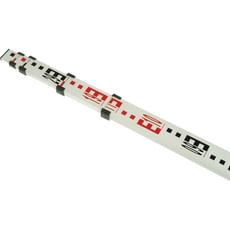
Grade rods, also known as levelling staffs or measuring rods, are essential surveying tools used in conjunction with laser levels, dumpy levels, and rotating lasers to establish accurate height measurements and gradients across construction sites. These precision instruments feature clearly marked graduations that allow tradespeople to determine elevations, set levels, and create accurate site gradients for foundations, drainage, and groundworks. Whether you're laying drains, establishing foundation levels, or setting out for landscaping projects, a quality grade rod provides the visual reference point needed for precise levelling work.
Modern grade rods are typically constructed from lightweight aluminium with high-visibility markings, making them easy to read from distances of up to 100 metres or more when used with appropriate levelling equipment. Available in both fixed-length and telescopic designs, these tools are built to withstand the rigours of site work whilst maintaining their accuracy over years of regular use. Telescopic models offer the convenience of compact storage and transport, extending to heights of 5 metres or more when fully deployed, making them ideal for tradespeople who need to work across multiple sites throughout the day.
Tooled-Up.com stocks grade rods from leading manufacturers like DeWalt and Stanley, specifically designed to work seamlessly with their laser level systems. These professional-grade rods feature high-contrast markings and robust construction that meets the demands of construction and civil engineering projects. From compact 3-section models for general building work to extended 5-section versions for major earthworks and drainage installations, having the right grade rod ensures your levelling work is completed accurately and efficiently, even in challenging UK weather conditions.
Jargon Buster
- Graduations
- The measurement markings on a grade rod, typically showing metric measurements in millimetres or centimetres. High-quality rods feature large, clear numbers that remain visible even when coated in site dust or viewed from considerable distances.
- Telescopic/Extending
- Grade rods that collapse into multiple sections for easy transport and storage, then extend to full height when needed. Most feature secure locking mechanisms to prevent accidental collapse during use, with typical models ranging from 3 to 5 sections.
- Rotating Laser Compatibility
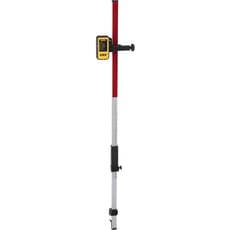
- The ability of a grade rod to work effectively with rotating laser levels, often featuring a laser detector mounting bracket or reflective target area for automatic grade checking over extended distances.
- Datum Point
- A fixed reference point from which all height measurements are taken. The grade rod is positioned at various locations across the site whilst measurements are taken from this established datum to ensure consistent levelling.
- Invert Level
- A measurement taken to establish the bottom level of trenches or drainage pipes, critical for ensuring proper fall and drainage flow. Grade rods with extended reach are essential for deep excavations common in groundworks.
- High-Visibility Markings
- Bold, contrasting colour schemes (typically red, black, and white) that make the rod easily readable from distance, even in challenging light conditions common on UK building sites throughout the year.
Who Uses Grade Rods?
Grade rods are indispensable tools for a wide range of construction and surveying professionals:
- Groundworkers and Civil Engineers: Setting levels for foundations, drainage systems, and road construction projects requiring precise gradient control
- Landscapers: Establishing gradients for lawns, patios, and drainage solutions in gardens and commercial landscapes
- Site Engineers and Surveyors: Conducting detailed site surveys, setting out building positions, and monitoring ground levels throughout construction phases
- Builders and General Contractors: Checking floor levels, establishing damp proof course heights, and ensuring accurate foundation depths
- Drainage Specialists: Setting precise falls for foul and surface water drainage systems to comply with Building Regulations Part H
- Agricultural Contractors: Land levelling and drainage work on farms and rural properties
- Highways Maintenance Teams: Road resurfacing, kerb laying, and establishing correct cambers for drainage
- DIY Enthusiasts: Homeowners tackling drainage improvements, patio installations, or garden levelling projects requiring accurate height measurements
How to Choose the Right Grade Rods
Rod Length and Reach: Consider the maximum height measurements you'll need to take. Standard 3-section telescopic rods typically extend to 3 metres, suitable for most general building work, whilst 5-section models reaching 5 metres are better suited to deep excavations, drainage work, or larger civil engineering projects. Fixed-length rods offer slightly better rigidity but sacrifice portability for van storage.
Construction and Durability: Professional-grade rods feature anodised aluminium construction that resists corrosion and maintains accuracy despite regular site use. Look for reinforced joints and secure locking mechanisms that prevent unwanted movement. DeWalt's aluminium grade rods, for example, are built to withstand demanding site conditions whilst remaining lightweight enough for all-day use without causing operator fatigue.
Graduation Style and Visibility: The marking system is crucial for accurate readings. High-contrast markings in bold colours ensure readability from distance, particularly important when working with rotating lasers or dumpy levels in varying light conditions. Some rods feature dual graduation systems showing both metric measurements and specialised markings for laser detector use.
Compatibility with Existing Equipment: If you already use laser levels or rotating lasers from manufacturers like DeWalt or Stanley, choosing a grade rod from the same brand ensures optimal compatibility, particularly regarding laser detector mounting options and target plate positioning. The grade rods available from Tooled-Up are designed to work seamlessly with their respective laser level systems.
Portability and Storage: Telescopic models excel for tradespeople moving between multiple sites, collapsing to a fraction of their extended length for van storage. Consider the collapsed length against your available storage space and transport arrangements, particularly if working from a smaller vehicle.
Budget Considerations: Entry-level grade rods suit occasional DIY use and light-duty applications, whilst professional models justify their higher cost through superior durability, clearer markings, and better accuracy retention over extended periods of site use in demanding conditions.
Popular Accessories
- Laser Detectors: Electronic receivers that mount to the grade rod and emit audio/visual signals when they intercept the laser beam, enabling accurate measurements even in bright sunlight when laser lines become difficult to see
- Carrying Cases: Protective bags or hard cases that prevent damage during transport and storage, particularly important for maintaining the accuracy of graduations and preventing dents to aluminium construction
- Laser Levels and Rotating Lasers: The primary tools used in conjunction with grade rods, with rotating lasers creating a 360-degree reference plane for comprehensive site levelling
- Tripods and Mounting Brackets: Stable platforms for positioning laser levels at the correct height, essential for establishing accurate datum points across the site
- Target Plates: Reflective plates that attach to grade rods to improve laser visibility and aid accurate readings when working at extended distances or in challenging light conditions
- Site Diary and Recording Equipment: Essential for documenting level readings, particularly important for drainage projects where gradient calculations must meet Building Regulations requirements
Safety Information
Whilst grade rods are relatively simple tools, proper use on construction sites requires attention to safety:
- High-Visibility Clothing: Always wear appropriate hi-vis workwear when using grade rods on active construction sites, particularly when working near plant machinery or in areas with vehicular movement
- Overhead Hazards: When extending telescopic grade rods, be constantly aware of overhead power lines, scaffolding, and other elevated hazards. Aluminium construction makes grade rods excellent electrical conductors, presenting a serious electrocution risk
- Secure Footing: Grade rods are often used in excavations, on uneven ground, or near trenches. Ensure stable footing and maintain awareness of trench edge stability, particularly after wet weather common throughout the UK
- Manual Handling: Extended grade rods can be awkward to manoeuvre, particularly in windy conditions. Use proper lifting techniques and consider wind loading when working on exposed sites
- Equipment Inspection: Regularly check locking mechanisms, graduation clarity, and rod straightness. Damaged or bent grade rods compromise measurement accuracy and should be replaced immediately
- Site Coordination: Ensure clear communication with the person operating the laser level or dumpy level, particularly on busy sites where multiple trades are working simultaneously
Frequently Asked Questions
What's the difference between a grade rod and a measuring tape?
Grade rods are specifically designed for use with laser levels and optical levelling instruments to establish heights and gradients across distances. Unlike measuring tapes, they remain rigid and vertical, allowing someone at a distance to read precise measurements through a level or laser detector. The bold, high-contrast graduations are optimised for visibility from 50-100 metres away, making them essential for site levelling work where tape measures would be impractical.
Can I use any grade rod with my laser level?
Whilst most grade rods work with any laser level for basic height measurements, using matching brands (such as a DeWalt grade rod with a DeWalt laser) often provides benefits like optimised detector mounting, compatible target plates, and graduation systems designed to work together. For professional work, this compatibility can improve accuracy and workflow efficiency significantly.
How do I maintain accuracy with a telescopic grade rod?
Ensure all sections lock securely when extended, as loose connections will cause inaccurate readings. Store the rod in its case when not in use to prevent damage to graduations and keep sections clean and dry to maintain smooth extension and retraction. Periodically verify the rod remains straight by extending it fully and sighting along its length – any bowing indicates damage requiring replacement.
What length grade rod do I need for drainage work?
For typical domestic drainage work in the UK, a 5-section telescopic rod extending to 5 metres provides sufficient reach for most trench depths whilst complying with Building Regulations requirements. For shallower work like patio drainage or general foundation levelling, a 3-metre rod is usually adequate. Consider the deepest excavations you regularly encounter when selecting your rod length.
Are grade rods suitable for indoor use?
Absolutely. Grade rods are excellent for internal levelling work such as checking floor levels, establishing screed depths, or setting heights for suspended ceilings. The telescopic design allows use in standard ceiling heights whilst the clear graduations enable precise measurements for compliance with Building Regulations Part M regarding floor level changes and accessibility requirements.