

Guides & Charts

Pay in 3 interest-free payments on purchases from £20-£3000 with  . Learn more.
 Loading...
End of content
Error - No more pages to load
About Guides & Charts
Professional technical guides and reference charts are indispensable workshop resources that provide instant access to critical engineering data, conversion tables, material specifications and technical standards. These comprehensive reference materials compile essential information that engineers, machinists, fabricators and precision workers need on a daily basis—from thread pitch specifications and tapping drill sizes to material hardness conversions and tolerance grades. Rather than interrupting workflow to search online or flip through multiple manuals, having a dedicated guide or laminated chart at the workbench delivers the accuracy and speed that professional work demands. These resources cover both metric and imperial systems, include BS and EN standards compliance data, and present complex technical information in clear, accessible formats designed for rapid reference during demanding projects.
The range available from Tooled-Up.com includes pocket-sized engineering handbooks ideal for toolboxes and site work, comprehensive workshop reference books covering broad technical disciplines, and durable laminated wall charts that withstand the harsh conditions of machine shops and fabrication environments. Many of these professional-grade resources feature multiple data tables on each page, maximising the amount of information available at a glance whilst maintaining readability. From cutting speeds and feed rates for CNC operations to trigonometric functions and jig boring coordinates, these guides eliminate guesswork and reduce costly errors in precision work.
Quality technical reference materials serve multiple purposes beyond immediate problem-solving. They standardise practices across workshop teams, support quality assurance processes, aid apprentice training, and ensure compliance with British and European manufacturing standards. For businesses working to ISO certification or maintaining quality management systems, having authoritative reference materials readily available demonstrates commitment to precision and professional standards. Whether permanently mounted beside machinery, kept in the drawing office, or carried in a toolbox, these guides represent essential infrastructure for any professional workshop.
Jargon Buster
- Thread Pitch: The distance between adjacent threads on fasteners, measured in millimetres for metric threads or threads per inch (TPI) for imperial systems. Charts showing thread pitch alongside corresponding tapping drill sizes prevent costly mistakes when preparing holes for threaded fixings.
- Tolerance Grade: Standardised classification systems (such as H7, g6, IT grades) that define acceptable dimensional variations in manufactured components. Understanding tolerance grades is essential for ensuring proper fit between mating parts in precision engineering and assembly work.
- BS/EN Standards: British Standards and European Norms that specify technical requirements for materials, products, manufacturing processes and testing methods. Professional guides reference these standards by number, enabling quick verification of compliance requirements.
- Hardness Scales: Measurement systems including Brinell (HB), Rockwell (HRC, HRB) and Vickers (HV) that quantify material resistance to indentation. Conversion charts allow comparison between different hardness scales and inform cutting tool selection for machining operations.
- Decimal Equivalents: Conversion tables showing fractional inch measurements as decimal values, essential when working between imperial drill sizes, drawing dimensions and digital readout systems on modern machinery.
- Cutting Speed: The rate at which a cutting edge passes across workpiece material, typically expressed in metres per minute (m/min) or surface feet per minute (SFM). Reference charts correlating material type, tool material and optimal cutting speeds maximise tool life and machining efficiency.
Who Uses Guides & Charts?
Technical reference materials serve professionals and skilled workers across numerous trades and industries:
- CNC machinists and precision engineers programming and setting up machining operations
- Tool and die makers working to exacting tolerances in mould and fixture production
- Fabricators and welders selecting materials, electrodes and process parameters
- Maintenance engineers and millwrights specifying replacement components and fixings
- Quality control inspectors verifying dimensional accuracy and standards compliance
- Mechanical fitters and assembly technicians selecting appropriate fasteners and clearances
- Workshop managers and production supervisors standardising processes and training staff
- Design engineers and draughtsmen specifying materials, tolerances and manufacturing requirements
- Apprentices and engineering students learning fundamental trade knowledge and calculations
- Experienced DIY enthusiasts undertaking advanced metalworking and precision projects
- Tool room supervisors maintaining cutting tool inventories and specifications
- Plant engineers working with both legacy imperial equipment and modern metric machinery
How to Choose the Right Guides & Charts
Content Coverage: Assess which technical information you reference most frequently. Comprehensive engineering pocket books typically include thread tables for both metric and imperial systems, tapping drill sizes with clearance specifications, material properties, tolerance grades, conversion charts, trigonometric functions and mathematical formulas. Specialised references may focus specifically on machining data, welding specifications, or fastener grades. Consider whether you need broad coverage or deep information in specific technical areas relevant to your primary work.
Format and Environment: Your working conditions should influence format selection. Laminated wall charts withstand exposure to cutting fluids, swarf and general workshop conditions whilst providing large-format visibility from machinery positions. Pocket-sized booklets with protective covers travel easily between workshop and site, fitting into toolboxes alongside spanners and micrometers. Hardcover reference books suit office environments, drawing boards and workshop supervision stations where comprehensive information supports planning and problem-solving activities.
Measurement Systems: UK engineering work frequently involves both metric and imperial measurements due to legacy equipment, imported machinery and diverse client specifications. Guides offering both systems plus comprehensive conversion tables provide maximum flexibility. Verify that drill size tables include both metric sizes and numbered/lettered imperial drills, and that thread specifications cover ISO metric, Unified (UNC/UNF) and BSW/BSF standards where relevant to your work.
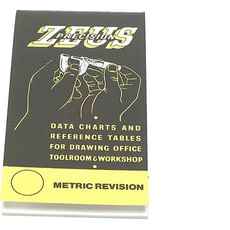
Standards Currency: British Standards and EN specifications evolve over time as manufacturing technology and safety requirements develop. Check publication dates and edition numbers, particularly for work requiring formal compliance documentation. Reputable publishers like Zeus Precision Charts regularly update their references to reflect current standards, ensuring the information supports modern quality management systems and certification requirements.
Durability and Longevity: Workshop reference materials represent long-term investments in accuracy and efficiency. Look for features like laminated pages that resist oil and coolant contamination, reinforced bindings that withstand frequent handling, and clear typography that remains legible under typical workshop lighting conditions. Quality construction ensures these resources remain reliable throughout years of daily professional use.
Popular Accessories
- Digital and dial callipers from Mitutoyo and Moore & Wright for measuring against specification tables
- Micrometers and depth gauges for verifying component dimensions against tolerance requirements
- Thread pitch gauges for quickly identifying fastener specifications in the field
- Workshop calculators designed for engineering calculations and conversions
- Technical drawing instruments including precision steel rules and engineer's squares
- Cutting tool sets from Dormer Pramet and Guhring referenced in machining speed charts
- Comprehensive fastener assortments from Fischer, Timco and Rawlplug organised by specification
- Protective document sleeves and workshop clipboard holders for keeping guides clean
- LED workshop lighting ensuring clear visibility of detailed tables and fine print
- Tool chest organisers and drawer inserts for storing pocket guides alongside precision instruments
Frequently Asked Questions
Are technical guides suitable for apprentices and those new to engineering?
Whilst designed primarily for trained professionals, quality engineering reference books serve as excellent educational resources for apprentices developing their skills. They provide authoritative information on standards, specifications and best practices, helping build fundamental understanding of engineering principles. Many experienced tradespeople recommend apprentices invest in a comprehensive pocket guide early in their training to support both classroom learning and practical workshop experience.
How do laminated charts withstand workshop conditions?
Professional laminated reference charts are specifically manufactured for industrial environments, with protective coatings that resist penetration by cutting oils, coolants, hydraulic fluids and general workshop contamination. They can be wiped clean with standard workshop rags and maintain legibility despite exposure to the demanding conditions typical of machine shops, fabrication facilities and maintenance workshops. When properly mounted, quality laminated charts provide years of reliable service.
Do I need separate references for metric and imperial systems?
Most comprehensive engineering guides produced for the UK market include both metric and imperial specifications along with conversion tables, recognising that British workshops frequently encounter both systems. This dual coverage proves particularly valuable when working with legacy equipment originally specified in imperial units, imported machinery using metric standards, or maintaining diverse plant with mixed measurement systems. A single quality guide typically provides the flexibility required for varied professional work.
How often should engineering reference materials be updated?
For general workshop reference covering fundamental specifications like thread dimensions, drill sizes and material properties, quality guides remain accurate for many years. However, specific standards do evolve—particularly those related to materials certification, environmental compliance and safety requirements. For businesses working to formal quality management systems or in regulated industries, periodic review of reference materials ensures alignment with current British and European standards. Check edition dates when purchasing and consider updates when significant standards revisions occur in your industry.
Can pocket guides replace comprehensive engineering handbooks?
Pocket-sized reference books and wall charts excel at providing quick access to frequently-needed data during active workshop tasks, making them ideal for daily operational use. Comprehensive engineering handbooks offer deeper technical explanations, worked examples, and broader theoretical coverage suited to problem-solving, process planning and technical education. Many professionals at Tooled-Up maintain both—detailed handbooks for the office or planning area, with concise pocket guides and charts for immediate workshop floor reference. This combination delivers both depth and accessibility across different working contexts.