
Hand Braces

Pay in 3 interest-free payments on purchases from £20-£3000 with  . Learn more.
Loading...
End of content
Error - No more pages to load
About Hand Braces
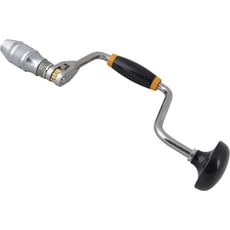
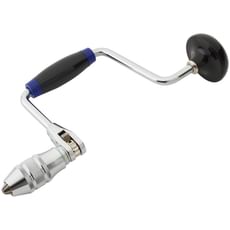
Hand braces represent one of the most enduring tools in woodworking history, offering a manually-operated drilling solution that has served carpenters, joiners, and furniture makers for generations. Also known as carpenter's braces or ratchet braces, these ingenious tools employ a rotating crank mechanism to generate the torque needed for drilling precise holes in timber without requiring electricity or batteries. The fundamental design consists of a U-shaped crank handle (the sweep), a chuck mechanism for securing drill bits, and a stationary top handle against which the user applies downward pressure whilst turning the crank.
The selection available from Tooled-Up includes hand braces from respected manufacturers such as Stanley and Draper, brands renowned for producing reliable manual tools that withstand the rigours of professional use. Modern hand braces typically feature ratchet mechanisms that enable drilling in confined spaces where a complete rotation isn't possible—an invaluable capability when working close to walls, in corners, or within assembled frameworks. Despite the ubiquity of cordless drills, these traditional tools remain essential for fine woodworking, restoration projects, heritage work, and situations demanding exceptional control and feedback from the cutting edge.
Professional tradespeople value hand braces for their reliability, portability, and the superior finish they achieve when paired with traditional auger bits. They excel at boring large diameter holes in solid timber, providing tactile feedback that allows experienced craftspeople to adjust pressure and speed instinctively. For site work in listed buildings, remote locations without power access, or projects where quiet operation is essential, a quality hand brace proves indispensable. DIY enthusiasts exploring traditional woodworking techniques will find these tools offer a rewarding connection to time-honoured craftsmanship whilst delivering genuinely practical results.
Jargon Buster
- Sweep: The U-shaped cranking handle of the brace, with its diameter determining leverage. Common sizes range from 200mm to 300mm—larger sweeps provide greater torque for drilling bigger holes or working hardwoods, whilst smaller sweeps offer enhanced control for delicate operations.
- Chuck: The gripping mechanism that secures drill bits or augers at the business end of the brace. Traditional models feature shell-type chucks with jaws that tighten by rotating the outer shell, typically accommodating square-tapered shanks up to 13mm.
- Ratchet Mechanism: A system allowing the brace to drill whilst moving the sweep back and forth through a limited arc. Essential for confined spaces, quality ratchets offer two or three positions—clockwise, anticlockwise, and sometimes a locked mode for continuous rotation.
- Auger Bit: Specialist drill bits designed specifically for hand braces, featuring a screw-point lead that draws the bit into the timber and helical flutes that efficiently evacuate waste material from deep holes.
- Head (Pad): The stationary top knob against which users apply downward pressure, often bracing it against their chest or shoulder. Quality heads rotate smoothly on bearings, minimising friction during operation.
- Quill: The rotating central shaft connecting the sweep to the chuck, transmitting rotational force to the drill bit. A well-maintained quill should spin smoothly without excessive play or binding.
Who Uses Hand Braces?
- Carpenters and Joiners: For drilling precise holes in timber framing, traditional joinery, and situations requiring exceptional control over drill speed and pressure
- Furniture Makers: Creating clean, tear-out-free holes for dowels, mortises, and decorative work where power tools might prove too aggressive
- Restoration Specialists: Working on heritage buildings, listed properties, and antique furniture where period-appropriate tools and traditional techniques are required or preferred
- Boat Builders: Particularly those constructing or restoring wooden vessels using traditional shipwright methods
- Luthiers and Instrument Makers: Requiring the delicate control and tactile feedback that hand braces provide for precision work on acoustic instruments
- Green Woodworkers: Practitioners of traditional woodland crafts who value hand tools for their quiet operation and direct connection to materials
- Off-Grid Tradespeople: Working in remote locations, historic sites, or buildings without reliable mains power access
- DIY Enthusiasts: Those interested in developing traditional woodworking skills and building a comprehensive hand tool collection
How to Choose the Right Hand Braces
Selecting an appropriate hand brace begins with considering sweep size, which directly affects leverage and drilling capacity. A 250mm sweep offers an excellent balance for general carpentry and joinery, providing sufficient torque for most applications without causing excessive fatigue during extended use. Larger 300mm sweeps suit professionals regularly drilling large diameter holes or working with dense hardwoods, whilst compact 200mm models benefit those prioritising manoeuvrability and delicate control over maximum leverage.
The ratchet mechanism represents a crucial feature for professional applications and anyone working in confined spaces. Tooled-Up stocks models from Stanley and Draper featuring reliable ratcheting action that engages positively without excessive play. A two-position ratchet enables drilling in either direction, whilst three-position mechanisms add a locked mode for continuous rotation in open spaces. Test the ratchet action if possible, ensuring smooth engagement and positive feedback—worn or imprecise ratchets compromise efficiency and control.
Chuck capacity and design determine bit compatibility and gripping reliability. Most quality hand braces accommodate square-tapered shanks up to approximately 13mm, covering the vast majority of traditional auger bits. The chuck should adjust smoothly and grip firmly without slippage—inspect the jaws for wear or damage, as compromised chucks pose safety risks and damage bit shanks. Some modern braces feature four-jaw universal chucks accepting both round and bitstock shanks, offering enhanced versatility.
Build quality and materials significantly impact longevity and performance. Look for substantial metal construction, particularly cast iron or steel frames that resist flexing under load. Wooden handles should be securely fitted without looseness, comfortable to grip, and treated to resist moisture damage. The head should rotate smoothly with minimal wobble—ball bearing mounting provides superior performance compared to plain bushings. Established brands offer better quality control, replacement part availability, and customer support for professional tradespeople requiring reliable tools.
Popular Accessories
- Auger Bits: Essential cutting tools in various diameters, typically ranging from 6mm to 25mm or larger for specialist applications
- Centre Bits: For drilling shallow, flat-bottomed holes with clean edges in joinery and furniture making
- Countersink Bits: Creating recesses for screw heads to sit flush with timber surfaces in traditional carpentry
- Expansive Bits: Adjustable cutters for drilling large diameter holes up to 75mm without requiring multiple fixed-size bits
- Screwdriver Bits: Square-shank screwdriver attachments for driving large screws with mechanical advantage
- Bit Extensions: For drilling extra-deep holes or reaching awkward positions in assembled frameworks
- Tool Rolls and Storage: Protecting your brace and bits from damage during transport between sites
- Sharpening Files: Specialist auger bit files for maintaining cutting edges and screw points
- Drill Bit Sets: Comprehensive collections of auger bits in commonly used sizes for professional applications
Safety Information
Whilst hand braces operate at considerably slower speeds than power drills, reducing certain risks, proper safety practices remain essential for preventing injuries. Always secure your workpiece firmly in a vice or with clamps before drilling—never attempt to hold timber by hand whilst boring holes, as sudden bit breakthrough or binding can cause the workpiece to spin unexpectedly. Keep your free hand well clear of the drilling area and the rotating sweep throughout operation.
Maintain sharp drill bits and augers, as dull cutting edges require excessive force, increasing the likelihood of slipping, binding, or sudden breakthrough. When the bit approaches the far side of your workpiece, reduce pressure to prevent violent breakthrough that could cause injury or severe tear-out. Wear safety glasses to protect against wood chips and debris, particularly important when drilling overhead or into resinous timbers that produce sharp splinters.
Inspect your hand brace regularly for loose or damaged components before each use. A head that doesn't spin freely, a ratchet mechanism with excessive wear, or loose handles should be repaired or replaced before continued operation. Store bits safely with protective covers over sharp points and screw leads. Maintain tools in accordance with HSE guidelines for hand tool safety in professional environments, ensuring equipment remains fit for purpose and safe for daily use on site.
Frequently Asked Questions
Q: Can I use modern twist drill bits in a hand brace?
A: Whilst traditional hand braces are designed for square-tapered shank auger bits, you can purchase adaptors enabling the use of round-shank twist drills. However, auger bits are specifically engineered for the slower rotational speed of hand braces and generally provide superior performance in timber, with their screw points drawing the bit into the wood and helical flutes efficiently clearing waste from deep holes.
Q: What's the difference between a ratchet brace and a standard brace?
A: A ratchet brace incorporates a mechanism allowing you to drill whilst moving the sweep back and forth through a limited arc, proving invaluable when working close to walls, in corners, or within confined spaces. Standard braces require a full 360-degree rotation to operate, significantly limiting where they can be used effectively on site.
Q: How do I maintain my hand brace?
A: Keep moving parts lightly oiled with machine oil, particularly the ratchet mechanism, head bearing, and quill. Wipe the tool clean after use and store in a dry environment to prevent rust. Wooden handles benefit from occasional treatment with linseed oil to prevent drying and splitting. Check that chuck jaws remain clean and grip firmly—they can be cleaned with a wire brush if debris accumulates.
Q: Are hand braces still relevant for professional tradespeople?
A: Absolutely. Many carpenters and joiners keep a quality hand brace for situations requiring exceptional control, quiet operation, or when working in areas without power access. They're particularly valued for traditional joinery, restoration work on listed buildings, and boring large diameter holes where the feedback and control surpass that of power tools, allowing experienced craftspeople to feel exactly what's happening at the cutting edge.
Q: What sweep size should I choose for general use?
A: For general carpentry and joinery work, a 250mm sweep offers an excellent balance of leverage and control, suitable for the majority of drilling applications encountered on site. Larger 300mm sweeps suit drilling big holes or working with hardwoods regularly, whilst smaller 200mm models are ideal for delicate work and users who prioritise manoeuvrability and reduced fatigue over maximum leverage.