

Hand Puller

Pay in 3 interest-free payments on purchases from £20-£3000 with  . Learn more.
 Loading...
End of content
Error - No more pages to load
About Hand Puller
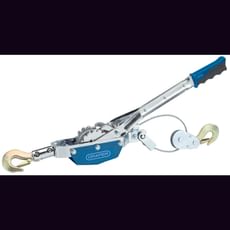
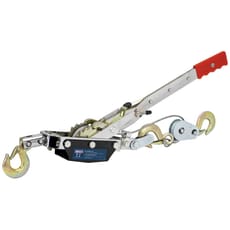
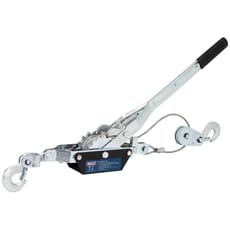
Hand pullers, also known as ratchet power pullers or cable pullers, are indispensable mechanical tools that deliver controlled pulling force for a wide array of demanding applications. Unlike powered winches that require electricity or hydraulics, these manual devices use a clever ratcheting mechanism combined with steel wire rope to generate substantial pulling power—often exceeding 1000kg capacity—making them perfect for site work, vehicle recovery, agricultural tasks, and construction projects where mains power isn't available. The mechanical advantage provided by the lever and ratchet system means a single operator can safely move loads weighing several tonnes with manageable physical effort.
The hand puller selection at Tooled-Up.com features professional-grade models from trusted manufacturers including Sealey and Draper, with capacities ranging from 1000kg to 1500kg and beyond. These tools typically incorporate robust steel gears with twin locking pawls for reliable load retention, heat-treated components for durability, and wire rope lengths around 3 metres (approximately 10 feet) to provide adequate working distance between anchor point and load. Their compact, portable design makes them easy to transport in a van or toolbox, whilst their rugged construction ensures they'll withstand the harsh conditions typical of outdoor recovery work, farm maintenance, and construction sites.
From extracting stuck vehicles from muddy fields to tensioning fencing wire, straightening bent metalwork, positioning heavy machinery during installation, or removing stubborn tree stumps, hand pullers prove their worth across countless scenarios. Professional tradespeople value their reliability and independence from power sources, whilst DIY enthusiasts appreciate the affordability and straightforward operation compared to more complex powered alternatives. With proper technique and adherence to safety guidelines, these versatile tools transform seemingly impossible pulling tasks into manageable operations.
Jargon Buster
- Ratchet Mechanism: The heart of any hand puller—a mechanical device featuring a toothed gear and pawl system that permits cable movement in one direction whilst preventing backward slippage. This allows you to apply force in repeated strokes whilst maintaining constant tension on the load between pulls, providing precise control throughout the operation.
- Safe Working Load (SWL): The maximum weight or force a hand puller can safely handle under normal operating conditions, typically expressed in kilograms or tonnes. Common capacities include 1000kg (like the Sealey HP1000) and 1500kg (such as the Sealey HP1500). Never exceed the stated SWL, and remember that angled pulls significantly reduce effective capacity.
- Wire Rope: Specialised steel cable constructed from multiple strands twisted together, providing excellent strength-to-weight ratio, flexibility, and resistance to abrasion. Standard hand pullers typically use 5mm diameter wire rope, though diameter and length vary by model. Regular inspection for fraying, kinking, or corrosion is essential for safe operation.
- Mechanical Advantage: The force multiplication achieved through the lever arm and ratchet system, enabling an operator to exert pulling force many times greater than their direct manual input. This principle makes it possible for one person to move loads weighing over a tonne with manageable effort.
- Twin Locking Pawls: A safety feature found on quality models like those from Sealey and Draper, where two independent pawls engage with the ratchet gear. This redundancy ensures that if one pawl fails, the second maintains load security, preventing dangerous sudden releases.
- Hook Set: The heavy-duty steel hooks at each end of the puller assembly—the main hook connects to the load being moved, whilst the anchor hook secures to a fixed point. Quality hooks feature safety latches to prevent accidental disengagement under tension.
Who Uses Hand Puller?
Hand pullers serve professionals and keen DIYers across numerous trades and industries:
- Agricultural Workers and Farmers: Fencing installation and repair, tensioning wire, positioning farm machinery, and general field maintenance tasks
- Vehicle Recovery Specialists: Extracting cars, vans, and light commercial vehicles from ditches, mud, snow, or difficult terrain
- Motor Mechanics and Auto Engineers: Engine removal, straightening chassis components, pulling stubborn bearings, and workshop fabrication work
- Construction Workers and Site Managers: Moving heavy building materials, positioning equipment, demolition work, and temporary structure tensioning
- Groundworkers and Landscapers: Tree stump removal, positioning large boulders and stones, earthmoving tasks, and landscaping projects
- Maintenance Engineers: Industrial equipment positioning, machinery alignment, and factory maintenance operations
- Marine and Boat Workers: Hauling boats up slipways, positioning anchors, dock work, and general boatyard applications
- Warehouse and Logistics Personnel: Moving heavy loads in confined spaces or areas without forklift access
- Forestry Workers: Tree felling operations, log handling, and woodland management tasks
- DIY Enthusiasts and Homeowners: Home improvement projects, garden landscaping, vehicle maintenance, and general pulling tasks around the property
How to Choose the Right Hand Puller
Assess Your Capacity Requirements: Select a hand puller with a safe working load that comfortably exceeds your typical pulling needs. For general DIY work and light trade applications, models rated at 1000kg provide adequate capacity for most tasks. Tradespeople regularly handling heavier loads—such as vehicle recovery specialists or agricultural contractors—should consider the 1500kg models or higher. Always apply a safety margin and never work at maximum rated capacity, as this compromises safety and accelerates wear.
Consider Cable Length and Quality: Standard hand pullers feature wire rope lengths between 1.5 and 3 metres, with many models offering approximately 3 metres (10 feet) of working distance. Evaluate your typical applications—will you need to reach across ditches, span gaps between anchor points, or work in confined spaces? The Draper RPP and Sealey models available from Tooled-Up feature robust 5mm diameter steel cable suitable for demanding professional use. Check that replacement cables are readily available should you need to replace worn rope in future.
Evaluate Build Quality and Brand Reputation: Professional-grade hand pullers from established manufacturers like Sealey and Draper offer superior durability compared to budget alternatives. Look for models featuring heat-treated steel gears, twin locking pawls for redundant safety, corrosion-resistant finishes, and robust construction designed to withstand regular use in challenging outdoor environments. These quality features prove their worth over years of reliable service.
Examine the Ratchet Mechanism: A well-designed ratchet should operate smoothly with minimal effort whilst providing positive, secure engagement. Test the action if possible—it should feel solid and confident without excessive play or roughness. The twin-pawl design found on quality models provides an important safety backup should one pawl wear or fail.
Inspect Hook Design and Security: Sturdy, forged steel hooks with safety latches are essential for preventing accidental load disengagement during operation. Check that hooks are appropriately sized for your typical anchor points and loads. Some applications benefit from swivel hooks that accommodate changing load orientation during pulling operations.
Consider Portability and Storage: If you transport your hand puller between sites regularly, consider the overall weight and dimensions. Most hand pullers weigh between 4-6kg, making them reasonably portable. Models supplied with protective storage cases offer advantages for keeping equipment organised and protected during van transport.
Popular Accessories
- Replacement Wire Rope: Spare steel cables in various lengths and diameters for maintenance or extended reach requirements
- Additional Hooks and Shackles: Alternative attachment hardware including bow shackles, clevis hooks, and snap hooks for different load configurations
- Chain Extensions: Heavy-duty lifting chain for extending overall reach or creating secure anchor points
- Snatch Blocks and Pulleys: Redirect pulling direction or double mechanical advantage by routing cable through quality pulleys
- Tree Straps and Trunk Protectors: Wide webbing straps for creating safe anchor points around trees without causing bark damage
- Heavy-Duty Work Gloves: Protective gloves from brands like Portwest or Scruffs for safe handling of wire rope and equipment
- Recovery Points and Ground Anchors: Portable anchoring systems including screw-in ground anchors for situations lacking fixed anchor points
- Load Levellers and Spreader Bars: Distribute pulling force evenly across multiple attachment points on wide loads
- Wire Rope Lubricant: Specialised lubricants to maintain cable flexibility and prevent corrosion
- Storage Cases and Tool Bags: Protective transport solutions from Stanley or DeWalt to keep your hand puller and accessories organised
Safety Information
Respect Load Limits: Never exceed the manufacturer's stated safe working load under any circumstances. The rated capacity applies to straight-line pulls in optimal conditions—angled pulls, shock loading, or adverse conditions significantly reduce safe capacity. Always apply a safety factor and avoid routinely working near maximum capacity. If a load won't move with reasonable force, reassess your approach rather than continuing to apply increasing tension.
Conduct Pre-Use Inspections: Before each use, thoroughly inspect your hand puller for signs of wear or damage. Examine wire rope carefully for fraying, kinking, flattening, corrosion, or broken strands—any of these defects render the rope unsafe. Check hooks for cracks, deformation, or worn safety latches. Inspect ratchet teeth for excessive wear and test the pawl engagement. Remove any damaged equipment from service immediately and arrange repair with genuine manufacturer parts or replacement.
Ensure Secure Anchoring: Both the load and anchor points must be structurally sound and capable of withstanding the full pulling force plus a safety margin. Anchor to solid, immovable objects—never to items that could shift, collapse, or break under load. Ensure hooks are properly seated with safety latches fully engaged. Avoid wrapping wire rope around sharp edges that could damage the cable under tension; use protective padding if necessary. When using trees as anchor points, employ proper tree straps to distribute load and prevent bark damage.
Maintain Clear Working Areas: Establish an exclusion zone around the entire pulling operation and keep all personnel well clear of the potential recoil path. If wire rope or attachment points fail, stored energy causes cables and components to whip back with tremendous force capable of causing serious injury. Never allow anyone to stand in line with the cable under tension. Mark the danger zone clearly and ensure all site workers understand the hazards, in accordance with HSE guidance for site safety.
Wear Appropriate PPE: Always wear suitable personal protective equipment including steel toe-capped safety boots, heavy-duty work gloves (essential when handling wire rope), and safety glasses or goggles to protect against debris. On construction sites or roadside recovery operations, high-visibility clothing is mandatory to comply with HSE regulations. Keep loose clothing, jewellery, and long hair secured away from the ratchet mechanism.
Apply Force Gradually: Operate the ratchet handle smoothly and progressively, allowing the load to respond to applied force. Sudden jerking or impact loading can shock-load the equipment far beyond its rated capacity, potentially causing catastrophic failure. If the load doesn't move after several strokes, stop and investigate potential obstructions or friction points rather than continuing to increase tension dangerously.
Maintain Your Equipment: Clean your hand puller after use, removing mud, dirt, and debris that could interfere with the ratchet mechanism. Lubricate moving parts and wire rope according to manufacturer specifications using appropriate products. Store in a dry environment to prevent corrosion of steel components. For equipment used commercially, arrange periodic professional inspection to verify continued safe operation and compliance with relevant British Standards.
Frequently Asked Questions
What's the difference between a hand puller and a come-along?
These terms are often used interchangeably in the UK to describe the same tool—a manually-operated ratchet device using wire rope or cable to generate pulling force. "Come-along" is more common in American terminology, whilst UK tradespeople typically refer to these tools as hand pullers, ratchet pullers, or power pullers. All describe the same basic mechanism: a ratcheting lever system that creates mechanical advantage for moving heavy loads without electrical power.
Can I use a hand puller for lifting operations overhead?
Whilst hand pullers can technically operate in any orientation including vertically, they're primarily designed and rated for pulling rather than lifting. Overhead lifting operations fall under stricter HSE regulations and typically require equipment specifically designed, tested, and certified for lifting duties, such as lever hoists or chain blocks that meet relevant British Standards. If you must use a hand puller vertically, ensure it's appropriate for the application, never position yourself or others beneath suspended loads, and consider whether a dedicated lifting device would be safer and more compliant with workplace regulations.
How do I know when to replace the wire rope?
Replace wire rope immediately if you observe any of the following: visible broken wires or strands, significant fraying or "bird-caging" (where strands separate and project outward), kinks or sharp bends that create permanent deformation, flattening or crushing of the rope, excessive rust or corrosion, or reduction in rope diameter. Even minor damage compromises cable integrity and creates serious safety risks. For professional applications, maintain a spare replacement cable so you're never tempted to continue using damaged rope. Quality replacement cables are available for Sealey and Draper models.
What capacity hand puller do I need for vehicle recovery work?
For recovering standard passenger cars and light vans from mud, ditches, or soft ground, a 1500kg capacity model like the Sealey HP1500 provides adequate pulling force for most situations. However, recovery work often encounters greater resistance than simply moving the vehicle's weight—suction in mud, uphill gradients, and friction dramatically increase required pulling force. Many vehicle recovery specialists prefer higher-capacity models or use snatch blocks to double mechanical advantage when facing particularly stubborn recoveries. Consider your typical vehicle weights and worst-case scenarios when selecting capacity.
How can I increase the pulling power of my hand puller?
The most effective method is using a snatch block (a heavy-duty pulley) to create a mechanical advantage system. By routing the cable through a pulley attached to the load and back to a fixed anchor point, you effectively double the pulling force whilst halving the pulling distance. This technique is particularly valuable when recovering heavy vehicles or moving exceptionally stubborn loads. Ensure your snatch block is rated for the forces involved and that all components in the system—including anchor points—can safely handle the increased loads. Quality snatch blocks are available as accessories to complement your hand puller setup.