

Handles for Drills

Pay in 3 interest-free payments on purchases from £20-£3000 with  . Learn more.
Loading...
End of content
Error - No more pages to load
About Handles for Drills
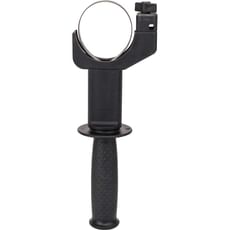
Auxiliary handles for drills are critical safety accessories that transform how you control and operate power drills, rotary hammers, and combi drills during demanding applications. These purpose-engineered components attach securely to your drill body, providing an essential secondary grip point that dramatically improves stability, reduces operator fatigue, and helps you maintain precise control when drilling through masonry, metal, or timber. When your drill bit encounters unexpected resistance or binds in the material, an auxiliary handle can be the difference between maintaining control and experiencing a dangerous kickback situation.
The handles available from Tooled-Up.com are predominantly genuine OEM replacement parts from industry-leading manufacturers including Bosch Professional, Bosch Home and Garden, and Makita. Each handle is precision-engineered to fit specific drill models, ensuring perfect compatibility with your existing equipment whilst maintaining the structural integrity and safety standards demanded by professional tradespeople. From compact side grips designed for lightweight combi drills to heavy-duty auxiliary handles built for powerful rotary hammers like the Bosch GBH series, these components are manufactured to withstand the rigours of construction site work whilst providing ergonomic comfort during extended use.
Most professional-grade auxiliary handles feature 360-degree rotation adjustment, allowing you to position the grip at the optimal angle for your specific drilling operation. This versatility proves invaluable when working overhead, drilling at awkward angles, or operating in confined spaces where standard two-handed positioning would be impractical. Whether you're replacing a lost or damaged handle or upgrading your drill's control capabilities, selecting the correct model-specific handle ensures both HSE compliance and the safe, controlled operation that professional work demands.
Jargon Buster
- Auxiliary Handle: A secondary grip that attaches to the drill body, providing an additional control point to help counteract torque reaction and improve stability during drilling operations, particularly with powerful tools.
- Side Handle/Side Grip: Alternative terminology for auxiliary handles, typically describing units that mount to the side of the drill housing and can be rotated through 360 degrees to suit different working positions and angles.
- Torque Reaction: The rotational force that attempts to twist the drill body in the opposite direction to the bit's rotation—particularly pronounced with large diameter bits or when the bit binds in the material. Auxiliary handles help you control this force safely.
- Handle Assembly: The complete unit comprising the grip, mounting bracket, adjustment collar, and all fixing components required for secure attachment to your specific drill model.
- OEM (Original Equipment Manufacturer): Genuine parts manufactured by the same company that produced your drill, guaranteeing perfect fit, appropriate material specifications, and compatibility with your drill's model number.
- 360-Degree Adjustment: The ability to rotate the auxiliary handle completely around the drill body, allowing precise positioning at any angle to optimise control for horizontal, vertical, or overhead drilling operations.
Who Uses Handles for Drills?
- Construction Workers: Regularly drilling into concrete, brick, and blockwork with powerful rotary hammers requiring maximum control and stability
- Electricians (Sparkies): Installing cable runs, mounting back boxes, and drilling through structural timber where precision and controlled operation are essential
- Plumbers: Creating pipe runs through walls and floors, often working in tight spaces where adjustable handle positioning proves crucial for maintaining control
- Carpenters and Joiners (Chippies): Heavy-duty drilling through timber framing and boring large diameter holes that generate significant torque reaction
- Maintenance Engineers: Replacing worn, damaged, or missing handles on existing equipment to maintain safe working conditions and HSE compliance
- Shopfitters: Precision installation work requiring steady control whilst managing torque from powerful drills in finished environments
- Hire Companies: Maintaining rental equipment by replacing damaged auxiliary handles to ensure tools meet safety standards before customer use
- DIY Enthusiasts: Home renovators tackling substantial projects who understand the importance of proper tool control and safe operating practices
How to Choose the Right Handles for Drills
Model Compatibility: The single most critical factor is ensuring the handle matches your specific drill model. Check your drill's model number on the rating plate and verify it against the handle's compatibility information. Bosch and Makita engineer handles to precise specifications—a handle for a Bosch GBH 4-32 DFR will not fit a GBH 7 DE, despite both being professional rotary hammers.
Genuine OEM vs Aftermarket: Whilst aftermarket alternatives occasionally exist, genuine manufacturer parts from Bosch Professional, Makita, or other leading brands guarantee proper fit, appropriate material strength, and full compatibility with your drill's safety features. For professional tools used in commercial environments where HSE compliance matters, genuine parts provide essential peace of mind.
Drill Type and Power Rating: Match the handle's construction to your drill's power output. Heavy-duty rotary hammers like the Bosch GBH 10 DC or Makita HR5212C require robust handles capable of withstanding significant vibration and torque. Lighter combi drills use more compact side grip assemblies. The handle's build quality must match the forces it will encounter.
Adjustment Mechanism: Look for handles offering smooth 360-degree rotation with secure locking mechanisms. The adjustment should operate easily even when wearing work gloves, but must lock positively to prevent slippage during operation. Quick-release collars prove particularly useful when you need frequent repositioning throughout the working day.
Ergonomics and Grip Design: The handle should provide a comfortable diameter with adequate surface texture or rubber overmoulding to prevent slipping, even in dusty or damp conditions. Consider your typical drilling duration—extended use demands superior ergonomic design to reduce hand fatigue and help prevent hand-arm vibration syndrome (HAVS).
Replacement or Initial Purchase: Determine whether you're replacing a lost component or purchasing an additional handle for a drill that didn't include one originally. Some professional drill kits include auxiliary handles as standard equipment, whilst others require separate purchase. Check your original drill packaging to understand what should have been supplied.
Popular Accessories
- Depth Stops and Rods: Attach to auxiliary handles to control drilling depth precisely, ensuring consistent hole depths across multiple fixings
- SDS Drill Bits: SDS-plus and SDS-max bits in various diameters for masonry drilling with rotary hammers
- Chuck Keys: Essential for drills with keyed chucks, frequently misplaced and requiring replacement to maintain full drill functionality
- Anti-Vibration Gloves: Reduce hand-arm vibration exposure when operating powerful drills for extended periods, helping prevent HAVS
- Tool Storage Systems: Makita MakPac, DeWalt TSTAK, or Milwaukee PACKOUT systems to organise drills, handles, and accessories efficiently
- Safety Goggles and Face Protection: Essential PPE when drilling overhead or into masonry that produces flying debris
- Vacuum Dust Extraction Attachments: Connect to your drill to capture dust at source, important for COSHH compliance on professional sites
- Drill Stands and Guides: Ensure perfectly perpendicular holes when precision alignment is critical for your application
Safety Information
Mandatory Use of Auxiliary Handles: If your drill was supplied with or designed to accept an auxiliary handle, you must use it during operation. The HSE recognises auxiliary handles as essential safety features that help prevent loss of control, particularly when drill bits bind or encounter unexpected resistance. Operating without the handle when one is specified compromises both your safety and HSE compliance.
Pre-Operation Inspection: Before each use, verify that the auxiliary handle is securely tightened and properly locked in position. Loose handles can rotate unexpectedly during operation, causing sudden loss of control and potential injury. Inspect for cracks, damage to adjustment mechanisms, worn grip surfaces, or any other deterioration that could compromise safety performance.
HAVS Prevention: When operating powerful drills and rotary hammers, particularly for prolonged periods, the auxiliary handle helps distribute grip force between both hands. This significantly reduces vibration exposure to any single hand and helps prevent hand-arm vibration syndrome, a serious occupational health condition that can cause permanent damage to blood vessels, nerves, and joints.
Correct Handle Positioning: Position the auxiliary handle to provide maximum control for your specific operation. When drilling horizontally into walls, position it to effectively counteract torque reaction. For overhead work, adjust the handle to maintain stable upward pressure whilst keeping your arms in a comfortable, sustainable position that prevents fatigue.
Two-Handed Operation: Always maintain a firm grip on both the main handle and auxiliary handle during operation. Never attempt to operate a powerful drill one-handed, even briefly. The auxiliary handle should be considered mandatory safety equipment for any drill over 600W or when using drill bits larger than 10mm diameter in any material.
Frequently Asked Questions
Are auxiliary handles interchangeable between different drill brands?
No, auxiliary handles are typically brand and model-specific components. A Bosch handle will not fit a Makita drill, and even within the same manufacturer, handles are often designed for specific model ranges. For example, Tooled-Up stocks different Bosch handles for the GBH 4, GBH 5, GBH 7, and GBH 10 series, each engineered for precise fitment. Always verify compatibility with your exact drill model number including any suffix letters before purchasing.
Can I operate my drill safely if the auxiliary handle is missing or damaged?
If your drill was designed to include an auxiliary handle, operating without one significantly compromises both safety and control, particularly with powerful models producing high torque. For professional use on construction sites, HSE guidance strongly recommends using all supplied safety features. Replace missing or damaged handles immediately—the modest cost is insignificant compared to the risk of injury from loss of control during binding or kickback situations.
Why won't my replacement handle fit properly despite matching the brand?
The most common issue is incorrect model matching within a brand's range. Drill manufacturers frequently update designs across model generations, and a handle for an older GBH 4 may not fit a newer GBH 4-32 DFR despite similar naming. Check the specific compatibility information provided and verify your drill's complete model number including all suffix letters and numbers. Genuine OEM parts typically include detailed compatibility lists to prevent ordering errors.
How tight should I fasten the auxiliary handle adjustment collar?
The handle should be tightened firmly enough that it cannot rotate during normal drilling operations, but avoid over-tightening which risks damaging the adjustment mechanism or drill housing. Most handles use either a threaded collar or quick-release lever system—tighten until secure, then test by attempting to rotate the handle with firm hand pressure before operating the drill. If it moves under hand pressure alone, it requires additional tightening.
Do different drilling applications require different handle types?
Generally, the same auxiliary handle serves all drilling applications for your specific drill model. However, the 360-degree adjustment capability allows you to optimise grip angle and control for different operations—whether drilling horizontally into walls, vertically downward through floors, or overhead into ceilings. The handle position should be adjusted to suit each specific task, but the handle itself remains constant for that particular drill model.