

Heat Shrink Tubing
Pay in 3 interest-free payments on purchases from £30-2000 with  . Learn more.



 Loading...
End of content
Error - No more pages to load
About Heat Shrink Tubing
Heat shrink tubing is an indispensable component for electrical installations, repairs, and cable management across professional and domestic applications. This versatile protective sleeving contracts when heated, forming a secure, insulating barrier around wires, cables, and connections. Whether you're working with automotive electrics, household wiring, or industrial equipment, heat shrink tubing delivers reliable protection against moisture, abrasion, and environmental damage whilst maintaining excellent electrical insulation properties. The polymer material shrinks to approximately half its original diameter when heat is applied, creating a tight, professional seal that safeguards connections and extends cable life.
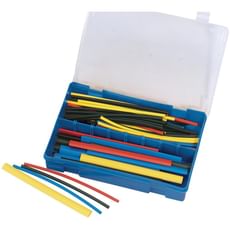
The range available from Tooled-Up.com includes comprehensive assortments from trusted brands like Sealey, Draper, and Steinel, offering various sizes and specifications to suit different cable diameters and applications. You'll find both standard heat shrink tubing and adhesive-lined variants that provide enhanced sealing and strain relief for demanding environments. Available in multiple colours including black and red, these tubes assist with circuit identification and create professional-looking installations that comply with UK wiring standards. Most assortments arrive in convenient storage cases, making them ideal for mobile tradespeople or workshop environments where organisation is essential.
Heat shrink tubing functions by applying controlled heat from a heat gun or other suitable source, causing the polymer material to contract uniformly around the conductor or connection point. The shrink ratio and wall thickness vary between products, with adhesive-lined options featuring an inner layer of hot-melt adhesive that melts during heating to create a waterproof seal – particularly valuable for outdoor applications, marine installations, or harsh industrial environments where moisture ingress could compromise electrical safety or performance.
Jargon Buster
- Shrink Ratio: The ratio between the tubing's original diameter and its fully shrunk diameter, typically expressed as 2:1 or 3:1. A 2:1 ratio means the tubing will shrink to half its original size, whilst 3:1 offers greater flexibility for covering irregular shapes, large connectors, or transitions between different cable diameters.
- Adhesive-Lined: Heat shrink tubing with an internal layer of hot-melt adhesive that melts when heated, creating a waterproof and environmentally sealed connection. Essential for marine, automotive, and outdoor electrical applications where moisture ingress poses a significant risk to connection integrity.
- Wall Thickness: The thickness of the tubing wall, measured in millimetres, which determines the mechanical protection and insulation properties. Thicker walls provide superior abrasion resistance and insulation values, making them suitable for industrial applications and high-traffic cable runs.
- Shrink Temperature: The temperature range at which the tubing begins to shrink and fully recovers, typically between 90°C and 120°C for standard polyolefin tubing. This determines the heat source required for proper installation and ensures compatibility with different heating equipment.
- Recovery: The process by which heat shrink tubing contracts to its final diameter when heated. Full recovery ensures optimal protection, professional appearance, and maximum insulation performance for safe electrical connections.
- Dielectric Strength: The maximum voltage the tubing can withstand without breaking down, measured in kilovolts per millimetre (kV/mm). Essential for ensuring safe electrical insulation in accordance with UK electrical standards and 240v domestic installations.
Who Uses Heat Shrink Tubing?
- Electricians and Electrical Contractors: For insulating wire joints, cable repairs, and creating professional terminations in domestic and commercial installations whilst complying with BS 7671 wiring regulations
- Auto Electricians and Motor Mechanics: Essential for automotive wiring repairs, ECU connections, and protecting circuits from moisture, vibration, and the harsh under-bonnet environment
- Marine Engineers: For waterproof electrical connections on boats and marine equipment where saltwater corrosion resistance and environmental sealing are absolutely critical
- Electronics Engineers and Technicians: For circuit board repairs, component insulation, cable management in electronic assemblies, and creating reliable connections in sensitive equipment
- Maintenance Engineers: For industrial equipment repairs, cable identification, preventative maintenance programmes, and extending the service life of existing installations
- Audio Visual Installers: For professional cable terminations, strain relief, and colour-coded identification in commercial AV systems, conference facilities, and entertainment venues
- DIY Enthusiasts and Home Improvers: For household electrical repairs, appliance fixes, garden lighting installations, and maintaining domestic electrical equipment safely
- Telecoms and Data Installers: For protecting cable joints and creating neat, professional network installations in commercial and domestic settings
How to Choose the Right Heat Shrink Tubing
Diameter and Shrink Ratio: Measure your cable or connection diameter accurately and select tubing with an expanded diameter that fits comfortably over it before shrinking. Remember that 2:1 shrink ratio tubing will halve in size, so choose accordingly – allow at least 20-30% clearance for easy application. For irregular shapes, large connectors, or transitions between different cable sizes, 3:1 ratio tubing offers significantly more flexibility.
Adhesive-Lined or Standard: Standard heat shrink tubing provides excellent electrical insulation and mechanical protection for most indoor applications and general workshop use. However, if you're working outdoors, in marine environments, underground, or anywhere moisture ingress is a concern, adhesive-lined tubing creates a waterproof seal that offers superior environmental protection and prevents corrosion at connection points.
Colour Coding: Black tubing remains standard for general applications, but coloured options like red are valuable for identifying circuits, phases, or cable functions. Many electricians maintain stocks of multiple colours to comply with UK wiring regulations, make future maintenance easier, and provide clear visual identification of different circuits or voltage levels.
Wall Thickness: Thin-wall tubing suits electronic applications where space is limited and flexibility is required, whilst medium and heavy-wall options provide better mechanical protection for automotive, industrial, or high-abrasion environments. Consider the operating conditions, physical stresses, and potential impact damage the tubing will face throughout its service life.
Assortments vs Individual Sizes: Starter assortments from brands like Sealey, Draper, and Steinel offer excellent value and variety for general trade work, typically including multiple diameters and lengths in organised storage cases. Browse the selection at Tooled-Up.com to find comprehensive sets ranging from 70 to 590 pieces. For specific projects or high-volume work on standardised cable sizes, individual rolls may prove more economical.
Temperature and Voltage Ratings: Ensure the tubing meets the temperature and voltage requirements of your specific application. Standard polyolefin tubing typically handles up to 125°C and provides adequate insulation for most UK 240v domestic applications, but always verify specifications for specialised requirements, industrial equipment, or higher voltage installations.
Popular Accessories
- Heat Guns: Purpose-built tools from brands like Steinel for applying controlled heat to shrink tubing evenly without damaging cables, insulation, or surrounding components
- Cable Ties and Clips: For securing and organising cables before applying heat shrink tubing, maintaining neat installations and preventing cable movement during heating
- Wire Strippers and Cutters: Essential for preparing cables cleanly and cutting heat shrink tubing to precise lengths for professional-looking terminations
- Electrical Tape: Complementary product for temporary repairs, additional cable bundling, or providing extra mechanical protection in high-wear areas
- Cable Crimping Tools: Often used alongside heat shrink tubing for creating secure, permanent electrical connections with crimped terminals
- Heat-Resistant Mats: Protect work surfaces, benches, and vehicle bodywork when using heat guns or other heating sources during installation
- Digital Multimeters: For testing connections and ensuring proper insulation resistance after applying heat shrink tubing, confirming safe electrical performance
- Solder and Soldering Irons: Frequently used in conjunction with heat shrink tubing for permanent electrical connections requiring maximum reliability
Safety Information
When working with heat shrink tubing, always ensure electrical circuits are properly isolated and de-energised before beginning work. Follow correct isolation procedures and use appropriate voltage testers to confirm circuits are dead, in accordance with HSE electrical safety guidelines and the requirements of BS 7671. Never assume a circuit is safe – always test before touching.
Heat guns and other heating sources reach extremely high temperatures and pose serious burn risks. Always direct heat away from yourself and others, work in well-ventilated areas, and allow equipment to cool completely before storage. Never use naked flames such as lighters or matches, as these can damage the tubing, melt cable insulation, and create fire hazards whilst producing harmful fumes.
Ensure heat shrink tubing is correctly rated for the voltage and current of your application. Using undersized or incorrectly rated tubing may result in inadequate insulation, creating shock hazards or fire risks. When working to UK wiring regulations, verify that your choice of heat shrink tubing provides appropriate insulation for the circuit voltage – this is particularly important for 240v domestic installations.
Wear appropriate PPE including safety glasses when cutting tubing and heat-resistant gloves when operating heat guns at close quarters. Fumes from heating polymer materials should be avoided – always work in well-ventilated spaces and take regular breaks when completing large-scale projects or working in confined areas.
Frequently Asked Questions
Can I use a hair dryer instead of a heat gun to shrink heat shrink tubing?
Whilst a hair dryer produces heat, it typically doesn't reach sufficient temperatures (usually only 60-80°C) to properly shrink most heat shrink tubing, which requires 90-120°C for complete recovery. A proper heat gun ensures even, complete shrinkage and proper adhesive activation on lined tubing. For occasional use, some lighter-duty tubes may respond to prolonged hair dryer application, but a dedicated heat gun is essential for professional results and reliable connections.
What's the difference between 2:1 and 3:1 shrink ratio?
A 2:1 shrink ratio means the tubing will shrink to half its original diameter, suitable for most standard cable applications and straightforward connections. A 3:1 ratio shrinks to one-third of its original size, offering greater flexibility for covering irregular shapes, large connectors, cable transitions, or awkward junction boxes. The 3:1 ratio provides a tighter final fit and accommodates a wider range of cable sizes, but costs slightly more per metre.
How do I know what size heat shrink tubing I need?
Measure the diameter of your cable or connection at its widest point using callipers or a ruler. Choose tubing with an expanded (pre-shrunk) diameter at least 20-30% larger than this measurement to ensure easy application over connectors or cable ends. After shrinking, the tubing should fit snugly without gaps or loose sections. For example, a 10mm cable would typically require 12-13mm expanded diameter tubing with a 2:1 shrink ratio.
Is heat shrink tubing waterproof?
Standard heat shrink tubing provides good moisture resistance but isn't fully waterproof at the ends where cables enter and exit. For genuine waterproof applications such as outdoor installations, marine environments, underground cables, or garden lighting, use adhesive-lined heat shrink tubing. The internal hot-melt adhesive creates a complete environmental seal when heated, preventing moisture ingress and providing superior corrosion protection for long-term reliability.
Can heat shrink tubing be removed and reused?
Heat shrink tubing cannot be "unshrunk" and reused once it has been heated and contracted. Once heated and shrunk, the polymer structure is permanently altered. To remove it, you'll need to carefully cut it away using wire strippers or a sharp knife, taking care not to damage the underlying cable insulation. This is why proper sizing, positioning, and alignment before heating is essential for professional installations that meet UK electrical standards.