

Hi Vis Jumpers
Pay in 3 interest-free payments on purchases from £30-2000 with  . Learn more.
 Loading...
End of content
Error - No more pages to load
About Hi Vis Jumpers
Hi vis jumpers are essential protective garments that combine thermal comfort with critical workplace visibility, keeping workers warm whilst ensuring they remain highly visible in hazardous environments. These versatile garments merge the insulation and comfort of traditional sweatshirts with the safety features of high visibility clothing, engineered to meet stringent UK safety standards including EN ISO 20471. Whether you're working on a busy construction site, maintaining highways, or operating machinery in a warehouse, hi vis jumpers provide crucial protection without compromising on comfort or mobility during long shifts.
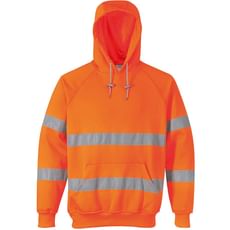
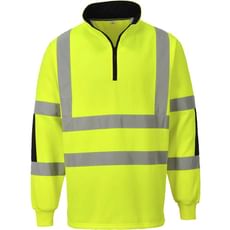
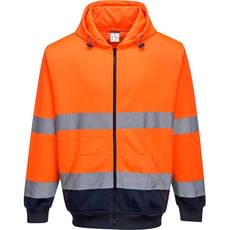
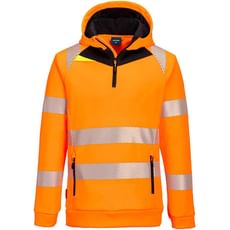
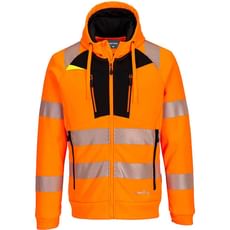
Available in various styles including overhead hoodies, zip-up sweatshirts, quarter-zip pullovers, and funnel neck designs, hi vis jumpers feature strategically positioned retroreflective tape that ensures 360-degree visibility in low-light conditions, poor weather, and high-risk environments. Tooled-Up.com stocks leading brands such as Portwest, whose specialised ranges include the DX4 collection combining contemporary styling with technical performance fabrics, and the PW2 range offering enhanced all-day comfort. Modern designs incorporate practical features including reinforced seams, multiple pockets for tools and mobile devices, moisture-wicking fabrics, and ribbed cuffs that trap warmth whilst allowing unrestricted movement.
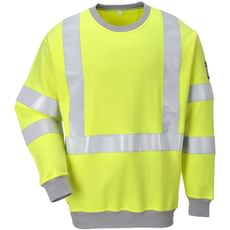
From Class 2 to Class 3 certification levels, these garments cater to different risk environments and regulatory requirements across UK workplaces. Flame-resistant options such as the Modaflame range provide additional protection for workers exposed to heat and flame hazards, making hi vis jumpers suitable for construction sites, road maintenance, warehousing, railway work, emergency services, and numerous other professional applications where visibility and thermal protection are paramount.
Jargon Buster
- EN ISO 20471 - The European standard specifying requirements for high visibility warning clothing. Garments must meet minimum requirements for fluorescent background material, retroreflective tape coverage, and combined performance properties to achieve certification.
- Class 2 and Class 3 Hi Vis - Classification levels indicating the amount of visible material and reflective tape. Class 3 offers the highest level of visibility with more extensive reflective tape coverage, required for higher-risk environments such as motorways and areas with fast-moving traffic.
- Retroreflective Tape - Specialised tape that reflects light directly back to its source, making the wearer visible to vehicle operators and machinery drivers in low-light conditions. Typically silver or yellow in colour and positioned on torso, arms, and shoulders for maximum effect.
- Flame Resistant (FR) - Fabrics treated or inherently engineered to resist ignition and self-extinguish when exposed to flames. Essential for workers in welding, electrical work, and petrochemical industries where fire hazards are present.
- Moisture-Wicking Fabric - Technical materials that draw perspiration away from the skin to the garment's outer surface, helping maintain optimal body temperature and comfort during physically demanding work.
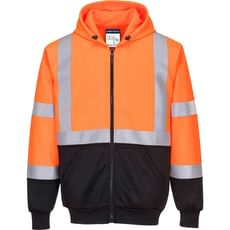
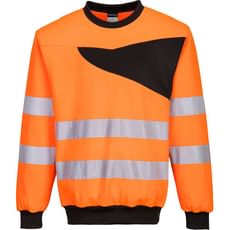
- Two-Tone Design - Hi vis garments featuring contrasting colours, typically fluorescent yellow or orange with navy or black panels, providing enhanced visibility whilst offering a more professional appearance and concealing dirt in high-wear areas.
Who Uses Hi Vis Jumpers?
Hi vis jumpers are essential workwear for numerous trades and professions across the UK:
- Construction Workers - Site labourers, bricklayers, carpenters, and general builders working on busy construction sites
- Road Workers - Highway maintenance crews, traffic management operatives, road construction teams, and resurfacing specialists
- Warehouse Staff - Forklift operators, logistics personnel, distribution centre workers, and picking operatives
- Railway Workers - Track maintenance crews, signalling engineers, station staff, and engineering teams
- Delivery Drivers - Couriers, HGV drivers, parcel delivery operatives, and logistics drivers making roadside deliveries
- Emergency Services - Paramedics, fire service personnel, breakdown recovery operators, and incident response teams
- Groundskeepers and Landscapers - Those working near roads, car parks, public spaces, and highway verges
- Utility Workers - Electricians, gas engineers, telecoms engineers, and water authority personnel working on public infrastructure
- Security Personnel - Event security, car park attendants, site security officers, and patrol operatives
- Surveyors and Site Inspectors - Professionals visiting multiple construction sites, industrial facilities, and outdoor locations
How to Choose the Right Hi Vis Jumpers
Certification Level: Determine whether you require Class 2 or Class 3 visibility based on your working environment. Class 3 garments provide maximum visibility and are mandatory for high-risk environments such as motorway work, roadside maintenance, and areas with fast-moving traffic. Class 2 is suitable for controlled environments like construction sites and warehouses. Always check your employer's requirements and HSE guidance for your specific role.
Style and Design: Consider your working conditions when choosing between overhead hoodies, zip-up sweatshirts, quarter-zip pullovers, or funnel neck designs. Zip-front styles offer easier removal and better temperature regulation throughout the day, whilst overhead designs provide fewer potential snag points around machinery. The Portwest DX4 range offers contemporary styling suitable for customer-facing roles, whilst traditional designs excel in heavy industrial environments.
Material and Comfort: Look for breathable, moisture-wicking fabrics if you'll be undertaking physically demanding work. Polyester-cotton blends offer excellent durability and comfort, whilst fleece-lined options provide extra warmth for winter working. Consider garment weight carefully - heavier jumpers offer superior insulation but may restrict movement during active work. Ribbed cuffs and hems help trap warmth and prevent the garment riding up during overhead tasks.
Special Requirements: If you work near heat or flame hazards such as welding, electrical work, or petrochemical environments, flame-resistant options like the Modaflame range are essential for your protection. For wet conditions, consider water-resistant treatments or layering options. Some designs include anti-static properties for electronics environments and ESD-sensitive areas.
Practical Features: Assess pocket configuration for carrying tools, mobile phones, and essential items. Look for reinforced high-wear areas around elbows and shoulders for enhanced durability. Two-tone designs with contrasting dark panels help conceal dirt and oil stains whilst maintaining full visibility standards. Consider designs with ID badge holders if required for site access protocols.
Sizing and Fit: Hi vis jumpers should fit comfortably over base layers without restricting arm movement or shoulder rotation. Consider whether you'll wear the garment over other clothing layers during colder months when sizing up may be necessary. The selection at Tooled-Up includes various fit options from Portwest to accommodate different body shapes and working requirements, ensuring all-day comfort without compromising safety standards.
Popular Accessories
- Hi Vis Vests and Gilets - Layering options for variable temperature conditions and easy on-off visibility
- Hi Vis Trousers - Matching legwear to complete Class 3 outfit requirements for maximum visibility
- Hi Vis Base Layers - Thermal underwear and moisture-wicking shirts for cold weather working
- Hi Vis Waterproof Jackets - Weather protection whilst maintaining visibility in wet conditions
- Work Gloves - Hand protection in various materials including hi vis options for enhanced visibility
- Safety Boots - Steel toe-cap and composite footwear to complete PPE requirements
- Hard Hats and Bump Caps - Head protection for construction and industrial environments
- Tool Belts and Pouches - Hands-free tool carrying solutions that complement workwear
- Knee Pads - Protection for groundwork and kneeling tasks
- Workwear Washing Detergent - Specialised cleaners that maintain reflective properties and garment integrity
Safety Information
Hi vis jumpers are classified as Personal Protective Equipment (PPE) and must comply with UK and European safety standards. The HSE requires employers to conduct thorough risk assessments to determine appropriate visibility levels for specific working environments. Class 3 garments are mandatory for workers exposed to high-speed traffic, motorway work, dual carriageways, and railway environments where maximum visibility is critical for personal safety.
Regular inspection of hi vis clothing is essential for maintaining protection - reflective tape that becomes cracked, peeled, contaminated with dirt or grease significantly reduces visibility and compromises safety. Garments showing signs of damage should be replaced immediately. Proper laundering maintains reflective properties; always follow manufacturer washing instructions, typically washing at 40-60°C, and avoid fabric softeners which can coat reflective tape and diminish its effectiveness. Most quality hi vis garments maintain full certification for approximately 50 wash cycles when cared for correctly according to manufacturer guidelines.
Hi vis jumpers should be worn as part of a comprehensive PPE approach appropriate to your working environment. In many situations, they must be combined with other protective equipment including safety footwear with steel toe-caps, hard hats, gloves, and eye protection. Remember that hi vis clothing alone does not eliminate risk - proper site safety protocols, traffic management systems, and continuous risk awareness remain essential for workplace safety.
Flame-resistant variants must be worn by personnel working near welding operations, electrical hazards, hot work, or in environments where flash fires may occur. These specialised garments should never be worn with non-FR layers underneath that could melt or ignite, compromising the protection they provide. Replace any hi vis garment that has been damaged, heavily soiled beyond cleaning, exposed to chemicals that may affect its protective properties, or involved in any incident where its integrity may have been compromised.
Frequently Asked Questions
What's the difference between Class 2 and Class 3 hi vis jumpers?
Class 3 garments feature significantly more retroreflective tape and fluorescent material than Class 2, providing maximum visibility from all angles. Class 3 is legally required for high-risk environments such as motorway work, roadside maintenance, and areas with fast-moving traffic exceeding 30mph. Class 2 is suitable for lower-risk environments like warehouses, construction sites with controlled traffic, and car parks. The specific class required depends on your employer's risk assessment and HSE guidance for your industry and working location.
How should I care for my hi vis jumper to maintain its reflective properties?
Wash according to manufacturer instructions, typically at 40-60°C using standard detergent, and avoid fabric softeners which can coat reflective tape and reduce effectiveness. Turn garments inside out before washing to protect reflective elements from abrasion. Air dry when possible rather than tumble drying on high heat which can damage tape adhesion. Inspect regularly for damaged, worn, or contaminated reflective tape, and replace garments when reflectivity diminishes - most maintain full certification for approximately 50 wash cycles with proper care.
Can I wear a hi vis jumper in all weather conditions?
Hi vis jumpers provide excellent mid-layer warmth and visibility but aren't typically waterproof. For wet conditions, wear a hi vis waterproof jacket over the top, or underneath if the jacket provides sufficient visibility classification on its own. In very cold weather, layer hi vis jumpers over thermal base layers for maximum insulation. For hot conditions or physically demanding work in warm weather, consider lighter-weight hi vis polo shirts or T-shirts instead to prevent overheating whilst maintaining required visibility standards.
Are two-tone hi vis jumpers as safe as single-colour ones?
Yes, provided they meet the same EN ISO 20471 classification and certification standards. Two-tone designs with navy or black contrast panels still incorporate the required amount of fluorescent material and retroreflective tape for their class rating. The darker panels offer practical benefits including concealing dirt, oil, and grease stains, providing a more professional appearance, and offering enhanced durability in high-wear areas, whilst maintaining full safety compliance and visibility requirements.
Do I need flame-resistant hi vis clothing for my work?
Flame-resistant hi vis jumpers are essential if you work with welding, cutting, grinding, electrical systems, or in petrochemical environments where flash fire hazards exist. Standard hi vis garments may melt or continue burning when exposed to flames or high heat, whereas FR-rated clothing like the Modaflame range self-extinguishes when the ignition source is removed. Your employer's risk assessment should clearly identify if FR clothing is required for your specific role, working environment, and the tasks you regularly perform.