

Holders
Pay in 3 interest-free payments on purchases from £30-2000 with  . Learn more.

 Loading...
End of content
Error - No more pages to load
About Holders
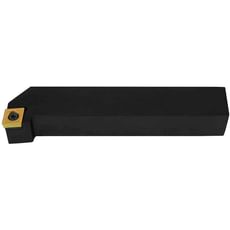
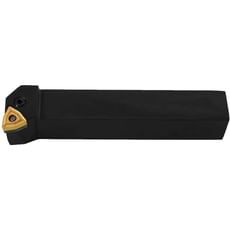
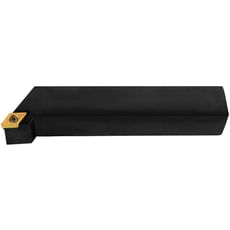
Turning tool insert holders represent specialised precision equipment essential for metalworking, engineering, and machining operations. These holders secure replaceable cutting inserts used in lathe work, boring operations, and threading applications, allowing machinists to achieve accurate cuts, consistent finishes, and efficient material removal across ferrous and non-ferrous metals. Unlike traditional brazed tool bits, insert holders accommodate indexable cutting tips that can be rotated or replaced when worn, significantly reducing downtime and maintaining cutting performance throughout production runs. The holders available at Tooled-Up.com feature steel shanks designed to withstand the significant forces generated during turning, boring, and threading operations whilst maintaining rigidity and dimensional accuracy.
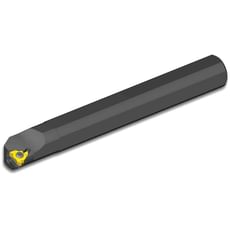
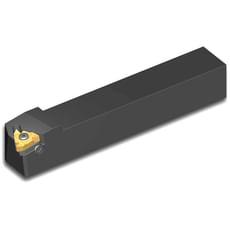
Professional machinists, engineering workshops, and manufacturing facilities rely on quality insert holders to maximise productivity and ensure consistent component quality. Different holder geometries suit specific machining operations: external turning holders remove material from outside diameters, internal boring holders machine internal features and holes, whilst threading holders cut precise external and internal threads to exacting specifications. The holder shank interfaces with the lathe tool post, whilst the insert pocket at the cutting end secures the replaceable carbide, ceramic, or cermet insert at the correct angle and height for optimal cutting geometry.
Modern insert holder systems follow standardised nomenclature indicating shank dimensions, insert shape compatibility, cutting direction, and approach angles. This international coding allows machinists to select appropriate holders for specific operations without ambiguity. Steel shank construction provides the necessary rigidity to resist deflection under cutting forces, whilst precision-machined insert pockets ensure accurate positioning and secure clamping of expensive cutting inserts. Whether performing high-volume production work or precision one-off components, the correct insert holder directly impacts surface finish quality, dimensional accuracy, and tool life.
Jargon Buster
- Insert Pocket
- The precision-machined recess at the holder's cutting end that locates and secures the replaceable cutting insert. Pocket geometry determines insert compatibility and cutting angles.
- Shank Size
- The cross-sectional dimensions of the holder body that fits into the lathe tool post, typically square or rectangular in profile. Common sizes include 10mm, 12mm, 16mm, 20mm, and 25mm square sections.
- Approach Angle
- The angle between the cutting edge and the workpiece feed direction, indicated in holder designation codes (e.g., 95°, 75°, 45°). Affects chip formation, cutting forces, and suitability for different turning operations.
- Indexable Insert
- A replaceable cutting tip featuring multiple cutting edges that can be rotated (indexed) to present fresh edges as wear occurs, eliminating the need for tool grinding or resharpening.
- Boring Bar
- An elongated holder design specifically for machining internal diameters, recesses, and holes. Features overhung geometry requiring careful consideration of rigidity and vibration control.
- Threading Tool Holder
- Specialised holders designed for cutting external or internal threads on turned components. Positions threading inserts at precise angles required for specific thread forms and pitches.
Who Uses Holders?
Turning tool insert holders are essential equipment across engineering and metalworking disciplines:
- Precision Engineers: CNC and manual lathe operators producing components to tight tolerances in manufacturing and aerospace sectors
- Toolmakers: Specialists creating dies, moulds, and precision tooling requiring accurate turning and boring operations
- Maintenance Fitters: Workshop personnel manufacturing replacement parts and repairing worn components in industrial facilities
- Model Engineers: Hobbyists and enthusiasts operating small lathes for model making and precision miniature component production
- Automotive Machinists: Specialists machining engine components, transmission parts, and custom automotive elements
- General Machinists: Tradespeople performing turning operations across diverse materials and applications in job shop environments
- Apprentices and Trainees: Students learning metalworking fundamentals in technical colleges and training workshops
- Prototype Workshops: Engineers producing one-off components and proof-of-concept parts requiring flexible tooling solutions
- Agricultural Engineers: Rural workshops manufacturing and repairing farm machinery components using lathe equipment
How to Choose the Right Holders
Lathe Compatibility: Verify that holder shank dimensions match your lathe tool post capacity. Measure your existing tool post opening or consult machine specifications before purchasing. Oversized holders cannot be accommodated, whilst undersized shanks require packing that compromises rigidity. Standard square shank sizes progress from 10mm for small bench lathes through to 25mm or larger for industrial machines.
Operation Type: Select holders designed for your specific machining requirements. External turning holders (PCLNR, PWLNR, SDJCR) suit outside diameter work, boring bars (SCLCR) machine internal features, whilst threading holders (SER for external, SIR for internal) cut screw threads. The designation code indicates holder geometry, cutting direction, and insert compatibility—understanding this nomenclature prevents purchasing incompatible tooling.
Insert Specification: Ensure holders accommodate inserts you already stock or can readily source. The Sirius range at Tooled-Up stocks holders accepting standard ISO insert geometries, offering flexibility in insert selection. Consider insert material (carbide for general purpose, ceramics for high-speed machining, cermets for finishing) and coating options (TiN, TiAlN) matching your workpiece materials and cutting conditions.
Material Requirements: Steel shank holders provide excellent rigidity for general machining operations across mild steel, stainless steel, aluminium, brass, and engineering plastics. For interrupted cuts or high-impact applications, verify that holder construction offers sufficient robustness. Heavy roughing operations generate substantial forces requiring larger shank sections and secure insert clamping mechanisms.
Overhang Considerations: Boring bars and internal threading holders feature extended reach beyond the tool post. Excessive overhang reduces rigidity, causing vibration (chatter) that degrades surface finish and dimensional accuracy. Select the shortest holder length providing necessary reach, and ensure your lathe possesses adequate rigidity for the operation.
Future Flexibility: Building a collection of holders covering common operations provides versatility for diverse machining tasks. Starting with external turning holders in left-hand and right-hand configurations, adding boring capability, then threading tools as requirements develop represents a logical progression for expanding workshops.
Popular Accessories
- Indexable Cutting Inserts: Replaceable carbide, ceramic, or cermet tips in various geometries and grades matching holder specifications
- Insert Screws and Clamps: Replacement fixing hardware securing inserts within holder pockets
- Torx Keys and Spanners: Specialist tools for tightening insert retention screws to correct torque specifications
- Tool Post Systems: Quick-change tool posts allowing rapid holder changes without resetting cutting height
- Height Setting Gauges: Precision instruments ensuring cutting edges align with lathe centreline for accurate machining
- Cutting Fluid Systems: Coolant delivery equipment improving insert life and surface finish quality
- Tool Storage Racks: Organised holder storage protecting cutting edges and maintaining workshop efficiency
- Digital Calipers and Micrometers: Measuring instruments verifying component dimensions during machining operations
- Insert Grade Charts: Reference materials matching insert specifications to workpiece materials and cutting parameters
Safety Information
Lathe operations present significant hazards requiring strict adherence to HSE guidelines and safe working practices. Always secure workpieces properly in chucks or between centres before commencing machining—loose work can be ejected with lethal force. Ensure insert holders are securely clamped in the tool post with adequate overhang support, as loose tooling may break or be thrown during rotation.
Verify that insert screws are tightened to manufacturer specifications using correct Torx keys or spanners—loose inserts can detach during cutting, causing injury and workpiece damage. Never attempt to measure work or adjust tooling whilst the lathe is running. Remove chuck keys immediately after use and establish a "keys out" habit to prevent projectile hazards when starting machines.
Wear appropriate PPE including safety glasses or face shields protecting against swarf and coolant splash. Avoid loose clothing, jewellery, or unsecured long hair that may become entangled in rotating components. Sharp cutting edges and hot swarf present laceration and burn hazards—use brushes rather than hands for chip removal, and allow sufficient cooling time after machining operations.
Ensure adequate workshop lighting and maintain clear access around lathes for emergency situations. Understand emergency stop locations and procedures before commencing work. When changing worn inserts, dispose of used cutting tips safely in designated sharps containers—carbide edges remain extremely sharp even when worn. Follow COSHH regulations when handling cutting fluids, and provide adequate ventilation to control mist and fume exposure during extended machining operations.
Frequently Asked Questions
What do the letter codes in holder designations mean?
Holder nomenclature follows ISO 11408 standardisation indicating key characteristics. The first letters describe holder style and insert clamping method (P=clamp pin, S=screw clamp), subsequent letters indicate insert shape compatibility (C=rhombic 80°, D=rhombic 55°, W=trigon), whilst further characters define cutting edge angle, hand (left/right), and shank dimensions. For example, PCLNR indicates Pin-clamped, rhombic 80° insert, Left-hand, Neutral relief. Understanding these codes ensures correct holder selection for specific operations.
Can I use carbide-tipped brazed tools instead of insert holders?
Traditional brazed carbide tools remain viable for certain applications, particularly in model engineering and small-scale workshops. However, indexable insert holders offer significant advantages: multiple cutting edges per insert reduce tooling costs, no grinding equipment or skills required, consistent cutting geometry, and rapid edge changes minimising downtime. For production environments and professional engineering workshops, insert holder systems deliver superior economy and productivity despite higher initial investment.
How do I prevent insert movement or chatter during cutting?
Secure insert seating requires clean holder pockets free from swarf or coolant residue. Verify insert sits flush against pocket surfaces before tightening retention screws to manufacturer-specified torque—overtightening can crack inserts whilst insufficient torque allows movement. Reduce tool overhang to minimum practical length, ensure rigid lathe setup, and select appropriate cutting parameters (speed, feed, depth) for your workpiece material. Excessive chatter often indicates inappropriate cutting conditions rather than holder defects.
What shank size do I need for my lathe?
Consult your lathe documentation or measure existing tool holders to determine correct shank dimensions. Small bench lathes (6" to 8" swing) typically accept 10mm or 12mm square shanks, medium lathes (10" to 12") accommodate 16mm or 20mm sections, whilst industrial machines utilise 20mm, 25mm, or larger holders. Using appropriately sized tooling ensures adequate rigidity and prevents tool post damage. When upgrading lathes, verify tool holder compatibility to utilise existing tooling inventory.
How often should cutting inserts be replaced or rotated?
Monitor insert condition through visual inspection and workpiece surface finish quality. Visible edge wear, chipping, or deteriorating surface finish indicates rotation or replacement requirements. Most inserts feature multiple cutting edges—typically 4 to 8 depending on geometry—allowing indexing to fresh edges as wear occurs. In production environments, establish replacement schedules based on component counts or machining hours. Attempting to extend worn insert life beyond reasonable limits risks workpiece scrapping and potential holder damage from increased cutting forces.