
Holesaws

Pay in 3 interest-free payments on purchases from £20-£3000 with  . Learn more.
Loading...
End of content
Error - No more pages to load
About Holesaws
Holesaws are cylindrical cutting tools designed to create perfectly round holes in a wide variety of materials including wood, metal, plastic, composite materials, and masonry. Unlike standard drill bits that remove material from the entire diameter, holesaws feature a ring of cutting teeth around a hollow cylinder, allowing efficient removal of larger diameter cores whilst requiring less power and producing cleaner results. This design makes them indispensable for installing pipes, cables, lighting fixtures, ventilation systems, door furniture, and countless other applications across professional trades and DIY projects.
The selection at Tooled-Up.com includes professional-grade bi-metal holesaws from leading manufacturers such as Bosch Professional and Bahco, offering exceptional durability and cutting performance for demanding site work. Whether you need individual holesaws for specific diameter requirements or comprehensive holesaw sets for maximum versatility, the range covers everything from compact 16mm sizes for electrical back boxes through to large diameter models exceeding 100mm for soil pipes and ventilation ducting. Specialist options include carbide-tipped multi-construction holesaws for abrasive materials, electricians' sets with common cable installation sizes, and plumbers' kits featuring larger diameters optimised for pipe work.
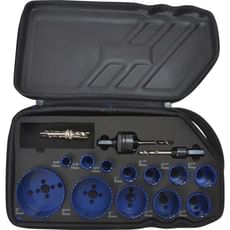
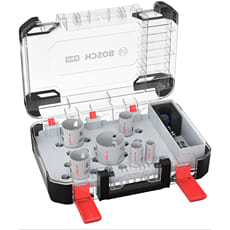
Most professional holesaw sets include mandrels (arbors), pilot bits, and multiple saw sizes in convenient carry cases, providing everything needed for professional installations. Available in both metric and imperial sizing to suit UK trade requirements, these holesaws are compatible with standard power drills, combi drills, impact drivers, and drill presses. Variable pitch tooth designs reduce vibration and binding, whilst bi-metal construction combines hardness for cutting with flexibility to prevent cracking under demanding conditions.
Jargon Buster
- Bi-Metal Construction: Holesaws manufactured with a high-speed steel (HSS) cutting edge welded to a flexible spring steel body, providing both the hardness needed for cutting and flexibility to prevent tooth breakage. This design is the professional standard for general trade work across wood, metal, and plastic.
- Mandrel (Arbor): The threaded shaft and pilot drill bit assembly that secures the holesaw in your drill chuck. The mandrel centres the saw and transmits driving force, whilst the pilot bit prevents drift when starting the cut. Quick-change mandrels allow rapid swapping between different diameter holesaws without tools.
- Variable Pitch Teeth: A tooth pattern where the spacing between teeth varies around the saw's circumference. This design reduces vibration during cutting, provides smoother operation, prevents binding in the material, and extends blade life by distributing wear across different tooth configurations.
- Carbide Grit/Carbide Tip: Extremely hard cutting particles or inserts bonded to the saw edge, essential for abrasive materials like ceramic tiles, glass, brick, fibre cement, and composite materials where standard HSS teeth would quickly dull. Carbide holesaws cost more but are necessary for multi-material construction work.
- Kerf: The width of material removed by the saw's cutting teeth. A narrower kerf requires less power and cuts faster, whilst a wider kerf provides better chip clearance in demanding applications and helps prevent binding when cutting thick or sticky materials.
- Depth of Cut: The maximum material thickness a holesaw can penetrate in a single pass, typically 38-40mm for standard models. Extended depth holesaws are available for thicker materials or when cutting through studwork with insulation.
Who Uses Holesaws?
- Electricians and Sparkies: Installing back boxes, cable entry points, downlighters, LED fittings, conduit penetrations, and consumer unit installations
- Plumbers: Creating clearance holes for waste pipes, radiator pipework, shower installations, basin outlets, and service penetrations
- Carpenters and Joiners: Fitting door locks, handles, letter plates, curtain poles, cable routing in joinery, and architectural ironmongery
- HVAC Engineers: Cutting ventilation grilles, extractor fan outlets, ducting penetrations, and air conditioning installations
- Kitchen and Bathroom Fitters: Installing taps, waste outlets, appliance connections, service penetrations, and mixer valve access
- General Builders: Site work requiring penetrations through various materials for services, fixtures, and building modifications
- Maintenance Engineers: Facilities management, retrofit installations, building upgrades, and emergency repairs
- Telecoms and Data Installers: Cable routing, trunking penetrations, and equipment mounting
- DIY Enthusiasts: Home improvement projects including lighting upgrades, storage solutions, fixture installations, and kitchen improvements
How to Choose the Right Holesaws
Material Compatibility: Select holesaws designed for your typical workpiece materials. Bi-metal holesaws from brands like Bosch Professional and Bahco handle wood, metal, and plastic effectively for general trade work. Carbide-tipped or diamond-grit models are essential for tiles, masonry, fibre cement, and composite materials. Always check the manufacturer's specifications for maximum material thickness and hardness ratings to ensure suitability.
Diameter Requirements: Consider whether you need specific sizes or would benefit from a comprehensive set. Electricians typically require 16-25mm for back boxes and cable entries, whilst plumbers often need 32-110mm for pipework. Multi-piece sets like those available from Tooled-Up offer better value for tradespeople working across varied applications, whilst individual holesaws suit specialists with specific recurring requirements.
Build Quality and Tooth Design: Professional bi-metal construction ensures longevity under demanding site conditions. Variable pitch teeth reduce vibration, provide smoother cutting, and extend blade life significantly. Look for electron beam welded tooth connections that prevent premature tooth loss. Cheaper holesaws with spot-welded teeth often fail prematurely, making quality brands more economical long-term.
Mandrel Type and Compatibility: Quick-change arbor systems significantly speed up work when using multiple diameters throughout the day. Some sets include multiple mandrels for different size ranges (typically small, medium, and large), whilst universal systems allow one arbor to fit various saw sizes. Ensure compatibility with your existing equipment if purchasing individual components separately to avoid costly duplication.
Set Configuration: Trade-specific sets bundle the most useful sizes for particular professions, providing better value than buying individually. Electricians' sets typically include 16mm, 20mm, 25mm, 32mm, and sometimes 65mm for downlighters. Plumbers' sets focus on larger pipe clearances from 32-110mm. General contractors' sets provide broad coverage across common installation sizes. Consider protective storage cases for organisation and protection on site.
Depth of Cut: Standard holesaws typically cut 38-40mm deep, suitable for most wall and door applications. When working through studwork, thicker materials, or double-skinned walls, extended depth models provide the necessary reach without requiring cutting from both sides.
Popular Accessories
- Replacement Mandrels and Arbors: Spare or upgraded quick-change systems for faster work, replacing worn components, and ensuring compatibility with different holesaw brands
- Pilot Drill Bits: Replacement centre bits for worn or damaged mandrel assemblies, ensuring accurate starting points and preventing drift
- Holesaw Storage Cases: Protective carry cases keeping your collection organised, preventing damage to cutting edges, and improving site efficiency
- Extension Arbors: Extended mandrels for cutting through deeper materials, reaching recessed areas, or working through cavity walls
- Plug Ejection Tools: Purpose-made implements for safely removing cut cores from holesaws, particularly useful when working with metal or deep cuts
- Cutting Lubricants and Pastes: Specialist compounds extending blade life significantly and improving cutting performance in metal applications
- Combi Drills and Impact Drivers: Suitable power tools with adequate torque for driving larger diameter holesaws effectively, particularly models from Makita, DeWalt, or Milwaukee
- Drill Stands and Presses: Providing stability and perpendicular accuracy for precision installations where alignment is critical
- Cable and Pipe Detectors: Essential safety equipment for identifying hidden services before cutting into walls or ceilings
Safety Information
Personal Protective Equipment: Always wear safety glasses or goggles rated to BS EN 166 to protect against flying debris and metal shavings. Hearing protection is advisable when cutting metal or working in enclosed spaces for extended periods. Wear appropriate work gloves when handling holesaws during setup and storage, but never whilst operating the drill as gloves can catch in rotating components, causing serious injury.
Secure Workpiece Clamping: Always firmly secure materials before cutting. Holesaws can grab unexpectedly, particularly during breakthrough, causing workpieces to spin dangerously and potentially striking the operator or bystanders. Use clamps, vices, or purpose-built jigs rather than attempting to hand-hold materials. When working on installed fixtures, ensure structural stability before commencing.
Electrical Safety: Before drilling into walls, ceilings, or floors, use a cable and pipe detector to identify hidden services. Cutting into live 240v electrical cables presents serious electrocution risks and breaches HSE guidelines. Ensure your power tools are regularly PAT tested and comply with UK safety standards. Use battery-powered tools where possible when working in damp conditions or confined spaces.
Tool Operation: Start slowly to establish the pilot hole before increasing speed to the recommended RPM (typically 300-500 RPM for larger holesaws). Excessive pressure reduces cutting efficiency, generates dangerous heat, and risks tool breakage. Let the saw do the work, applying steady moderate pressure. When breakthrough is imminent, reduce pressure significantly to maintain control and prevent the drill from being pulled through violently.
Hot Surfaces and Swarf: Holesaws and cut material become extremely hot during operation, especially in metal. Allow adequate cooling time before touching or handling cut cores. The HSE recommends appropriate precautions when working with hot materials or tools. Metal swarf has extremely sharp edges—dispose of it carefully in appropriate containers to prevent injury to yourself and others on site.
Plug Removal: Use proper plug ejection tools or screwdrivers inserted through side slots rather than fingers to remove cores from holesaws. Cut edges and saw teeth are extremely sharp and can cause serious lacerations. Never force your hand into a holesaw cavity. If plugs are particularly stubborn, drilling a small hole through the waste material allows safer removal from behind.
Frequently Asked Questions
What's the difference between bi-metal and carbide holesaws?
Bi-metal holesaws feature high-speed steel teeth welded to a spring steel body, ideal for wood, metal, and plastic. They're the professional standard for general trade work, offering excellent value and longevity when cutting conventional materials. Carbide-tipped or carbide-grit holesaws have extremely hard cutting surfaces designed specifically for abrasive materials like ceramic tiles, porcelain, brick, fibre cement, and composite materials that would quickly destroy standard HSS teeth. Carbide models cost considerably more but are essential for kitchen and bathroom fitting, and multi-material construction work involving tiles and masonry.
Why does my holesaw keep binding or jamming in the material?
Binding typically occurs from excessive feed pressure, insufficient drill speed, or accumulated swarf blocking the gullets between teeth. Withdraw the saw periodically to clear debris, especially when cutting metal or holes deeper than 20mm. Ensure your drill operates at the recommended speed—generally 300-500 RPM for larger diameter holesaws (50mm+) and up to 1000 RPM for smaller sizes. Using cutting lubricant when working with metal significantly reduces friction and binding. If the pilot bit isn't sharp or properly centred, it can also cause the saw to wander and bind. Blunt teeth also increase binding risk—professional holesaws from Bosch or Bahco maintain sharpness longer.
Can I use the same holesaw for both wood and metal?
Quality bi-metal holesaws are specifically designed to cut both wood and metal effectively without changing blades. However, cutting very hard metals or abrasive materials will dull the teeth more quickly than wood alone. For optimal blade life and performance, some tradespeople maintain separate sets for different materials, particularly when doing high-volume work. Always clean the saw thoroughly when switching between materials to prevent cross-contamination, particularly when moving from treated timber (which contains corrosive preservatives) to metal. Using appropriate cutting speeds for each material also extends blade life significantly.
How do I remove the cut plug stuck inside my holesaw?
Most holesaws have slots in the side wall allowing you to insert a screwdriver to lever out the plug from the side. Some professional models include ejection springs that automatically push cores out during withdrawal. When plugs are particularly stubborn (common with metal cores), drilling a small hole through the centre of the waste material allows you to push it out from behind using a drift or rod. Purpose-made plug ejection tools are available and worthwhile for tradespeople using holesaws daily. Never force your fingers into a holesaw—the teeth and cut edges are extremely sharp and can cause serious lacerations.
What size holesaws do I need for common electrical installations?
UK electricians typically require 16mm for single gang back boxes (for switches and single sockets), 25mm for double gang boxes, and 20-22mm for standard cable entries through joists and studwork. For downlighters, sizes vary by fitting manufacturer, but 65mm, 75mm, and 90mm cover most LED and GU10 installations. For consumer units and larger electrical enclosures, 35-50mm sizes are common for cable entries. A comprehensive electricians' holesaw set usually includes 16mm, 20mm, 25mm, 32mm, and 65mm as standard, with some sets adding larger sizes for conduit work. Always check specific fixture requirements before cutting, as tolerances for electrical accessories are typically tight, and oversized holes create installation difficulties, compromise aesthetics, and may not comply with BS 7671 wiring regulations regarding support and protection.