

Ignition & Spark Plug Testers
Pay in 3 interest-free payments on purchases from £30-2000 with  . Learn more.


 Loading...
End of content
Error - No more pages to load
About Ignition & Spark Plug Testers
Ignition and spark plug testers are indispensable diagnostic tools for anyone working with petrol engines, from compact garden machinery through to motorcycles, cars, and light commercial vehicles. These purposeful devices allow mechanics and DIY enthusiasts to quickly identify ignition system faults, dramatically reducing troubleshooting time when engines refuse to start, misfire, or exhibit unexplained power loss. By providing visual confirmation that high-tension current is reaching the spark plugs correctly, these testers eliminate guesswork and enable methodical fault-finding in ignition circuits.
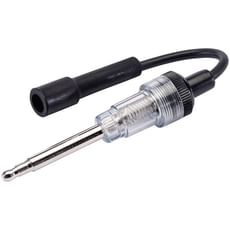
The selection at Tooled-Up.com includes several types of diagnostic equipment suited to different applications. In-line spark testers connect between the spark plug and HT lead, featuring transparent chambers that illuminate to indicate spark presence and intensity. Ramp-type spark plug gauges provide precise measurements for checking and setting electrode gaps, ensuring optimal combustion performance. Professional-grade multi-piece tester sets combine multiple adapters and connectors, making them versatile solutions for workshops servicing diverse engine types. Leading manufacturers like Sealey and Draper produce reliable, affordable options suitable for both professional automotive workshops and serious home mechanics.
These diagnostic tools function by safely channelling high-voltage ignition current through visible indicators, allowing technicians to assess spark quality, consistency, and timing without risk of electrical shock. This approach proves considerably safer than traditional testing methods whilst delivering more accurate diagnostic information. Modern in-line testers typically feature clear inspection windows that work effectively in various lighting conditions, making them practical for mobile mechanics working on customer sites as well as workshop-based technicians.
Jargon Buster
- HT Lead (High Tension Lead): The thick, insulated cable carrying high-voltage electricity from the ignition coil or distributor to individual spark plugs. Also referred to as spark plug leads or ignition cables, these components can deteriorate over time, causing starting problems and misfires.
- In-Line Spark Tester: A diagnostic device that connects between the HT lead and spark plug, incorporating a transparent chamber that illuminates when electrical current flows. This provides instant visual confirmation of spark presence and relative strength during engine cranking or running.
- Ramp Type Gauge: A graduated measuring tool used to accurately check and adjust the gap between spark plug electrodes. These gauges typically feature stepped measurements from 0.5mm to 2.5mm, allowing precise gap setting according to manufacturer specifications.
- Electrode Gap: The carefully controlled distance between the centre and ground electrodes of a spark plug, critical for proper ignition timing and efficient combustion. Incorrect gaps result in poor engine performance, increased fuel consumption, or persistent misfiring.
- Misfire: A condition where combustion fails to occur properly in one or more cylinders, frequently caused by faulty spark plugs, deteriorated HT leads, failing ignition coils, or incorrect electrode gaps. Misfires reduce power output and increase emissions.
- Earth/Ground Connection: The return electrical path in an ignition circuit, typically through the engine block and chassis. Poor earth connections prevent adequate spark generation and are common causes of intermittent ignition faults.
Who Uses Ignition & Spark Plug Testers?
- Motor mechanics and automotive technicians diagnosing engine performance issues in cars, vans, and motorcycles
- Mobile mechanics requiring portable diagnostic equipment for on-site vehicle repairs and breakdown recovery
- MOT testing centres verifying ignition system integrity as part of emissions testing procedures
- Garden machinery repair specialists servicing lawn mowers, strimmers, chainsaws, and other petrol-powered equipment
- Agricultural engineers maintaining farm equipment, tractors, and small utility engines
- Plant hire companies performing routine maintenance on petrol-powered tools and machinery fleets
- Marine mechanics working on outboard motors, inboard engines, and boat auxiliary equipment
- DIY enthusiasts and home mechanics maintaining their own vehicles and garden equipment
- Motorcycle workshops specialising in bike servicing, repairs, and performance tuning
- Classic car restorers diagnosing ignition issues in older vehicles with traditional contact breaker systems
- Small engine repair businesses servicing generators, pressure washers, and portable power equipment
How to Choose the Right Ignition & Spark Plug Testers
When selecting spark plug and ignition testing equipment, consider the range of engines you'll typically work with. In-line spark testers represent excellent value for quick diagnostic checks across most automotive and small engine applications. Prioritise models with bright, clearly visible indicator windows that function reliably in both workshop and outdoor lighting conditions—particularly important for mobile mechanics conducting on-site diagnostics.
For workshops handling diverse repair work across multiple vehicle types, a comprehensive multi-piece HT tester set offers superior versatility. These kits typically include various adapters and connectors compatible with different plug cap designs and engine configurations, from motorcycles through to commercial vehicles. The Sealey VS5261 4 Piece HT Tester Set exemplifies this approach, providing flexibility for garages servicing varied customer fleets.
Ramp-type spark plug gauges serve as essential complementary tools for ensuring correct electrode gaps. Select gauges featuring clear metric markings and robust construction, as these tools see frequent use in busy workshops. Wire-type gauges suit basic gap checking, whilst ramp designs enable more accurate gap adjustment capabilities. The Sealey Ramp Type Spark Plug Gauge provides reliable measurements for precise gap setting.
Consider the voltage specifications relevant to your applications. Standard automotive ignition systems operate on 12V battery supply, but secondary voltage at spark plugs can exceed 40,000V. Tooled-Up stocks testers properly rated for high-voltage ignition systems, ensuring safe, reliable diagnostics. The Draper IST In-Line Ignition Spark Tester features a 57mm probe length with 43mm clear inspection tunnel, providing hands-free operation and instant spark confirmation.
Brand reputation matters significantly with diagnostic equipment. Established manufacturers like Sealey and Draper offer proven reliability and build quality, ensuring testing equipment withstands demanding professional workshop conditions whilst delivering accurate results throughout extended service life.
Popular Accessories
- Replacement HT leads and spark plug cap sets for common vehicle makes and models
- Spark plug socket sets with protective rubber inserts to prevent ceramic insulator damage
- Wire brushes for cleaning spark plug threads and electrode surfaces before reinstallation
- Anti-seize compound for spark plug installation, preventing thread seizure in aluminium cylinder heads
- Compression testers for complete engine diagnostic capabilities and cylinder health assessment
- Multimeters for checking ignition coil resistance, continuity testing, and electrical circuit diagnostics
- Timing lights for petrol engines requiring distributor adjustment and ignition timing verification
- Feeler gauges for precise valve clearance checks and general gap measurements
- Magnetic pick-up tools for retrieving dropped components in engine bays and confined spaces
- Circuit testers and test lamps for electrical fault-finding in 12V vehicle systems
Safety Information
Always disconnect the vehicle battery before commencing work on ignition systems to prevent accidental electrical shocks or short circuits. Remember that ignition coils can store high voltage even after battery disconnection, so handle all HT components with appropriate caution and use insulated tools where practical.
Never test spark plugs by holding them against the engine block with bare hands or using improvised methods. Always employ proper testing equipment specifically designed to safely channel high-voltage current. The HSE recommends using insulated tools and wearing appropriate PPE, including safety glasses, when working on vehicle electrical systems to protect against unexpected sparks or component failure.
Ensure adequate ventilation when running engines during diagnostic work, particularly within workshop environments. Never operate petrol engines in enclosed spaces without proper extraction systems, as exhaust fumes contain dangerous carbon monoxide which can prove fatal in confined areas.
Keep spark testers and related diagnostic equipment away from fuel sources and flammable materials. High-voltage ignition sparks can readily ignite petrol vapour, so always work in well-ventilated areas and avoid testing near open fuel containers, spillages, or fuel system components undergoing maintenance.
Frequently Asked Questions
How do I use an in-line spark tester correctly?
Connect the in-line tester between the HT lead and spark plug, ensuring secure connections at both ends. Crank the engine over or start it, then observe the tester's transparent window. A bright, consistent spark indicates healthy ignition system operation, whilst weak, intermittent, or absent sparks suggest problems with the ignition coil, HT lead, distributor, or earth connections requiring further investigation.
What spark plug gap should I use for my engine?
Always consult your engine manufacturer's specifications, as gap requirements vary significantly between different engines and ignition systems. Typical automotive gaps range from 0.6mm to 1.0mm, though modern engines with electronic ignition may require different settings. Using incorrect gaps causes poor performance, increased fuel consumption, difficult starting, or persistent misfiring.
Can spark testers damage modern vehicle electronics?
Quality in-line spark testers from reputable manufacturers like Sealey and Draper are specifically designed for automotive use and won't damage modern electronic ignition systems when used correctly. However, always follow manufacturer instructions carefully and avoid using makeshift testing methods that could cause expensive electrical damage to engine management systems.
Why is my spark tester showing no spark at all?
If your tester shows no spark, possible causes include a faulty ignition coil, broken or deteriorated HT lead, failed crankshaft position sensor, blown fuse in the ignition circuit, or poor earth connection. Systematically check each component, starting with visual inspection for obvious damage to leads and connectors, before testing coil resistance with a multimeter and checking sensor operation.
Do I need different testers for cars and motorcycles?
Most in-line spark testers work effectively across various vehicle types, though you may require different adapters for specific spark plug cap designs. Multi-piece HT tester sets typically include several connectors suitable for cars, motorcycles, garden machinery, and other small engines, making them versatile choices for workshops or individuals servicing diverse equipment types.