

Impact & Timebond Adhesive
Pay in 3 interest-free payments on purchases from £30-2000 with  . Learn more.
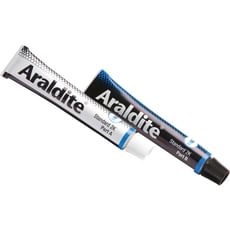
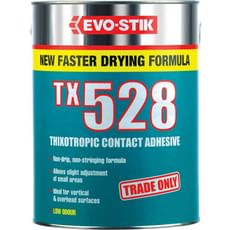
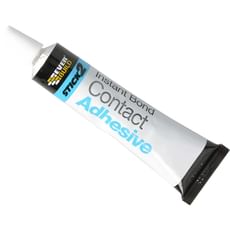
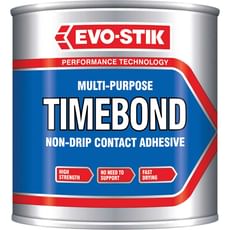
 Loading...
End of content
Error - No more pages to load
About Impact & Timebond Adhesive
Impact and Timebond adhesives represent some of the most versatile and powerful bonding solutions available to professional tradespeople and serious DIY enthusiasts. These specialist contact adhesives create exceptionally strong bonds between a wide variety of materials, including wood, metal, plastic, rubber, leather, and laminates. Unlike standard PVA or multi-purpose glues, impact adhesives work by applying adhesive to both surfaces, allowing them to become touch-dry before pressing them firmly together to form an instant, permanent bond.
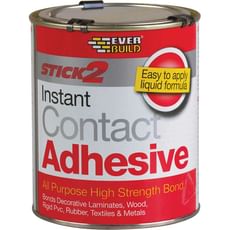
The selection at Tooled-Up.com includes premium products from trusted manufacturers such as Evo-Stik, Araldite, Everbuild, and Bostik – brands that have been the cornerstone of professional adhesive solutions in the UK for decades. Whether you're fitting kitchen worktops, installing carpets, bonding laminate surfaces, or working with materials that require immediate positioning without clamping time, impact and Timebond adhesives deliver the reliability and strength that professional applications demand.
From fast-setting contact adhesives ideal for site work to thixotropic formulations that won't run on vertical surfaces, and two-component epoxy adhesives offering exceptional structural strength, this category provides specialised bonding solutions for virtually any professional or domestic project. The versatility of these products makes them essential additions to any tradesperson's toolkit or workshop.
Jargon Buster
- Contact Adhesive: A type of adhesive applied to both surfaces which bonds instantly upon contact when the surfaces are pressed together, requiring no clamping time. Both surfaces must be allowed to become touch-dry before joining.
- Two-Component Epoxy: An adhesive system consisting of resin and hardener that must be mixed together before application. Once mixed, a chemical reaction occurs that creates an extremely strong, durable bond suitable for structural applications.
- Thixotropic: A property that describes adhesives with a gel-like consistency that won't run or drip when applied to vertical surfaces, but spreads easily when worked with a spreader or brush.
- Impact Adhesive: A fast-bonding contact adhesive that creates an immediate, high-strength bond upon impact when two prepared surfaces are brought together, particularly useful for large surface areas like laminates.
- Open Time: The period after applying adhesive during which it remains workable and capable of forming a bond. For contact adhesives, this refers to the time before surfaces must be joined for optimal adhesion.
- Pot Life: For two-component adhesives, this is the working time available after mixing the components together before the mixture becomes too viscous to apply effectively.
Who Uses Impact & Timebond Adhesive?
Impact and Timebond adhesives are essential tools across numerous trades and applications:
- Kitchen Fitters: For bonding worktop joints, laminate surfaces, edging strips, and installing splashbacks
- Carpenters and Joiners: For laminate bonding, veneer work, and furniture assembly requiring instant adhesion
- Carpet and Flooring Installers: For securing carpets, vinyl, and other floor coverings to various substrates
- Shopfitters and Signage Installers: For bonding display materials, panels, and decorative laminates
- Vehicle Trimmers and Upholsterers: For bonding fabrics, foams, and trim materials in automotive and furniture applications
- Boat Builders and Repair Specialists: For waterproof bonding of marine materials and structural repairs
- General Builders and Maintenance Workers: For repairs, installations, and bonding diverse materials on site
- Model Makers and Craftspeople: For precision bonding of specialist materials requiring strong, reliable adhesion
- DIY Enthusiasts: For home improvement projects including worktop installation, laminate repairs, and general household bonding tasks
How to Choose the Right Impact & Timebond Adhesive
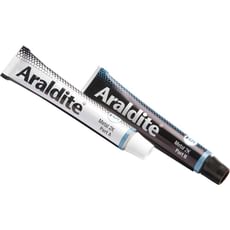
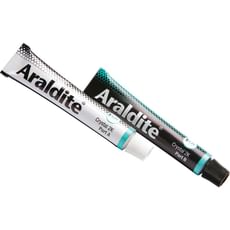
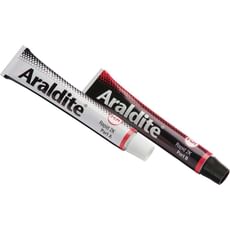
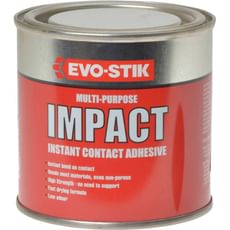
Material Compatibility: Consider what materials you're bonding together. Contact adhesives like Evo-Stik Impact work brilliantly for laminates, rubber, and leather, whilst two-component epoxies such as Araldite products excel at bonding metal, ceramics, and rigid plastics. Always check the manufacturer's recommendations for material suitability.
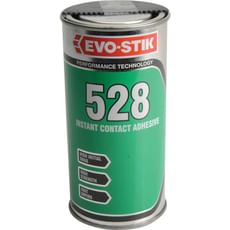
Application Type: For large surface areas like kitchen worktops or flooring, a standard impact adhesive provides excellent coverage and instant bond strength. For vertical applications or overhead work, opt for thixotropic formulations like Evo-Stik TX528 that won't run or drip. For structural repairs requiring maximum strength, two-component epoxies offer superior performance.
Setting Time Requirements: Contact adhesives require both surfaces to be coated and allowed to become touch-dry before joining – typically 15-20 minutes depending on conditions. If you need repositioning time, standard adhesives may be preferable, but if you require an instant bond, impact adhesives are ideal. Two-component epoxies offer varying pot lives from rapid-setting to standard formulations.
Environmental Conditions: Consider temperature and humidity in your working environment. Some adhesives require specific conditions for optimal curing. For exterior or moisture-prone applications, select products with enhanced water resistance. Solvent-based products generally offer superior initial grab, whilst water-based alternatives provide lower odour for interior work.
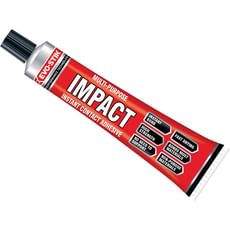
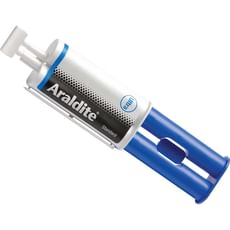
Container Size and Format: Available in tubes, tins, and syringes, choose the format that suits your project scale. Small tubes work well for minor repairs, whilst larger tins are more economical for extensive projects. Syringe formats like the Araldite dispensers ensure accurate mixing ratios for two-component systems.
Popular Accessories
- Adhesive Spreaders and Spatulas: For achieving even application across large surfaces
- Notched Trowels: Essential for controlling adhesive thickness and coverage rates
- Mixing Sticks and Palettes: For thoroughly combining two-component epoxy systems
- Applicator Brushes: For precise application in detailed work or smaller areas
- Roller Systems: For applying pressure to ensure complete bonding of large laminate surfaces
- Surface Preparation Materials: Including cleaners, degreasers, and abrasives for optimal adhesion
- Masking Tape: For protecting surrounding areas and achieving clean edges
- Disposable Gloves: Essential PPE for protecting hands during application
- White Spirit or Adhesive Remover: For cleaning tools and removing excess adhesive
Safety Information
Impact and Timebond adhesives contain powerful chemical compounds that require careful handling in accordance with COSHH regulations:
Ventilation: Always ensure adequate ventilation when working with solvent-based contact adhesives. Many products emit strong fumes that can cause dizziness or headaches in poorly ventilated spaces. Open windows and doors, and consider using extraction fans for extended applications or when working in confined areas.
Personal Protective Equipment: Wear appropriate PPE including disposable nitrile gloves to prevent skin contact, and safety glasses when working overhead or dispensing from pressurised containers. For prolonged exposure or in poorly ventilated areas, respiratory protection may be necessary – consult the product safety data sheet.
Flammability: Many contact adhesives are highly flammable. Keep away from naked flames, sparks, and heat sources. Ensure no one is smoking in the vicinity, and avoid using electrical equipment that could generate sparks during application and whilst the adhesive is drying.
Skin Contact: If adhesive contacts skin, it can be difficult to remove and may cause irritation. Remove immediately with appropriate cleaners or white spirit – never use aggressive solvents. If two surfaces bond with skin between them, seek medical attention rather than attempting to force them apart.
Storage and Disposal: Store adhesives in cool, well-ventilated areas away from heat sources and direct sunlight. Keep containers tightly sealed when not in use. Dispose of empty containers and waste materials in accordance with local authority guidelines and environmental regulations.
Frequently Asked Questions
What's the difference between impact adhesive and contact adhesive?
Impact adhesive is essentially a type of contact adhesive specifically formulated for instant, aggressive bonding upon contact. Both are applied to each surface and allowed to become touch-dry before joining, but impact adhesives typically offer even stronger initial grab and are particularly effective for large surface areas like laminates and worktops. The terms are often used interchangeably in the trade.
How long do I need to wait before pressing surfaces together?
For most contact and impact adhesives, you should wait until both coated surfaces are touch-dry but still tacky – typically 15-20 minutes depending on temperature and humidity. The surfaces should not feel wet, but a finger pressed lightly should still feel slight adhesion. Pressing together too early can result in a weak bond, whilst waiting too long may prevent proper adhesion altogether.
Can I reposition surfaces after they've made contact?
No – this is a crucial characteristic of contact and impact adhesives. Once the two prepared surfaces touch, they bond almost instantly and cannot be repositioned. This makes careful alignment essential before bringing surfaces together. For applications requiring repositioning time, consider using alternative adhesives or employ the "slip sheet" technique where a barrier is temporarily placed between surfaces during initial positioning.
What's the advantage of two-component epoxy adhesives like Araldite?
Two-component epoxies available from Tooled-Up.com offer exceptional structural strength and can bond materials that contact adhesives struggle with, including smooth metals, glass, and ceramics. They're also excellent for gap-filling applications and provide superior resistance to heat, chemicals, and weathering. Whilst they require mixing and have longer curing times than contact adhesives, they're the preferred choice for structural repairs and applications requiring maximum bond strength.
Are these adhesives suitable for outdoor use?
Many impact and contact adhesives offer good water resistance once fully cured, making them suitable for exterior applications. However, always check the manufacturer's specifications for the specific product. Two-component epoxies generally provide superior weathering resistance and are often the better choice for permanent outdoor installations. For marine or constantly wet environments, select products specifically rated for such conditions.