

Indoor Lights
Pay in 3 interest-free payments on purchases from £30-2000 with  . Learn more.

 Loading...
End of content
Error - No more pages to load
About Indoor Lights
Professional indoor lighting is fundamental to creating safe, productive working environments across workshops, warehouses, industrial units, and commercial premises. Whether illuminating a busy factory floor, fitting out a professional garage, or upgrading lighting in a distribution centre, the right indoor lights dramatically improve visibility, reduce eye strain, and enhance workplace safety. Modern LED indoor lighting solutions deliver exceptional energy efficiency, providing powerful illumination whilst significantly reducing running costs compared to traditional halogen or fluorescent alternatives.
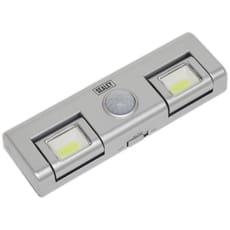
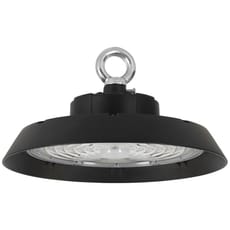
The range available from Tooled-Up.com includes high-performance LED high bay lights engineered for spaces with elevated ceilings, versatile strip lighting kits perfect for workbenches and storage areas, and motion-activated area lights that provide illumination exactly when and where it's needed. These professional-grade lighting solutions are built to withstand demanding industrial environments, offering robust aluminium construction, excellent light output measured in lumens, and impressive longevity that reduces maintenance requirements and replacement costs over time. With options spanning 100W to 200W high bay units and compact SMD LED strip systems, Tooled-Up stocks lighting solutions designed to meet the exacting demands of tradespeople and business owners who require reliable, efficient illumination day in and day out.
Jargon Buster
- LED (Light Emitting Diode) - An energy-efficient lighting technology that produces bright, consistent light whilst consuming significantly less electricity than traditional bulbs. LEDs generate minimal heat and can last 50,000 hours or more, making them ideal for commercial and industrial applications.
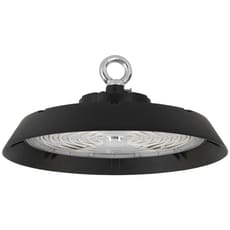
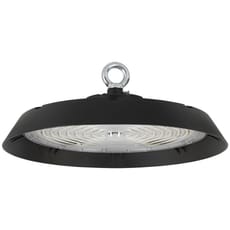
- High Bay Light - A powerful lighting fixture specifically designed for spaces with high ceilings, typically 6 metres or more. These lights deliver concentrated illumination over large areas using a focused 90° beam angle, commonly used in warehouses, factories, and industrial units.
- Kelvin (K) / Colour Temperature - The measurement used to describe the colour appearance of light. 6000K produces a cool, bright white light similar to natural daylight, ideal for task-oriented work environments where visibility, accuracy, and concentration are crucial.
- Lumens - The measurement of total light output from a source. Higher lumen values indicate brighter lights. A 100W LED high bay might produce 10,000+ lumens, whilst a 200W unit can deliver over 20,000 lumens for substantial illumination in professional applications.
- PIR (Passive Infrared) Sensor - A motion detection technology that automatically activates lights when movement is detected, improving energy efficiency and providing convenient hands-free operation in workshops, stores, corridors, and areas with intermittent use.
- SMD (Surface Mounted Device) LED - A compact LED technology that allows multiple small LED chips to be mounted on a single circuit board, creating slim, efficient lighting strips perfect for close-range illumination under cabinets, along workbenches, and in storage areas.
Who Uses Indoor Lights?
Professional indoor lighting solutions are essential for a wide range of trades and industries:
- Electricians and electrical contractors installing lighting systems in commercial and industrial premises
- Warehouse managers and logistics operators requiring efficient illumination for storage and distribution facilities
- Motor mechanics and vehicle technicians needing bright, clear lighting in garages and workshops
- Manufacturing facilities where consistent, powerful lighting ensures quality control and worker safety
- Joiners and cabinet makers using task lighting around workbenches and machinery
- Property developers and building contractors fitting out commercial units and industrial spaces
- Retail store owners illuminating stockrooms and back-of-house areas
- Maintenance managers responsible for facility lighting in schools, hospitals, and public buildings
- Agricultural operations lighting barns, storage facilities, and processing areas
- Factory supervisors and production managers optimising working conditions on the shop floor
How to Choose the Right Indoor Lights
Ceiling Height and Mounting Position: High bay lights are specifically designed for spaces with ceilings of 6 metres or higher, delivering powerful illumination from significant heights. Strip lights and area lights work best at standard ceiling heights in workshops and smaller commercial spaces. Consider the mounting options available and ensure they're compatible with your existing infrastructure.
Light Output Requirements: Calculate the lumens needed based on your space size and intended use. Detailed precision work requires higher lumen output than general storage areas. A 100W LED high bay typically suits smaller workshops and garages, whilst 150W-200W units are better for large industrial spaces, warehouses, and manufacturing facilities.
Colour Temperature: Cool white light at 6000K provides excellent visibility for technical work and is less likely to cause eye fatigue during extended use. This daylight-equivalent colour temperature is preferred in most professional environments where accuracy, detail, and productivity matter.
Energy Efficiency: LED technology offers substantial savings on electricity costs compared to metal halide or fluorescent alternatives. Modern LED units consume a fraction of the power whilst delivering superior illumination, with some fixtures replacing 400W traditional lights with just 100W LED equivalents.
Installation Requirements: Consider whether you need hardwired lights requiring professional installation by a qualified electrician, or plug-and-play solutions like strip lighting kits with standard 13A plugs. All electrical work must comply with BS 7671 wiring regulations and UK electrical safety standards.
Additional Features: PIR motion sensors reduce energy waste in areas with intermittent use such as corridors and storerooms. Aluminium reflectors can focus and direct light more effectively, maximising coverage and minimising waste. The robust aluminium body construction found in quality high bay lights ensures maximum heat dissipation, prolonging the life of the fixture.
Popular Accessories
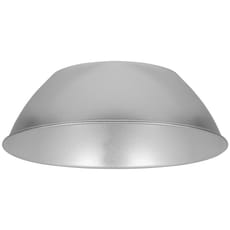
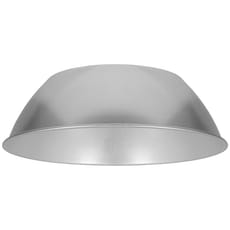
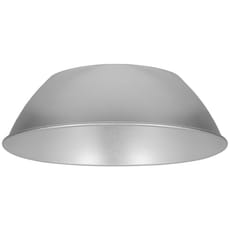
- Aluminium reflectors - Enhance light distribution and focus illumination where it's most needed, available sized specifically for 100W, 150W, and 200W high bay lights
- Mounting brackets and suspension kits - Secure fixtures safely at the correct height and angle using eyelets and hanging systems
- Extension cables and connectors - Provide flexibility in positioning lights around your workspace
- Light switches and timers - Control when lights operate to maximise energy efficiency
- Cable management systems - Keep wiring neat, organised, and compliant with regulations
- Protective cages and guards - Shield lights from accidental damage in busy industrial environments
- Dimmer switches - Adjust brightness levels to suit different tasks and conditions
Safety Information
All electrical installation work must be carried out by a qualified electrician in accordance with BS 7671 (IET Wiring Regulations) and Part P of the Building Regulations. Indoor lights operating at 240v mains voltage must be properly earthed and protected by appropriate circuit breakers or RCDs (Residual Current Devices).
Before installing or maintaining indoor lights, always isolate the power supply at the consumer unit and verify the circuit is dead using a proper voltage tester. High bay lights mounted at height require safe access equipment such as scaffold towers or mobile elevated work platforms - never overreach from ladders. Ensure all work complies with the Electricity at Work Regulations 1989 and HSE guidance on electrical safety.
LED lights generate significantly less heat than traditional lighting due to efficient aluminium body construction designed for maximum heat dissipation, but fixtures should still be installed with adequate ventilation and clearance from combustible materials. Always check the IP (Ingress Protection) rating to ensure lights are suitable for the environment - dusty workshops or areas with moisture may require higher IP ratings for safe operation.
Frequently Asked Questions
What's the difference between high bay and standard indoor lights?
High bay lights are specifically engineered to illuminate spaces with high ceilings (typically 6 metres or more). They produce concentrated, powerful beams with a 90° beam angle that effectively reach ground level from significant heights, making them ideal for warehouses and industrial units. Standard indoor lights like strip lighting and area lights work best at lower mounting heights in offices, workshops, and retail spaces.
How much energy can I save by switching to LED indoor lights?
LED lighting typically uses 70-80% less electricity than traditional halogen or metal halide equivalents whilst providing similar or better light output. A 100W LED high bay can replace a 400W metal halide fixture, delivering substantial savings on electricity bills and reducing cooling costs due to minimal heat generation and efficient heat dissipation through aluminium body construction.
How long do LED indoor lights last?
Quality LED lighting fixtures can last 50,000 hours or more under normal operating conditions. If used 10 hours daily, this translates to approximately 13 years of service before requiring replacement, significantly reducing maintenance costs and disruption in commercial environments compared to traditional lighting technologies.
Do I need an electrician to install indoor lights?
Any work involving mains voltage wiring (240v) must be carried out by a qualified electrician to comply with UK electrical regulations. Some strip lighting kits with standard 13A plug connections can be installed by competent users, but hardwired high bay lights and permanent installations require professional installation and appropriate electrical certification.
What colour temperature is best for workshop and industrial use?
6000K cool white light is generally preferred for professional environments as it closely mimics natural daylight, reducing eye strain and improving visibility for detailed work. This colour temperature enhances concentration and is proven to create more productive working conditions compared to warmer yellow-toned lighting, making it ideal for manufacturing, mechanics, and precision tasks.