

Inspection Mirrors

Pay in 3 interest-free payments on purchases from £20-£3000 with  . Learn more.

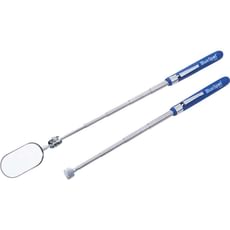
 Loading...
End of content
Error - No more pages to load
About Inspection Mirrors
Inspection mirrors are indispensable tools that enable tradespeople and DIY enthusiasts to see into confined spaces, around obstacles, and behind components where direct line of sight is simply impossible. Whether you're a motor mechanic examining underneath a vehicle chassis, a plumber checking pipework behind fixed units, or an electrician inspecting cable runs in ceiling voids, a quality inspection mirror eliminates guesswork and saves hours of unnecessary dismantling. These versatile tools feature reflective surfaces mounted on various handle configurations—from fixed-length handles for close-up work to telescopic models that extend your reach considerably, and flexible gooseneck designs that navigate around corners and hold their position during inspection.
The inspection mirrors available from Tooled-Up.com include models from trusted brands such as Facom, Sealey, Draper, and ITL, each offering different features to suit specific applications. Modern inspection mirrors come with LED illumination to brighten dark recesses, magnifying lenses for detailed component examination, and 360-degree rotation for all-round viewing angles. Mirror shapes vary between compact round designs for tight spaces and rectangular options that provide a broader field of view. Professional-grade models feature robust construction with chrome-plated or stainless steel components that withstand daily workshop use, whilst specialist insulated versions ensure electrical safety when working near live installations.
Choosing the right inspection mirror depends on your typical working environment and the tasks you perform most frequently. Many professionals maintain several inspection mirrors in their toolkit—perhaps a telescopic LED model for general automotive work, a flexible mirror for navigating around machinery, and a compact pocket mirror for quick checks. With telescopic models extending from approximately 150mm up to 900mm, and combination sets pairing inspection mirrors with magnetic pick-up tools, there's a configuration suited to virtually every inspection challenge across trades and industries.
Jargon Buster
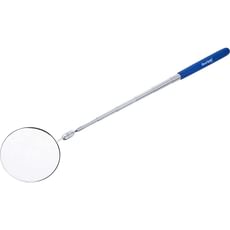
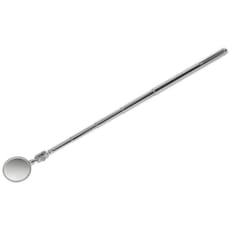
- Telescopic Handle: An extendable shaft mechanism that allows the inspection mirror to reach variable distances, typically between 150mm and 900mm. This adjustable length proves invaluable for overhead inspections, underneath vehicle work, and reaching into deep cavities without requiring additional equipment.
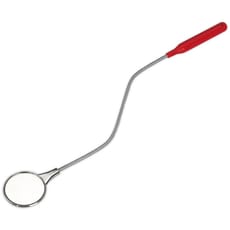
- Flexible Shaft (Gooseneck): A bendable handle construction that can be positioned at various angles and maintains its shape during use. Ideal for navigating around obstacles, pipework, and machinery whilst keeping the mirror steady for prolonged viewing without hand fatigue.
- LED Illumination: Integrated battery-powered lights positioned around the mirror head that illuminate dark spaces where ambient light cannot penetrate—such as engine bays, behind boilers, inside cabinets, and ceiling voids. Most models use standard AAA or button cell batteries for convenient replacement.
- Magnifying Mirror: An inspection mirror featuring a convex or specially ground lens that enlarges the reflected image, making it easier to examine fine details, hairline cracks, wear patterns on components, or small electrical connections. The magnification reduces field of view but increases detail visibility.
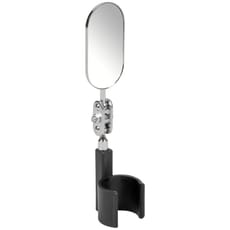
- Ball Joint Mount: A pivoting connection between the mirror head and handle that allows 360-degree rotation and multi-angle adjustment. Twin ball joints provide even greater positioning flexibility for achieving the precise viewing angle required.
- Insulated Handle: A handle constructed entirely from non-conductive materials, essential for electrical inspection work where the mirror might inadvertently contact live conductors or terminals. These models meet electrical safety standards for working near potentially energised components.
Who Uses Inspection Mirrors?
Inspection mirrors serve professionals and enthusiasts across numerous trades and applications:
- Motor Mechanics and Vehicle Technicians: Examining underneath vehicles, checking exhaust systems for corrosion, inspecting brake assemblies, viewing engine components in tight engine bays, and assessing chassis condition without requiring lifting equipment.
- Plumbers and Heating Engineers: Checking pipework behind walls and fixed units, inspecting soldered joints in confined spaces, examining connections behind radiators and boilers, and assessing pipe condition in ceiling voids.
- Electricians: Viewing cable runs in cavity walls, checking connections inside back boxes, inspecting wiring in tight electrical enclosures, and examining conduit runs without dismantling surrounding structures.
- HVAC Technicians: Examining ductwork for damage or blockages, checking air conditioning components in tight spaces, inspecting ventilation systems, and assessing heat exchanger condition.
- Plant and Machinery Engineers: Inspecting industrial equipment for wear, checking lubrication points, examining moving parts without extensive dismantling, and assessing component condition during routine maintenance.
- Building Surveyors and Property Inspectors: Checking for damp penetration, structural damage, pest infestation evidence, and cavity wall condition in properties during surveys and inspections.
- DIY Enthusiasts: Home maintenance tasks, retrieving dropped items behind appliances, checking plumbing connections, and general household repairs in awkward locations.
- Joiners and Carpenters: Inspecting behind fitted units, checking fixings in tight spaces, and examining joints without disassembly.
How to Choose the Right Inspection Mirrors
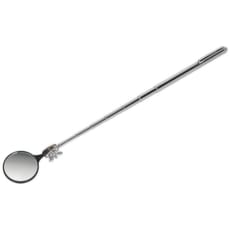
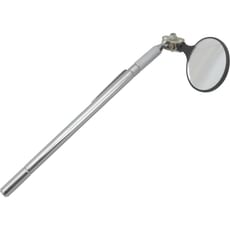
Handle Type and Length: Consider your typical inspection scenarios. Fixed-length handles suit close-up work and provide excellent control in confined spaces. Telescopic inspection mirrors from brands like Sealey and Facom extend from approximately 150-900mm, offering versatility for varied reach requirements—from underneath vehicles to overhead cable runs. Flexible gooseneck models navigate around obstacles and maintain their position, ideal for complex machinery inspection where you need to see around corners whilst keeping both hands free.
Mirror Size and Shape: Round mirrors between 25-50mm diameter manoeuvre easily in very tight spaces but offer limited field of view. Rectangular mirrors provide broader visibility for general inspection but may struggle in extremely confined areas. A 40-50mm round mirror offers excellent all-round versatility for workshop use. The selection at Tooled-Up includes various sizes to match different applications—consider keeping multiple sizes for comprehensive coverage.
Illumination Requirements: If you regularly work in poorly lit environments—engine bays, ceiling voids, behind machinery, or inside cabinets—an LED inspection mirror transforms visibility and inspection quality. Models from Expert by Facom and Sealey feature integrated LED lighting with sufficient brightness for dark recesses. Check battery type and availability—standard AAA cells offer convenient replacement compared to specialist button cells.
Magnification Features: For precision work involving circuit boards, small components, hairline crack detection, or detailed wear assessment, magnifying inspection mirrors prove invaluable. Facom offers magnifying telescopic models that enlarge details whilst maintaining professional build quality. Remember that magnification reduces field of view, making these best suited to close-range detailed examination rather than general overview inspection.
Build Quality and Durability: Professional-grade inspection mirrors feature robust construction with chrome-plated or stainless steel components that resist workshop corrosion. The mirror surface should be shatterproof glass or high-quality acrylic that maintains clarity despite regular use. Handles should feel substantial without excessive weight, and telescopic mechanisms should extend and retract smoothly with positive locking at extended lengths. Brands like Draper, Facom, and Sealey offer workshop-proven durability.
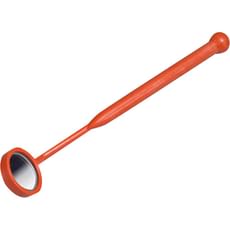
Electrical Safety Considerations: For electricians and anyone working near potentially live electrical installations, insulated inspection mirrors are essential safety equipment. ITL produces fully insulated models with non-conductive handles specifically designed for electrical work, providing crucial protection against accidental contact with live conductors. Standard mirrors with metal handles pose serious electrocution risks near electrical installations.
Combination Sets and Value: Many manufacturers offer inspection mirror and pick-up tool sets that provide excellent value and complementary functionality. These combination kits—available from brands like BlueSpot and Draper—suit mechanics and maintenance engineers who frequently need both tools, eliminating the need for separate purchases whilst often reducing overall cost.
Popular Accessories
- Telescopic Pick-Up Tools: Magnetic retrievers for dropped fasteners, washers, and small components in inaccessible locations—often sold as combination sets with inspection mirrors.
- LED Torches and Inspection Lamps: Additional lighting sources for workspace illumination when using non-illuminated mirrors, particularly rechargeable LED models for sustained use.
- Replacement Batteries: Spare AAA or button cell batteries for LED inspection mirrors to ensure continuous operation without downtime during critical inspections.
- Borescopes and Endoscopes: Digital inspection cameras with recording capability for documenting findings, particularly useful for insurance assessments and customer demonstrations.
- Cleaning Cloths and Solutions: Microfibre cloths and methylated spirits for maintaining clear mirror surfaces free from oil, grease, and workshop contamination.
- Tool Rolls and Storage Cases: Protective storage solutions that prevent mirror damage during transport and keep inspection tools organised within larger toolkits.
- Mechanics Creepers and Roller Seats: Comfortable positioning equipment for extended underneath vehicle inspections, reducing physical strain during prolonged mirror use.
- Protective Equipment: Safety glasses and gloves appropriate for working in potentially hazardous inspection environments with sharp edges or contaminants.
Safety Information
Electrical Work Precautions: Always use properly insulated inspection mirrors when working near electrical installations or potentially live conductors. Standard mirrors with metal handles and frames conduct electricity and pose serious electrocution risks. Ensure power isolation wherever possible following HSE guidance and BS 7671 wiring regulations. Even with insulated mirrors, treat all electrical installations as potentially live until proven otherwise with appropriate testing equipment.
Mirror Breakage Risks: Glass mirrors shatter if dropped or struck against hard surfaces, creating laceration hazards. Inspect your mirror before each use for cracks, chips, or coating deterioration. Consider shatterproof acrylic mirror models for demanding workshop environments where impacts are likely. Replace damaged mirrors immediately rather than risking injury from broken glass during use.
Sharp Edges and Pinch Points: When inspecting around machinery, awkward positioning may bring your hands near sharp edges, hot surfaces, or moving components. Wear appropriate cut-resistant gloves and ensure machinery isolation before inspection. Never attempt inspection work on running machinery where the mirror could contact moving parts or where your hand position creates entrapment risks.
Working at Height: Telescopic inspection mirrors used overhead affect your balance, particularly when fully extended. Maintain stable footing and use proper access equipment—step ladders or platforms—rather than overreaching. Extended mirrors create leverage that can cause falls if you lose balance whilst concentrating on the reflected image.
Confined Space Assessment: When using inspection mirrors to assess confined spaces before entry, ensure proper risk assessment following confined space entry regulations. Never rely solely on visual mirror inspection—verify atmospheric conditions, structural integrity, and potential hazards before entering any confined space. Inspection mirrors supplement but never replace proper confined space safety procedures.
Frequently Asked Questions
What's the difference between telescopic and flexible inspection mirrors?
Telescopic inspection mirrors feature rigid extendable handles that provide excellent reach and stability, ideal for straight-line viewing at variable distances—underneath vehicles, into deep cavities, or overhead inspections. They typically extend from around 150mm to 900mm with positive locking mechanisms. Flexible inspection mirrors have bendable gooseneck shafts that can be positioned around obstacles and hold their shape during use, perfect for navigating complex machinery or viewing around corners. Many professionals keep both types—telescopic for general reach requirements and flexible for awkward angles where rigid handles cannot achieve the necessary viewing position.
How do I maintain my inspection mirror for optimal clarity?
Clean the mirror surface regularly with a soft lint-free cloth and either mild glass cleaner or methylated spirits, avoiding abrasive materials that scratch the reflective surface. For stubborn oil and grease—common in automotive and engineering work—use a suitable degreasing agent followed by thorough cleaning with methylated spirits. Store mirrors in protective cases or tool rolls to prevent scratches during transport and storage. Inspect regularly for deterioration of the reflective coating, particularly around edges where moisture penetration begins. Replace mirrors showing significant coating damage as clarity deteriorates rapidly once the reflective layer degrades.
Are LED inspection mirrors worth the additional cost?
For professionals regularly working in poorly lit environments—underneath vehicles, ceiling voids, behind machinery, inside cabinets, or engine bays—LED inspection mirrors significantly improve visibility and inspection quality. The integrated lighting eliminates juggling a separate torch, freeing both hands for positioning the mirror and manipulating components. This improves efficiency, reduces eye strain, and often reveals details that ambient lighting alone cannot illuminate. If dark space inspection forms a regular part of your work, the investment pays for itself quickly through improved productivity and inspection thoroughness. For occasional use in well-lit areas, standard mirrors suffice.
Can I use any inspection mirror for electrical work?
Only use inspection mirrors specifically designed and rated for electrical work when inspecting near potentially live electrical installations. Standard mirrors with metal handles, frames, and fixings conduct electricity and pose life-threatening electrocution risks if they contact live conductors or terminals. Look for fully insulated models like those from ITL with non-conductive construction throughout. However, best practice always involves isolating electrical supplies before inspection wherever possible, following HSE guidelines and BS 7671 requirements. Even with insulated tools, verify isolation with appropriate testing equipment before working on electrical installations.
What size inspection mirror works best for general workshop use?
For all-round versatility across various workshop applications, a telescopic inspection mirror with a round 40-50mm diameter mirror head suits most requirements. This size provides adequate viewing area for general inspection whilst remaining compact enough for reasonably confined spaces. The telescopic handle offers reach adjustment from close-up work to extended inspections. Many tradespeople complement this versatile option with a smaller 25-30mm pocket mirror for very tight spots—behind panels, inside small enclosures—and a larger rectangular mirror for broader inspection areas where maximum field of view matters more than compactness. This three-mirror approach provides comprehensive coverage across different scenarios without excessive toolkit bulk.