

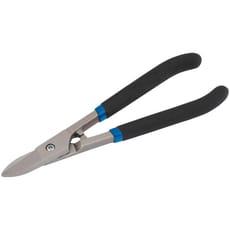
Jewellers Snips

Pay in 3 interest-free payments on purchases from £20-£3000 with  . Learn more.
 Loading...
End of content
Error - No more pages to load
About Jewellers Snips
Jewellers snips are precision cutting tools designed for detailed, accurate work with thin materials such as soft metals, wire, plastic sheet, and fine textiles. Also known as jewellery snips or craft snips, these compact hand tools feature fine, sharp blades that allow for intricate cuts in tight spaces where standard tin snips or aviation snips would be too bulky or cumbersome. The refined cutting edges and ergonomic design make jewellers snips essential for any work requiring delicate control and clean, burr-free cuts.
Unlike heavier-duty cutting tools, jewellers snips are engineered for finesse rather than brute force. They typically feature narrow, tapered blades that come in various configurations including straight, curved, and offset patterns. The blade geometry allows craftspeople to navigate complex curves and achieve precise cuts without distorting the material. Most jewellers snips incorporate spring-loaded handles that automatically reopen after each cut, reducing hand fatigue during repetitive cutting tasks and improving overall control.
Professional-grade jewellers snips, such as those manufactured by trusted brands like Gilbow, are crafted from high-quality carbon or stainless steel with carefully hardened cutting edges. The finest models maintain their sharpness through extensive use and can cleanly cut materials up to approximately 1mm thick, depending on the material hardness. Whether you're cutting precious metals, model-making components, or fine electronic wiring, quality jewellers snips from Tooled-Up.com deliver the precision and reliability that detailed work demands.
Jargon Buster
- Straight Snips – Jewellers snips with perfectly aligned straight blades, ideal for making linear cuts and trimming edges without curvature. These are the most versatile pattern for general-purpose fine cutting work.
- Spring-Loaded Action – A built-in spring mechanism between the handles that automatically reopens the blades after each cut, reducing hand strain and increasing cutting speed during repetitive work.
- Flush Cut – A cutting action where the blades meet perfectly flat, leaving no protruding material or sharp edges. Essential for professional jewellery work and precision model making.
- Blade Hardness (HRC) – The Rockwell Hardness scale rating that indicates how resistant the cutting edges are to wear and deformation. Higher HRC ratings mean longer-lasting sharpness but may be more brittle.
- Burr-Free Cutting – The ability to cut materials without leaving rough edges, splinters, or raised metal fragments that would require additional finishing work.
- Tapered Blades – Blade tips that narrow towards the point, allowing access to confined spaces and enabling detailed work around other components without causing damage.
Who Uses Jewellers Snips?
Jewellers snips are essential tools for a diverse range of professionals and enthusiasts who require precision cutting capabilities:
- Jewellers and Silversmiths – cutting precious metals, findings, wire, and sheet metal for custom pieces
- Model Makers – trimming plastic components, brass detailing, and fine materials for scale models
- Electronics Technicians – cutting component leads, fine wiring, and heat shrink tubing
- Hobbyists and Crafters – working with polymer clay, thin leather, decorative metals, and mixed media
- Watchmakers – precision cutting of delicate springs, pins, and metal components
- Textile Artists – cutting fine fabrics, threads, and embellishments in detailed work
- Sculptors and Artists – shaping wire, thin metal sheet, and mixed media materials
- Prototype Engineers – creating and modifying small-scale components and test pieces
- Dental Technicians – working with fine wires and thin metal materials in prosthetic construction
How to Choose the Right Jewellers Snips
Selecting the appropriate jewellers snips depends on your specific cutting requirements and the materials you'll be working with most frequently:
Blade Configuration: Straight blade snips are the most versatile choice for general cutting tasks and straight lines. If your work involves intricate curves or accessing tight spaces, consider the blade geometry that best suits your typical projects. The blade length should provide adequate cutting capacity whilst maintaining the manoeuvrability you need.
Build Quality and Materials: Professional-grade snips constructed from hardened steel will maintain their edge far longer than economy alternatives. Look for reputable brands like Gilbow that have established reputations for quality hand tools. Check that the blades align precisely when closed and that the cutting action feels smooth throughout the full range of motion.
Handle Comfort: Since precision work often involves extended periods of repetitive cutting, comfortable, ergonomically designed handles are essential. Spring-loaded handles significantly reduce fatigue and improve cutting rhythm. Test the grip size and shape if possible – handles should fit your hand comfortably without causing pressure points.
Cutting Capacity: Consider the maximum material thickness you'll need to cut. Most jewellers snips handle materials up to 0.8-1.2mm thickness in soft metals and non-ferrous materials. Attempting to cut materials beyond the tool's capacity will damage the cutting edges and reduce precision.
Maintenance Requirements: Quality snips should require minimal maintenance beyond occasional cleaning and a drop of light oil at the pivot point. Stainless steel models resist corrosion better in humid workshop environments, though carbon steel typically holds a finer edge.
Popular Accessories
Enhance your jewellers snips and maintain optimal performance with these complementary products available at Tooled-Up:
- Jewellers Files and Needle Files – for smoothing cut edges and removing any minor burrs
- Precision Pliers Sets – including flat nose, round nose, and chain nose pliers for wire work
- Cutting Mats – self-healing surfaces that protect your workbench and extend blade life
- Tool Maintenance Oil – light machine oil for pivot points to ensure smooth action
- Bench Magnifiers – magnifying lamps or loupes for precision cutting of extremely fine materials
- Tool Rolls and Storage – protective storage solutions to keep cutting edges safe and sharp
- Wire Gauges – for accurately measuring material thickness before cutting
- Polishing Cloths – for cleaning and maintaining tool surfaces
- Safety Glasses – essential eye protection when cutting materials that may produce small fragments
Safety Information
While jewellers snips are relatively safe hand tools, proper use and precautions ensure injury-free operation:
Eye Protection: Always wear safety glasses when cutting, as small metal fragments or wire ends can fly off unexpectedly. This is particularly important when cutting spring wire or hardened materials that may shatter rather than cut cleanly.
Sharp Edges: The blades of quality jewellers snips are extremely sharp. Always cut away from your body and keep fingers clear of the cutting line. Store snips with blade guards or in protective cases when not in use to prevent accidental cuts.
Proper Material Selection: Never attempt to cut materials that exceed the snips' rated capacity. Forcing the tool to cut thick or hardened materials can cause blade damage, slippage, and potential injury. Use appropriate heavier-duty cutting tools for thicker materials.
Workspace Organisation: Maintain a clean, well-lit workspace free from clutter. Small cut-offs from wire and sheet materials can create sharp debris – dispose of offcuts safely and sweep your work area regularly to prevent cuts from stray pieces. Follow HSE guidelines for hand tool safety in professional workshop environments.
Frequently Asked Questions
What's the difference between jewellers snips and standard tin snips?
Jewellers snips are much smaller, lighter, and designed for precision work with thin materials up to approximately 1mm thick. They feature finer blades, more delicate cutting edges, and are engineered for accuracy rather than cutting power. Standard tin snips are heavier-duty tools intended for sheet metal work up to 1.2mm or thicker, with compound leverage mechanisms for greater cutting force.
Can jewellers snips cut hardened wire or steel?
Quality jewellers snips can cut soft to medium hardness wire and non-ferrous metals like copper, brass, silver, and gold. However, they're not designed for hardened steel wire, stainless steel, or other hard alloys. Attempting to cut materials beyond the tool's capacity will damage the cutting edges. For hardened materials, use purpose-made wire cutters or side cutters.
How do I maintain the sharpness of my jewellers snips?
Keep your snips clean and dry after use, applying a drop of light machine oil to the pivot point occasionally. Only cut materials within the tool's specified capacity to prevent edge damage. If the blades become dull, professional resharpening is recommended as home sharpening can alter the critical blade geometry. Store snips in a protective case or tool roll to prevent damage to the cutting edges.
Are spring-loaded handles worth the extra cost?
For repetitive cutting work, spring-loaded handles significantly reduce hand fatigue and improve cutting rhythm. The automatic reopening action means you can focus on positioning each cut rather than manually opening the tool each time. Professionals and hobbyists who use jewellers snips regularly find spring-loaded models well worth the modest additional investment.
What materials can I safely cut with jewellers snips?
Jewellers snips excel at cutting soft metals (copper, brass, aluminium, silver, gold), thin plastic sheet, fine leather, textiles, paper, card, rubber, and soft wire up to approximately 1mm diameter. They're ideal for precision work where clean, burr-free cuts are essential. Always check the manufacturer's specifications for maximum cutting capacity and avoid materials harder than the blade material itself.