

Job Site Radios
Pay in 3 interest-free payments on purchases from £30-2000 with  . Learn more.
 Loading...
End of content
Error - No more pages to load
About Job Site Radios
Job site radios have become an indispensable part of professional work environments across the UK, transforming building sites, workshops, and outdoor spaces with high-quality audio entertainment designed to withstand the harshest working conditions. Unlike domestic radios, these ruggedised units are purpose-built to endure the knocks, drops, dust, moisture, and general rough-and-tumble that characterise trade work. Modern job site radios deliver far more than basic AM/FM reception – many models feature DAB+ digital radio for crystal-clear audio and extensive station choice, Bluetooth connectivity for wireless music streaming from smartphones, USB charging ports to keep mobile devices powered, and auxiliary inputs for connecting external audio sources.
The majority of professional job site radios available from Tooled-Up.com are designed to run on the same lithium-ion battery platforms used by cordless power tools from leading manufacturers including Makita, DeWalt, Milwaukee, Bosch Professional, and Festool. This intelligent design means tradespeople can share their existing 18V batteries between power tools and audio equipment, eliminating the need for separate battery systems and reducing the gear you need to transport to site. Many models also accept mains 240v power, delivering maximum flexibility whether you're working on a remote construction site with limited electrical access or in a workshop with power readily available.
From ultra-compact Bluetooth speakers like the DeWalt DCR009 that slip easily into a tool bag to full-featured DAB+ radios with integrated battery chargers and LED work lights such as the Makita DMR056, the range of job site audio equipment caters to every requirement and budget. Premium models from brands like Festool and Milwaukee offer exceptional sound quality with enhanced bass response and superior speaker configurations, whilst more affordable options from Einhell provide reliable performance for DIY enthusiasts and occasional users tackling weekend projects.
Jargon Buster
- DAB/DAB+: Digital Audio Broadcasting – a digital radio technology offering superior sound quality, more stations, and additional information displays compared to traditional FM radio. DAB+ is the enhanced version with improved audio compression for even better performance.
- IP Rating: Ingress Protection rating that indicates the level of protection against dust and water ingress. For example, IP64 means complete dust protection and protection against water splashes from any direction – essential for construction site conditions where rain showers and dusty environments are common.
- Battery Platform Compatibility: The ability to use batteries from a manufacturer's cordless tool range. An 18V LXT Makita radio accepts any Makita 18V LXT battery, whilst DeWalt XR radios work exclusively with DeWalt 18V XR batteries, ensuring proper voltage regulation and safety.
- Bluetooth Pairing: Wireless technology allowing you to stream audio from smartphones, tablets, or other devices to the radio without cables, typically with a range of up to 10 metres depending on obstacles and interference.
- RMS Power Output: Root Mean Square power measurement indicating the continuous power output of speakers, giving a more accurate representation of actual volume and sound quality than peak power ratings which only measure brief maximum outputs.
- Roll Cage: Protective framework surrounding the radio housing, designed to absorb impacts from drops and knocks whilst keeping the internal electronics and speakers safe from damage – a critical feature for site durability.
Who Uses Job Site Radios?
Job site radios are invaluable for a wide range of trades and users:
- Construction Workers & General Builders: Use radios throughout the day on building sites to maintain morale and create a better working atmosphere during long shifts
- Carpenters & Joiners: Rely on portable audio whilst working in workshops, on-site installations, or during first and second fix carpentry work
- Electricians & Plumbers: Appreciate compact, battery-powered models that can be easily transported between jobs and powered by their existing cordless tool batteries
- Painters & Decorators: Benefit from lightweight speakers that provide entertainment during repetitive tasks without taking up valuable workspace
- Landscapers & Groundworkers: Use weather-resistant models that can withstand outdoor conditions whilst working in gardens and external projects
- Workshop Professionals: Mechanics, fabricators, and workshop-based tradespeople who want quality audio in industrial environments
- DIY Enthusiasts & Homeowners: Weekend warriors working on home improvements, garden projects, or vehicle maintenance
- Event & Festival Workers: Temporary structures teams and event setup crews working long hours at outdoor venues
How to Choose the Right Job Site Radios
Selecting the perfect job site radio depends on several key factors:
Battery Compatibility: The most important consideration is choosing a radio compatible with your existing power tool battery platform. If you already use Makita 18V LXT tools, a Makita radio makes perfect sense as you can share batteries between devices. Similarly, DeWalt XR users should look at DeWalt radios, whilst Milwaukee users benefit from Milwaukee's M18 radio options. This approach maximises your investment in battery technology and reduces the number of chargers you need to carry.
Power Options: Consider whether you need mains power capability alongside battery operation. Dual-power models offer maximum flexibility, allowing you to run on 240v mains in a workshop whilst preserving battery life, then switching to cordless operation when working in areas without electrical access or on sites where temporary power isn't yet available.
Audio Features: Decide which reception types you need. DAB+ digital radio provides the widest station choice and best quality for traditional radio listening, including BBC stations, commercial radio, and specialist channels. Bluetooth connectivity is essential if you prefer streaming music from Spotify, Apple Music, or your own music library. Many premium models like the Bosch GPB 18V-2 SC offer both options, plus FM radio as a backup.
Durability & IP Rating: Check the IP rating for dust and water resistance. Construction site environments demand robust protection – look for ratings of IP64 or higher if you're working in dusty conditions or where the radio might be exposed to rain or water splashes. Roll cage protection and rubber bumpers provide additional impact resistance for inevitable drops and knocks.
Sound Quality: Consider the speaker configuration and power output. Larger radios like the Bosch GPB 18VH-6 SRC with multiple speakers and subwoofers deliver superior sound quality with better bass response, ideal for workshops or larger sites where audio needs to carry. Compact speakers prioritise portability over maximum volume but still provide impressive audio for their size, perfect for solo tradespeople.
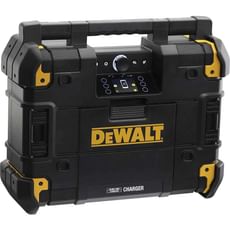
Additional Features: Many job site radios at Tooled-Up include useful extras such as USB charging ports for mobile phones and tablets, auxiliary inputs for connecting MP3 players, integrated battery chargers that can charge your power tool batteries whilst you work (like the DeWalt TSTAK model), and even LED work lights for dual functionality in dimly-lit areas.
Size & Portability: Match the radio size to your working environment. Ultra-compact Bluetooth speakers easily fit in a tool bag and are perfect for mobile tradespeople moving between jobs throughout the day. Larger models offer premium sound but require more space and suit static workshop locations or larger site offices where audio quality takes priority over portability.
Popular Accessories
- Spare Batteries: Additional 18V lithium-ion batteries ensure continuous operation throughout the workday without interruption – essential when working in locations without mains power access
- Battery Chargers: Fast chargers and multi-bay charging stations keep your batteries topped up and ready (some radios include integrated chargers for added convenience)
- Auxiliary Cables: 3.5mm audio cables for connecting non-Bluetooth devices like older MP3 players, laptops, or smartphones without wireless capability
- Protective Covers: Weather-resistant covers and carry bags provide additional protection during transport and storage, extending the life of your investment
- Aerial Extensions: Telescopic aerial upgrades can improve DAB and FM reception in areas with weak signals, particularly in rural locations or inside metal-clad buildings
- USB Charging Adapters: Multi-port USB adapters allow charging multiple devices simultaneously from radios with USB outputs
- Mounting Brackets: Wall-mounting solutions and stands for permanent workshop installations, keeping the radio secure and at optimal listening height
Frequently Asked Questions
Can I use any brand battery in a job site radio?
No – job site radios are designed to work exclusively with their manufacturer's battery platform. A Makita radio only accepts Makita 18V LXT batteries, DeWalt radios require DeWalt 18V XR batteries, Bosch radios need Bosch Professional 18V batteries, and so on. This ensures proper voltage regulation, safety features, and warranty protection. However, most professional tradespeople already use one main battery platform across their cordless tools, making this a natural choice that maximises battery interchangeability across your entire tool collection.
How long does a battery last when powering a job site radio?
Battery runtime varies significantly depending on battery capacity (measured in Ah) and volume level. As a general guide, a 5.0Ah battery will typically power a radio for 15-25 hours at moderate volume. Higher volumes drain batteries faster due to increased power draw, whilst lower volumes extend runtime considerably. Many tradespeople find a single battery lasts an entire working day, though keeping a spare charged battery ensures uninterrupted entertainment. Larger capacity batteries like 6.0Ah or 9.0Ah units provide even longer runtimes for extended shifts.
Are job site radios waterproof?
Most job site radios are water-resistant rather than fully waterproof. They're designed to withstand rain showers, splashes, and damp conditions but shouldn't be submerged in water or left standing in puddles. Check the IP rating – IP64 offers good protection against water splashes from any direction, whilst IP65 provides protection against water jets. These ratings mean the radio will handle typical construction site weather conditions, but always store radios in dry conditions when not in use to maximise longevity and protect internal electronics.
Do I need DAB radio or is Bluetooth enough?
This depends on your listening preferences and working environment. DAB+ digital radio offers access to dozens of UK radio stations including BBC services, commercial stations like Heart and Capital, and specialist channels without consuming mobile data – ideal for staying informed with news, traffic updates, and live radio shows throughout the day. Bluetooth is perfect for streaming your own music playlists and podcasts but requires a smartphone with data connection or downloaded content. Many users find having both options provides maximum flexibility for different situations and preferences.
Can job site radios charge power tool batteries?
Some models include integrated battery charging functionality, allowing you to charge your power tool batteries whilst listening to music or radio – a genuine time-saver on site. The DeWalt TSTAK DAB radio, for example, features a built-in charger that can charge batteries whilst the radio operates on mains 240v power. This dual functionality reduces the number of separate devices you need to transport to site and ensures batteries are always ready when you need them. However, not all radios include this feature, so check the specifications carefully if this capability is important to your workflow.