

Jubilee & Hose Clips
Pay in 3 interest-free payments on purchases from £30-2000 with  . Learn more.
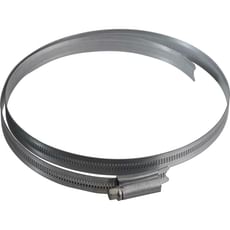
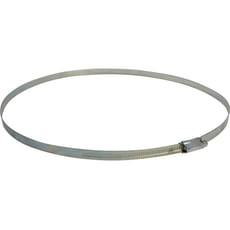
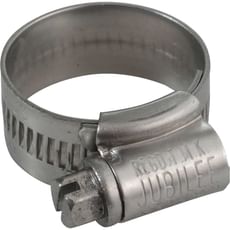
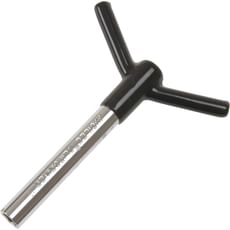
 Loading...
End of content
Error - No more pages to load
About Jubilee & Hose Clips
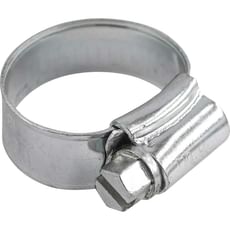
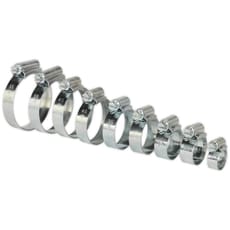
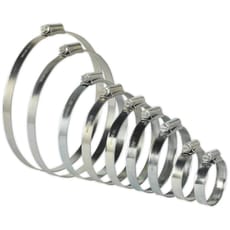
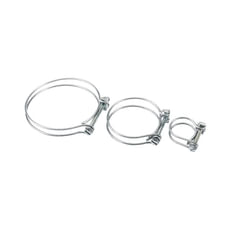
Jubilee and hose clips are essential fastening components used across countless industries and applications to securely attach hoses, pipes, and tubes to fittings. These versatile clamps work by tightening around flexible tubing to create a leak-proof seal, preventing fluids and gases from escaping at connection points. Whether you're working with water, air, fuel, or hydraulic systems, having the right hose clips ensures reliable, long-lasting connections that won't fail under pressure.
The term 'Jubilee clip' has become synonymous with quality hose clamps in the UK, much like 'Hoover' for vacuum cleaners. Originally trademarked by the Jubilee Clip Company, these stainless steel worm-drive clips have been the gold standard since the 1920s. Today's market offers an extensive range of hose clips in various materials, sizes, and designs, from traditional worm-drive clips to multiband systems, spring clamps, and specialist aviation-style clips. The selection at Tooled-Up.com includes premium brands like Jubilee, Sealey, Draper, and Faithfull, covering everything from individual clips to comprehensive assortment sets for professional workshops.
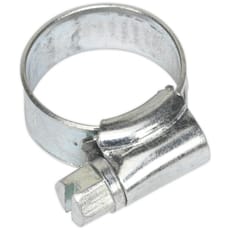
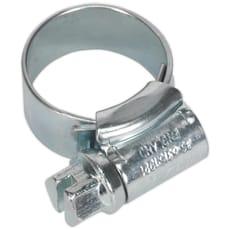
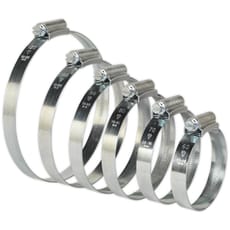
Quality hose clips are available in different materials to suit specific environments and applications. Zinc-plated mild steel clips offer excellent general-purpose performance at an economical price point, whilst stainless steel variants provide superior corrosion resistance for marine, outdoor, and food-grade applications. Professional-grade clips feature rolled band edges to protect hoses from damage, hex-head or wing screws for easy tightening, and precision threading for consistent, reliable clamping force across the entire diameter range.
Jargon Buster
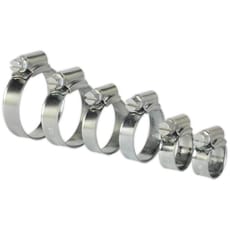
- Worm Drive: The screw mechanism that tightens the band around the hose. As you turn the screw, it engages with perforations in the clip band, progressively reducing the diameter to create a secure grip. This is the most common type of hose clip mechanism in the UK.
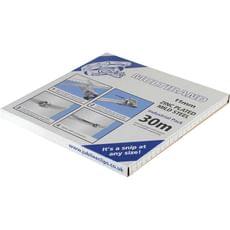
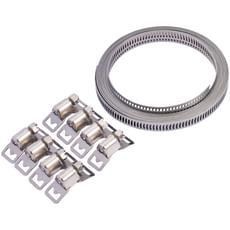
- Perfoband: The perforated metal strapping material used in multiband and continuous-length clip systems. Supplied in rolls or strips, perfoband allows you to cut custom lengths and create bespoke clip sizes for any diameter application, making it ideal for production environments and on-site fabrication work.
- Band Width: The measurement (in millimetres) of the clip's band from top to bottom. Standard clips typically range from 8mm to 20mm width. Wider bands distribute clamping force more evenly and are recommended for higher-pressure applications or softer hose materials.
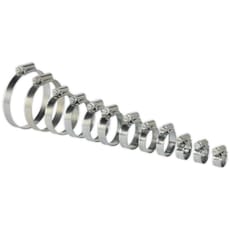
- Diameter Range: The minimum and maximum hose diameter (measured in millimetres) that a clip can accommodate. For example, a clip marked 30-40mm will effectively secure any hose between those sizes. Always measure your hose's outside diameter when selecting clips.
- Torque Rating: The recommended tightening force for the clip screw, measured in Newton metres (Nm). Over-tightening can damage hoses and fittings, whilst under-tightening risks leaks. Professional clips specify torque requirements for critical applications.
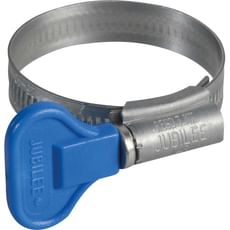
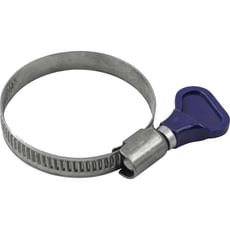
- Wing Screw: A clip head design featuring protruding tabs that allow hand-tightening without tools. Particularly useful for temporary connections or applications requiring frequent disconnection, though a screwdriver or socket provides more secure tightening for permanent installations.
Who Uses Jubilee & Hose Clips?
Hose clips are indispensable across numerous trades and industries:
- Plumbers and Heating Engineers: Installing and repairing washing machine connections, central heating systems, boiler installations, and water supply pipes
- Motor Mechanics and Auto Electricians: Securing coolant hoses, fuel lines, air intake systems, and vacuum pipes in vehicles
- Agricultural and Horticultural Contractors: Maintaining irrigation systems, tractor hydraulics, spray equipment, and milking machinery
- Marine Engineers and Boat Owners: Critical for below-waterline applications, engine cooling systems, bilge pumps, and toilet installations where corrosion-resistant stainless steel clips are essential
- HVAC Engineers: Securing flexible ducting, condensate drainage pipes, and ventilation hose connections
- Industrial Maintenance Teams: General workshop applications, pneumatic systems, coolant circulation, and production line equipment
- DIY Enthusiasts and Home Improvers: Garden hose repairs, appliance installations, pressure washer connections, and general household maintenance
- Brewers and Food Production: Food-grade stainless steel clips for hygienic hose connections in beverage and processing industries
How to Choose the Right Jubilee & Hose Clips
Selecting appropriate hose clips requires consideration of several factors to ensure secure, long-lasting connections:
Measure Accurately: Always measure the outside diameter of your hose or tube using callipers or a tape measure. Choose a clip whose diameter range encompasses your measurement with a few millimetres to spare. A 35mm hose would suit a 30-40mm clip rather than a 25-35mm size for optimal grip.
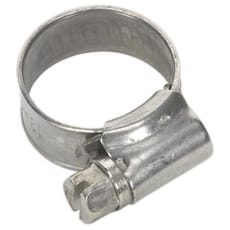
Material Selection: Zinc-plated mild steel clips suit most general workshop, automotive, and indoor plumbing applications where cost-effectiveness matters. Upgrade to stainless steel (ideally 304 or 316 grade) for outdoor installations, marine environments, food processing, or anywhere exposed to moisture and corrosive substances. Some applications may require all-stainless construction including screws and housings.
Band Width Matters: Standard 9mm bands work well for low-pressure domestic applications, but professional installations benefit from 12mm or wider bands. Broader bands distribute clamping pressure more evenly, reducing the risk of cutting into softer hoses whilst providing more secure retention on high-pressure systems.
Head Configuration: Hex-head screws accommodate spanners, sockets, or nut drivers for high-torque applications and are ideal where access allows. Slotted screws suit screwdrivers and dedicated hose clip drivers. Wing screws enable hand-tightening for temporary connections. Consider access constraints when selecting head types for confined spaces.
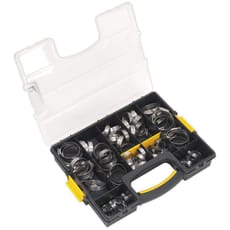
Assortment Sets vs Individual Clips: Professional workshops benefit enormously from comprehensive assortment sets containing multiple sizes. Tooled-Up stocks organised storage solutions that ensure you always have the correct size to hand. For specific projects or occasional use, purchasing individual clips in the exact size required proves more economical.
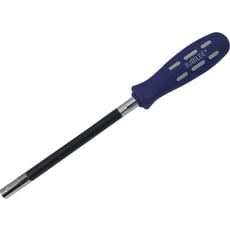
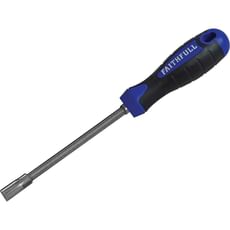
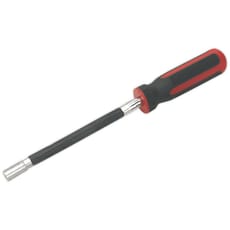
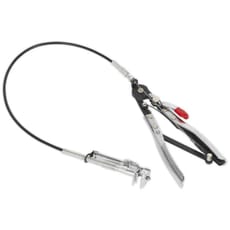
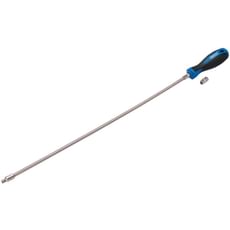
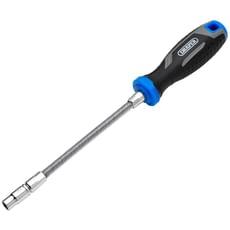
Specialist Tools: Dedicated hose clip drivers, available in standard and long-reach configurations from brands like Draper and Faithfull, significantly speed up installation work and provide better access in confined spaces compared to conventional screwdrivers. The investment quickly pays dividends for anyone regularly working with clips.
Popular Accessories
- Hose Clip Drivers: Dedicated tools including flexible ratcheting drivers and long-reach versions for accessing clips behind engines and in awkward spaces
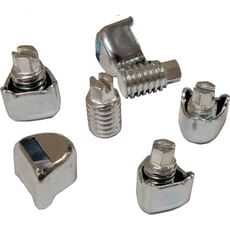
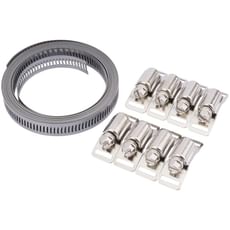
- Multiband Strip and Housings: Continuous perforated banding and separate screw housings for creating custom-size clips in workshop production environments
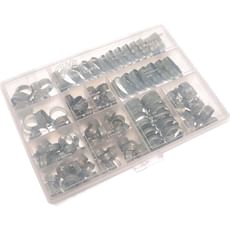
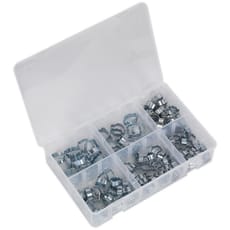
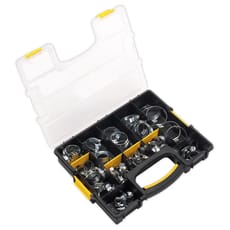
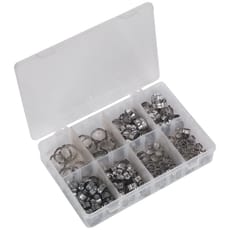
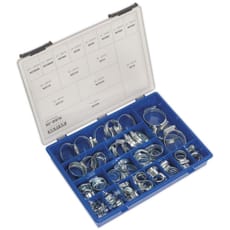
- Assortment Cases: Organised storage sets containing multiple clip sizes in compartmentalised boxes for mobile service vehicles and site work
- Socket Adapters: Hex socket attachments for pneumatic and electric drivers, essential for production-line efficiency
- Torque Screwdrivers: Calibrated tools ensuring correct tightening force for critical applications without damaging hoses
- Hose Cutters: Sharp, ratcheting cutters for clean hose preparation before clip installation
- Thread Sealants and Lubricants: Products ensuring leak-proof threaded connections on fittings
Frequently Asked Questions
What size Jubilee clip do I need for a standard garden hose?
Most UK garden hoses have an outside diameter of approximately 18-20mm, so a clip with a 16-25mm or 20-32mm diameter range will provide a secure fit. For threaded tap connectors, measure the outside diameter of the hose barb fitting rather than the hose itself, as this determines the required clip size.
Can I reuse hose clips, or should I fit new ones?
Quality Jubilee and branded clips can typically be reused several times if they're undamaged, show no corrosion, and the threads remain in good condition. However, for critical applications like fuel lines, brake systems, or below-waterline marine installations, best practice recommends fitting new clips to guarantee reliability. Always inspect clips carefully before reusing them.
What's the difference between zinc-plated and stainless steel clips?
Zinc-plated mild steel clips offer excellent strength and value for general indoor applications but will eventually corrode when exposed to moisture. Stainless steel clips (particularly 304 or 316 grade) provide superior corrosion resistance for outdoor, marine, and food-grade applications, though they cost more. For longevity in harsh environments, stainless steel is always the better investment.
How tight should I fasten a hose clip?
Tighten clips until they grip firmly without deforming the hose. Over-tightening can cut into softer rubber or silicone hoses, creating weak points and potential leak paths. For critical applications, manufacturers specify torque values (typically 2-5 Nm for standard automotive clips). The hose material should compress slightly but not bulge excessively around the clip edges.
Why are proper Jubilee clips better than cheaper alternatives?
Genuine Jubilee and quality branded clips feature rolled band edges that won't cut into hoses, precision-punched perforations for consistent tightening, and properly hardened screws that won't strip under load. Cheaper alternatives often have sharp edges, irregular perforations causing uneven clamping, and soft screws that round off easily. For professional reliability and longevity, quality clips represent excellent value despite higher initial cost.