

Laminate Floor Tools
Pay in 3 interest-free payments on purchases from £30-2000 with  . Learn more.
 Loading...
End of content
Error - No more pages to load
About Laminate Floor Tools
Installing laminate flooring demands precision, patience, and most importantly, the right specialist tools designed specifically for this popular flooring material. Laminate floor tools encompass everything from cutting equipment that produces clean, chip-free edges to spacing devices that maintain essential expansion gaps, tapping blocks that protect delicate tongue-and-groove joints, and pull bars that close those final awkward gaps near walls. Whether you're a professional flooring contractor working through multiple installations weekly or a DIY enthusiast tackling your first bedroom floor, having purpose-designed laminate tools transforms what could be a frustrating experience into a satisfying project with professional-quality results.
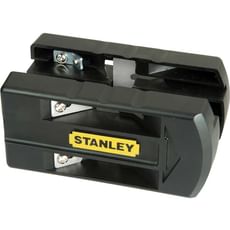
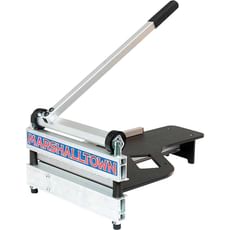
The selection at Tooled-Up.com includes manual laminate flooring guillotines from manufacturers like Edma and Marshalltown that slice through planks cleanly without creating the dust and noise associated with power saws—ideal for working in occupied properties. Brands such as Roughneck provide robust installation accessories including knocking blocks, pull bars, and gap spacers that protect your expensive flooring materials whilst ensuring tight, moisture-resistant joints. Adjustable spacing systems like the Bessey AV2 offer versatility across different floor thicknesses and expansion gap requirements, whilst specialised tools such as the Stanley Laminate Trimmer handle those tricky cuts around door frames and architraves.
Modern laminate cutting tools aren't limited to laminate alone—many professional-grade cutters like the Edma Straticut Vario handle engineered wood, MDF, and various composite flooring materials up to different thicknesses, making them versatile additions to any flooring professional's toolkit. The right equipment reduces installation time significantly, minimises material waste from poor cuts, prevents costly damage to plank edges, and helps achieve that seamless finish that separates professional installations from amateur attempts. From compact domestic rooms to extensive commercial spaces, quality laminate floor tools deliver consistent results whilst reducing physical strain during what can be demanding, knee-intensive work.
Jargon Buster
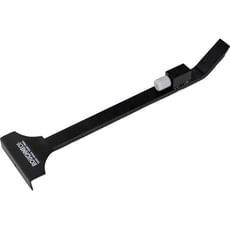
- Pull Bar: A specially shaped metal tool with a hooked end designed to close the final joints between laminate planks and walls or obstacles where a standard tapping block cannot physically reach. You position the hooked end against the plank edge and tap the opposite flat end with a hammer to draw the joint tight without damaging the board.
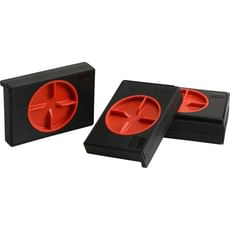
- Tapping Block (Knocking Block): A protective block placed against the long or short edge of laminate planks before striking with a hammer to close joints. The block distributes impact force evenly across the plank edge, preventing damage to the vulnerable tongue-and-groove connection whilst ensuring tight, gap-free joints.
- Expansion Gap: The essential space (typically 10-12mm) left around the entire perimeter of a laminate floor installation and around fixed objects like radiator pipes. This gap allows the floating floor to expand and contract naturally with temperature and humidity fluctuations without buckling or warping—failure to maintain adequate expansion gaps causes problems later.
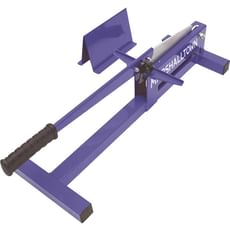
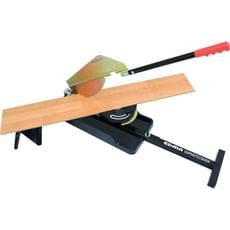
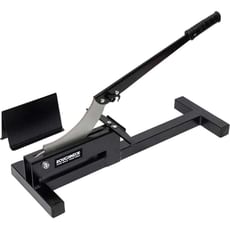
- Flooring Guillotine: A manually-operated cutting tool specifically engineered to make clean, straight cuts through laminate planks using a shearing action rather than sawing. These tools produce zero dust, work silently, require no electricity, and create chip-free cuts on the decorative surface—making them ideal for occupied buildings and repetitive straight cuts.
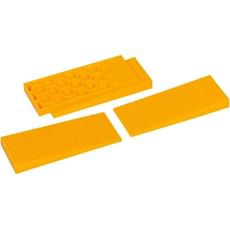
- Spacers (Gap Spacers): Small wedges or blocks temporarily positioned between laminate planks and walls during installation to maintain consistent expansion gaps. These are removed once installation is complete, with the gap subsequently hidden by skirting boards or finishing beading.
- Cross-Cutter: A specialised cutting tool designed to make precise perpendicular cuts across laminate and wood flooring planks, particularly useful for trimming the final planks in rows to exact length. These tools typically feature measurement guides and stops for accurate, repeatable cuts.
Who Uses Laminate Floor Tools?
- Flooring Specialists: Professional flooring fitters and contractors who install laminate, engineered wood, and vinyl flooring as their primary trade, working across domestic and commercial projects
- Carpenters and Joiners: Chippies who incorporate flooring installation as part of broader carpentry work on renovation projects, extensions, and new-build developments
- General Builders: Construction professionals undertaking complete property refurbishments where flooring installation forms part of the final finishing stages
- Property Maintenance Teams: Facilities managers and maintenance operatives working on commercial properties, rental portfolios, social housing, and hospitality venues requiring flooring repairs or replacements
- Kitchen and Bathroom Fitters: Specialists who complete flooring installation as the final stage of room refurbishments, often working with water-resistant laminate products
- Interior Designers and Shopfitters: Professionals creating complete interior spaces including flooring in retail environments, offices, and commercial premises
- DIY Enthusiasts: Home improvers tackling laminate flooring installation projects to save costs, develop practical skills, and personalise their living spaces
- Handyman Services: Multi-trade professionals offering flooring installation alongside other home improvement and maintenance services
How to Choose the Right Laminate Floor Tools
Assess Your Project Scale: For occasional domestic installations or single-room projects, mid-range tools from brands like Roughneck offer excellent value with sufficient quality and durability for DIY use. However, professional fitters working daily across multiple installations should invest in heavy-duty equipment such as professional-grade laminate guillotines from Edma or Marshalltown that withstand constant use and deliver consistent results across hundreds of cuts.
Consider Cutting Requirements: Laminate flooring guillotines excel at producing clean, dust-free straight cuts and work quietly—essential when working in occupied properties or noise-sensitive environments. For projects requiring angled cuts, intricate shaping around obstacles, or curved profiles, you'll need supplementary tools like jigsaws or multi-tools alongside your guillotine for straight cuts. The Marshalltown Lightweight Wood Flooring Shear offers excellent portability for site work.
Quality of Construction: Look for tools featuring hardened steel cutting blades that maintain their edge, reinforced frames that resist flexing during use, and ergonomic handles that reduce hand fatigue. Professional-grade equipment may cost more initially but delivers better cut quality, requires less frequent blade replacement, and proves more economical over time for regular users.
Versatility Matters: Some advanced cutters like the Edma Straticut Vario can handle various materials including standard laminate, thicker engineered wood, MDF, and composite flooring materials up to different thicknesses. If you work with multiple flooring types or anticipate future projects with different materials, investing in versatile equipment reduces the number of tools you need to purchase, store, and transport between job sites.
Ergonomics and Portability: Lightweight designs reduce fatigue during extended use—particularly important when you're making dozens of cuts throughout the day. Compact tools are easier to transport in vans between job sites and require less storage space. Consider the weight and dimensions of larger guillotines if you frequently work on upper floors or sites with access challenges.
Complete Kit Considerations: Ensure you have the essential installation trio of pull bar, tapping block, and spacers alongside your cutting tools. Adjustable spacers like the Bessey AV2 offer flexibility for different expansion gap requirements and work with various floor thicknesses, eliminating the need for multiple fixed-size spacers. Tooled-Up stocks comprehensive kits from Roughneck that provide all essential installation accessories in one purchase.
Popular Accessories
- Replacement Blades: Spare cutting blades for laminate guillotines and shears to maintain clean, chip-free cuts as original blades dull with use
- Measuring and Marking Tools: Tape measures, combination squares, speed squares, and marking pencils for accurate plank measurements and cut marking
- Underlay and Moisture Barriers: Essential preparatory materials that sit beneath laminate flooring to provide cushioning, sound dampening, and moisture protection
- Floor Levelling Compounds: Self-levelling products to correct subfloor irregularities before installation—laminate requires relatively flat surfaces for proper performance
- Laminate Floor Repair Kits: Touch-up markers, wax filler sticks, and repair paste for concealing minor scratches, chips, or damage during and after installation
- Skirting Board Installation Tools: Mitre boxes, trim saws, nail guns, and adhesives for completing the installation with finishing skirting boards or beading that cover expansion gaps
- Knee Pads and Kneelers: Essential PPE for protecting knees during extended floor-level work—comfortable knee protection prevents injury and reduces fatigue
- Profile Trimmers: Specialised tools like the Stanley Laminate Trimmer for creating precise cuts around door frames, architraves, and other obstacles
- Transition Strips and Thresholds: Finishing profiles for doorways, room transitions, and joins between different flooring types or heights
- Jigsaws and Blades: For curved cuts, circular cutouts around pipes, and intricate shapes that guillotines cannot achieve
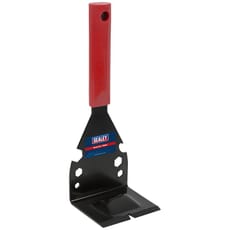
- Skirting Board Removers: Tools like the Sealey Multifunction Skirting Board and Trim Puller for removing existing skirting without damaging walls or woodwork
Frequently Asked Questions
Can I install laminate flooring without specialist tools?
While technically possible using basic DIY tools like a handsaw, hammer, and improvised spacers, specialist laminate floor tools dramatically improve both results and efficiency. A dedicated laminate cutter produces cleaner cuts than a handsaw without creating dust or noise, whilst purpose-made spacers ensure consistent expansion gaps around the entire perimeter. Proper tapping blocks and pull bars prevent damage to the delicate tongue-and-groove edges that cheap alternatives, improvised tools, or direct hammering might cause. For a single small room, you might manage with basic tools, but the modest investment in proper equipment pays dividends through faster work, better results, and less frustration.
What's the advantage of a laminate flooring guillotine over a circular saw?
Laminate guillotines offer several compelling advantages: they produce absolutely zero dust (eliminating cleanup and respiratory concerns), work silently making them ideal for occupied buildings or noise-sensitive environments, require no electricity (no trailing cables or charged batteries needed), create perfectly clean cuts without chipping the decorative surface layer, and are actually faster for repetitive straight cuts once you establish a rhythm. They're also considerably safer with no exposed rotating blades or kickback risks. However, power saws remain necessary for angled cuts, intricate shapes around obstacles, and curved profiles that guillotines cannot achieve—most professional installers use both tools depending on the cut required.
How do I know what size expansion gap to leave?
Most laminate flooring manufacturers recommend a 10-12mm expansion gap around all room perimeters, door frames, radiator pipes, and other fixed objects. However, always check your specific flooring manufacturer's installation instructions, as requirements vary slightly between products and brands. Some wider planks or longer room dimensions may require larger gaps. Using purpose-made spacers ensures consistency around the entire installation, and remember that these gaps will be completely hidden once skirting boards, beading, or threshold strips are installed. Larger rooms or those experiencing significant temperature variations (like conservatories) may require slightly larger expansion gaps to accommodate greater movement.
Are expensive professional laminate tools worth it for DIY projects?
For a single domestic room or occasional use, mid-range tools from brands like Roughneck offer excellent value with sufficient quality and durability for DIY applications. However, if you're planning multiple rooms, whole-house installation, or anticipate future flooring projects, investing in professional-grade equipment from manufacturers like Edma or Marshalltown pays dividends through superior results, reduced frustration, faster work, and greater comfort during use. Quality tools also retain excellent resale value if you later decide to sell them, or they become valuable lending items for friends and family tackling similar projects. Consider too that professional tools often feature better ergonomics, reducing physical strain during what can be demanding work.
Can laminate floor tools be used with engineered wood flooring?
Yes, most laminate flooring tools work equally well with engineered wood products, as installation methods are fundamentally similar—both use tongue-and-groove floating floor systems requiring the same techniques for joining planks and maintaining expansion gaps. However, check the maximum thickness capacity of cutters and guillotines before purchasing, as some engineered wood boards are thicker than standard laminate planks. Tools like the Edma Straticut Vario are specifically designed to handle various flooring types and thicknesses up to certain limits, making them ideal for professional fitters working with multiple materials or DIYers uncertain about future projects.