

Laser Levels

Pay in 3 interest-free payments on purchases from £20-£3000 with  . Learn more.
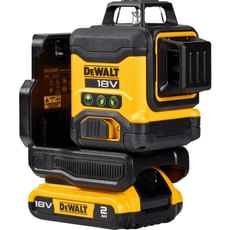
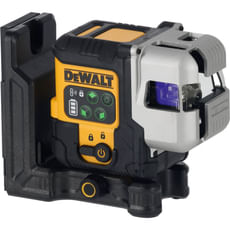
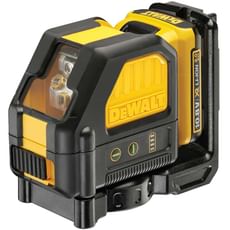
DeWalt DCLE34031 18v Cordless Self Levelling Cross Line GREEN Laser Level
in stock
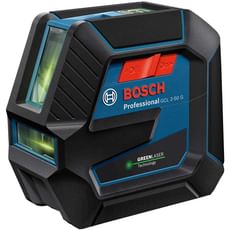
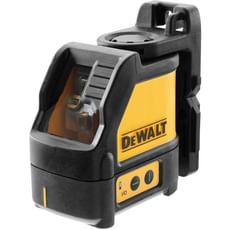
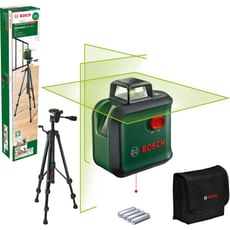
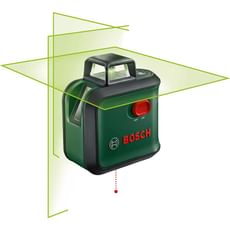
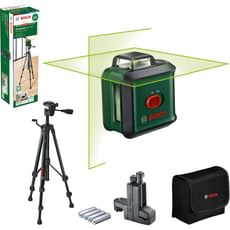
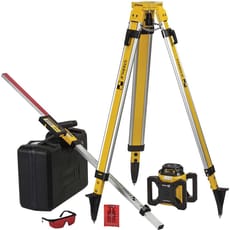
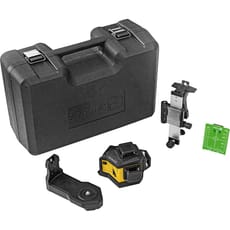
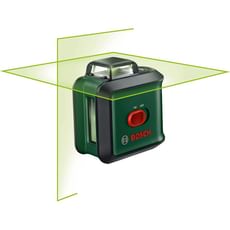

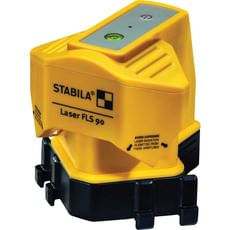
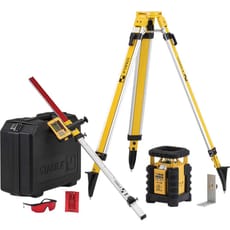
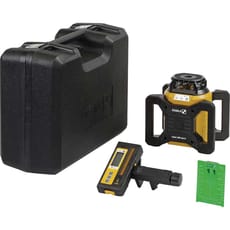
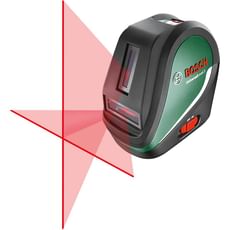
Loading...
End of content
Error - No more pages to load
About Laser Levels
Laser levels have transformed how tradespeople and DIY enthusiasts tackle levelling and alignment tasks across construction, installation, and home improvement projects. These precision instruments project perfectly straight laser beams horizontally, vertically, or in multiple planes simultaneously, eliminating guesswork and delivering professional accuracy far beyond traditional spirit levels. Whether you're fitting kitchens, tiling bathrooms, installing electrical outlets at consistent heights, setting out drainage falls, or simply hanging pictures, a quality laser level provides visible reference lines that ensure perfect alignment every time.
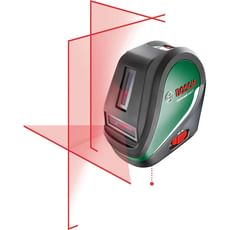
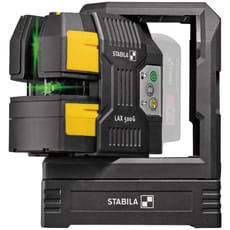
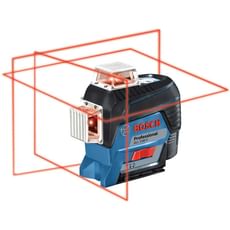
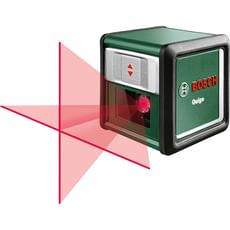
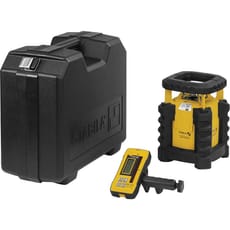
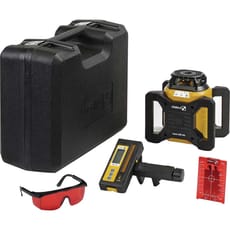
Modern laser levels come in several configurations to suit different applications and budgets. Cross-line lasers project intersecting horizontal and vertical beams, making them ideal for interior fitting work like tiling and electrical installation. Rotary lasers spin 360 degrees to create a complete level plane around entire rooms or outdoor sites, perfect for groundwork, foundations, and large-scale construction projects. Line lasers offer straightforward single or dual-line projection for basic alignment tasks. Green beam technology has revolutionised visibility in bright conditions, with green lasers appearing up to four times more visible than traditional red beams. The selection at Tooled-Up.com features comprehensive ranges from Bosch Professional, Bosch Home and Garden, and DeWalt, spanning entry-level models for occasional DIY use through to robust professional tools engineered for demanding site conditions.
Self-levelling capability is now standard on quality laser levels, using pendulum mechanisms or electronic sensors to automatically achieve true level within a specified range, typically ±3-4 degrees. This saves considerable setup time and ensures consistent accuracy throughout the working day. Most models are battery-powered for maximum portability, with many professional units featuring rechargeable lithium-ion batteries compatible with existing tool platforms. Mounting options include tripod threads, magnetic bases for metalwork attachment, and wall brackets, whilst pulse mode functionality enables use with laser receivers for extended outdoor range.
Jargon Buster
- Self-Levelling
- Automatic mechanism that adjusts the laser beam to true horizontal or vertical within a specified angle range, typically ±3-4 degrees. Out-of-range indicators alert you if the unit is tilted beyond its compensation ability, ensuring you never work from an inaccurate reference.
- Green Beam vs Red Beam
- Green laser light is up to four times more visible to the human eye than red, particularly useful in bright ambient light, daylight conditions, or over longer distances. Red beam lasers are more affordable and consume less battery power, making them perfectly adequate for most indoor applications.
- Cross-Line Laser
- Projects both horizontal and vertical laser lines simultaneously, creating a cross pattern ideal for aligning tiles, electrical fixtures, kitchen units, and general fitting work. Many models offer switchable lines for flexibility when only one plane is needed.
- Rotary Laser
- Spins the laser beam 360 degrees to create a complete level reference plane around an entire room or site. Essential for groundwork, suspended ceilings, drainage falls, and large-scale levelling tasks where a single reference plane is needed across extensive areas.
- Working Range
- The maximum distance at which the laser line remains visible and accurate, typically between 10-50 metres depending on the model and beam colour. Effective range can be extended significantly using laser receivers or detectors, particularly important for outdoor groundwork.
- Accuracy Rating
- Usually expressed in millimetres per metre (mm/m), indicating how much deviation occurs over distance. Professional models typically offer ±0.2mm/m to ±0.3mm/m accuracy, whilst DIY models may be ±0.5mm/m, which remains perfectly adequate for most general alignment tasks.
Who Uses Laser Levels?
Laser levels are indispensable tools across numerous trades and applications:
- Electricians and Sparkies: Aligning socket heights, switch positions, conduit runs, and lighting fixtures to consistent levels throughout installations, ensuring professional appearance and compliance with regulations
- Carpenters and Chippies: Setting out stud walls, installing skirting boards, kitchen units, worktops, and ensuring door frames and architraves are perfectly plumb and level
- Tilers: Creating level reference lines for tile layouts, ensuring consistent grout lines, and achieving professional finishes in bathrooms, kitchens, and commercial spaces
- Plasterers and Drywall Installers: Checking wall flatness, aligning suspended ceiling grids, setting datum lines for rendering, and ensuring perfectly level plasterboard installation
- Groundworkers and Landscapers: Establishing levels for foundations, setting drainage falls, laying paving, constructing retaining walls, and building decking projects
- Shopfitters and Joiners: Installing shelving systems, display units, retail fixtures, and commercial joinery to precise alignment specifications
- Plumbers: Setting gradient falls for drainage pipes, waste runs, and ensuring sanitary ware, baths, and shower trays are perfectly level
- Decorators: Hanging wallpaper borders, creating feature wall alignments, positioning dado rails, and aligning wall art or mirror installations
- Building Surveyors: Checking floor levels, assessing structural movement, and documenting property conditions during surveys
- DIY Enthusiasts: Home improvement projects including picture hanging, shelf installation, garden construction, fence building, and general alignment tasks
How to Choose the Right Laser Levels
Type of Work: Consider your primary applications carefully. Line lasers and cross-line lasers suit most interior fitting, decoration, and installation tasks, making them ideal for electricians, tilers, kitchen fitters, and general building work. Rotary lasers are essential for groundwork, large room layouts, exterior projects, and construction site levelling. Combi lasers from manufacturers like Bosch and DeWalt offer multiple projection modes for versatility across different job types, representing excellent value for tradespeople working across varied applications.
Beam Colour Technology: Red beam lasers are perfectly adequate for indoor use and represent excellent value for money. Green beam technology costs more but provides significantly better visibility in bright ambient light, outdoors, or when working over longer distances. If you regularly work in well-lit commercial premises, outdoors, or need maximum range, the investment in green beam is worthwhile and can improve productivity considerably.
Range and Accuracy Requirements: Match the working range to your typical project sizes. Domestic and light commercial work usually requires 10-20 metres, whilst construction and groundwork may need 30-50+ metres or more with detector use. Professional tools typically offer ±0.2-0.3mm/m accuracy compared to ±0.5mm/m for DIY models—critical for precision trades like tiling and joinery but less important for general alignment tasks like hanging pictures or basic carpentry.
Power Source Options: Cordless battery-powered models offer maximum site flexibility without trailing cables. Look for lithium-ion battery platforms that integrate with your existing tool collection from brands like Bosch, DeWalt, or Milwaukee to minimise battery investment. Some professional lasers accept both battery and 240v mains power for extended operation on static projects. Standard AA or AAA battery models suit occasional DIY use but running costs accumulate quickly for professional applications.
Durability and Site Protection: Professional lasers feature robust housings with IP54 or higher ingress protection against dust and moisture—essential for challenging site conditions. Look for protective cages, rubberised bumpers, and reinforced housings if working in rough environments or where impacts are likely. DIY models may lack this protection but suffice for careful indoor use and home improvement projects.
Features and Functionality: Self-levelling is essential for convenience and consistent accuracy. Pulse mode enables use with laser receivers for outdoor work and extended range. Tripod threads (typically 1/4" or 5/8"), magnetic mounts, and target plates enhance versatility. Consider complete sets available from Tooled-Up that include tripods, measuring tools, or carrying cases for better overall value and immediate readiness.
Brand and Budget Considerations: Bosch Professional and DeWalt offer proven reliability and manufacturer support for demanding professional use with comprehensive warranties. Bosch Home and Garden models provide excellent quality at more accessible price points for serious DIYers and light trade use. Expect to invest £80-200 for quality DIY lasers and £200-600+ for professional-grade instruments with advanced features and superior durability.
Popular Accessories
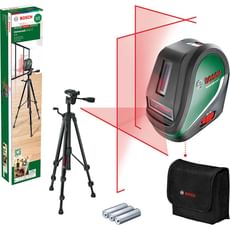
- Tripods and Elevating Tripods: Provide stable mounting at adjustable working heights from floor level to 1.5 metres or more, essential for room-centre positioning and extending effective range. Look for models with standard 1/4" or 5/8" thread compatibility and quick-release mechanisms.
- Wall and Ceiling Mounts: Quick-mounting brackets for positioning lasers at height without tripods, particularly useful for ceiling work, confined spaces, and permanent installation reference points.
- Laser Receivers and Detectors: Extend the usable range of your laser outdoors or in bright conditions by detecting the beam electronically rather than visually, essential for groundwork and construction applications where range may exceed 30-50 metres.
- Target Plates: Reflective boards that make laser lines easier to see over long distances or in bright ambient light, improving accuracy when marking reference points and transfer measurements.
- Laser Enhancement Glasses: Tinted eyewear that enhances laser line visibility, particularly useful with red beam lasers in bright conditions. Also provides appropriate eye protection when working with Class 2 or higher classification lasers.
- Laser Measures and Measuring Tapes: Complementary tools that work alongside laser levels for complete dimensional control, with many manufacturers offering combination kits that pair levelling and measuring capabilities.
- Protective Carrying Cases: Padded storage solutions that protect your investment during transport and on-site storage, often included with professional models but available separately for added protection.
- Mounting Poles and Extension Accessories: Telescopic poles and extension accessories for positioning lasers at precise heights without ladders, useful for ceiling work and tall room applications.
Safety Information
Laser Safety Classification: Most construction laser levels are Class 2 devices, considered safe under normal use but should never be stared into directly. Avoid directing the beam towards eyes and be mindful of reflections from mirrors, glass, or polished metallic surfaces that could redirect beams unexpectedly. Class 3 lasers require additional precautions including warning signage and may require specific risk assessments on construction sites.
Site Awareness and Trip Hazards: When setting up laser levels on active work sites, ensure tripods and equipment are positioned to avoid creating trip hazards for yourself and other trades. Use warning signs if lasers are operating in public areas, corridors, or locations where others might inadvertently look into the beam. Secure cables and leads properly.
Electrical Safety: Mains-powered units operating from 240v supplies should be used with RCD protection as standard on UK construction sites. Ensure cables don't create trip hazards and inspect equipment regularly for damage, particularly cable insulation and plug integrity. Battery-powered models eliminate these concerns for most applications whilst providing greater portability.
Equipment Care and Calibration: Laser levels contain delicate optics and precision levelling mechanisms. Avoid drops, impacts, and excessive vibration which can affect accuracy and damage internal components. Store in protective cases when not in use and transport carefully. Have professional tools calibrated periodically, particularly after any impact or if accuracy seems compromised during verification checks.
HSE Guidance: Follow Health and Safety Executive guidelines for laser safety on construction sites, ensuring appropriate risk assessments are in place for higher-class lasers or when working near public areas. Employers should provide suitable training on laser equipment use and safety protocols.
Frequently Asked Questions
What's the difference between red and green laser levels?
Green laser beams are up to four times more visible than red to the human eye, making them significantly easier to see in bright conditions, daylight, and over longer distances. This improved visibility can boost productivity when working outdoors or in well-lit commercial premises. Red lasers are more affordable, use less battery power extending runtime, and perform perfectly well for most indoor applications in average lighting. Choose green if you regularly work outdoors, in bright environments, or need maximum visibility; choose red for cost-effective indoor use.
Can I use a laser level outdoors in daylight?
Yes, but visibility depends heavily on ambient light levels and working range. Green beam lasers perform considerably better outdoors than red due to improved visibility. For groundwork, construction, and exterior projects, use a rotary laser paired with a laser receiver or detector which can pick up the beam electronically even when it's barely visible or invisible to the naked eye. This extends your effective range to 50-100 metres or more, making outdoor levelling practical even in bright sunlight.
How accurate are laser levels and do they need calibrating?
Quality laser levels typically offer accuracy between ±0.2mm/m to ±0.5mm/m, meaning deviation of 0.2-0.5mm over each metre of distance. Professional tools should be checked periodically for accuracy, particularly after any impact, drop, or if accuracy seems questionable. Many manufacturers including Bosch and DeWalt offer calibration services. You can verify accuracy yourself by projecting lines at known distances and comparing against precision measurements or by checking against a known level surface.
What does self-levelling mean and is it necessary?
Self-levelling lasers automatically adjust to true horizontal or vertical within a specified range, usually ±3-4 degrees, using pendulum mechanisms or electronic sensors. This feature saves considerable setup time compared to manual levelling and ensures consistent accuracy throughout the working day. Out-of-level indicators alert you if the unit is tilted beyond its compensation range, preventing inaccurate work. Self-levelling is now standard on quality tools from brands stocked at Tooled-Up.com and is highly recommended over manual-levelling models for both professional and DIY use.
Will a laser level work with my existing tripod?
Most laser levels feature a standard 1/4" tripod thread (same as photographic cameras) or 5/8" thread used for survey equipment. Check your tripod's thread type—adaptors are readily available if needed. Purpose-made laser tripods often include features like extending centre columns, fine-adjustment controls, and quick-release mechanisms that make positioning easier and more precise than general-purpose tripods. Elevating tripods extend from floor level to 1.5 metres or more for greater versatility.