

Lathe Accessories

Pay in 3 interest-free payments on purchases from £20-£3000 with  . Learn more.








 Loading...
End of content
Error - No more pages to load
About Lathe Accessories
Lathe accessories are essential components that expand the functionality and versatility of both metal and wood lathes, enabling tradespeople and engineering enthusiasts to tackle a wider range of turning, facing, and machining operations. From precision cutting tools and chuck systems to clamping kits and revolving centres, these accessories transform a standard lathe into a comprehensive machining station capable of producing accurate, professional results across various materials. The right accessories allow you to handle everything from simple cylindrical turning to complex off-centre work, threading operations, and precision drilling.
The extensive range of lathe accessories at Tooled-Up.com includes everything from HSS cutting tool sets and face plates to tailstock chucks, steady rests, and specialised clamping systems. Whether you're working with a compact benchtop lathe or a full-sized engineering lathe, having the right accessories ensures you can handle diverse projects efficiently and safely. These components are manufactured by trusted brands including Sealey and Draper, known for their precision engineering and compatibility with standard lathe specifications, ensuring reliable performance in both professional workshops and home engineering setups.
Quality lathe accessories are fundamental to achieving tight tolerances and superior surface finishes in metalworking, woodturning, and general engineering applications. From independent four-jaw chucks that provide superior holding power for irregular workpieces to live centres that reduce friction during tailstock support, each accessory serves a specific purpose in the machining process. Investing in the proper accessories not only improves your work quality but also enhances safety and reduces setup time between operations, making your lathe work more productive and enjoyable.
Jargon Buster
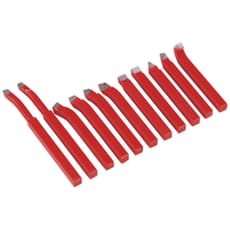
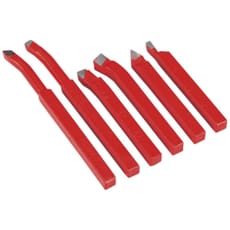
- HSS (High-Speed Steel): A hardened tool steel alloy used for cutting tools that maintains its hardness at elevated temperatures, ideal for lathe cutting operations at higher speeds without losing its edge. Can be reground multiple times to restore cutting performance.
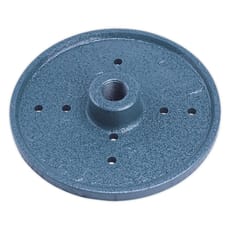
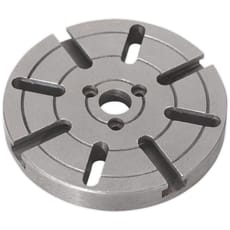
- Face Plate: A circular mounting disc that attaches to the lathe spindle, featuring slots and holes for bolting irregular or large-diameter workpieces that won't fit in a standard chuck. Essential for holding flat or awkwardly shaped items securely.
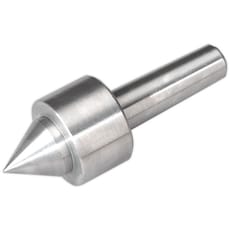
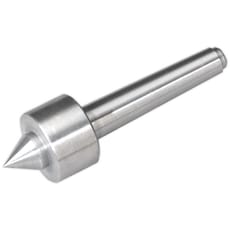
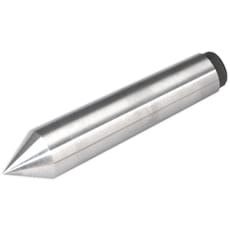
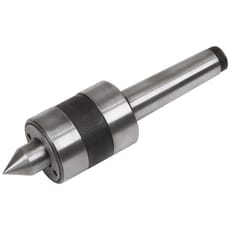
- Live Centre/Revolving Centre: A tailstock-mounted centre with internal bearings that rotates with the workpiece, reducing friction and heat build-up during turning operations compared to a fixed dead centre. Particularly important for longer turning sessions and higher spindle speeds.
- MT2/MT3 (Morse Taper): A standardised self-holding tapered shank system used to secure accessories in the lathe tailstock or headstock, with MT2 and MT3 being common sizes for different lathe capacities. The taper creates a friction fit that's easily removed with a drift.
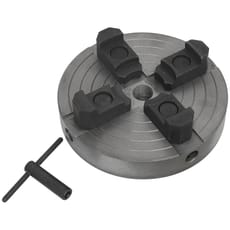
- Four-Jaw Independent Chuck: A chuck system where each jaw can be adjusted independently, allowing for precise centring of irregular workpieces or intentional off-centre mounting for specialised operations. Takes longer to set up than a self-centring chuck but offers superior versatility.
- Steady Rest: A support device mounted on the lathe bed that provides additional support for long, slender workpieces, preventing deflection and vibration during machining operations. Critical for maintaining accuracy when working with extended lengths.
Who Uses Lathe Accessories?
Lathe accessories are essential tools for a diverse range of professionals and enthusiasts:
- Engineering Machinists: Professional engineers in workshops and manufacturing facilities who require precision accessories for component production and maintenance work
- Tool and Die Makers: Specialists who create custom tooling, jigs, and fixtures requiring precise turning and facing operations
- Model Engineers: Hobbyists and professionals creating scale models, steam engines, and precision miniature components
- Woodturners: Craftspeople producing bowls, spindles, and decorative turned items who need chucks, tool rests, and live centres
- Maintenance Engineers: Tradespeople in industrial settings who repair and fabricate replacement parts for machinery and equipment
- Educational Institutions: Schools, colleges, and training centres teaching metalworking and engineering skills
- Automotive Workshops: Mechanics and restoration specialists who machine brake drums, flywheels, and custom components
- DIY Enthusiasts: Home workshop owners pursuing metalworking and woodturning as serious hobbies
How to Choose the Right Lathe Accessories
Selecting appropriate lathe accessories requires careful consideration of several key factors to ensure compatibility and optimal performance:
Lathe Compatibility: Always verify that accessories match your lathe's specifications, including spindle thread size, morse taper size (MT1, MT2, MT3), and swing capacity. Draper and Sealey accessories available from Tooled-Up are often designed for specific lathe models, so check compatibility before purchasing. Mismatched components won't fit properly and can create dangerous situations.
Material and Application: Consider whether you're primarily working with metal or wood, as this determines the type of cutting tools, chucks, and centres you'll need. HSS cutters are ideal for general metalwork, whilst carbide-tipped tools offer longer life for production work. Wood lathe accessories often differ significantly in design from metal lathe equivalents.
Chuck Type and Size: Choose between three-jaw self-centring chucks for round stock and four-jaw independent chucks for irregular or off-centre work. Face plates provide maximum versatility for large or awkward workpieces. Ensure the chuck diameter suits your typical workpiece sizes—oversized chucks on small lathes can cause balance issues.
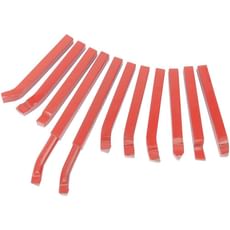
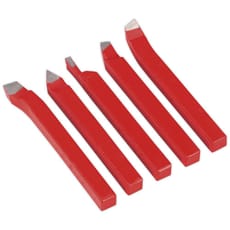
Cutting Tool Requirements: Assess the range of operations you'll perform—turning, facing, boring, threading, or parting off—and select comprehensive cutter sets that cover these needs. Square HSS tool bits (typically 8mm or 10mm) are versatile and can be ground to custom profiles for specialised applications.
Build Quality: Invest in precision-made accessories from reputable manufacturers like Sealey and Draper. Poor quality chucks or centres can introduce runout and vibration, compromising accuracy and surface finish whilst potentially creating safety hazards. Hardened steel construction and accurate machining are essential for reliable performance.
Clamping and Workholding: Consider specialised clamping kits and T-nut bolt sets for securing work to face plates or mounting accessories to your lathe bed. Adequate workholding is essential for both safety and precision. Check that clamping hardware matches the T-slots or mounting holes on your specific lathe model.
Popular Accessories
Enhance your lathe setup with these complementary items:
- Cutting tool grinding wheels and sharpening systems for maintaining HSS cutters
- Centre drills and spotting drills for accurate tailstock drilling operations
- Dial test indicators (DTIs) for precise workpiece alignment in four-jaw chucks
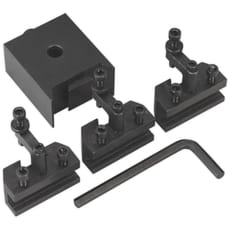
- Lathe tool holders and quick-change tool posts for efficient tool changes
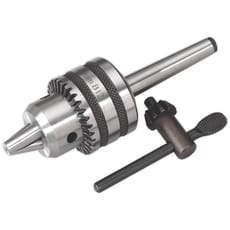
- Tailstock drill chucks in various capacities for drilling and reaming
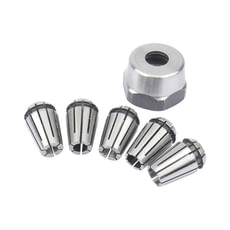
- Collet sets and collet chucks for precision holding of small diameter work
- Cutting fluids and lubricants suitable for metalworking operations
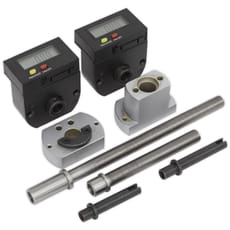
- Digital readout (DRO) systems for enhanced measurement accuracy
- Face shields and safety glasses meeting EN166 standards
- Work lights and magnifying lamps for detailed inspection
- Micrometers and vernier callipers for precision measurement
- Lathe bed protection covers to prevent damage from swarf
Safety Information
Working with lathes and their accessories requires strict adherence to safety protocols to prevent serious injury:
Personal Protective Equipment: Always wear appropriate eye protection meeting EN166 standards. Avoid loose clothing, jewellery, and ties that could become entangled. Secure long hair and never wear gloves when operating a lathe, as they can catch on rotating components. Steel toe-cap boots are recommended for workshop environments.
Chuck and Workpiece Security: Ensure all chuck jaws are properly tightened and remove the chuck key immediately after adjustment—never leave it in the chuck. Verify that face plates and work are securely mounted before starting the lathe. Check for adequate clearance before engaging the motor. A loose workpiece can become a dangerous projectile.
Cutting Tool Setup: Mount cutting tools at the correct height (typically on centre for most operations) and ensure adequate overhang—excessive projection causes chatter and tool breakage. Always advance cutting tools gradually to avoid dig-in and workpiece ejection. Use the cross-slide and compound rest locks when appropriate.
Speed Selection: Follow HSE guidelines and manufacturer recommendations for appropriate spindle speeds based on workpiece diameter and material. Larger diameters require slower speeds to maintain safe surface speeds. As a general rule, double the diameter means half the speed.
Machine Guarding: Ensure all guards are in place and functioning. Keep the work area clean and free from swarf accumulation, using brushes rather than hands to clear metal chips. Sharp swarf can cause serious cuts, and accumulated chips present slip hazards.
Electrical Safety: Ensure your lathe is properly earthed and connected to an appropriate 240v supply with suitable circuit protection. Use an RCD (residual current device) for additional protection, especially in damp workshop environments. Never operate equipment with damaged cables or plugs.
Frequently Asked Questions
What's the difference between a three-jaw and four-jaw chuck?
A three-jaw self-centring chuck automatically centres round or hexagonal stock as all jaws move simultaneously, making it quick and convenient for symmetrical workpieces. A four-jaw independent chuck allows each jaw to be adjusted separately, enabling you to centre irregular shapes, mount work off-centre deliberately, or achieve extremely precise centring for demanding applications. Three-jaw chucks are faster for production work, whilst four-jaw chucks offer superior accuracy and versatility.
Do I need a live centre or will a dead centre suffice?
A live centre (revolving centre) contains bearings that allow it to rotate with the workpiece, reducing friction and heat generation, which is essential for higher spindle speeds and longer operations. Dead centres are suitable for low-speed work but require lubrication and generate more heat. For most applications, a live centre is the better investment as it reduces wear on both the centre and workpiece, whilst allowing higher cutting speeds.
How do I know which morse taper size my lathe uses?
Check your lathe's manual or measure the existing tailstock accessories. MT2 (Morse Taper 2) is common on smaller benchtop lathes, whilst MT3 is typical for mid-sized lathes. The taper size determines which centres, drill chucks, and other tailstock accessories will fit your machine. You can also measure the large diameter of the taper—MT2 is approximately 18mm whilst MT3 is approximately 24mm.
Can I use wood lathe accessories on a metal lathe and vice versa?
Some accessories like morse taper centres are interchangeable if the taper size matches, but many items are application-specific. Metal lathe cutting tools are inappropriate for wood, and wood lathe tool rests won't withstand the forces of metalworking. Always use accessories designed for your specific lathe type and material. Check manufacturer specifications to ensure compatibility.
How often should I replace HSS cutting tools?
HSS cutting tools don't need replacing but require regular sharpening when they become dull, indicated by poor surface finish, increased cutting forces, or chattering. With proper grinding and maintenance, quality HSS cutters can last for years. Keep a selection of pre-ground profiles ready to minimise downtime during projects. Learn proper tool grinding techniques to restore tools to optimal cutting geometry.