

Lathes
Pay in 3 interest-free payments on purchases from £30-2000 with  . Learn more.
 Loading...
End of content
Error - No more pages to load
About Lathes
Lathes represent one of the most fundamental and versatile machine tools available to engineers, woodturners, and skilled craftspeople. By rotating a workpiece on a horizontal axis whilst applying cutting tools to its surface, lathes transform raw materials into precision-crafted cylindrical, conical, and spherical components with exceptional accuracy. From creating decorative furniture legs and artistic wooden bowls to machining steel shafts and fabricating replacement engineering parts, the lathe remains an indispensable tool across countless trades and industries.
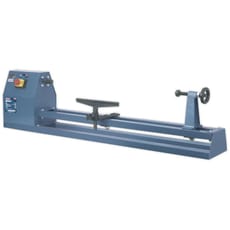
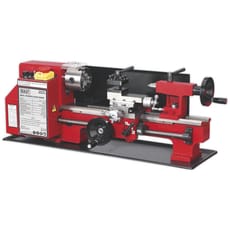
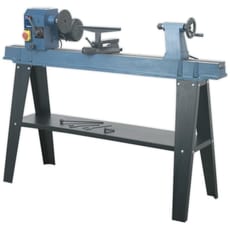
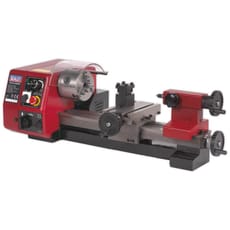
Tooled-Up.com stocks an extensive selection of lathes divided into two primary categories: wood lathes and metal lathes. Wood lathes are purpose-designed for turning timber into decorative and functional items, featuring extended bed lengths, tool rests for hand-held tools, and higher speed ranges suitable for working with softwoods, hardwoods, and composite materials. Metal lathes, by contrast, prioritise rigidity and precision for engineering applications, incorporating compound slides, graduated dials, and robust construction capable of withstanding the significant forces involved in cutting steel, aluminium, brass, and other metals. Available capacities range from compact benchtop models ideal for home workshops and small-scale projects to substantial floor-standing machines designed for demanding professional applications.
Modern lathes incorporate sophisticated features that enhance precision, versatility, and ease of use. Variable speed control allows operators to optimise cutting speeds for different materials and diameters, whilst digital readouts provide accurate dimensional feedback during machining operations. Threading capabilities, tailstock drilling functions, and quick-change tooling systems further expand the range of operations possible. Whether you're a professional machinist producing one-off components, a furniture maker creating bespoke turned pieces, or a hobbyist exploring model engineering, selecting the appropriate lathe capacity, build quality, and feature set ensures successful outcomes across all your turning projects.
Jargon Buster
- Swing Over Bed: The maximum diameter of workpiece that can be rotated above the lathe bed, measured in millimetres. A 300mm swing capacity means you can turn material up to 300mm in diameter, though actual working capacity may be less depending on tool rest positioning on wood lathes.
- Between Centres: The maximum length of material that can be mounted between the headstock and tailstock, determining the longest workpiece you can accommodate. Common specifications range from 500mm for compact models to over 1000mm for extended bed lathes.
- Headstock: The fixed housing at the left end of the lathe containing the motor, drive system, and main spindle. The headstock rotates the workpiece and typically features multiple speed settings via belt changes or electronic variable speed control.
- Tailstock: The movable component on the right end of the lathe bed that provides support for longer workpieces via centre points and can hold drilling tools for boring operations. The tailstock slides along the bed and locks in position as required.
- Chuck: The workholding device that mounts to the spindle nose and securely grips the workpiece. Wood lathes typically use scroll chucks with expanding jaws, whilst metal lathes employ three-jaw self-centring or four-jaw independent chucks for different workholding requirements.
- Tool Rest: On wood lathes, the adjustable support platform positioned close to the rotating workpiece that stabilises hand-held turning tools during operation. Metal lathes instead use a compound slide or tool post for rigid tool mounting and precise positioning.
Who Uses Lathes?
- Professional Woodturners: Craftspeople producing bespoke furniture components, artistic bowls and platters, decorative finials, and commissioned pieces for galleries and interior designers
- Engineering Machinists: Precision engineers manufacturing custom components, repairing damaged machinery parts, creating threaded fasteners, and fabricating bushings and shafts
- Model Engineers: Hobbyists building scale models of steam engines, locomotives, and mechanical devices requiring precisely machined metal components
- Furniture Makers and Joiners: Tradespeople creating chair legs, table supports, newel posts, spindles, and decorative wooden elements for bespoke furniture projects
- Maintenance Engineers: Site-based engineers and millwrights who fabricate replacement parts, repair damaged shafts and cylinders, and restore worn machinery components
- Pen Turners and Craft Workers: Artisans producing high-value turned items including writing instruments, bottle stoppers, decorative boxes, and specialist craft products
- Agricultural and Plant Engineers: Workshop-based mechanics repairing farm machinery and manufacturing replacement bushings, pins, shafts, and mechanical components
- Educational Establishments: Schools, colleges, and training centres teaching metalwork, engineering, woodwork, and design technology skills to students and apprentices
How to Choose the Right Lathes
Determine Your Primary Application: Wood lathes and metal lathes are fundamentally different machines optimised for specific materials. If you work exclusively with timber, a wood lathe offers appropriate features and better value. For metalworking, engineering tasks, and precision machining, invest in a metal lathe despite the higher initial cost.
Consider Capacity Requirements: Measure the largest diameter and longest workpiece you anticipate turning, allowing margin for future projects. Wood lathe capacities typically range from 250mm to 450mm swing with between-centres distances of 500mm to 1000mm. Metal lathes commonly offer 200mm to 300mm swing for benchtop models, with similar length capacities depending on bed configuration.
Evaluate Speed Range and Control: Variable speed control proves highly desirable for both wood and metal turning. Large diameter workpieces require slower speeds (300-600 RPM) to maintain safe surface speeds, whilst small delicate work and finishing operations benefit from higher speeds (2000-3000 RPM). Electronic variable speed offers convenience, though stepped pulley systems remain robust and reliable alternatives.
Assess Motor Power: More powerful motors handle larger workpieces and tougher materials without stalling. Wood lathes typically feature 500W to 1000W motors, sufficient for most hardwoods and bowl turning. Metal lathes require greater power, with 750W to 1500W motors being common for workshop models. Ensure your workshop electrical supply can support the motor—most larger lathes require 240v single-phase supply with 13A or 16A circuits.
Check Build Quality and Rigidity: Cast iron construction provides superior vibration damping, stability, and longevity compared to pressed steel or fabricated frames. Examine the bed for straightness, inspect the fit of moving components, and check for excessive play in the tailstock and carriage. Quality brands including Record Power, Axminster, and Warco offer better precision and extended service life.
Factor in Available Space: Measure your workshop carefully, allowing clearance around the lathe for material loading, tool access, and safe operation. Benchtop lathes save floor space but require a sturdy workbench at appropriate working height. Floor-standing models offer greater capacity and inherent stability but demand dedicated floor space and level mounting surfaces.
Budget for Accessories: The lathe itself represents only part of your total investment. Wood turners need chucks, faceplates, turning tools, sharpening equipment, and often extraction systems. Metal lathe users require cutting tools, chuck keys, measuring instruments, centres, and potentially milling attachments or quick-change tool posts for efficient operation.
Popular Accessories
- Lathe Chucks: Four-jaw independent chucks, three-jaw self-centring chucks, and scroll chucks with expanding jaws for secure workholding across different applications
- Cutting Tools: High-speed steel (HSS) or carbide-tipped lathe tools including turning tools, facing tools, parting tools, boring bars, and threading tools for metalwork
- Wood Turning Tools: Spindle gouges, bowl gouges, skew chisels, parting tools, scrapers, and specialist hollowing tools for vessel work
- Centres and Drives: Live centres with bearing-supported rotation, dead centres, drive centres with spurs, and revolving centres for tailstock support
- Faceplates and Backplates: For mounting irregular workpieces, enabling bowl turning on wood lathes, and securing large diameter work
- Tool Rests: Extended tool rests, curved rests for bowl turning, and adjustable height rests for improved tool control and operator comfort
- Measuring Equipment: Digital callipers, micrometers, dial test indicators, centre finders, and vernier gauges for precision metalworking operations
- Extraction Systems: Dust and swarf extraction equipment to maintain clean, healthy workshop environments in compliance with HSE guidance and COSHH regulations
- Coolant Systems: Cutting fluid delivery systems for metal lathes to extend tool life, improve surface finish, and enhance dimensional accuracy
- Quick-Change Tool Posts: For metal lathes, enabling rapid tool changes, repeatable tool positioning, and improved productivity in production environments
Safety Information
Lathe operation presents significant hazards requiring strict safety protocols in accordance with HSE guidance. Before operating any lathe, remove jewellery, secure long hair, and avoid loose clothing that could become entangled in rotating machinery. Never wear gloves when operating a lathe, as they can catch on rotating components and pull your hand into the machine with devastating consequences.
Eye protection conforming to BS EN 166 is mandatory at all times—flying metal chips or wood shavings can cause serious injury. Safety glasses provide minimum protection, though full face shields offer superior coverage, particularly when turning at high speeds or working with brittle materials that may shatter. Hearing protection may be necessary during extended operations or when working with larger machines.
Ensure workpieces are securely mounted before starting the lathe. On wood lathes, verify the tool rest is positioned correctly and locked firmly—it should sit close to the workpiece without touching when rotated by hand. On metal lathes, confirm cutting tools are properly secured in the tool post and the workpiece is gripped firmly in the chuck with no projecting chuck key, which represents a serious projectile hazard.
Always rotate the workpiece by hand through a complete revolution before switching on the motor to check for clearance, balance, and secure mounting. Start at lower speeds when turning irregularly shaped or unbalanced work, increasing speed gradually only once the workpiece is rounded. Maintain a clean work area free from swarf, offcuts, and tools that could cause trips or interfere with safe machine operation.
Electrical safety remains paramount—ensure your lathe is properly earthed and protected by an RCD (residual current device) conforming to current wiring regulations. Never adjust the tool rest, change speeds, measure workpieces, or remove swarf whilst the lathe is running. If you're new to lathe work, seek proper training from an experienced operator or attend a recognised course before attempting independent operation.
Frequently Asked Questions
What's the difference between a wood lathe and a metal lathe?
Wood lathes are designed for hand-held tool operation with an adjustable tool rest for support, typically running at higher speeds (up to 3000 RPM) suitable for timber. Metal lathes feature rigid tool mounting systems, compound slides for precise tool positioning, graduated dials for dimensional control, and run at lower speeds appropriate for cutting steel, aluminium, and other metals. Metal lathes are substantially more robust and expensive due to the significant forces involved in metalworking operations.
Can I use a metal lathe for woodworking or vice versa?
Whilst technically possible to turn wood on a metal lathe for specific projects, it's not ideal as metal lathes lack proper tool rests for hand-held tools and fine wood dust can damage precision components. Never attempt to cut metal on a wood lathe—the forces involved will damage the machine, and it presents serious safety risks due to inadequate rigidity and improper tool mounting capabilities.
What size lathe do I need for pen turning?
Pen turning requires minimal capacity—a compact wood lathe with 250mm swing and 500mm between centres proves more than adequate. Focus instead on smooth running characteristics, good speed control in the 1000-3000 RPM range, and a quality chuck system. Many pen turners prefer smaller benchtop models that occupy less workshop space and are easier to transport to craft fairs and demonstrations.
Do I need three-phase power for a lathe?
Most benchtop and small workshop lathes run on standard 240v single-phase supply available in UK homes and workshops through conventional 13A sockets. Larger industrial lathes may require three-phase power, but these are generally beyond the scope of typical workshop use. Always verify electrical requirements before purchase and ensure your supply circuit can handle the motor's current draw safely.
How much space do I need for a lathe?
Allow at least 1.5 metres of clearance to the left of the headstock for long material overhang, and 1 metre behind the lathe for operator movement and safe working posture. Benchtop lathes require a sturdy bench at comfortable working height (typically 900-1000mm). Floor-standing models need level concrete floors capable of supporting 100-200kg without vibration. Also consider space for tool storage, material racks, extraction equipment, and safe access around the machine during operation.