

Lawn Spreaders
Pay in 3 interest-free payments on purchases from £30-2000 with  . Learn more.
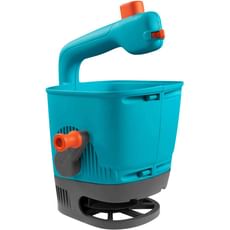
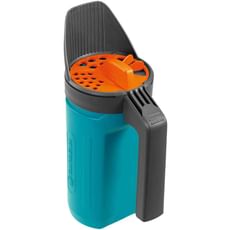
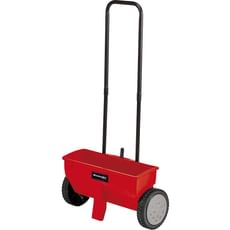
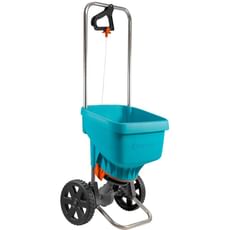







 Loading...
End of content
Error - No more pages to load
About Lawn Spreaders
Lawn spreaders are indispensable tools for maintaining healthy lawns, gardens, and outdoor spaces throughout the year. These practical devices enable even distribution of grass seed, fertiliser, weed and feed treatments, and rock salt across large areas, eliminating the inconsistency and physical strain of manual broadcasting. Whether you're a professional groundskeeper maintaining sports pitches or a homeowner caring for your garden, the right spreader transforms time-consuming tasks into efficient, professional-quality applications.
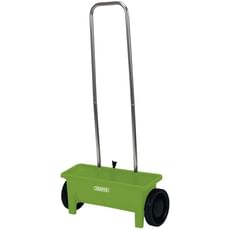
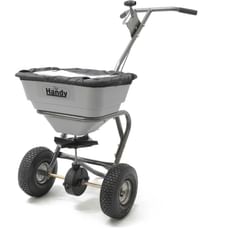
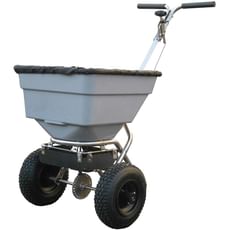
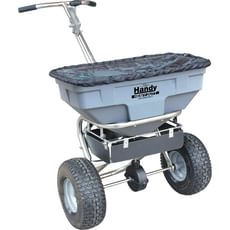
Two main types dominate the market: broadcast spreaders (also called rotary spreaders) use a spinning disc mechanism to distribute material in a wide arc, typically covering 1.5 to 3 metres with each pass, making them ideal for open lawns where speed matters. Drop spreaders release material straight downwards through calibrated openings, providing precise control along borders and pathways. Tooled-Up.com stocks both configurations from trusted brands including Handy, Sealey, Gardena, Einhell, and Draper, ranging from compact handheld models for small gardens to heavy-duty push spreaders with 25kg+ hoppers for extensive grounds.
Modern spreaders incorporate adjustable flow controls for accurate application rates, with hopper capacities typically between 12 and 30 litres. Cordless battery-powered models have gained popularity, offering motorised distribution that significantly reduces physical effort when tackling slopes or covering large properties. For professionals and councils requiring winter gritting capabilities, stainless steel models resist the corrosive effects of rock salt, ensuring longevity in demanding applications. Construction materials vary from lightweight polypropylene for occasional domestic use to robust aluminium frames with pneumatic tyres designed for commercial groundskeeping.
Jargon Buster
- Broadcast Spreader: A spreader employing a spinning disc to propel material outwards in a wide fan pattern, covering ground quickly but requiring careful control near borders to prevent overspreading onto flower beds or paving.
- Drop Spreader: Releases material vertically downwards through the hopper base in a controlled line matching the spreader's width, offering precision for applications near sensitive areas but requiring more passes to cover equivalent ground.
- Hopper Capacity: The volume of material the spreader holds, measured in litres or kilograms. Capacities range from 3 litres for handheld units to 30kg for commercial models, with larger hoppers reducing refilling frequency but increasing overall weight.
- Flow Rate Control: An adjustable mechanism regulating how much material disperses per metre travelled. Numbered settings correspond to manufacturer recommendations on seed and fertiliser packaging, preventing over-application and product waste.
- Spread Width: The coverage achieved in a single pass, ranging from 30cm for drop spreaders to 4 metres for broadcast models. Wider spread widths increase efficiency on open lawns but demand greater care near boundaries.
- Pneumatic Tyres: Air-filled wheels providing superior traction and manoeuvrability across uneven terrain compared to solid plastic wheels, particularly beneficial on sloped gardens or rough ground.
Who Uses Lawn Spreaders?
Lawn spreaders serve professionals and DIY enthusiasts across diverse applications:
- Landscape Gardeners and Groundskeepers: Maintaining sports grounds, golf courses, parks, and commercial landscaping with seasonal fertiliser and seed programmes
- Local Authorities and Facilities Managers: Winter gritting of car parks, pathways, public spaces, and council properties
- Grounds Maintenance Contractors: Delivering lawn care services across multiple residential and commercial properties
- Estate Managers and Property Maintenance Teams: Caring for extensive lawns, driveways, and grounds on large private estates
- Schools, Universities, and Sports Clubs: Maintaining playing fields, pitches, and campus grounds throughout the year
- Agricultural Workers and Smallholders: Distributing seed and treatments across paddocks, grazing areas, and field margins
- Homeowners and DIY Enthusiasts: Seasonal lawn care including spring seeding, summer feeding, autumn weed treatments, and winter salt application
- Allotment Holders and Keen Gardeners: Applying lime, fertiliser, and soil conditioners across vegetable plots and growing areas
How to Choose the Right Lawn Spreaders
Area Size and Property Layout: Gardens under 100 square metres suit handheld spreaders or compact push models with 12-15kg hoppers. Properties between 100-500 square metres benefit from broadcast spreaders with 18-20kg capacities. Larger estates or commercial grounds require heavy-duty models with 25kg+ hoppers or towable versions for ride-on mowers. Consider terrain complexity—intricate layouts with borders favour drop spreaders for precision, whilst open lawns suit faster broadcast types.
Material Compatibility and Corrosion Resistance: Regular rock salt application demands stainless steel or specifically salt-resistant models. The corrosive nature of de-icing salt rapidly deteriorates standard steel components, particularly in the UK's damp climate. For fertiliser-only use, polypropylene hoppers on aluminium frames provide adequate durability at lower cost. The Tooled-Up range includes both corrosion-resistant stainless steel models and standard materials for various budgets and requirements.
Construction Quality and Mechanism: Professional users should prioritise robust frames, commercial-grade gears, and pneumatic tyres for daily reliability. DIY users applying treatments twice yearly can opt for lighter-duty construction. Check for adjustable spread patterns and flow control dials calibrated with clear numbering—essential for following manufacturer application rates and avoiding costly over-application or patchy results.
Power Source Considerations: Traditional push spreaders require no power source but demand physical effort, especially when fully loaded. Cordless 18v battery-powered models significantly reduce fatigue on extensive properties or sloped terrain, particularly valuable for elderly users or professionals covering multiple sites daily. Verify whether batteries and chargers are included or check compatibility with existing tool platforms you own.
Storage and Maintenance Requirements: Consider available shed or garage space. Some models feature removable hoppers or folding handles for compact storage. Plastic hoppers are lighter and inherently rust-proof, whilst metal versions offer greater stability when fully loaded. All spreaders require thorough cleaning after use, especially after salt application, to prevent mechanism jamming and corrosion.
Popular Accessories
- Calibration Trays and Measuring Kits: Help establish precise flow rates for different materials, ensuring accurate application and preventing product waste or lawn damage
- Protective Storage Covers: Weather-resistant covers protect stored spreaders from moisture and dust during off-season storage, extending component life
- Replacement Hoppers: Allow dedicated use for different materials, preventing cross-contamination between fertilisers, herbicides, and rock salt
- Edge Guards and Deflector Shields: Attachments preventing material spreading beyond desired boundaries, particularly useful near flower beds, ponds, and paved areas
- Pneumatic Tyre Upgrade Kits: Convert solid wheels to air-filled tyres for improved manoeuvrability and reduced lawn compaction on uneven ground
- Tow Hitch Adaptors: Universal connectors ensuring compatibility between towable spreaders and various lawn tractors, ATVs, or compact utility vehicles
Safety Information
Personal Protective Equipment: Always wear suitable gloves when handling fertilisers, herbicides, or rock salt, as these substances can irritate or burn skin. Safety goggles protect eyes from wind-blown particles, particularly when operating broadcast spreaders in breezy conditions. Consider a dust mask when spreading fine powders in dry weather to avoid respiratory irritation.
Chemical Handling and COSHH Compliance: Consult COSHH data sheets for all chemicals before application, following manufacturer instructions for safe handling, storage, and disposal. Never exceed recommended application rates—over-fertilising damages lawns, wastes money, and pollutes waterways through run-off. Store products securely away from children, pets, and food preparation areas in well-ventilated spaces.
Operating Precautions: Maintain stable footing when pushing loaded spreaders, especially on slopes or wet grass where traction reduces. Clear the application area of obstacles, pets, and bystanders before commencing work. Ensure hoppers are properly secured before operation to prevent spillage. For cordless models, follow battery safety guidelines including using only manufacturer-approved chargers and avoiding charging in extreme temperatures.
Winter Gritting Considerations: When spreading rock salt, remember that excessive application damages plants, corrodes concrete surfaces, and harms wildlife. Target only essential pathways and driveways. Always clean spreaders thoroughly with water after salt use to prevent accelerated corrosion, particularly if using non-stainless models. Consider environmental impact near drainage systems and water features.
Frequently Asked Questions
Can I use any lawn spreader for rock salt during winter?
Not all spreaders are suitable for rock salt application. Standard steel components corrode rapidly when exposed to salt, particularly in the UK's damp climate. Check manufacturer specifications before use—many basic models explicitly warn against corrosive materials. For regular winter gritting, invest in stainless steel or specifically salt-resistant models. Always clean thoroughly after salt use, even with resistant models, to maximise longevity.
What's the difference between broadcast and drop spreaders?
Broadcast spreaders distribute material in a wide arc using a spinning disc mechanism, covering ground quickly but with less precision at boundaries. Drop spreaders release material straight downwards in a controlled line, offering accuracy for work near borders but requiring more passes to cover equivalent areas. Choose broadcast for open lawns where speed matters, drop for gardens with intricate layouts, flower beds, or where precise control prevents waste.
How do I calibrate my spreader for different products?
Most spreaders feature numbered flow control dials. Fertiliser and seed manufacturers provide recommended settings on packaging corresponding to these numbers. For accurate calibration, mark out a measured area (such as 10 square metres), spread material at a mid-range setting, collect and weigh what's distributed, then adjust the flow control until you achieve the recommended application rate per square metre. Re-calibrate when switching between different products or brands.
Can I leave fertiliser in my spreader between applications?
Never leave material in hoppers for extended periods. Fertilisers and chemicals absorb moisture from ambient air—particularly problematic in the UK's damp climate—causing clumping, corrosion, and mechanism jamming. Always empty hoppers completely after use, rinse with water to remove residue, and store the spreader in a dry shed or garage. This simple maintenance prevents costly repairs and ensures reliable operation next season.
What hopper capacity do I need for my lawn size?
As a general guide, 12-15kg hoppers suit gardens up to 300 square metres, 18-20kg capacities cover 300-600 square metres, whilst 25kg+ hoppers are appropriate for larger properties or commercial use. Remember that larger capacities reduce refilling frequency but significantly increase overall weight when fully loaded, making spreaders harder to manoeuvre, particularly on slopes or when turning. Balance capacity against your physical capability and terrain characteristics.