

Lighting Testers

Pay in 3 interest-free payments on purchases from £20-£3000 with  . Learn more.
 Loading...
End of content
Error - No more pages to load
About Lighting Testers
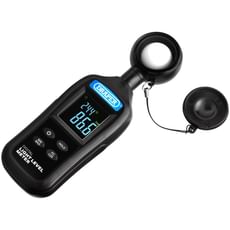
Lighting testers, also known as light level meters or lux meters, are precision diagnostic instruments designed to measure illumination levels across workplaces, commercial premises, and domestic environments. These essential tools help electricians, facilities managers, and health and safety professionals ensure that lighting installations comply with UK building regulations and Health and Safety Executive (HSE) requirements, which mandate minimum illumination levels for different work environments. Whether you're commissioning a new lighting system, conducting workplace assessments, or verifying compliance with HSE standards, a reliable lighting tester delivers accurate readings in lux or foot-candles to support professional documentation.
Modern digital light level meters combine precision measurement technology with user-friendly displays, making them accessible to both professional tradespeople and DIY enthusiasts. These handheld instruments typically feature LCD screens that provide instant readings, with many models offering data hold functions, minimum and maximum reading capture, and automatic ranging capabilities. The lighting testers available from Tooled-Up.com include quality instruments from trusted brands like Draper and Faithfull, built to withstand the demands of site work whilst delivering consistent, accurate measurements essential for compliance documentation.
The importance of proper illumination testing cannot be overstated, particularly in commercial and industrial settings where inadequate lighting can lead to accidents, reduced productivity, and potential legal issues. Regular light level assessments help identify areas requiring improved lighting, verify that new installations meet specifications, and ensure ongoing compliance with workplace safety standards. With LED lighting now standard across UK installations, modern lighting testers feature spectral response calibration that accurately measures contemporary light sources, providing professionals with the reliable data needed for comprehensive environmental assessments.
Jargon Buster
- Lux (lx)
- The SI unit of illuminance, measuring the amount of light falling on a surface. One lux equals one lumen per square metre. UK workplace regulations specify minimum lux levels for different tasks, typically ranging from 50 lux for walkways to 500 lux for detailed work.
- Foot-Candle (fc)
- An imperial unit of light measurement still occasionally referenced, particularly in older specifications. One foot-candle equals approximately 10.764 lux. Most UK lighting testers display readings in lux as standard.
- Photodetector/Photocell
- The light-sensitive sensor component of a lighting tester that converts light energy into an electrical signal. The quality and spectral response of the photodetector directly affects measurement accuracy.
- Spectral Response
- How a light meter responds to different wavelengths of light. Quality meters are designed to match the human eye's response curve (photopic response) for accurate readings across various light sources including LED, fluorescent, and incandescent.
- Data Hold Function
- A feature that freezes the current reading on the display, allowing you to take measurements in awkward positions or poorly lit areas and read the results afterwards.
- Auto-Ranging
- Automatic selection of the appropriate measurement range, eliminating the need to manually switch scales and preventing inaccurate readings from range overflow.
Who Uses Lighting Testers?
Lighting testers serve a diverse range of professionals and users across various industries:
- Electricians and Electrical Contractors – Verifying lighting installations meet specification and commissioning new systems in commercial and domestic properties
- Health and Safety Officers – Conducting workplace assessments and ensuring HSE compliance across industrial and commercial environments
- Facilities Managers – Monitoring lighting levels in offices, factories, warehouses, and commercial premises to maintain optimal working conditions
- Building Inspectors – Checking compliance with Building Regulations Part L and other standards during construction and refurbishment projects
- Architects and Interior Designers – Assessing existing conditions and verifying design implementations in new and renovated spaces
- Maintenance Engineers – Identifying areas requiring lamp replacement or lighting upgrades as part of routine maintenance programmes
- Photographers and Videographers – Measuring ambient light conditions for professional shoots and studio work
- Horticulturalists – Monitoring light levels for plant growth in greenhouses and indoor growing facilities
- Landlords and Property Managers – Ensuring rental properties meet minimum lighting standards and maintaining safe environments for tenants
- DIY Enthusiasts and Homeowners – Planning home improvements and optimising domestic lighting for comfort and energy efficiency
How to Choose the Right Lighting Testers
Selecting the appropriate lighting tester depends on your specific requirements and working environment. Consider these key factors:
Measurement Range: Ensure the meter covers the lux levels you'll encounter. Basic models typically measure from 0-50,000 lux, suitable for most indoor applications. If you're working outdoors or in very bright environments, consider a meter with an extended range up to 200,000 lux or higher.
Accuracy and Resolution: Professional applications requiring compliance documentation need higher accuracy specifications, typically ±3-4% of reading. Resolution (the smallest change the meter can detect) is equally important – look for 0.1 lux resolution for precision work.
Display Type: Digital LCD displays are standard, but consider screen size and backlighting if you'll be working in dimly lit areas. The lighting testers stocked at Tooled-Up feature clear, easy-to-read displays that reduce errors and speed up assessments, with some models offering dual displays showing both light and temperature readings simultaneously.
Additional Functions: Data hold, minimum/maximum recording, and averaging functions greatly enhance usability. Some advanced models offer data logging capabilities, allowing you to record measurements over time for trend analysis or creating detailed reports for clients.
Build Quality and Durability: Site work demands robust construction. Look for meters with protective housings, quality switches, and ergonomic designs. Pocket-sized models are highly portable for electricians and contractors working across multiple sites.
Calibration and Certification: Professional users may require traceable calibration certificates for compliance purposes. Check whether the manufacturer offers calibration services and how frequently recalibration is recommended.
Power Source: Most handheld lighting testers run on standard 9V batteries or AAA cells. Consider battery life specifications, especially if conducting extensive surveys, and look for auto-power-off features to conserve battery life.
Popular Accessories
- Carrying Cases – Protective pouches or hard cases to prevent damage during transport and storage on site
- Replacement Batteries – Spare 9V or AAA batteries to avoid interruptions during site work
- Calibration Services – Professional recalibration to maintain accuracy and compliance certification
- Replacement Sensors – Spare photocells for meters with detachable sensor heads
- Data Logging Software – PC applications for downloading and analysing stored measurements from advanced models
- Multifunction Testers – Combined instruments measuring light, sound, temperature, and humidity for comprehensive environmental assessments
- Documentation and Report Templates – Pre-formatted compliance report sheets for HSE workplace assessments
Frequently Asked Questions
What lux levels are required in UK workplaces?
The HSE recommends minimum illuminance levels based on task requirements: 50 lux for corridors and circulation areas, 100 lux for warehouses and loading bays, 200 lux for general offices, and 500 lux for detailed work such as drawing or precision assembly. Specific industries may have additional requirements under sector-specific regulations.
How often should lighting levels be tested?
Regular testing is recommended as part of routine workplace assessments, typically annually or when changes are made to lighting installations. Immediate testing is required after installing new lighting systems, following complaints about lighting quality, or if accident reports suggest inadequate illumination may be a contributing factor.
Can lighting testers measure LED lights accurately?
Quality digital light meters with proper spectral response calibration accurately measure LED lighting. Older or budget meters designed primarily for incandescent or fluorescent sources may give inaccurate readings with LED installations. When purchasing a lighting tester, verify it's suitable for modern LED light sources, which are now standard in UK commercial and domestic installations.
Do I need a certified meter for compliance testing?
For formal HSE compliance documentation or building regulation submissions, using a calibrated meter with traceable certification is strongly recommended, though not always legally required. Many clients, particularly in commercial and industrial sectors, will expect to see calibration certificates accompanying light level reports. Regular recalibration (typically annually) maintains accuracy and professional credibility.
What's the difference between a lux meter and a light meter?
The terms are essentially interchangeable – both measure illuminance. "Lux meter" specifically refers to meters displaying readings in the metric lux unit, whilst "light meter" is a more general term that may include devices measuring in foot-candles. In the UK, lux is the standard measurement unit, so most meters sold for professional use are technically lux meters displaying results in accordance with UK and European standards.