

Line Pins
Pay in 3 interest-free payments on purchases from £30-2000 with  . Learn more.
 Loading...
End of content
Error - No more pages to load
About Line Pins
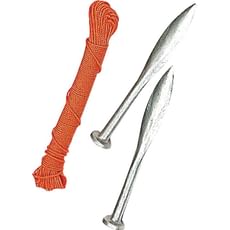
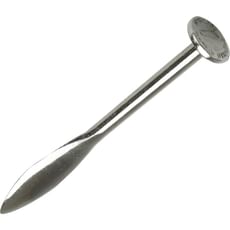
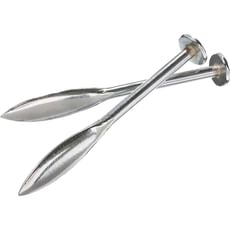
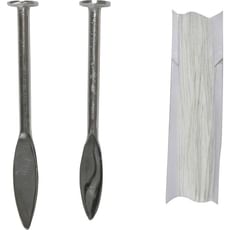
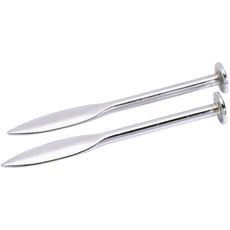
Line pins are essential tools for bricklayers, groundworkers, and builders who need to create perfectly straight, level courses of brickwork or mark out accurate horizontal and vertical lines on site. These deceptively simple yet indispensable tools consist of sturdy metal pins, typically made from drop-forged or high-carbon steel, which are driven into mortar joints or soft ground to anchor a builder's line. The taut line then serves as a visual guide to ensure consistent alignment and spacing throughout masonry work.
Most line pins feature either large flat heads or specially designed profiles that securely hold the line in place without slipping, even when the cord is under tension. Professional-grade line pins available from Tooled-Up.com are manufactured from hardened and tempered steel, often with protective finishes such as chrome plating or zinc coating to resist corrosion on damp building sites. Standard lengths typically range from 150mm to 180mm, with 160mm being the most common size for general bricklaying applications.
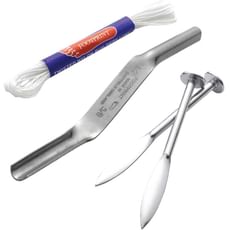
Quality makes a significant difference with line pins. Premium brands like FootPrint, Faithfull, Draper, and Spear and Jackson produce line pins engineered to withstand repeated hammering and the rigours of daily site use. Sets usually include a pair of pins along with builder's line, providing everything needed to start marking out accurately. The Tooled-Up range includes both individual line pins and complete sets with accompanying line cord for convenient all-in-one solutions.
Jargon Buster
- Drop Forged: A manufacturing process where heated metal is shaped under extreme pressure between dies, creating tools with superior strength and durability compared to cast alternatives. Drop-forged line pins resist bending and breaking even under heavy use.
- Hardened and Tempered: A heat treatment process that increases the toughness and wear resistance of steel tools. Hardening makes the metal more resistant to deformation, whilst tempering reduces brittleness to prevent snapping.
- Builder's Line: A strong, high-visibility cord (typically nylon or polyester) stretched between line pins to create a reference guide for alignment. Available in various colours including fluorescent yellow and orange for improved visibility.
- Course: A horizontal layer of bricks or blocks in masonry work. Line pins help ensure each course is laid perfectly straight and level.
- Chrome Plated: A protective coating applied to steel tools that provides excellent corrosion resistance and a smooth, durable finish that's easy to clean.
- Zinc Plated: A galvanised coating that protects steel from rust and weathering, ideal for tools exposed to moisture on building sites.
Who Uses Line Pins?
- Bricklayers and Blocklayers: Primary users who rely on line pins daily to maintain accurate coursing and alignment in masonry construction
- Groundworkers: For setting out foundations, trenches, and drainage runs with precision
- Landscapers: When constructing garden walls, raised beds, and paving with consistent levels
- General Builders: For various marking and alignment tasks across residential and commercial projects
- Construction Site Foremen: For setting out and marking building lines during initial site preparation
- DIY Enthusiasts: Homeowners undertaking garden wall construction, patio laying, or extension projects
- Heritage and Restoration Specialists: When repointing or rebuilding historic masonry requiring traditional techniques
- Agricultural Builders: For constructing farm buildings, boundary walls, and agricultural structures
How to Choose the Right Line Pins
Material and Construction: Look for drop-forged steel construction rather than pressed or cast alternatives. Drop-forged pins offer superior strength and longevity, withstanding thousands of impacts without bending or breaking. Hardened and tempered steel provides the ideal balance of toughness and resilience.
Protective Finish: Choose chrome-plated or zinc-plated pins for corrosion resistance, particularly important given the damp conditions typical on building sites. Chrome plating offers the most durable protection and stays cleaner, whilst zinc plating provides excellent rust resistance at a lower cost point.
Pin Length: Standard 150-160mm pins suit most general bricklaying work, providing sufficient length to anchor securely in mortar joints whilst remaining manageable. Longer pins may be beneficial for groundwork or when working with particularly thick walls.
Head Design: Large flat heads prevent the builder's line from slipping off under tension. Some designs feature notches or grooves specifically engineered to grip the line securely. Check that the head profile suits your preferred line attachment method.
Set Contents: Consider whether you need just the pins or a complete set including builder's line. Many tradespeople at Tooled-Up choose complete sets for convenience and guaranteed compatibility between pins and cord.
Brand Reputation: Established manufacturers like FootPrint, Faithfull, and Draper have proven track records for producing reliable line pins that stand up to professional use. These brands typically offer better quality control and more consistent performance than budget alternatives.
Popular Accessories
- Builder's Line: Replacement cord in various lengths, typically 18-30 metres, available in high-visibility colours
- Line Blocks: Alternative line holders that attach to brick corners without requiring pins
- Brick Jointers: Tools for finishing mortar joints, often sold as complementary items with line pins
- Spirit Levels: Essential for checking vertical and horizontal accuracy alongside your line work
- Lump Hammers: For driving line pins into mortar joints or hard ground
- Trowels: Bricklaying trowels, pointing trowels, and jointing tools for complete masonry work
- Line Winders: For neatly storing and managing builder's line between uses
- Tape Measures: For accurate spacing when positioning line pins along a wall run
Frequently Asked Questions
How do I prevent the builder's line from slipping off line pins?
Ensure you're using pins with properly designed heads featuring adequate surface area or notches. Wind the line around the pin head several times or use a simple loop knot. Maintain proper tension in the line, and check that your pins are driven firmly into the mortar joint at a slight angle for maximum grip.
What's the difference between budget and professional line pins?
Professional pins from established brands use drop-forged, hardened steel that resists bending even after thousands of uses. Budget pins are often made from softer pressed steel that bends easily, has inconsistent dimensions, and lacks protective coatings, leading to rust. The modest additional investment in quality pins pays for itself through longevity and reliability.
Can I use line pins for groundwork as well as bricklaying?
Yes, line pins are versatile tools suitable for both applications. For groundwork in firm soil, you may need to strike them harder to achieve secure anchorage. Some tradespeople prefer slightly longer pins for ground marking, though standard 160mm pins work adequately for most site setting-out tasks.
How should I maintain my line pins?
Clean off mortar and debris after each use before it hardens. Store pins in a dry location to prevent rust, particularly if they have zinc rather than chrome plating. Check occasionally for bending or damage to the head, and replace pins that have become significantly deformed as they won't hold the line securely.
Do line pins come with builder's line included?
This varies by product. Some line pins are sold individually or in pairs without cord, whilst others come as complete sets including 18 metres or more of builder's line. Check the product specifications carefully – sets offer better value if you need both components, whilst experienced tradespeople often prefer to purchase pins separately and choose their preferred line type and length independently.