

Lockers
Pay in 3 interest-free payments on purchases from £30-2000 with  . Learn more.

 Loading...
End of content
Error - No more pages to load
About Lockers
Lockers provide essential secure storage solutions for workshops, factories, gyms, schools, and commercial premises across the UK. These robust metal cabinets offer individual compartments where employees, tradespeople, and site workers can safely store personal belongings, work clothing, tools, and valuables. Modern locker systems combine durability with practical features such as ventilation, cylinder locks, and internal hanging rails, making them indispensable for any workplace requiring organised personal storage.
The locker range at Tooled-Up.com encompasses single door, double door, and multi-door configurations to suit different space requirements and user numbers. Constructed from heavy-gauge steel with powder-coated finishes, professional lockers withstand the demanding conditions of industrial environments whilst providing years of reliable service. Ventilated door designs promote air circulation, preventing odours and moisture build-up—particularly important when storing work boots, protective clothing, or damp garments.
Whether equipping a busy workshop, construction site welfare facility, or commercial premises, choosing the right locker configuration ensures efficient use of space whilst giving users secure, personal storage. Standard features typically include reinforced doors, recessed handles, clothes hanging bars, and cylinder locks with multiple keys, providing both security and convenience for daily use.
Jargon Buster
- Cylinder Lock: A pin-tumbler locking mechanism operated by a key, offering standard security for locker doors. Each locker typically comes with two or more keys and can be re-keyed if required.
- Ventilated Doors: Locker doors featuring perforations or slots that allow air circulation whilst maintaining privacy and security. Essential for preventing mildew and odours when storing clothing or footwear.
- Powder Coating: A durable finish applied electrostatically then cured under heat, creating a hard-wearing surface resistant to chipping, scratching, and corrosion—ideal for workshop environments.
- Clothes Rail/Hanging Bar: An internal horizontal rail positioned near the top of the locker compartment, allowing garments to be hung on hangers rather than folded.
- Nest of Lockers: Multiple individual locker compartments contained within a single frame unit, maximising storage capacity whilst minimising floor space.
- Cam Lock: A simple rotating lock mechanism often used on smaller lockers, operated by turning a key 90 or 180 degrees to engage the locking bolt.
Who Uses Lockers?
Lockers serve a diverse range of professional and commercial environments:
- Tradespeople and Construction Workers: Storing personal belongings, work clothing, and hand tools on building sites and in workshop facilities
- Manufacturing and Factory Workers: Securing personal items and changing into protective workwear in industrial settings
- Warehouse and Logistics Staff: Keeping valuables safe during shifts in distribution centres and storage facilities
- Facilities Managers: Equipping changing rooms, staff rooms, and welfare facilities in commercial buildings
- Gym and Leisure Centre Operators: Providing secure storage for members' belongings during exercise sessions
- Educational Institutions: Offering staff and students personal storage in schools, colleges, and training centres
- Healthcare Facilities: Enabling medical staff to store personal items and change into uniforms securely
- Retail and Hospitality Staff: Storing personal belongings away from customer-facing areas
- Security and Emergency Services: Providing secure storage for uniforms, equipment, and personal effects
How to Choose the Right Lockers
Number of Users: Calculate how many individual storage compartments you require. Single-door units suit low-capacity needs, whilst multi-door configurations maximise capacity in limited floor space. Consider future expansion when planning your locker provision.
Available Space: Measure your installation area carefully, accounting for door opening clearance and access pathways. Standard lockers typically measure 1850mm in height, but width and depth vary depending on the configuration—single-door units are wider than multi-door alternatives.
Storage Requirements: Assess what users need to store. Full-height lockers with hanging rails suit those storing coats and overalls, whilst smaller compartments suffice for personal valuables and small items. Tooled-Up stocks various configurations to match different storage needs.
Ventilation Needs: Ventilated doors are essential when storing work clothing, boots, or PPE that may be damp or develop odours. Solid doors offer greater privacy and are better suited to storing valuable equipment or documents.
Security Level: Standard cylinder locks provide adequate security for most applications. Consider whether master-key systems are required for management access, or whether individual key control is preferable.
Environment and Durability: Powder-coated steel construction withstands workshop and industrial environments. Consider the locker's gauge thickness and finish quality—heavier-gauge steel offers greater resistance to impacts and forced entry.
Internal Features: Look for practical additions such as coat hooks, hanging rails, shelf options, and vanity mirrors. These features enhance daily usability and user satisfaction.
Popular Accessories
- Padlocks: High-security padlocks for lockers with hasp fittings, offering user-controlled security
- Locker Stands: Raising base plinths for easier cleaning beneath lockers and improved floor-level hygiene
- Sloping Tops: Angled top sections preventing dust accumulation and discouraging storage on top of units
- Number Plates: Adhesive or magnetic identification plates for easy locker allocation
- Replacement Locks: Cylinder lock replacements and master-key systems for fleet management
- Bench Seating: Complementary changing room benches for comfortable dressing areas
- Key Cabinets: Secure management storage for spare locker keys
- Locker Hooks: Additional internal hooks for bags, helmets, and equipment
Safety Information
Installation and Stability: Ensure lockers are installed on level flooring and secured to walls where appropriate, particularly in seismic or high-traffic areas. Tall locker units should be stabilised to prevent tipping hazards.
Loading Capacity: Avoid overloading locker compartments beyond their designed capacity. Distribute weight evenly and never stand on lockers or use them as climbing aids.
Ventilation: Never store flammable materials, chemicals, or hazardous substances in standard lockers unless specifically designed for such use. Ensure adequate ventilation to prevent moisture accumulation and mould growth.
Manual Handling: Lockers are heavy items requiring proper manual handling procedures during delivery and installation. Use appropriate lifting equipment and multiple persons when manoeuvring units into position.
Frequently Asked Questions
What's the difference between single-door and multi-door lockers?
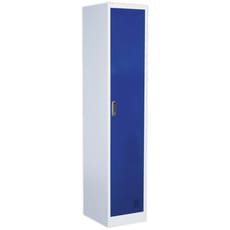
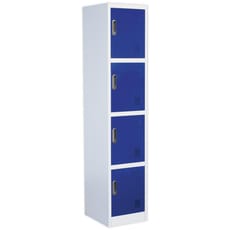
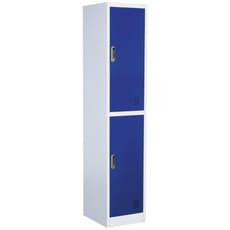
Single-door lockers provide one large compartment per unit (typically 380mm wide), offering generous storage space for one user. Multi-door lockers divide the same height into two, three, or four narrower compartments, allowing more users to store items in the same floor space—ideal for maximising capacity in limited areas.
Can lockers be used outdoors or in damp environments?
Standard steel lockers are designed for indoor use in dry environments. Whilst powder coating offers some moisture resistance, prolonged exposure to weather or high humidity may cause corrosion. For outdoor or wet environments, consider specialist weatherproof lockers with enhanced protective coatings.
How do I maintain and clean workplace lockers?
Clean locker exteriors with mild detergent and water, avoiding abrasive cleaners that might damage powder coating. Encourage users to keep interiors tidy and ventilated. Periodically inspect locks for smooth operation and apply light lubricant if required. Check ventilation slots remain unobstructed.
Are replacement keys available if originals are lost?
Cylinder locks can usually be re-keyed by a locksmith, or entire lock cylinders can be replaced relatively inexpensively. Recording lock numbers when purchasing helps with ordering replacement keys. Some organisations implement master-key systems allowing management access whilst users retain individual keys.
What's the typical lifespan of a workshop locker?
Quality steel lockers with powder-coated finishes typically provide 10-15 years of service in normal workshop conditions, often longer with proper maintenance. Durability depends on usage intensity, environment, and build quality—heavier-gauge steel constructions withstand demanding industrial use better than lighter alternatives.