

Locking Nuts

Pay in 3 interest-free payments on purchases from £20-£3000 with  . Learn more.
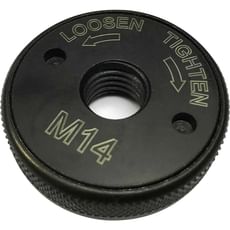
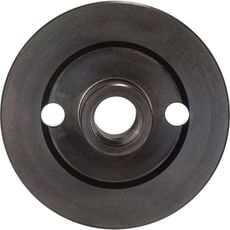
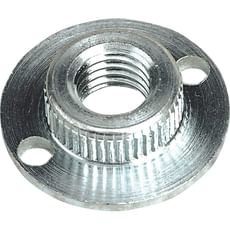
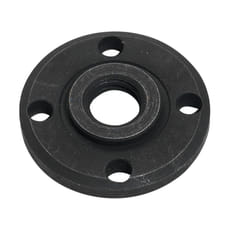
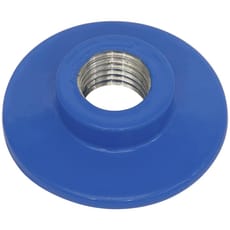
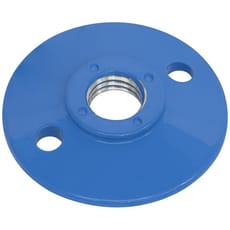
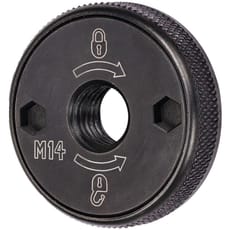
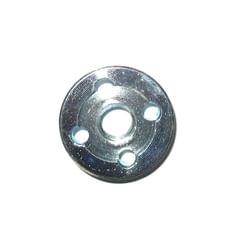
 Loading...
End of content
Error - No more pages to load
About Locking Nuts
Locking nuts are essential fastening components designed specifically to secure grinding discs, cutting wheels, and polishing pads onto angle grinders and similar power tools. These precision-engineered fasteners provide a secure, vibration-resistant connection between the accessory and the tool's spindle, ensuring safe operation during demanding grinding, cutting, and finishing applications. The category encompasses standard M14 threaded locking nuts, quick-release mechanisms, SDS clic systems, and toolless variants that simplify disc changes on site.
Modern locking nuts have evolved significantly from basic threaded fasteners to include innovative quick-change systems that eliminate the need for spanners or pin wrenches. Tooled-Up.com stocks locking nuts compatible with angle grinders ranging from compact 115mm models through to larger 230mm industrial machines, with thread sizes including M10, M14, and specialist fitments for specific tool models. The range includes solutions from leading manufacturers such as Bosch Professional, Makita, DeWalt, Sealey, and Faithfull, ensuring compatibility across virtually all popular angle grinder brands.
Whether you require a replacement for a lost or damaged nut, or you're upgrading to a quick-release system to improve productivity, selecting the correct locking nut specification is critical for both performance and safety. Factors including thread pitch, bore diameter (typically 22.23mm), and compatibility with your specific grinder model and manufacture date all influence which locking nut will provide secure, reliable fastening.
Jargon Buster
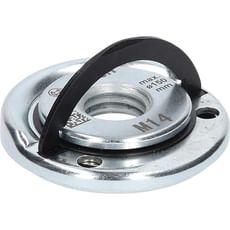
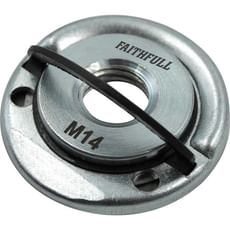
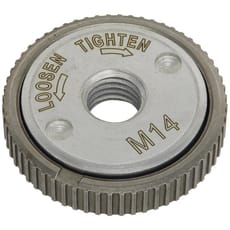
- M14 Thread: The most common thread size for angle grinder spindles in the UK and Europe, with a 14mm diameter and specific pitch. Essential to match the thread size to your grinder's spindle specification.
- Bore Diameter: The central hole size in grinding discs and backing pads, standardised at 22.23mm (approximately 7/8 inch) for most angle grinders. The locking nut must accommodate this dimension correctly.
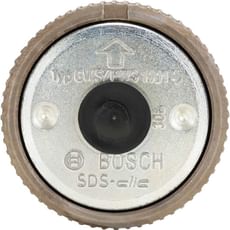
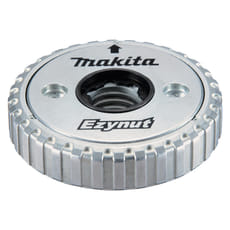
- Quick-Release/Toolless System: Advanced locking mechanisms such as Bosch SDS Clic, Makita Ezy Nut, or DeWalt Quick Release that allow disc changes without spanners, using hand-tightening systems with secure locking action.
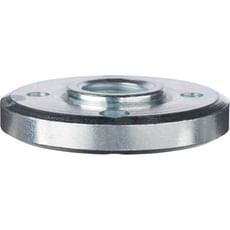
- Flange Nut: A locking nut with an integrated flange (wide collar) that distributes clamping pressure evenly across the grinding disc, preventing damage and ensuring balanced rotation.
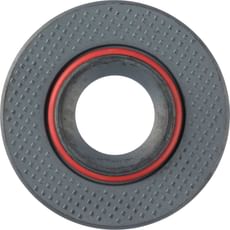
- Backing Pad/Backing Flange: The supporting disc that sits between the grinder spindle and the grinding accessory, with the locking nut securing everything together. Some locking nuts incorporate backing flange features.
- Thread Pitch: The distance between threads, measured in millimetres. Common specifications include M10 x 1.25mm and M10 x 1.5mm. Using incorrect pitch will prevent proper fastening and create safety hazards.
Who Uses Locking Nuts?
- Metal Fabricators and Welders: Frequently changing between grinding, cutting, and finishing discs throughout the day
- Construction Workers: Using angle grinders for cutting materials, removing excess concrete, and general site preparation
- Motor Vehicle Technicians: Grinding welds, removing rust, and preparing surfaces during repair and restoration work
- Plumbers and Gas Fitters: Cutting and preparing pipework with angle grinders across various installations
- Stone Masons and Tilers: Cutting and shaping materials with diamond cutting discs that require secure fastening
- Maintenance Engineers: Keeping replacement locking nuts in stock to maintain operational equipment across facilities
- DIY Enthusiasts: Replacing lost or damaged locking nuts on domestic angle grinders for home improvement projects
- Tool Hire Companies: Maintaining angle grinder fleets with replacement locking nuts as consumable components
How to Choose the Right Locking Nuts
Check Your Thread Size: Identify your angle grinder's spindle thread - M14 is standard for most professional grinders, but smaller tools may use M10. Check your grinder's manual or existing locking nut markings to confirm the specification.
Verify Compatibility with Grinder Model: Some locking nuts are designed for specific tool ranges or manufacture dates. For example, pre-1990 Bosch angle grinders require different locking nuts than current models. When shopping at Tooled-Up, use the product compatibility information to match nuts to your specific grinder.
Consider Quick-Change Systems: If you frequently swap discs throughout the day, investing in a quick-release locking nut significantly improves productivity. Systems like Makita's Ezy Nut or Bosch's SDS Clic eliminate the need for spanners, though they typically cost more than standard threaded nuts.
Match to Your Disc Diameter: Ensure the locking nut is rated for your grinding disc size. Most locking nuts accommodate 115mm to 230mm discs, but always verify the specification, particularly for specialist applications or larger industrial grinders.
Original Equipment vs. Compatible: Genuine manufacturer locking nuts guarantee perfect fit and compatibility, whilst high-quality compatible versions from established brands like Faithfull or Sealey offer cost-effective alternatives that meet the same safety standards.
Keep Spares Available: Locking nuts are small components easily lost on busy sites. Tradespeople should maintain spare locking nuts in their tool storage to avoid downtime when fasteners go missing during disc changes.
Popular Accessories
- Grinding Discs: Depressed centre and flat grinding discs in various grit grades for metal removal and surface preparation
- Cutting Discs: Thin cutting wheels for steel, stainless steel, stone, and masonry applications
- Flap Discs: Abrasive flap wheels for blending, finishing, and removing material with controlled aggression
- Backing Pads: Rubber or fibre backing pads for supporting fibre sanding discs and polishing accessories
- Diamond Cutting Discs: Specialist cutting wheels for concrete, stone, tiles, and masonry materials
- Pin Spanners: Two-pin or C-spanners for tightening standard locking nuts without quick-release features
- Wire Cup Brushes: Crimped or twisted wire brushes that attach to angle grinders for rust and paint removal
- Angle Grinder Accessories Kits: Multi-piece sets containing various disc types, backing pads, and locking nuts for comprehensive capability
Safety Information
Correct Installation is Critical: Always ensure locking nuts are properly tightened before operating angle grinders. Under-tightened nuts can allow discs to slip or detach during use, creating serious projectile hazards. Over-tightening can damage threads or crack grinding discs.
Inspect Before Use: Check locking nut threads for damage, cross-threading, or wear before each installation. Damaged threads will not provide adequate clamping force and must be replaced immediately. Never force a locking nut onto a spindle - it should thread smoothly.
Match Specifications Exactly: Using incorrect thread sizes or incompatible locking nuts compromises tool safety. Always verify compatibility with your specific angle grinder model before purchase. HSE guidance emphasises that all power tool accessories must be correctly matched to equipment.
Follow Manufacturer Torque Specifications: When using standard threaded locking nuts, tighten firmly with the appropriate spanner but avoid excessive force. Quick-release systems should lock audibly and positively - if uncertain, consult the manufacturer's instructions.
Regular Replacement: Locking nuts are subject to wear from repeated tightening, vibration, and exposure to grinding debris. Replace locking nuts showing thread damage, deformation, or difficulty threading onto the spindle.
Frequently Asked Questions
What thread size locking nut do I need for my angle grinder?
Most professional angle grinders use M14 thread locking nuts, which is the European standard for tools from 115mm to 230mm diameter capacity. Smaller grinders or specific models may use M10 threads. Check your grinder's spindle thread or consult the tool's manual to confirm the correct specification before ordering.
Can I use a quick-release locking nut on any angle grinder?
Not all quick-release systems are universally compatible. Systems like Bosch SDS Clic, Makita Ezy Nut, and DeWalt Quick Release are typically designed for specific tool ranges. However, some universal quick-change nuts with M14 threads will fit most standard angle grinders. Always check compatibility information available at Tooled-Up before purchasing quick-release systems.
Why won't my locking nut tighten properly?
Common causes include cross-threaded installation, damaged spindle threads, incorrect thread size or pitch, or debris in the threads. Remove the nut completely and inspect both the spindle and nut threads for damage. Clean away any grinding dust or debris, and ensure you're starting the thread straight. If threads are damaged, replacement is necessary for safe operation.
How tight should I tighten a standard locking nut?
Tighten firmly using the appropriate spanner - typically a two-pin or C-spanner - until the disc is securely clamped without movement. The nut should be tight enough to prevent slippage during operation but not so tight that you risk damaging threads or cracking the grinding disc. Most experienced tradespeople develop a feel for correct tightness through regular use.
Are flange nuts and locking nuts the same thing?
The terms are often used interchangeably in relation to angle grinders, though technically a flange nut incorporates a wider collar to distribute pressure. In the context of angle grinder accessories, most "locking nuts" have flange features to properly clamp grinding discs. When ordering replacements, match the style to your original component or consult product specifications for compatibility with your grinder model.