

Log Splitters

Pay in 3 interest-free payments on purchases from £20-£3000 with  . Learn more.
 Loading...
End of content
Error - No more pages to load
About Log Splitters
Log splitters are essential pieces of equipment for anyone who regularly processes firewood, offering a safer and far less physically demanding alternative to traditional splitting axes. These machines use mechanical force to break down logs into manageable pieces, making them easier to store, season, and ultimately burn. Whether you're heating a home with a wood burner, maintaining a business that relies on timber, or simply managing woodland, the right log splitter can transform what would be hours of back-breaking work into a straightforward task.
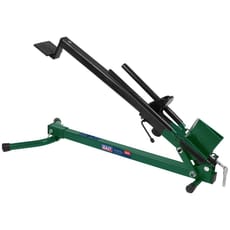
The selection at Tooled-Up.com encompasses several distinct types of log splitters, each suited to different applications and work environments. Manual log splitters offer a cost-effective entry point, using mechanical advantage through levers or foot-operated mechanisms to drive logs onto a splitting wedge. Electric log splitters—powered by 240v mains electricity—provide automated splitting action with minimal physical effort, making them ideal for domestic users and small businesses with access to mains power. For more demanding applications or remote locations, petrol-driven models deliver higher splitting forces and complete independence from electrical supplies, though they do require more maintenance and produce emissions.
The capability of any log splitter is primarily determined by its splitting force, typically measured in tonnes and ranging from around 4 tonnes for compact electric models up to 8 tonnes or more for professional-grade machines. This force rating indicates the maximum pressure the splitter can exert, with higher values enabling you to tackle larger diameter logs and denser hardwoods with greater ease. Understanding your typical log dimensions and wood types will help you select a machine with adequate force for your needs.
Jargon Buster
- Splitting Force (Tonnage): The maximum pressure a log splitter can exert, measured in tonnes. Domestic models typically range from 4-6 tonnes, whilst professional machines may exceed 8 tonnes. Higher tonnage enables splitting of larger, denser logs.
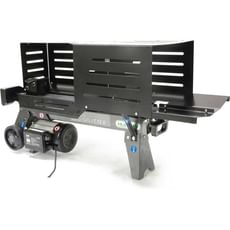
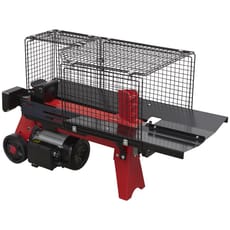
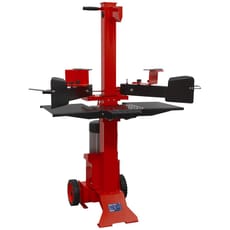
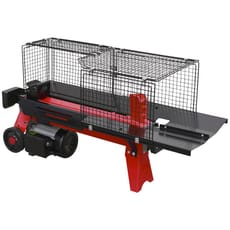
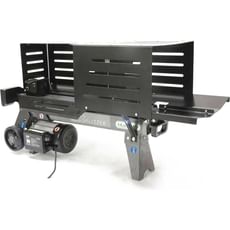
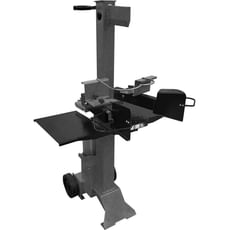
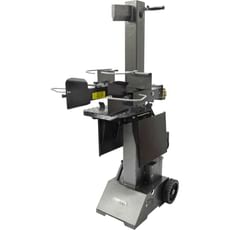
- Horizontal vs Vertical Orientation: Horizontal splitters position logs parallel to the ground, making them easier to load but requiring more floor space. Vertical splitters stand logs upright, ideal for handling very large rounds without heavy lifting.
- Ram Speed: The velocity at which the splitting wedge moves through the log, measured in seconds for a complete cycle. Faster ram speeds increase productivity when processing large volumes of timber.
- Maximum Log Length and Diameter: The physical capacity of the splitter, determining the largest logs it can accommodate. Always check these specifications against your typical material dimensions.
- Hydraulic System: Uses pressurised fluid to generate the force needed for splitting. Hydraulic splitters can be manually pumped or powered by electric or petrol motors for automated operation.
- Two-Handed Operation: A safety feature requiring both hands to be on controls during the splitting cycle, preventing accidental contact with moving parts.
Who Uses Log Splitters?
- Homeowners with Wood Burners: Domestic users heating homes with log stoves or open fires who process their own firewood for cost savings and convenience
- Arborists and Tree Surgeons: Professional tree care specialists who need to process felled timber on-site or back at their yards
- Woodland Managers and Foresters: Professionals managing commercial or private woodland who process timber as part of regular maintenance operations
- Firewood Merchants: Businesses that sell seasoned logs commercially and require efficient equipment to process large volumes of timber
- Landscape Gardeners: Landscaping professionals who clear sites and manage tree work, often needing to process waste timber efficiently
- Small Farms and Rural Estates: Agricultural businesses and estate managers who maintain hedgerows and woodland, generating timber that can be processed for heating or sale
- Camping and Activity Centres: Outdoor facilities that require regular supplies of split firewood for campfires and wood-burning facilities
- DIY Enthusiasts: Keen home improvers with access to timber who prefer to process their own logs rather than purchasing pre-split firewood
How to Choose the Right Log Splitters
Assess Your Volume Requirements: Consider how much wood you typically need to process. Occasional domestic use suits manual or compact electric models, whilst commercial operations or those heating large properties benefit from higher-capacity electric or petrol machines with greater splitting forces and faster cycle times.
Power Source and Location: Electric log splitters running on 240v mains power offer convenience, quiet operation, and minimal maintenance, making them perfect for domestic settings with accessible electrical supplies. Petrol models provide portability and higher power outputs for remote locations or professional applications, though they require fuel storage, produce emissions, and need regular servicing.
Splitting Force: Match the tonnage rating to your typical log characteristics. Softwoods and smaller diameter logs (up to 250mm) split effectively with 4-5 tonne machines, whilst hardwoods like oak or ash, and larger rounds, benefit from 6-8 tonne models. Tooled-Up stocks splitters from trusted brands including Handy and Sealey, offering force ratings across this spectrum.
Horizontal or Vertical Design: Horizontal splitters suit most users, positioning logs at a comfortable working height for straightforward loading. Vertical models excel when handling very large, heavy rounds that would be difficult to lift onto a horizontal machine, as logs can be rolled into position instead.
Portability Features: If you'll be moving the splitter frequently—perhaps between a storage location and working area, or transporting it to different sites—look for models with robust wheels and manageable weight. Some machines also feature tow hitches for vehicle transportation.
Safety Features: Prioritise machines with two-handed operation controls, protective guards around the splitting mechanism, and automatic ram return functions. These features significantly reduce the risk of injury during operation.
Popular Accessories
- Work Gloves: Heavy-duty leather or synthetic gloves protect hands when handling rough logs and bark
- Safety Goggles: Essential eye protection against flying wood chips, splinters, and debris generated during splitting
- Steel Toe Cap Boots: Safety footwear protects against falling logs and dropped wood pieces
- Log Storage Bags and Holders: Keep split logs organised and allow airflow for proper seasoning
- Moisture Meters: Measure wood moisture content to ensure logs are properly seasoned before burning
- Extension Cables: Heavy-duty outdoor-rated cables for electric splitters, ensuring adequate power supply at safe working distances
- Chainsaw Equipment: For initially cutting felled timber to lengths suitable for your log splitter's capacity
- Machine Covers: Weatherproof covers protect your investment when stored outdoors or in unheated sheds
- Splitting Wedges and Axes: Useful for pre-splitting very large rounds or finishing pieces that don't split completely
Safety Information
Personal Protective Equipment: Always wear safety goggles or a face shield to protect against flying debris, and steel toe cap boots to safeguard feet from dropped logs. Heavy-duty gloves improve grip and protect hands from splinters and rough bark. Avoid loose clothing, jewellery, or anything that could become caught in moving parts.
Operational Safety: Never place hands near the splitting wedge or ram during operation. Use the two-handed control system as designed—this safety feature ensures both hands are clear of danger zones. Never attempt to split multiple pieces simultaneously or overload the machine beyond its stated capacity. Keep children, pets, and bystanders at a safe distance whilst operating the equipment.
Environmental Considerations: Electric log splitters should not be used in wet conditions due to electrical shock risks—ensure both the machine and working area are dry. Petrol-powered models must never be operated indoors or in enclosed spaces due to toxic exhaust fumes; always work in well-ventilated outdoor areas. Follow HSE guidance on manual handling to avoid strain injuries when moving logs and equipment.
Maintenance and Inspection: Regularly inspect hydraulic hoses, electrical cables, and structural components for wear or damage before each use. Keep the splitting wedge sharp and free from debris. For electric models, ensure extension cables are appropriately rated and in good condition. Petrol machines require proper fuel storage in approved containers, away from ignition sources.
Frequently Asked Questions
What size log splitter do I need for domestic firewood preparation?
For typical domestic use with logs up to 300mm diameter and 520mm length, a 4-6 tonne electric log splitter is usually sufficient. This capacity handles most softwoods and medium-density hardwoods comfortably. If you regularly process dense hardwoods like oak or have access to larger diameter timber, consider a 6-8 tonne model for more efficient splitting.
Can I use an electric log splitter outdoors in my garden?
Yes, but only in dry conditions. Electric log splitters running on 240v mains power pose an electrocution risk if used in wet weather or damp environments. Always operate on dry ground, use a properly rated outdoor extension lead with RCD protection, and store the machine under cover when not in use. If you need to work in variable weather or remote locations, a petrol model offers greater flexibility.
How do I know if a log is too large for my splitter?
Check your machine's specifications for maximum log length and diameter. Never exceed these dimensions, as doing so risks damaging the equipment and creates safety hazards. If you have oversized rounds, use a chainsaw to reduce them to appropriate dimensions before splitting. The stated tonnage also matters—very dense or knotty wood may require higher splitting forces even if dimensions are within capacity.
Do I need any special electrical supply for an electric log splitter?
Most domestic electric log splitters operate on standard 240v household mains electricity and draw between 13-16 amps, meaning they'll run from a regular 13A socket. However, you'll likely need a heavy-duty outdoor extension cable to reach your working area. Always use a cable rated for the machine's power consumption and incorporate RCD protection to guard against electrical faults.
What's the difference between horizontal and vertical log splitters?
Horizontal splitters position logs parallel to the ground at a comfortable working height, making them easier to load for most users and suitable for the majority of domestic applications. Vertical splitters stand logs upright and excel when processing very large, heavy rounds that would be difficult to lift—you can simply roll them into position. Some models offer both orientations for maximum versatility.