

Long Tape Measures
Pay in 3 interest-free payments on purchases from £30-2000 with  . Learn more.
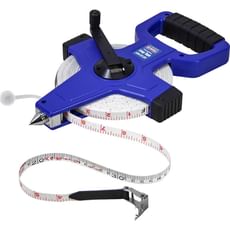
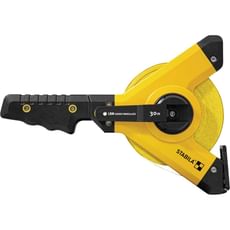
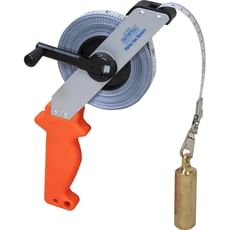
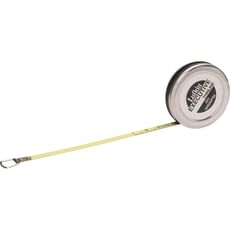
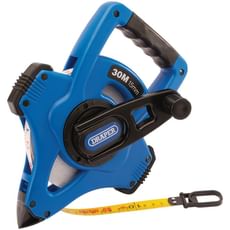
 Loading...
End of content
Error - No more pages to load
About Long Tape Measures
Long tape measures are indispensable tools for professionals and DIY enthusiasts who need to measure extended distances with accuracy and reliability. Unlike standard pocket tape measures that typically extend to 5 or 8 metres, long tapes can measure distances from 10 metres up to 100 metres or more, making them essential for site surveys, large-scale construction projects, landscaping work, and property measurement. Available in both open reel and enclosed designs, these measuring tools are built to withstand the demands of outdoor work and challenging site conditions, delivering consistent performance in all weathers.
The category encompasses a diverse range of products constructed from different materials, each suited to specific applications. Steel long tapes offer exceptional durability and dimensional stability, making them ideal for general construction and engineering work where accuracy is paramount. Fibreglass tape measures provide excellent resistance to moisture, chemicals, and electrical conductivity, making them the preferred choice for electrical contractors and surveyors working near power lines or live installations. Specialist variants include diameter tapes for measuring circular objects like pipes and tanks, and tank dipping tapes designed specifically for measuring liquid depths in storage vessels.
Tooled-Up.com stocks comprehensive ranges from leading manufacturers including Stanley, Faithfull, Draper, Stabila, DeWalt, Lufkin, Bahco, Komelon, and Roughneck, catering to different budgets and professional requirements. Whether you're a surveyor requiring precision measurement over long distances, a builder setting out foundations, a groundworker planning drainage runs, or a landscaper designing gardens, there's a long tape measure engineered to meet your specific needs with the accuracy and reliability that professional work demands.
Jargon Buster
- Fibreglass Blade: A non-conductive measuring tape made from woven glass fibres coated with PVC. Resistant to water, chemicals, and electrical current, making it safe for use around live electrical installations and ideal for outdoor surveying work in damp conditions.
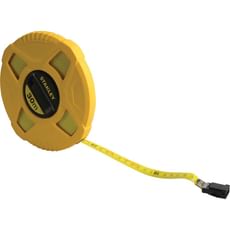
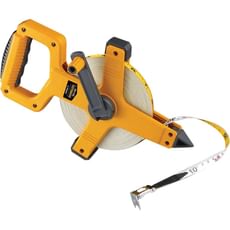
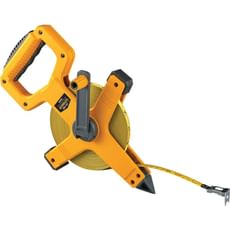
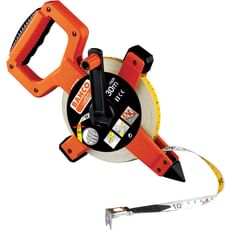
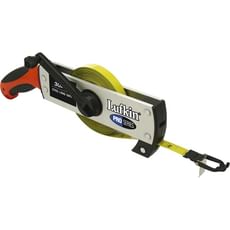
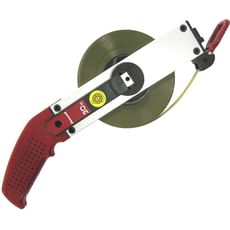
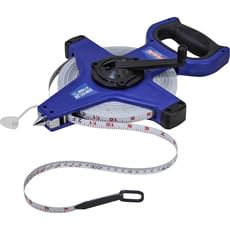
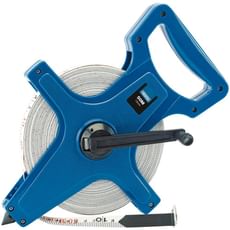
- Open Reel Design: A simple frame construction where the tape is visible on an exposed spool. Lighter and more economical than enclosed models, these are easy to clean and allow quick visual inspection of the blade condition, though they offer less protection from the elements and impact damage.
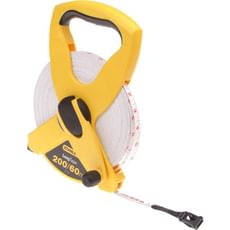
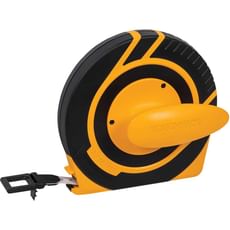
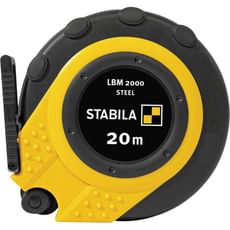
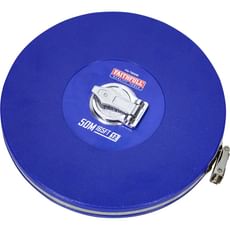
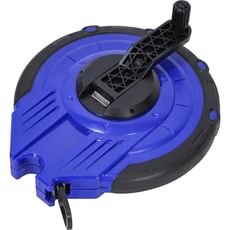
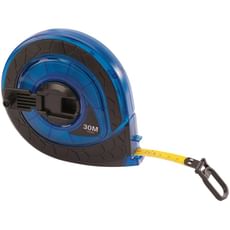
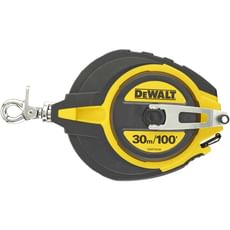
- Enclosed Reel: A protective housing that fully contains the tape mechanism, offering superior protection from dust, moisture, and impact damage. Features typically include fold-out winding handles and improved blade longevity, though they're generally heavier than open reel alternatives.
- Fast Rewind Mechanism: A geared winding system that allows rapid retrieval of the tape blade, significantly reducing the time needed to rewind long distances. Essential for professionals who need to take multiple measurements throughout the working day.
- Class Accuracy Rating: European standard (EN) classification indicating measurement precision. Class II (±2.3mm at 10m) is standard for most professional work, whilst Class I offers higher accuracy for precision surveying applications.
- Ring End Hook: A metal loop or hook at the tape's end that allows it to be anchored to a fixed point, enabling single-person measurements over long distances without an assistant to hold the tape end.
Who Uses Long Tape Measures?
Long tape measures serve a wide spectrum of professional trades and applications:
- Surveyors and Site Engineers: Essential for land surveys, topographical measurements, and establishing construction site dimensions with precision
- Builders and General Contractors: Setting out foundations, measuring plot boundaries, establishing building lines, and calculating material requirements
- Groundworkers and Civil Engineers: Planning drainage runs, measuring excavations, laying out roads and pathways, and establishing levels across large sites
- Landscapers and Gardeners: Designing garden layouts, measuring lawn areas, planning irrigation systems, and setting out planting schemes
- Electricians: Calculating cable runs, measuring distances for outdoor lighting installations, and working safely near electrical equipment with non-conductive fibreglass tapes
- Roofers and Cladding Specialists: Measuring building elevations, calculating material coverage, and determining working heights
- Quantity Surveyors: Taking site dimensions for costings, measuring existing structures, and verifying contractor measurements
- DIY Enthusiasts: Planning garden projects, measuring fencing runs, designing patios and driveways, and tackling large-scale home improvement projects
- Property Professionals: Estate agents and property managers measuring land plots, building footprints, and garden areas
- Sports Ground Maintenance: Marking out pitches, measuring track distances, and maintaining sports facilities to regulation dimensions
How to Choose the Right Long Tape Measures
Length Requirements: Consider the typical distances you need to measure. Tapes from 10-30 metres suit most building and landscaping work, whilst 50-100 metre variants are essential for land surveying, large site work, and extensive property measurement. Having multiple lengths available provides flexibility for different applications without the bulk of carrying an unnecessarily long tape for routine measurements.
Blade Material Selection: Steel tapes offer superior durability and resistance to stretching, making them ideal for construction work and general measuring where accuracy is paramount. Fibreglass alternatives are essential for electrical work due to their non-conductive properties, and they excel in wet conditions and marine environments where steel would corrode. They're also lighter and more comfortable for all-day use, though they may stretch slightly over time with heavy use.
Reel Type: Open reel designs from brands like Faithfull and Bahco are lightweight, economical, and easy to maintain—perfect for occasional use and dry conditions. Enclosed reels such as those offered by Stanley, Draper, and DeWalt provide superior protection in harsh site conditions, feature fast-rewind mechanisms for efficiency, and generally offer longer blade life, justifying their higher initial cost for professional daily use.
Graduation and Readability: Check the marking increments suit your precision requirements. Most professional tapes feature millimetre graduations, with clear numbering every 10cm or metre. High-visibility printing or colour-coded sections improve readability in poor light conditions. Consider dual-scale tapes showing both metric and imperial measurements if you work with older plans or international projects.
Build Quality and Durability: Professional-grade tapes from Stanley, Stabila, and Lufkin feature reinforced end hooks, robust frame construction, and quality winding mechanisms that withstand daily site use. Budget options from Roughneck and Komelon offer good value for lighter or occasional use. Look for UV-resistant blade coatings if working extensively outdoors in direct sunlight.
Ease of Use Features: Fast-rewind handles significantly reduce winding time on longer tapes. Carrying handles and shoulder straps improve portability for enclosed models. Some feature folding or telescopic winding handles for compact storage. Consider weight if you'll be carrying the tape around site all day—fibreglass tapes are notably lighter than steel equivalents of the same length.
Popular Accessories
- Measuring Wheels: Complement long tapes for very large distances where tape measurement becomes impractical, providing quick distance measurements along pathways and roads
- Range Finders and Laser Distance Measurers: Electronic alternatives for quick measurements, ideal for preliminary surveys before detailed tape measurements
- Marking Paint and Spray Markers: Essential for marking measurements on the ground during setting-out work, available in high-visibility colours
- Surveying Pins and Arrows: Metal markers for establishing fixed points during long-distance measurements, typically used in sets of ten
- String Lines and Building Lines: Work alongside tape measures for establishing straight lines between measured points
- Spirit Levels and Laser Levels: Ensure measured points are accurately levelled, particularly important for foundation and drainage work
- Protective Tape Cases: Additional carrying cases for open reel tapes, protecting them during transport and storage
- Replacement Blades: Available for some professional models from brands like Stanley and Lufkin, extending the tool's lifespan when the blade becomes worn or damaged
Safety Information
Whilst long tape measures are relatively safe tools, proper handling prevents injuries and ensures accurate measurements. Always inspect the blade before use, checking for kinks, damaged edges, or worn sections that could affect accuracy or cause injury. When extending the tape, maintain control to prevent the blade whipping back unexpectedly—retract slowly and deliberately, never allowing the tape to snap back freely as this can cause cuts or eye injuries.
When working with steel tapes near electrical installations or overhead power lines, always use fibreglass non-conductive alternatives to eliminate electrocution risk. Be particularly cautious in wet conditions where conductivity increases. The HSE recommends maintaining safe distances from overhead cables, and using non-conductive measuring equipment is a fundamental requirement when working near live installations.
Wear appropriate PPE including safety gloves when handling long tapes extensively, as the blade edges can cause cuts, particularly when retracting steel tapes. Safety glasses protect against eye injuries from a snapping tape or flying debris on construction sites. When working on busy sites, ensure the extended tape doesn't create a trip hazard for other workers—use barrier tape or cones to mark the measuring area if necessary, and never leave tapes extended unattended across walkways or working areas.
Frequently Asked Questions
What's the difference between fibreglass and steel long tape measures?
Steel tapes are more durable, resistant to stretching, and maintain accuracy over time, making them ideal for general construction work where dimensional stability is critical. Fibreglass tapes are non-conductive (essential for electrical work), lighter, resistant to moisture and chemicals, and won't rust, though they can stretch slightly with extended use and may be less durable in abrasive conditions. Choose steel for general building work and fibreglass for electrical trades, wet environments, or when weight is a concern during all-day use.
How accurate are long tape measures?
Most professional long tapes conform to Class II accuracy under European standards, providing precision of ±2.3mm at 10 metres, which is sufficient for general construction and surveying work. Higher-grade tapes may achieve Class I accuracy for more demanding applications. However, accuracy can be affected by temperature (tapes expand in heat), blade tension (stretching under load), and maintenance—keeping the blade clean and avoiding kinks preserves accuracy. For critical measurements, always verify with multiple readings and ensure consistent tension.
Can I use a long tape measure on my own?
Yes, most long tapes feature a ring end hook or loop that can be secured around a fixed point, enabling single-person operation for most applications. For best results, anchor the end securely, ensure the tape runs straight without snagging, and maintain consistent tension throughout the measurement. However, for very long distances or windy conditions, having an assistant to hold one end ensures greater accuracy and prevents the tape from bowing or moving mid-measurement, which can affect dimensional accuracy.
How do I maintain my long tape measure?
After each use, wipe the blade clean with a dry cloth to remove dirt, moisture, and debris that can cause premature wear or affect accuracy. For stubborn contamination, use a slightly damp cloth followed by thorough drying. Store in a dry location away from direct sunlight and extreme temperatures which can affect calibration. Periodically check the winding mechanism, applying a small amount of light oil if it becomes stiff. Never store the tape wet, particularly steel variants which will rust, and always rewind fully to prevent blade damage and kinking.
What length tape measure do I need for building work?
For typical residential building projects, a 30-metre tape handles most tasks including room dimensions, garden measurements, and foundation setting out. Commercial construction and larger sites benefit from 50-metre tapes, whilst land surveyors and civil engineers typically require 100-metre variants for extensive site work. Many professionals keep multiple lengths available—a 20-30m for everyday tasks and a 50m+ for specialist work—as this provides flexibility without the bulk of carrying an unnecessarily long tape for routine measurements. Browse the selection at Tooled-Up.com to find the right length for your specific requirements.