

Magnifying Glasses
Pay in 3 interest-free payments on purchases from £30-2000 with  . Learn more.

 Loading...
End of content
Error - No more pages to load
About Magnifying Glasses
Magnifying glasses are essential precision tools used across numerous trades and professions where detailed inspection, assembly, or repair work is required. From electronics engineers examining circuit boards to jewellers assessing gemstone clarity, these optical instruments provide the magnification needed to work with confidence on intricate tasks. Modern magnifying glasses range from traditional handheld round magnifiers and jewellers' eye loupes to advanced LED-illuminated work lights with integrated magnification, offering solutions for every application and environment.
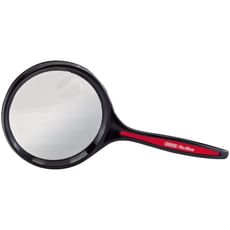
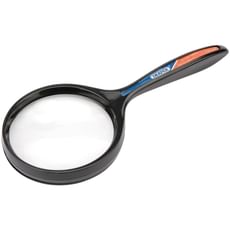
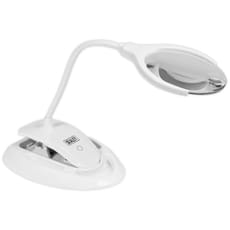
The magnifying glasses available at Tooled-Up.com include both basic handheld models and sophisticated illuminated versions designed for professional workshop use. Handheld magnifiers typically feature main lens magnifications of 2x to 3x with smaller inset lenses offering 6x magnification for ultra-fine detail work. These lightweight plastic designs are perfect for portable inspection tasks, whilst clamped LED work lights with built-in magnification provide hands-free operation ideal for bench-mounted precision work in electronics, watchmaking, and fine assembly applications.
Quality magnifying equipment from trusted brands like Draper and Sealey ensures optical clarity without distortion, which is crucial for accurate work. Whether you need a simple loupe for occasional inspection tasks or a rechargeable dimmable LED magnifying lamp for daily professional use, the right magnification tool can significantly reduce eye strain whilst improving work quality and productivity.
Jargon Buster
- Magnification Power (x): The number preceding 'x' indicates how many times larger an object appears compared to the naked eye. A 3x magnifier makes objects appear three times their actual size.
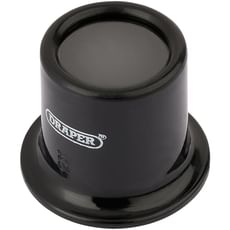
- Jewellers Eye Glass/Loupe: A small, high-magnification lens designed to be held close to the eye or worn in the eye socket, providing hands-free magnification typically between 2x and 10x for detailed inspection work.
- Inset Lens: A secondary, smaller lens built into the main magnifying lens that provides higher magnification for examining extremely fine details without switching tools.
- Dioptre: The optical measurement of magnifying power. Higher dioptre numbers indicate stronger magnification, with each dioptre approximately equivalent to 0.25x magnification.
- LED Magnifying Lamp: A combined magnifier and light source featuring energy-efficient LED illumination around the lens perimeter, eliminating shadows and providing consistent, bright lighting for detailed work.
- Clamp Mount: A mechanical fixing system allowing magnifying lamps to be securely attached to workbenches or table edges, providing stable, adjustable positioning for hands-free operation.
Who Uses Magnifying Glasses?
Magnifying glasses serve a diverse range of professionals and enthusiasts who work with fine details:
- Electronics Engineers & Technicians: For inspecting PCBs, soldering joints, and identifying component markings
- Jewellers & Watchmakers: Essential for examining gemstones, hallmarks, and intricate mechanical movements
- Hobbyists & Model Makers: For precision painting, assembly, and detailing of miniatures and scale models
- Stamp & Coin Collectors (Philatelists & Numismatists): To authenticate items and examine fine printing details
- Dental Technicians: For detailed work on dental prosthetics and orthodontic devices
- Quality Control Inspectors: To identify manufacturing defects, surface imperfections, and material flaws
- Textile Workers & Seamstresses: For threading needles and examining fabric weaves
- Electricians: When working with miniature components in control panels or automotive electrics
- Antique Dealers & Appraisers: To authenticate maker's marks and assess item condition
- Print & Graphics Professionals: For examining print quality and registration accuracy
How to Choose the Right Magnifying Glasses
Selecting appropriate magnification equipment depends on several key factors:
Magnification Level: Consider the size of details you'll be examining. Lower magnifications (2x-3x) suit general inspection and reading small print, whilst higher magnifications (6x-10x) are necessary for extremely fine work like electronics or gemology. Remember that higher magnification reduces the field of view and working distance.
Hands-Free vs Handheld: Handheld magnifiers from Tooled-Up offer portability and flexibility for varied locations, whilst clamp-mounted LED magnifying lamps provide stable, hands-free operation essential for tasks requiring both hands, such as soldering or assembly work.
Illumination Requirements: For precision work in workshops or poorly lit environments, choose LED magnifying lamps with adjustable brightness. Dimmable models allow you to optimise lighting levels for different materials and tasks, reducing eye strain during extended use. Rechargeable versions eliminate the need for proximity to 240v mains outlets, offering greater positioning flexibility.
Lens Quality & Size: Larger diameter lenses provide a wider field of view, reducing the need to constantly reposition the magnifier. Optical-quality glass or high-grade plastic lenses ensure distortion-free viewing, which is crucial for accurate work and preventing eye fatigue.
Build Quality & Durability: For professional workshop environments, robust construction with metal frames and protective lens covers ensures longevity. Lightweight plastic designs suit occasional use or portable applications where weight is a consideration.
Mounting & Positioning: If choosing a magnifying lamp, ensure it offers adequate reach and adjustment. Articulated arms with multiple pivot points allow precise positioning, whilst stable clamp or base mounts prevent unwanted movement during work.
Popular Accessories
- Workbenches & Work Surfaces: Stable platforms essential for mounting magnifying lamps securely
- Task Lighting: Supplementary LED work lights for additional illumination in demanding environments
- Soldering Stations: Frequently used alongside magnifying equipment for electronics work
- Precision Hand Tools: Tweezers, micro screwdrivers, and needle files for detailed work under magnification
- Storage Cases: Protective cases for handheld magnifiers to prevent lens scratches during transportation
- Cleaning Cloths & Solutions: Microfibre cloths and optical cleaning solutions to maintain lens clarity
- Bench Vices & Clamps: To secure workpieces whilst working hands-free with magnification
- Anti-Static Mats: For electronics work where magnification reveals sensitive components
Frequently Asked Questions
What magnification power do I need for electronics work?
For general electronics inspection and soldering, 3x magnification typically provides an ideal balance between detail visibility and working distance. For SMD component work or micro-soldering, you may require 6x-10x magnification. Many magnifiers feature dual magnification with an inset lens, offering versatility for different task requirements.
What's the difference between a jewellers loupe and a standard magnifying glass?
A jewellers loupe is designed to be held very close to the eye or worn in the eye socket, providing higher magnification (typically 10x or more) with a smaller field of view. Standard magnifying glasses are held further away and offer lower magnification with a wider viewing area, making them more suitable for general inspection tasks and reading applications.
Are rechargeable LED magnifying lamps as bright as mains-powered versions?
Modern rechargeable LED magnifying lamps provide comparable brightness to 240v mains-powered models, with the advantage of portability and flexible positioning without cable constraints. Dimmable versions allow brightness adjustment to suit different materials and tasks, with typical battery life of several hours on a single charge for professional use.
How do I clean magnifying glass lenses without scratching them?
Use a soft microfibre cloth specifically designed for optical surfaces. For stubborn marks, apply a small amount of optical lens cleaner or diluted isopropyl alcohol to the cloth (never directly to the lens). Wipe gently in circular motions. Avoid paper towels or general cleaning cloths which may contain abrasive fibres that can scratch plastic or glass lenses.
Can I use a magnifying lamp for reading and detailed paperwork?
Absolutely. Magnifying lamps with 2x-3x magnification are excellent for reading fine print, reviewing technical drawings, or examining documents. The integrated LED lighting provides even, shadow-free illumination that reduces eye strain compared to using separate lighting and magnification, making them popular with professionals who regularly review detailed paperwork or technical documentation.