

Marking Gauges

Pay in 3 interest-free payments on purchases from £20-£3000 with  . Learn more.
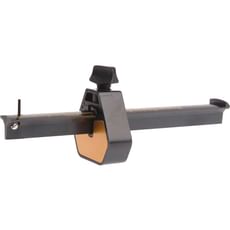
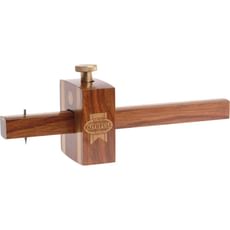
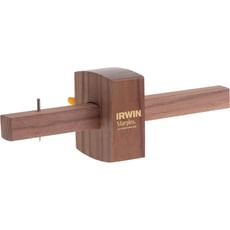
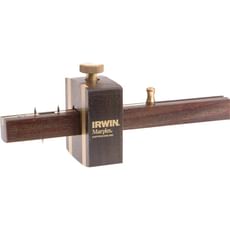


 Loading...
End of content
Error - No more pages to load
About Marking Gauges
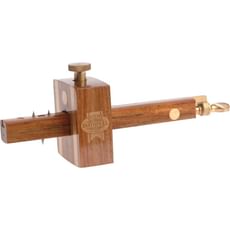
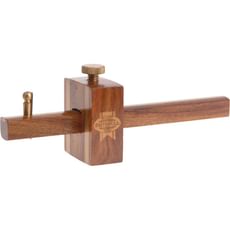
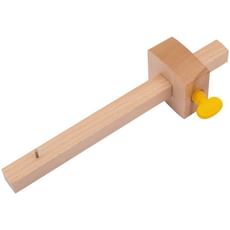
Marking gauges are essential precision hand tools used in woodworking to scribe consistent, parallel lines along the grain of timber. These traditional yet indispensable tools allow craftspeople to mark out accurate measurements for joints, mortices, tenons, and other precise woodworking operations. A marking gauge typically consists of a wooden or metal beam with a movable fence (or stock) that slides along the beam and locks at the desired measurement, whilst a sharp spur or pin scribes the line on the workpiece.
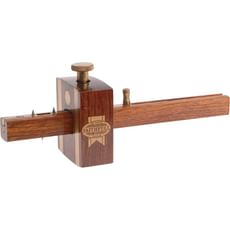
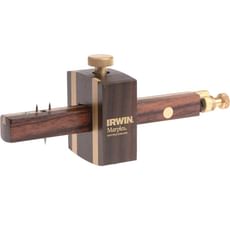
The range available at Tooled-Up.com includes several specialised variations to suit different marking tasks. Standard marking gauges feature a single pin for basic parallel lines, whilst mortice gauges incorporate two adjustable pins for marking the width of mortices and tenons simultaneously. Cutting gauges use a knife-edge blade rather than a pin, making them ideal for marking across the grain without tearing the wood fibres. Combination gauges offer versatility by incorporating both marking and mortice functions in one tool, and profile scribing gauges allow craftspeople to transfer irregular shapes and contours from one surface to another.
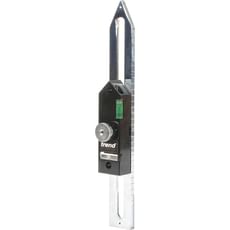
Traditional marking gauges are typically crafted from hardwoods such as beechwood or rosewood, with brass fittings and hardened steel spurs or pins. These time-tested designs from brands like Faithfull, Marples, and Stanley continue to be favoured by professional joiners and cabinetmakers for their reliability and tactile feedback. Modern alternatives include plastic-bodied gauges that offer durability and affordability, alongside innovative multi-scribing tools like the Trend Multiscribe that combine traditional marking functions with contemporary design features.
Jargon Buster
- Spur: The hardened steel pin or point that scribes the marking line into the wood surface. Quality gauges feature replaceable or adjustable spurs that maintain sharpness through repeated use.
- Fence (or Stock): The wooden block that slides along the beam and registers against the edge of the workpiece, maintaining a consistent distance from the edge whilst marking. Often features a brass wear strip for durability.
- Mortice Gauge: A specialised marking gauge with two adjustable pins, designed specifically for marking out the parallel sides of mortices and the corresponding tenons. One pin typically remains fixed whilst the other adjusts to set the width.
- Cutting Gauge: A variant that uses a small knife blade rather than a pin, allowing it to cut cleanly across the grain without tearing wood fibres. Particularly useful for marking dovetails and crossgrain work.
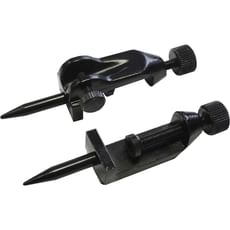
- Trammel Heads: Adjustable marking accessories that attach to a beam or straight edge to scribe large circles and arcs, or to transfer measurements across considerable distances that exceed standard gauge capacity.
- Beam: The main shaft of the gauge along which the fence slides. Typically features measurement graduations and a locking mechanism to secure the fence at the desired position.
Who Uses Marking Gauges?
- Joiners and Carpenters: Professional woodworkers who rely on marking gauges daily for accurate joint layout, door hanging, and general carpentry operations
- Cabinetmakers: Furniture makers requiring precision marking for dovetails, mortice and tenon joints, and fine joinery work
- Shopfitters: Tradespeople installing commercial fixtures who need accurate marking for consistent installations
- Restoration Specialists: Craftspeople working on historic buildings and furniture who use traditional hand tools for sympathetic repairs
- Timber Framers: Specialists in traditional timber frame construction who mark out complex joints in structural timbers
- Wood Machinists: Workshop operatives who mark out workpieces before machining operations
- DIY Enthusiasts: Home woodworkers and hobbyists undertaking joinery projects, furniture making, and general woodworking
- Apprentices and Students: Those learning traditional woodworking skills in colleges, training centres, and apprenticeship programmes
How to Choose the Right Marking Gauges
Type of Gauge: Consider which marking operations you perform most frequently. A standard marking gauge suffices for basic parallel lines, but if you regularly cut mortice and tenon joints, a dedicated mortice gauge or combination gauge proves more efficient. Cutting gauges are essential for crossgrain work, whilst profile gauges serve specialised scribing needs.
Build Quality and Materials: Traditional hardwood gauges from established brands like Faithfull and Marples offer superior feel and longevity, with rosewood models providing enhanced durability and wear resistance. Beechwood gauges deliver excellent value whilst maintaining professional quality. Brass fittings resist corrosion and provide smooth adjustment, whilst hardened steel spurs maintain sharpness through extended use.
Adjustment Mechanism: Evaluate the locking mechanism that secures the fence position. Brass thumbscrews allow precise micro-adjustments and reliable locking, whilst plastic turn screws offer quick adjustment on budget models. Premium gauges feature graduated beams with clear measurement markings for repeatable settings.
Spur Configuration: Single-spur gauges suit general marking, whilst dual-spur mortice gauges prove indispensable for joint work. Check that spurs are genuinely hardened steel rather than mild steel, which dulls rapidly. Some quality gauges feature replaceable spurs for long-term serviceability.
Beam Length: Standard gauges typically feature beams of 150-200mm, suitable for most joinery work. Consider your typical workpiece dimensions – larger furniture projects may benefit from extended beam lengths, whilst compact gauges suit smaller, detailed work.
Brand Heritage: Tooled-Up stocks marking gauges from respected manufacturers including Faithfull, Marples, Stanley, Draper, and Sealey. Established brands generally offer better quality control, accurate machining, and consistent performance compared to unbranded alternatives.
Popular Accessories
- Marking Knives: Complement marking gauges for precise joint layout, particularly when marking shoulders and crossgrain lines
- Pencils and Scribers: For general layout work alongside gauged lines
- Squares and Try Squares: Essential companions for checking gauge accuracy and marking perpendicular lines
- Sharpening Stones: Diamond stones or whetstones for maintaining sharp spurs and marking knife edges
- Calipers and Rulers: Precision measuring tools for setting gauge dimensions accurately
- Trammel Heads: Extend marking capabilities to large circles and arcs beyond standard gauge capacity
- Tool Rolls and Boxes: Protect marking gauges during transport and storage, preventing damage to delicate spurs
- Chisels and Saws: The cutting tools that follow the lines established by marking gauges
Frequently Asked Questions
What's the difference between a marking gauge and a mortice gauge?
A marking gauge features a single pin or spur for scribing one parallel line along the grain, whilst a mortice gauge has two adjustable pins for marking both sides of a mortice or tenon simultaneously. This dual-pin configuration saves considerable time when laying out joints, as both lines are scribed in one pass. Combination gauges incorporate both functions, with the second pin being retractable or removable when not required.
Can I use a marking gauge across the grain?
Standard marking gauges with pin spurs can tear wood fibres when used across the grain. For crossgrain marking, use a cutting gauge which features a knife blade instead of a pin. The blade slices cleanly through fibres rather than tearing them, producing crisp lines for dovetails and other crossgrain joinery. Alternatively, mark crossgrain lines with a marking knife and square.
How do I maintain my marking gauge?
Keep the beam and fence clean and free from resin build-up using a cloth with white spirit. Apply a thin coat of furniture wax to wooden components occasionally to prevent moisture absorption and maintain smooth adjustment. Check that spurs remain sharp – resharpen on a fine stone when necessary, maintaining the original angle. Store gauges in a dry environment to prevent rust on metal components and warping of wooden parts.
Why choose a wooden marking gauge over a plastic one?
Traditional wooden gauges, particularly those crafted from rosewood or beechwood, offer superior tactile feedback and durability compared to plastic alternatives. The weight and balance of wooden gauges provide better control during marking, whilst quality hardwoods resist wear at contact points. Brass fittings on wooden gauges also outlast plastic components. However, plastic gauges from reputable brands like Stanley offer affordability and perfectly adequate performance for occasional users and apprentices.
What beam length marking gauge do I need?
Most general joinery work is well served by gauges with 150-200mm beam lengths, allowing marking up to approximately 100-150mm from an edge. This covers the majority of furniture components, door frames, and typical carpentry applications. If you regularly work with wider boards or need to mark centres on substantial timbers, consider supplementing your standard gauge with trammel heads that accommodate virtually unlimited beam lengths using any suitable straight edge.