

Measuring Rods

Pay in 3 interest-free payments on purchases from £20-£3000 with  . Learn more.
 Loading...
End of content
Error - No more pages to load
About Measuring Rods
Measuring rods, also known as levelling rods or survey rods, are essential precision instruments used across the construction, surveying, and civil engineering industries. These telescopic tools extend to significant heights—typically between 2.4 and 5 metres—allowing professionals to take accurate vertical measurements and level readings when used in conjunction with optical or laser levels. Unlike standard tape measures, measuring rods provide rigid, stable reference points that are crucial for establishing precise elevations, transferring bench marks, and verifying site levels over distance.
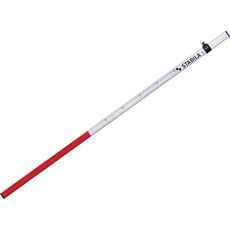
Modern measuring rods combine robust construction with practical features designed for site work. Most quality rods feature graduated markings in millimetres, often with high-visibility colour coding to aid reading at distance. Premium models from manufacturers like Bosch Professional and Stabila incorporate aluminium construction for durability whilst maintaining a manageable weight, telescopic mechanisms for compact transport, and reinforced sections to withstand the demands of daily professional use. Whether you're working on foundations, drainage projects, road construction, or building surveys, a reliable measuring rod is an indispensable companion to your levelling equipment.
The telescopic design of contemporary measuring rods represents a significant advancement over traditional single-piece alternatives, allowing tradespeople to transport these tools easily between sites and store them in standard work vehicles. With secure locking mechanisms at each extension point, these instruments maintain their accuracy whilst remaining quick to deploy and adjust as work progresses across a site. The selection available from Tooled-Up.com includes models ranging from 2.4 metres to 5 metres, suitable for everything from general building work to extensive civil engineering projects.
Jargon Buster
- Telescopic Extension: A multi-section design that allows the rod to collapse for transport and extend to full height when needed. Quality rods feature smooth extension mechanisms with positive locking at each section to maintain accuracy during use.
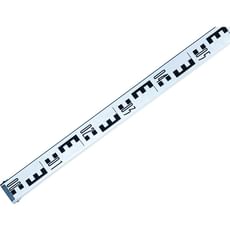
- Graduated Scale: The measurement markings along the rod's length, typically displayed in millimetres and centimetres. Many rods use alternating colour bands (often red and white or black and white) at regular intervals to improve visibility from distance.
- Levelling Staff: Alternative term for measuring rods, particularly common in surveying contexts. The instrument held vertically at a point where height or elevation needs to be determined.
- E-Code/Bar Code Scale: Some modern rods feature special coded scales designed for use with digital levels, which can automatically read the measurement electronically rather than requiring manual observation.
- Benchmark Transfer: The process of establishing known elevation points across a site, for which measuring rods are essential when used with optical or laser levels to ensure consistent height references.
- Cut and Fill: Construction terminology referring to excavation (cut) and backfill (fill) operations where measuring rods help determine exact depth and elevation requirements.
Who Uses Measuring Rods?
Measuring rods are specialist tools employed by various professionals who require accurate vertical measurements and level readings:
- Land Surveyors: Conducting topographical surveys, establishing site levels, and creating accurate elevation maps for planning and development projects.
- Civil Engineers: Setting out road construction projects, drainage systems, and infrastructure works requiring precise level control across extended distances.
- Building Surveyors: Assessing existing structures, checking floor levels, and identifying settlement or structural movement in properties.
- Groundworkers and Drainage Contractors: Establishing correct falls for drainage systems, setting foundation levels, and ensuring proper gradients for water management.
- Site Engineers and Foremen: Daily site work involving level checks, setting out, and quality control throughout construction phases.
- Landscaping Professionals: Creating accurate contours, terracing, and ensuring proper drainage gradients in landscaping projects.
- Builders and Main Contractors: Checking floor levels, setting floor screeds, and verifying that construction proceeds to correct elevations throughout a project.
- Quantity Surveyors: Taking site measurements and verifying earthwork volumes during construction projects.
How to Choose the Right Measuring Rods
Selecting the appropriate measuring rod depends on your specific applications and working environment. Consider these key factors when making your decision:
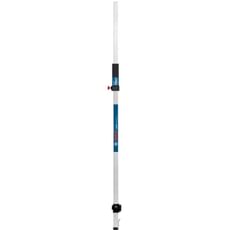
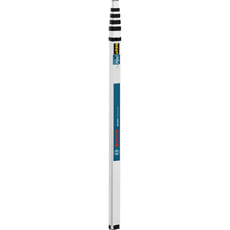
Extended Height: Measuring rods typically range from 2.4 metres to 5 metres when fully extended. The Bosch GR 240 extends to 2.4 metres, making it suitable for general building work, whilst the Bosch GR 500 reaches 5 metres—ideal for civil engineering and surveying applications requiring greater range. Consider the typical distances you work over and the height of levels you need to establish.
Compatibility with Your Level: Ensure your measuring rod works with your existing levelling equipment. Whilst traditional graduated scales work with any optical or laser level, some modern rods feature digital bar-code scales specifically designed for electronic levels. Bosch Professional measuring rods are optimised for use with Bosch rotary lasers and optical levels, whilst Stabila rods complement their extensive range of levelling instruments.
Construction Quality: Professional-grade rods from Bosch Professional and Stabila feature aluminium construction, which provides excellent durability whilst remaining lightweight enough for all-day use. Check for reinforced joints, secure locking mechanisms, and protective end caps. Quality construction ensures your rod maintains accuracy even after repeated extension and retraction over months of site work.
Scale Visibility: Clear, high-contrast graduations are essential for accurate readings, particularly when working at distance or in varying light conditions. Look for rods with alternating colour bands and well-defined measurement markings. Metric graduations are standard in the UK, with millimetre precision being most common for construction and surveying applications.
Portability and Storage: When collapsed, measuring rods should be compact enough to transport easily. Most telescopic models collapse to around 1.5 metres or less, fitting comfortably in a work van alongside other surveying equipment. Consider included carrying cases or bags for protection during transport and storage.
Budget Considerations: Entry-level measuring rods suitable for occasional use start around £50-80, whilst professional-grade instruments from established manufacturers like Bosch Professional and Stabila typically range from £100-200. For daily professional use, investing in a quality rod pays dividends through improved accuracy, durability, and reliability on site.
Popular Accessories
- Laser Levels and Rotary Lasers: Measuring rods are designed to work in conjunction with these instruments, which project level reference planes that can be read against the rod's graduated scale. Brands like Bosch Professional, Makita, and DeWalt offer comprehensive laser level systems.
- Optical Levels: Traditional levelling instruments that require a measuring rod for taking sight readings and establishing elevations across a site.
- Tripods and Detector Brackets: When using laser levels with measuring rods, a stable tripod for the level and a detector bracket for the rod improve accuracy and ease of use.
- Protective Carry Cases: Purpose-designed bags protect your measuring rod during transport and storage, extending its working life and maintaining calibration.
- Laser Detectors/Receivers: Electronic devices that attach to the measuring rod to detect laser beams, particularly useful when working in bright conditions or at extended distances where the laser line becomes difficult to see.
- Rod Bipods and Support Stands: Stabilising accessories that hold the measuring rod vertically without requiring an assistant, improving efficiency when working alone.
Safety Information
Whilst measuring rods are relatively straightforward tools, proper usage ensures accurate results and prevents accidents on site:
- Overhead Hazards: Always be aware of overhead power lines and obstructions when extending your measuring rod, particularly when working near electrical installations. Aluminium rods conduct electricity and must never contact live cables or 240v power sources.
- Stable Positioning: Ensure the rod is held perfectly vertical and on stable ground for accurate readings. Soft or uneven surfaces can affect measurements and potentially cause the rod to slip.
- Weather Conditions: In windy conditions, measuring rods can act as sails and become difficult to control. Use rod supports or work with an assistant to maintain stability and safety.
- Manual Handling: Extended measuring rods can be unwieldy. Follow HSE guidelines and proper manual handling techniques when deploying, adjusting, and collapsing the rod to prevent strain injuries.
- Site Awareness: When focused on taking readings, maintain awareness of site traffic, excavations, and other personnel to avoid trips, collisions, or falls.
- Regular Inspection: Check locking mechanisms before each use to ensure sections won't slip during measurement. Inspect for damage, particularly to graduated scales and telescopic joints.
Frequently Asked Questions
What's the difference between a measuring rod and a levelling staff?
These terms are essentially interchangeable—both refer to the same instrument. "Levelling staff" and "levelling rod" are traditional surveying terms, whilst "measuring rod" is perhaps more commonly used in construction contexts. All describe a graduated vertical pole used with levels to take height and elevation measurements.
Can I use any measuring rod with my laser level?
Most standard graduated measuring rods work with any optical or laser level—you simply read where the laser beam intersects the rod's scale. However, some modern digital levels require specific coded rods with bar-code scales. Check your level's specifications, though for most site work, traditional graduated rods from quality manufacturers like Bosch Professional or Stabila work perfectly with any levelling instrument.
How do I ensure my measuring rod remains accurate?
Store your rod in its protective case when not in use, avoiding impacts that might damage the scale or bend the rod. Keep locking mechanisms clean and free from debris. Periodically verify accuracy by comparing against a known benchmark or using a spirit level to check the graduations are aligned when sections are extended. Quality rods from professional manufacturers maintain their accuracy with proper care.
What length measuring rod do I need for typical building work?
For general building and construction projects, a rod extending to 2.4-3 metres like the Bosch GR 240 covers most requirements, including floor level checks, drainage falls, and foundation work. Civil engineering projects, road construction, and surveying applications often benefit from longer rods (4-5 metres) that provide greater range when working over extended distances or establishing levels across varying terrain.
Do I need an assistant to use a measuring rod?
Traditionally, levelling requires one person operating the level and another holding the rod at measurement points. However, rod bipods and support stands allow solo operation for some applications. For efficiency and accuracy on most professional sites, working in pairs remains the standard practice, allowing for quicker measurements and better communication between the instrument operator and the person moving the rod between positions.