

Metal Repairer
Pay in 3 interest-free payments on purchases from £30-2000 with  . Learn more.
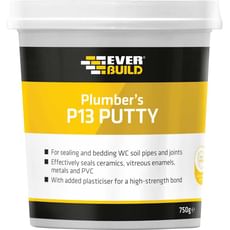
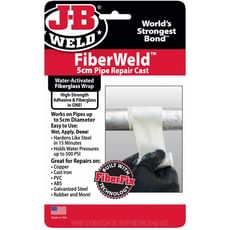
 Loading...
End of content
Error - No more pages to load
About Metal Repairer
Metal repair products are essential solutions for fixing, sealing, and restoring damaged metal components across countless applications. Whether you're dealing with cracked pipes, worn machinery parts, leaking radiators, or corroded metalwork, the right metal repairer can provide a cost-effective alternative to complete replacement. These specialist compounds and putties are formulated to bond strongly to various metal surfaces, creating durable repairs that can withstand heat, pressure, and chemical exposure in demanding trade environments.
The metal repairer category encompasses several product types, including liquid metal compounds, epoxy putties, pipe repair systems, and specialist metal bonding adhesives. Modern formulations from trusted brands like Sealey, J-B Weld, Rocol, and Everbuild offer professional-grade performance that can restore structural integrity and seal leaks even under demanding conditions. These products cure to form hard, machinable surfaces that can be drilled, tapped, filed, sanded, and painted once fully set, making them incredibly versatile for on-site repairs.
For tradespeople and DIY enthusiasts alike, having reliable metal repair solutions in your toolkit means you can tackle emergency repairs on-site without the need for welding equipment or specialist fabrication. From quick-set liquid metals for rapid repairs to robust epoxy systems for permanent fixes, these versatile products available from Tooled-Up.com have become indispensable for maintenance work, pipework repairs, automotive applications, and general metalwork restoration across the UK.
Jargon Buster
- Epoxy Putty: A two-part putty compound that combines resin and hardener. When kneaded together, it initiates a chemical reaction that cures to form a hard, metal-like material. Can be applied by hand and shaped before setting.
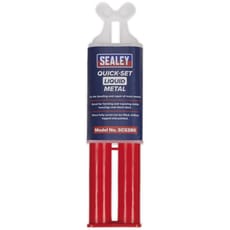
- Liquid Metal: A fluid repair compound designed to flow into cracks and voids before hardening. Typically sets faster than putty-based products and is ideal for filling gaps and creating smooth finishes on metal surfaces.
- Pot Life: The working time available after mixing two-part compounds before they begin to harden. This determines how quickly you must complete your application after preparation.
- Cure Time: The period required for the repair compound to reach full strength and hardness. May include both initial set time (when it becomes touch-dry) and full cure time (when it achieves maximum strength).
- Machinable: A property indicating that once cured, the material can be worked with standard metalworking tools including drills, taps, files, and saws without crumbling or cracking.
- PTFE Tape Alternative: Some metal repair products, particularly plumbers putty, serve as alternatives or supplements to traditional PTFE tape for sealing threaded pipe connections.
Who Uses Metal Repairer?
Metal repair products are used across a wide range of trades and applications:
- Plumbers and Heating Engineers: For emergency pipe repairs, sealing leaks, and fixing radiator damage without complete system replacement
- Maintenance Engineers: Repairing worn machinery parts, fixing cracks in castings, and restoring damaged equipment in industrial settings
- Motor Mechanics and Auto Electricians: Repairing exhaust systems, engine components, and vehicle bodywork
- Fabricators and Metalworkers: Filling voids, repairing casting defects, and building up worn surfaces on metal components
- Facilities Managers: Conducting quick repairs to building services, heating systems, and metal fixtures
- Agricultural Engineers: Emergency repairs to farm machinery, irrigation systems, and equipment in the field
- Marine Engineers: Repairing boat fittings, hull repairs above the waterline, and fixing corroded components
- DIY Enthusiasts: Home repairs to radiators, pipes, garden equipment, and household metalwork
How to Choose the Right Metal Repairer
Selecting the appropriate metal repair product depends on several key factors:
Application Type: Consider whether you're repairing pipes, machinery, castings, or general metalwork. Pipe-specific products like fibre wrap systems are designed for tubular repairs, whilst general-purpose epoxy putties work better for three-dimensional rebuilding tasks.
Working Conditions: Assess the temperature and pressure the repair will face. High-temperature epoxies are essential for exhaust systems or heating applications, whilst standard formulations suffice for ambient temperature repairs. Check the product's maximum operating temperature and pressure ratings.
Set Time Requirements: Quick-set liquid metals cure in minutes for emergency repairs when downtime must be minimised. Standard epoxy putties typically offer 3-5 minute working time with 10-60 minute set times. Slower-curing products allow more working time for complex repairs but require longer before returning to service.
Environmental Exposure: For outdoor applications or exposure to chemicals, water, or oils, choose products specifically formulated for these conditions. Marine-grade or chemical-resistant formulations provide superior durability in harsh environments.
Surface Preparation: Some products require clean, dry surfaces, whilst others can be applied to damp or oily metal. Consider your ability to prepare the surface properly before selecting a product.
Finish Requirements: If the repair needs painting or further machining, ensure you choose a machinable compound that accepts paint. Browse the selection at Tooled-Up.com from brands like Sealey and J-B Weld that can be drilled, tapped, and painted once cured.
Popular Accessories
- Wire Brushes: Essential for surface preparation, removing rust, scale, and contamination before applying repair compounds
- Abrasives and Sandpaper: For smoothing cured repairs and creating clean surfaces for painting
- Degreasing Agents: Clean metal surfaces thoroughly before repair to ensure maximum bond strength
- Mixing Boards and Spatulas: For preparing two-part compounds evenly before application
- Protective Gloves: Disposable nitrile gloves protect hands from epoxy resins and hardeners
- Metal Primers and Paints: For protecting and finishing repaired surfaces once cured
- PTFE Tape: Often used alongside plumbers putty for comprehensive pipe sealing
- Files and Rasps: For shaping and finishing machinable metal repair compounds
Safety Information
When working with metal repair products, observe these important safety precautions:
Ventilation: Always work in well-ventilated areas. Many epoxy compounds release fumes during curing that can cause irritation. For indoor work, ensure adequate airflow or use extraction equipment.
Personal Protective Equipment: Wear appropriate PPE including safety glasses, disposable gloves (nitrile recommended), and protective clothing. Some hardeners can cause skin irritation or allergic reactions with prolonged contact.
COSHH Compliance: Review product safety data sheets before use, particularly in professional environments. Ensure compliance with Control of Substances Hazardous to Health regulations for workplace use.
Mixing and Application: Follow manufacturer instructions precisely for mixing ratios and application methods. Incorrect proportions can result in products that fail to cure properly or achieve their rated strength.
Pressure Systems: When repairing pipes or pressure vessels, never exceed the product's rated pressure capacity. For critical applications or high-pressure systems, consult a qualified professional rather than attempting temporary repairs.
Heat Generation: Some fast-curing compounds generate heat during the curing process (exothermic reaction). Avoid applying excessive amounts in confined spaces or on heat-sensitive components.
Frequently Asked Questions
Can metal repair compounds be used on leaking pipes under pressure?
Most metal repair products require the system to be depressurised and drained before application. However, specialist pipe repair wraps like fibreglass systems can sometimes be applied to active leaks as an emergency measure. For permanent repairs to pressurised systems, always drain and clean the area thoroughly before application, then allow full cure time before re-pressurising.
How strong is cured metal repair putty compared to the original metal?
Quality epoxy metal repair compounds can achieve impressive strength, with some products reaching tensile strengths of 3000+ PSI. Whilst this makes them suitable for many structural repairs, they typically don't match the exact properties of the original metal. They're best used for non-critical repairs, filling voids, and applications where welding isn't practical.
Can I paint over metal repair compounds?
Yes, most metal repair products accept paint once fully cured. For best results, lightly sand the cured surface to provide a key for the paint, clean away dust, apply a suitable metal primer, then finish with your chosen topcoat. Always allow complete curing before painting—this may take 24 hours or longer depending on the product.
Will metal repair putty work on aluminium and stainless steel?
Most modern metal repair compounds bond effectively to aluminium, stainless steel, and other non-ferrous metals. However, surface preparation is crucial—thoroughly clean and roughen the surface with abrasive paper or a wire brush to remove any oxidation layer. Some products are specifically formulated for particular metals, so check the manufacturer's specifications for your application.
What's the difference between liquid metal and epoxy putty?
Liquid metal has a thinner consistency that flows into cracks and gaps, making it ideal for filling voids and achieving smooth finishes. It typically sets faster but may require multiple applications for larger repairs. Epoxy putty has a clay-like consistency that can be moulded and shaped by hand, making it better for building up three-dimensional repairs and rebuilding missing sections. Choose based on whether you need gap-filling (liquid) or rebuilding (putty) properties.