

Mig Wire

Pay in 3 interest-free payments on purchases from £20-£3000 with  . Learn more.
 Loading...
End of content
Error - No more pages to load
About Mig Wire
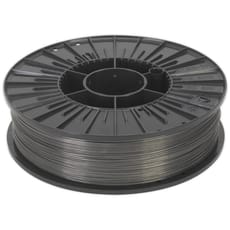
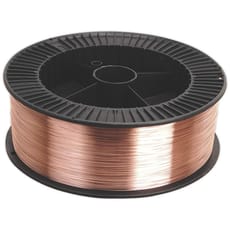
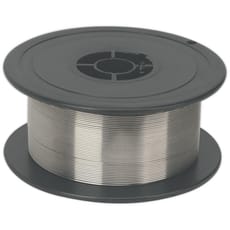
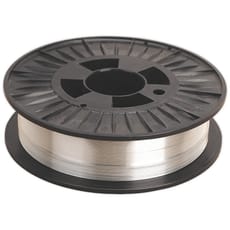
MIG (Metal Inert Gas) wire is an essential consumable for MIG welding, also known as GMAW (Gas Metal Arc Welding). This wire serves as both the electrode and filler material, feeding continuously through the welding torch to create strong, clean welds on various metals. The selection at Tooled-Up.com includes mild steel, stainless steel, aluminium, flux-cored gasless wire, and specialist alloys like copper silicon bronze, each formulated for specific welding applications and base materials.
The choice of MIG wire depends on the material being welded, the welding position, and whether shielding gas is available. Mild steel wire is the most commonly used for general fabrication and automotive work, whilst aluminium wire requires specialised equipment with different drive rollers and liners. Flux-cored gasless wire offers portability for outdoor or site work where gas cylinders are impractical, as the flux coating provides its own shielding during the welding process. Stainless steel wire is essential for food-grade fabrication, marine applications, and projects requiring corrosion resistance.
Wire diameter typically ranges from 0.6mm to 1.2mm, with 0.8mm being the most versatile for general purpose welding on materials from 1mm to 6mm thick. Thinner wires suit delicate work and bodywork repairs, whilst thicker wires are better for heavy fabrication. Quality MIG wire should be clean, consistently sized, and properly spooled to prevent tangling and feeding issues that can compromise weld quality.
Jargon Buster
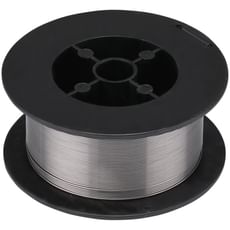
- Flux-Cored Wire: MIG wire with a hollow core containing flux compounds that create their own shielding gas when heated, eliminating the need for external gas cylinders. Ideal for outdoor welding where wind would disperse shielding gas.
- Wire Feed Speed: The rate at which wire is fed through the torch, measured in metres per minute. This must be balanced with voltage and amperage settings to achieve proper arc characteristics and penetration.
- ER70S-6: A common mild steel wire classification indicating the wire's tensile strength (70,000 psi) and silicon/manganese content. The "S" denotes solid wire, whilst the "6" refers to the deoxidiser content for cleaner welds on contaminated surfaces.
- Cast and Helix: The natural curvature of wire when unreeled. Excessive cast causes feeding problems and inconsistent arc length, particularly noticeable with smaller diameter wires or aluminium.
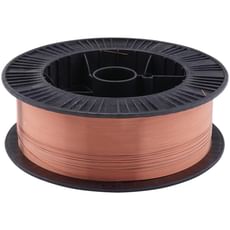
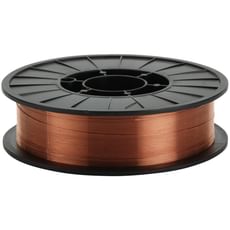
- Copper Coating: A thin copper plating applied to mild steel wire to improve electrical conductivity, reduce contact tip wear, and prevent rust during storage. This coating shouldn't be confused with pure copper alloy wire.
- Spool Size: MIG wire is supplied on various spool sizes, commonly 0.7kg, 5kg, and 15kg reels. Larger spools offer better value but require compatible wire feeders and storage considerations to prevent moisture contamination.
Who Uses Mig Wire?
- Fabricators and welders: Using MIG wire daily for structural steelwork, custom fabrication, and production welding in workshops
- Automotive technicians: For bodywork repairs, exhaust systems, chassis work, and restoration projects requiring clean, controllable welds
- Agricultural engineers: Repairing farm machinery, trailers, gates, and livestock handling equipment, often using gasless wire for field repairs
- Maintenance engineers: Conducting repairs on industrial equipment, conveyor systems, and building infrastructure
- Construction professionals: For site welding of steel frames, reinforcement mesh, and structural connections
- DIY enthusiasts: Tackling home welding projects, from garden furniture and gates to trailer repairs and creative metalwork
- Marine fabricators: Using stainless steel and aluminium wire for boat repairs, davits, and corrosion-resistant marine structures
- Sheet metal workers: For HVAC ducting, cladding panels, and thin gauge steel fabrication requiring low heat input
How to Choose the Right Mig Wire
Match Wire to Base Material: The fundamental rule is matching your wire to the metal being welded. Mild steel wire for steel, aluminium wire for aluminium alloys, and stainless wire for stainless steel. Dissimilar metals may require specialist wires like silicon bronze, which can join steel to brass or copper.
Consider Your Shielding Gas Setup: If you have a gas cylinder setup with argon/CO2 mix or pure CO2, choose solid wire for cleaner welds with less spatter. For outdoor work, site welding, or where portability matters, flux-cored gasless wire eliminates gas cylinder requirements but produces more smoke and spatter.
Select Appropriate Diameter: Wire diameter affects the amperage range and material thickness you can weld. For 240v hobby machines and thin materials (up to 3mm), 0.6mm or 0.8mm wire provides better control. For thicker steel and industrial machines, 0.8mm to 1.0mm offers versatility, whilst 1.2mm suits heavy fabrication above 6mm thickness.
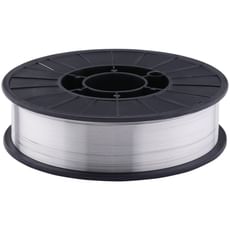
Check Welder Compatibility: Verify your MIG welder can accommodate the wire type and diameter. Aluminium welding requires a spool gun or specialised wire feed system with different liners and drive rollers to prevent the soft wire from jamming or bird-nesting.
Quality and Brand: Professional brands available from Tooled-Up, including Sealey and Draper, ensure consistent wire diameter, proper copper coating on steel wire, and clean surfaces free from drawing compounds that can contaminate welds. Cheap wire often causes feeding problems and porosity.
Spool Size Economics: Larger spools offer better cost per kilogram but require proper storage in sealed containers with desiccant to prevent moisture absorption, which causes porosity. Smaller spools suit occasional users or when welding multiple different materials.
Popular Accessories
- MIG Welding Torches: Replacement torches and consumables including contact tips, shrouds, and swan necks for different welding positions
- Contact Tips: Available in various sizes to match wire diameter, these copper tips transfer current and guide wire precisely
- Anti-Spatter Spray: Prevents weld spatter from sticking to the workpiece and torch nozzle, making cleanup easier
- Wire Feed Liners: Steel liners for steel wire, Teflon or nylon liners essential for soft aluminium wire to prevent jamming
- Drive Rollers: Knurled rollers for steel wire, smooth grooved rollers for aluminium to prevent wire damage during feeding
- Shielding Gas Cylinders and Regulators: Argon/CO2 mix for steel, pure argon for aluminium and stainless steel welding
- Wire Storage Containers: Sealed boxes with desiccant packets to protect wire from moisture and contamination
- Welding Magnets: For holding workpieces at precise angles during tack welding and fabrication
- Wire Brushes: Stainless steel brushes for cleaning welds and preparing surfaces before welding
Safety Information
Personal Protective Equipment: Always wear appropriate welding helmets with correct shade lenses (shade 10-13 for MIG), leather welding gloves, flame-resistant clothing, and safety boots. MIG welding produces intense UV radiation that can cause arc eye and skin burns within seconds of exposure.
Ventilation Requirements: MIG welding generates hazardous fumes, particularly when using flux-cored wire, galvanised steel, or stainless steel. Ensure adequate workshop ventilation or use fume extraction equipment. Galvanised coatings produce toxic zinc oxide fumes requiring enhanced precautions in accordance with HSE guidelines.
Fire Prevention: Welding spatter can travel several metres and ignite flammable materials. Clear the work area of combustibles, use welding blankets to protect surrounding surfaces, and keep a fire extinguisher readily accessible. Never weld near fuel tanks or in explosive atmospheres.
Electrical Safety: Ensure MIG welders are properly earthed and connected to appropriate 240v supplies with correctly rated circuit protection. Keep cables in good condition, avoid welding in wet conditions, and never touch the electrode or work clamp with bare skin when the machine is powered.
Wire Handling: Store MIG wire properly to prevent rust and contamination. Wire ends can be sharp – handle carefully to avoid cuts. When changing wire, ensure the drive rollers are released to prevent unexpected wire feeding during spool replacement.
Frequently Asked Questions
Can I use gasless flux-cored wire in any MIG welder?
Most MIG welders can run flux-cored wire, but you must switch the polarity from the standard DCEP (electrode positive) used for gas-shielded wire to DCEN (electrode negative) for gasless wire. Check your welder's manual as some budget machines don't offer polarity switching. You may also need to adjust drive roller pressure as flux-cored wire is softer than solid wire.
Why does my MIG wire keep jamming or bird-nesting?
Bird-nesting occurs when drive roller pressure is incorrect, the wire liner is worn or kinked, or the contact tip is wrong size or worn. For steel wire, ensure adequate drive pressure with knurled rollers. For aluminium, reduce pressure and use smooth grooved rollers with a Teflon liner. Also check that your earth clamp has good contact – poor earthing increases resistance and wire feeding problems.
What's the difference between ER70S-6 and ER70S-3 wire?
ER70S-6 contains higher levels of deoxidisers (silicon and manganese), making it more forgiving on contaminated or rusty steel with better arc stability and wetting characteristics. ER70S-3 has lower deoxidiser content, producing cleaner welds on pristine material but requiring better surface preparation. For general purpose work, ER70S-6 is the more versatile choice.
How should I store MIG wire to prevent rust?
Store wire in sealed plastic bags or airtight containers with silica gel desiccant packets, particularly in damp workshops. Rusty wire causes porosity and feeding problems. Once opened, smaller spools should be used within a few months. If wire does develop surface rust, it can sometimes be cleaned by feeding through a pad of wire wool soaked in light oil, though heavily rusted wire should be discarded.
Can I weld aluminium with a standard MIG welder?
Aluminium welding requires specific equipment modifications. The soft aluminium wire needs a spool gun mounted directly on the torch or a specialised push-pull wire feed system. You'll also need smooth drive rollers, a Teflon liner, pure argon shielding gas, and typically a welder capable of at least 150 amps. Standard steel MIG welders can be converted but require these components and thorough cleaning to prevent steel contamination of aluminium welds.